
Toy Certification Basics for Safe Market Entry
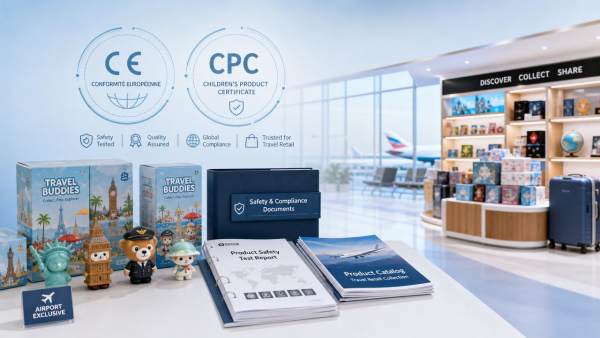
For quality control and safety managers, understanding toy certification is essential to achieving compliant and efficient market entry. From CPC and CE requirements to testing protocols and documentation, toy certification directly impacts product approval, brand reputation, and cross-border retail success. This guide outlines the core basics you need to reduce risk, meet buyer expectations, and support safer product launches.
Why toy certification matters in tourism service retail channels
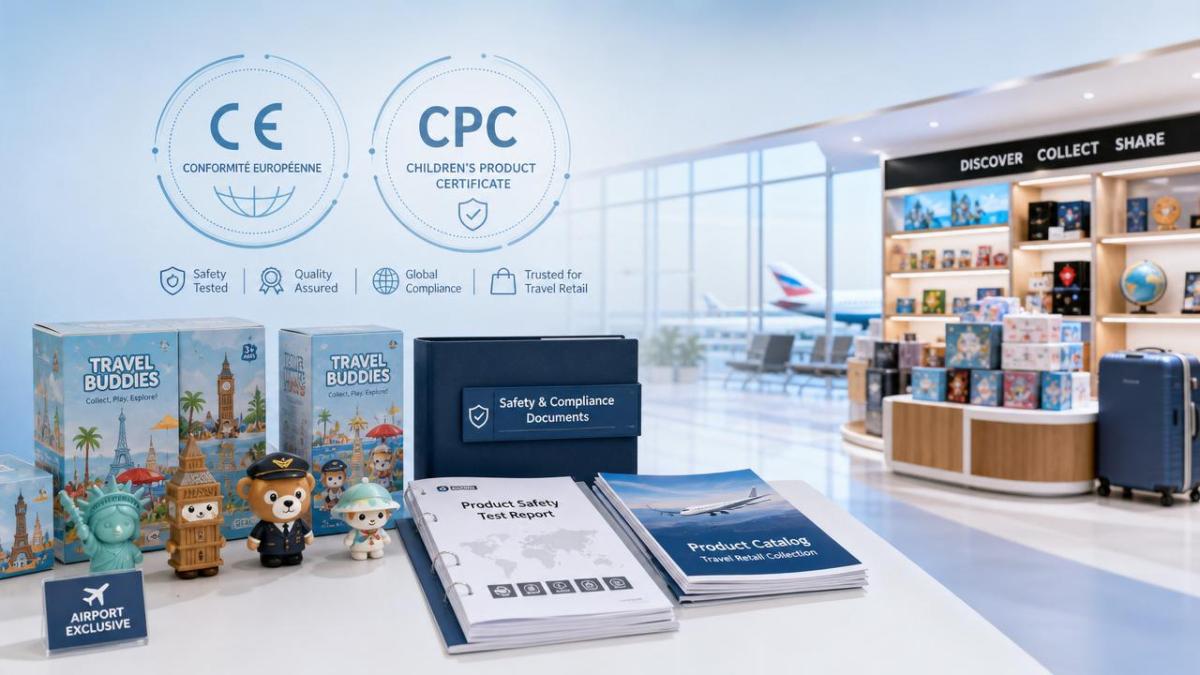
In tourism service businesses, toys are often sold or distributed in gift shops, airport retail zones, resort boutiques, museum stores, cruise programs, family attractions, and seasonal travel campaigns. That means toy certification is not only a product safety issue. It also affects guest experience, operator liability, border clearance, and the purchasing confidence of travel retailers that serve international families.
For quality control teams, the challenge is practical. A toy may be designed for impulse purchase in a travel setting, packed for multilingual tourists, sourced under tight launch windows, and expected to meet the rules of multiple destination markets. A missing test report or weak age grading decision can delay a rollout, trigger customs review, or create a recall risk that damages both the product line and the tourism brand behind it.
This is where disciplined supplier screening and documentation control become critical. Global Consumer Sourcing (GCS) helps retail buyers, brand owners, and sourcing leaders interpret toy certification requirements in a commercial context. Instead of treating compliance as a late-stage checkpoint, GCS supports earlier decision-making across sourcing, private-label planning, packaging review, and market-entry preparation.
- Tourism retail often requires fast replenishment for holiday peaks, cruise departures, and destination events, leaving little room for certification mistakes.
- Products may be purchased by international travelers who later carry them into other regions, increasing scrutiny on labeling and traceability.
- Family-focused venues need higher confidence in small parts, chemical safety, flammability, and age suitability because child end users are central to the buying scenario.
What does toy certification usually include?
Toy certification is not one universal document. It is a combination of legal requirements, product testing, technical documentation, labeling controls, and importer or manufacturer declarations that vary by market. For QC and safety managers, the core task is to map the product to the destination market, intended age group, materials, and risk profile before purchase orders are finalized.
Core compliance elements quality teams should verify
- Applicable market rules, such as CPC-related obligations for the United States and CE-related obligations for the European market.
- Product testing scope, including mechanical and physical safety, chemical restrictions, flammability, and in some cases electrical checks for battery-operated items.
- Age grading logic and warning language, especially for products sold in hotel gift stores, airport outlets, or tourist attractions where staff may not explain usage in detail.
- Traceability records, supplier declarations, bill of materials consistency, packaging compliance, and factory document readiness.
Many sourcing failures happen because teams confuse a passed lab test with complete toy certification. A test report only supports compliance. It does not replace the broader legal package. In tourism service supply chains, that distinction matters because buyers often source private-label souvenir toys, seasonal bundles, or limited-edition destination gifts from multiple factories under compressed timelines.
Which certification paths are most relevant for common export markets?
The table below summarizes how toy certification expectations typically differ across major destination markets often targeted by tourism-linked retail programs, travel gift supply, and cross-border consumer goods distribution.
The main takeaway is simple: toy certification is market-specific. A compliant souvenir toy for one destination may need new labeling, revised warnings, or additional supporting documents for another. GCS helps sourcing and compliance teams compare these requirements earlier, which is especially useful when one travel retailer serves multiple countries through airports, resorts, or online travel merchandise stores.
How should QC managers assess risk before approving a toy supplier?
Supplier approval should begin before lab booking. In tourism service retail, product lines often change quickly to match local events, licensed themes, or seasonal visitor demand. That creates pressure to onboard factories fast. A structured pre-approval model helps prevent later failures in toy certification, delivery timing, and packaging control.
A practical pre-order checklist
- Confirm product classification. Determine whether the item is legally treated as a toy, collectible, souvenir, or promotional article in the target market.
- Review material composition. Paints, plastics, textile trims, magnets, batteries, cords, and filling materials can all affect testing scope.
- Check age grading assumptions. Travel retail often favors compact products, but small size may increase small-parts concerns for children under three.
- Validate documentation ownership. Make sure the factory, trading party, brand owner, and importer understand who controls test reports, declarations, and labeling artwork.
- Set change-control rules. Any later change in resin, accessory, print ink, packaging insert, or battery compartment can affect toy certification status.
GCS adds value here by connecting trend-responsive sourcing with compliance discipline. If a destination retailer wants an exclusive toy tied to a seasonal travel program, the sourcing plan should include enough time for sample review, lab testing, corrective action, and document issuance before final shipment windows are locked.
What testing and documentation should never be treated as optional?
The exact test list depends on the item, but quality teams should separate critical evidence from supporting paperwork. For tourism service buyers, this is especially important because products may be sold in environments where returns are rare, customer feedback is delayed, and any incident can escalate through public reviews or operator complaint channels.
The table below highlights high-priority areas commonly reviewed during toy certification planning and product release control.
These review points are not theoretical. They directly influence whether a tourism-linked toy assortment can move smoothly from sample approval to store delivery. For quality managers, the best control point is before mass production begins, when label text, BOM records, and test samples can still be aligned without expensive rework.
How to balance cost, launch speed, and certification reliability
Budget pressure is real, especially for destination retail programs with uncertain demand or short seasonal sales windows. However, the cheapest route often becomes the most expensive if toy certification gaps force retesting, packaging replacement, or shipment hold. QC managers should guide internal stakeholders toward total-risk thinking rather than unit-price thinking.
Cost-sensitive decisions that still protect compliance
- Favor stable materials and standard construction where possible. Novel decorative elements may create extra test items and more failure risk.
- Consolidate packaging formats across markets only when warning and language requirements truly overlap. Forced harmonization can create noncompliance.
- Use early sample screening to identify high-risk design features before formal testing begins.
- Plan certification timing around peak travel sales windows. Missing a summer resort launch or holiday airport campaign can erase the savings of rushed sourcing.
GCS is particularly useful for teams making these trade-offs because it combines sourcing intelligence with compliance-aware market insight. If a buyer is comparing two OEM or ODM options, the decision should include not just price and lead time, but also documentation maturity, testing history, packaging adaptability, and responsiveness to corrective action.
Common mistakes that delay market entry for travel and destination retailers
Mistake 1: Assuming all souvenir toys follow the same rules
A plush mascot, molded keychain toy, bath toy, wooden puzzle, and battery light-up novelty may all be sold in the same resort store, but their testing and documentation pathways can differ. Toy certification should be built around actual product characteristics, not merchandising category names.
Mistake 2: Testing a prototype but shipping a modified product
Changing fabric trims, paints, fastening methods, or accessory components after testing is a frequent cause of compliance breakdown. Any change that affects safety characteristics should trigger review. This is especially common in destination retail where buyers ask for localized artwork or fast packaging edits near launch.
Mistake 3: Overlooking documentation handoff between parties
Factories, trading companies, brand owners, and travel retailers often assume someone else will retain the final compliance file. That creates gaps during customs checks or platform listing reviews. Ownership of toy certification records should be assigned in writing before orders are placed.
Mistake 4: Underestimating multilingual packaging control
Tourism service channels frequently sell to international visitors. Warning text, age grading, importer information, and destination language requirements should be reviewed as carefully as the product itself. Label nonconformity can block market entry even when the toy passes technical testing.
FAQ: practical toy certification questions from QC and safety managers
How early should toy certification start in the sourcing cycle?
Start at product concept or supplier quotation stage, not after final packaging. Early review helps define testing scope, age grading, required warnings, and destination-market documentation. For tourism service launches tied to holiday travel, school breaks, or cruise schedules, late compliance planning is one of the main causes of missed selling windows.
Can one test report support multiple markets?
Sometimes a report can support part of the technical evidence across markets, but it rarely covers the full legal package for every destination. Toy certification also depends on declarations, labeling, traceability, and market-specific obligations. QC managers should treat cross-market reuse carefully and confirm whether the original sample, standards referenced, and report ownership all fit the intended route.
What should buyers request from suppliers before sample approval?
Request a draft BOM, material details, proposed age grading, packaging artwork concept, previous relevant test evidence if available, and a statement on whether any outsourced components are used. This pre-sample package helps quality teams identify toy certification gaps before formal testing costs are incurred.
Which products in travel retail deserve extra caution?
Compact items with detachable parts, magnetic elements, battery functions, cords, cosmetics-style play components, coated metals, or mixed-material construction deserve close review. These features commonly appear in novelty toys and souvenir-driven assortments and can increase testing complexity.
Why work with GCS when planning compliant market entry?
Global Consumer Sourcing supports teams that need more than a generic compliance checklist. For quality control and safety managers in tourism service retail, the real issue is connecting supplier capability, market expectations, and toy certification timing into one workable sourcing plan. GCS brings together retail intelligence, product safety perspective, and supply chain judgment to help buyers reduce avoidable risk.
- Support for evaluating whether a toy concept is suitable for the target travel retail channel and destination market.
- Guidance on comparing OEM or ODM options based on certification readiness, documentation maturity, and commercial fit.
- Structured input on packaging, lead time, testing sequence, and product launch coordination for multi-market retail programs.
- A stronger sourcing framework for private-label toys, seasonal destination merchandise, and family-focused travel retail assortments.
If your team is reviewing toy certification for airport retail, resort shops, cruise programs, attraction stores, or destination gift collections, GCS can help you clarify product classification, supplier selection, certification requirements, sample strategy, delivery timing, and documentation gaps before they turn into launch delays.
Contact us to discuss certification requirements, sample support, supplier comparison, packaging review, lead-time planning, or quotation alignment for your next compliant toy program. This is especially valuable when you need to balance safety, speed, and commercial readiness across cross-border tourism service channels.
Related Intelligence
 Skincare OEMAug 16, 2026Amazon Enforces AI Human Metadata Rule for Beauty and Personal Care SellersAmazon now enforces AI human metadata rules for beauty sellers. Learn how to protect listings, traffic, and compliance in skincare, cosmetics, and beauty devices.
 Beauty DevicesAug 15, 2026China to Roll Out Nationwide Cross-Border Cash Pooling for MultinationalsChina to roll out nationwide cross-border cash pooling for multinationals from Sept. 14. Discover how this policy could improve treasury efficiency, liquidity management, and China-linked supply chains.
 Beauty DevicesAug 14, 2026China Imposes Temporary Export Ban on Helium, Affecting Cooling Supply ChainsChina's temporary helium export ban may disrupt cooling supply chains for beauty RF devices and laser systems. Learn what ODMs, buyers, and procurement teams should check now.
![]() Cosmetics & PkgAug 13, 2026PPWR becomes mandatory: Beauty and personal care packaging materials usher in new EPR and PFAS compliance requirementsPPWR takes effect for cosmetics packaging in the EU, bringing EPR registration and PFAS limits. Learn what brands, importers, and suppliers must do now.
Cosmetics & PkgAug 13, 2026PPWR becomes mandatory: Beauty and personal care packaging materials usher in new EPR and PFAS compliance requirementsPPWR takes effect for cosmetics packaging in the EU, bringing EPR registration and PFAS limits. Learn what brands, importers, and suppliers must do now. Cosmetics & PkgAug 12, 2026EU PPWR Now Enforced for Beauty Packaging ComplianceEU PPWR now enforced for beauty packaging compliance: learn how EPR, ERN, heavy metals and PFAS rules affect EU exports, customs clearance and platform sales.
 Cosmetics & PkgAug 11, 2026EU PPWR Rules Take Effect on Aug. 12 for Beauty PackagingEU PPWR rules for beauty packaging take effect on Aug. 12, 2026. Learn key compliance steps, EPR, labeling, PFAS limits, and how to avoid customs delays and fines.
 Smart Pet DevicesAug 10, 2026EU EPR Rules to Cover Smart Pet Devices on Aug. 15EU EPR Rules will cover smart pet devices from Aug. 15, 2026. Learn how smart collars, feeders, and monitoring devices can avoid delisting, customs delays, and compliance risks in the EU.
 Infant Feeding & CareAug 09, 2026CPSC Recalls Baby Sleep Sacks Over Undeclared TDCPPCPSC Recalls Baby Sleep Sacks Over Undeclared TDCPP: learn how this 2026 recall impacts CPC documents, third-party testing, and U.S. baby product compliance for exporters.
 Infant Feeding & CareAug 08, 2026ECHA Adds 5 SVHCs, Importer Notices Due From Oct 2026ECHA adds 5 SVHCs to the Candidate List, with importer notices due from October 2026. Learn how REACH affects exporters, supply chains, and documentation readiness.
 Baby Gear & StrollersAug 07, 2026CPSC Revises Crib Rail Standard for November 2026CPSC revises crib rail standard for November 2026, adding dynamic impact tests and mandatory third-party lab testing. Learn how the new rule affects U.S. market access, compliance, and shipments.
 Electronic & RC ToysAug 06, 2026EU to Require EN IEC 62115:2025 for Electronic ToysEU to Require EN IEC 62115:2025 for Electronic Toys from Oct 1, 2026. Learn scope, battery and AI safety updates, CE compliance risks, and how exporters can avoid customs delays.
 Baby Gear & StrollersAug 05, 2026US Stroller Stability Rule Takes Effect Aug. 15US Stroller Stability Rule Takes Effect Aug. 15: learn how new U.S. stroller compliance, ASTM F833-26a, and CPSC testing rules may affect imports, certification, and shipment readiness.
 Infant Feeding & CareAug 04, 2026ECHA Adds 5 SVHCs, Triggering Baby Care Export ReviewECHA adds 5 SVHCs, prompting an urgent baby care export review for EU-bound products. Learn the 0.1% threshold risks, compliance steps, and how to avoid customs delays and fines.












