Bottle Sterilizer OEM Mistakes That Create Delays in Product Certification
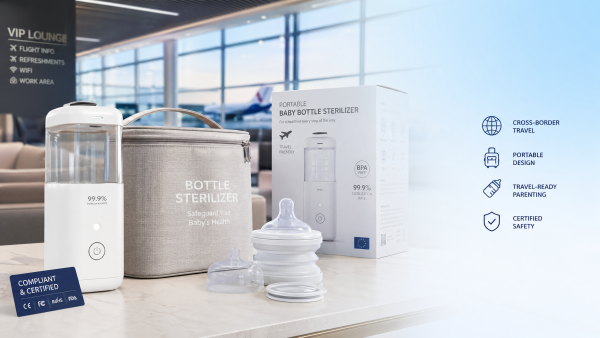
For project managers and engineering leads, a bottle sterilizer OEM partnership can accelerate market entry—or trigger costly certification setbacks. Small mistakes in design documentation, material selection, testing alignment, and factory communication often create avoidable delays with FDA, CE, or other compliance approvals. Understanding these risks early is essential for keeping timelines, budgets, and launch targets under control.
Why certification delays vary by project scenario
In sourcing programs connected to retail, travel retail, airport shops, cross-border gifting, and compact hospitality amenity lines, a bottle sterilizer OEM project rarely fails because of one obvious issue. Delays usually come from a mismatch between the intended business scenario and the compliance path chosen at the beginning. A unit developed for e-commerce baby goods may need a different labeling set, plug configuration, packaging warning format, and test sequence than a product prepared for duty-free travel channels or hotel family-service programs.
For project leaders, this matters because certification queues often add 2 to 8 weeks when technical files are incomplete, and another 1 to 4 weeks when samples must be rebuilt. In fast-moving seasonal procurement windows, especially for travel-service buyers planning launches before summer holidays, Lunar New Year recovery, or year-end gifting peaks, a four-week slip can mean missing a full sales cycle.
A bottle sterilizer OEM partner should therefore be judged not only on tooling speed or unit cost, but on how well the factory understands the destination scenario. Project managers need to ask a practical question: what exact use case is this product being certified for, and what details become critical in that use case?
Three common sourcing scenarios where mistakes appear differently
In travel-related distribution, the same bottle sterilizer can sit in at least three very different commercial contexts. The first is travel retail resale, where products are sold through airport, cruise, or destination stores. The second is hospitality support, where hotels, serviced apartments, or premium resorts offer sterilizers to traveling families. The third is compact D2C or marketplace distribution targeting parents who need portable feeding hygiene while away from home.
- Travel retail resale often prioritizes multilingual packaging, compact shelf footprint, and plug-region clarity.
- Hospitality programs prioritize durability, replacement cycles, cleaning instructions, and repeated-use safety.
- Portable online retail prioritizes lightweight design, foldable parts, and battery or low-voltage compatibility for mobile use.
When a bottle sterilizer OEM uses one generic file set for all three scenarios, the probability of a re-test rises sharply. That is because testing scope, instruction content, accessory definition, and claims language can shift from one route to another even when the heating or UV function is similar.
The table below helps map common certification risks to these business scenarios so project teams can identify likely delay points before tooling and pilot build start.
For project managers, this comparison shows that certification delays are rarely random. They usually reflect scenario blindness during the first 10% to 20% of the development process, when product definition, sourcing assumptions, and market-entry timing are still flexible.
Scenario 1: Travel retail launches where packaging and claims create hidden rework
Travel retail programs move quickly and depend on strict launch calendars. Buyers may require final packaging approval 6 to 10 weeks before shelf placement, which means any certification-linked change to carton copy, voltage marking, or accessory naming can trigger expensive reprint work. In a bottle sterilizer OEM project, a common mistake is treating the retail pack as a marketing task rather than a compliance-controlled deliverable.
If the product is tested with one adapter, one tray configuration, or one cycle description, but the printed packaging shows another, the factory may need to submit updated documents or even re-test. This is especially common when sales teams add words such as “medical-grade,” “99.9%,” or “global use” without checking whether those statements are supported by the chosen certification route and product design file.
In travel channels, compactness also creates risk. Teams may ask the bottle sterilizer OEM to reduce carton size by removing inserts, shortening the manual, or changing cable arrangement. Even a small packaging adjustment can affect labeling visibility, accessory protection, or user instruction completeness. A revision made in week 7 can easily push testing closure into week 10 or 11.
What project leads should lock before artwork approval
- Confirm the exact sales region list, because plug type, voltage range, and language requirements may differ across 3 to 5 markets.
- Freeze all performance claims before testing samples are sent, not after the report is issued.
- Match the user manual, color box, rating label, and test application form line by line.
- Check whether bundled accessories such as tongs, cups, or adapters are included in the compliance scope.
A practical control point
A strong bottle sterilizer OEM workflow should include an internal packaging-compliance review at least 2 weeks before final print sign-off. That review should involve engineering, regulatory coordination, sourcing, and the commercial owner. In travel retail, where stock often moves through multiple countries, this cross-check can remove one of the most common causes of avoidable launch delay.
Scenario 2: Hospitality and family-travel service programs where repeated-use reality is ignored
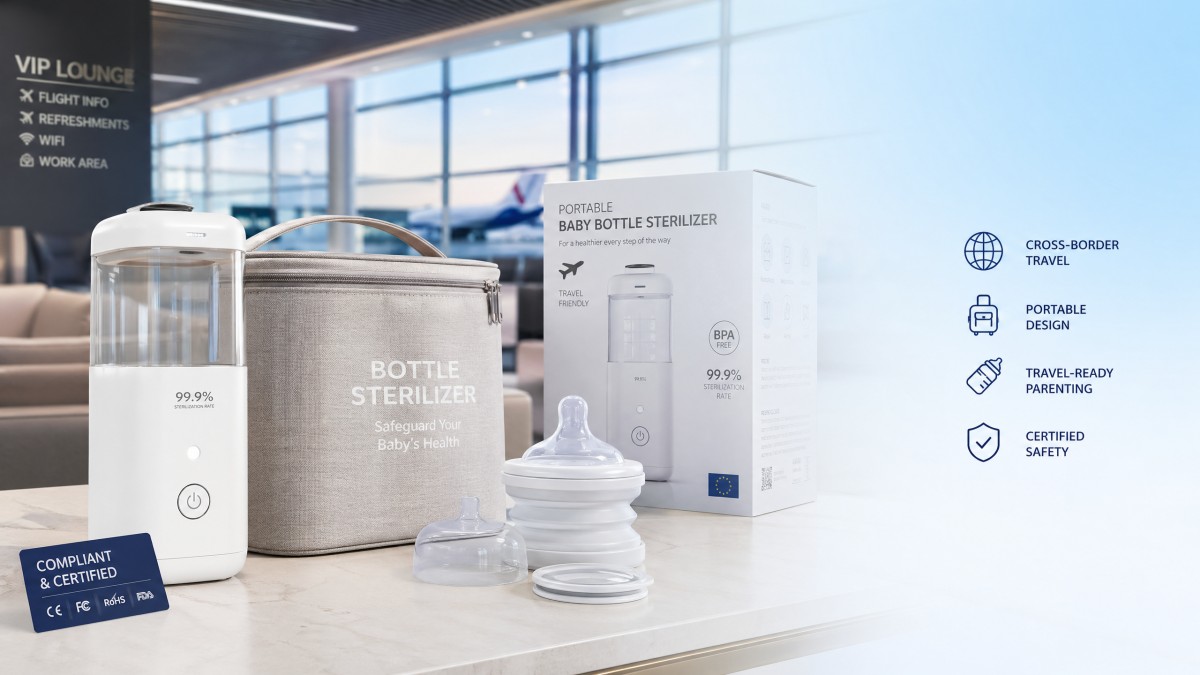
Hotels, resorts, serviced apartments, and premium family travel operators do not always buy bottle sterilizers for retail resale. In many cases, they source units as guest-facing equipment or as a premium amenity for parents traveling with infants. Here, the certification challenge is different. The product will often be used by many guests across a 12- to 24-month service cycle, and operational teams care more about repeated-use reliability than flashy packaging.
A bottle sterilizer OEM can create delays in this scenario by selecting materials that pass initial checks but do not hold up well under frequent cleaning, heat exposure, or disinfection chemicals used by housekeeping teams. If project leads discover cracking, discoloration, or seal degradation during pilot deployment, they may need to stop rollout and re-open material verification before final procurement.
Another mistake is failing to define the operational environment. A compact family room in a city hotel, a beach resort suite, and a cruise cabin do not expose appliances to the same humidity, storage habits, or cleaning frequency. If the bottle sterilizer OEM does not collect these conditions in the requirement phase, engineering may validate the wrong stress profile.
Repeated-use requirements often missing from early briefs
Hospitality buyers often need a unit that can support dozens of use cycles per month, tolerate quick turnaround cleaning, and remain intuitive for short-stay guests. Yet many OEM briefs still read like online retail briefs. They mention color, logo, and target price, but omit cleaning agents, storage temperature range, expected annual usage, and replacement policy.
For project managers in travel service environments, the safer approach is to define operating assumptions numerically. That can include expected daily use of 1 to 4 cycles, housekeeping wipe-down frequency of 1 to 2 times per day, and a replacement planning horizon of 12 or 18 months. Once these assumptions are written down, the bottle sterilizer OEM can align material selection and test preparation more effectively.
The next table shows how requirement priorities shift when the same product is intended for hospitality rather than simple consumer resale.
This contrast matters because a bottle sterilizer OEM that performs well in consumer packaging execution may still struggle in hospitality deployment if service conditions are not translated into engineering language from day one.
Scenario 3: Portable and cross-border projects where technical files lag behind design changes
Portable bottle sterilizers are especially relevant for parents on the move, including airline travelers, road-trip families, and short-stay visitors. In these programs, teams often prioritize foldability, lighter weight, USB power, or travel pouch compatibility. The speed of feature iteration is high, but that is also why certification risk rises. Engineering may update charging interfaces, plastics, seals, or internal layout several times in a 4- to 6-week prototype window.
The recurring mistake is that the bottle sterilizer OEM updates the sample but not the technical file package at the same speed. Drawings, bills of materials, material declarations, and artwork can become inconsistent by revision 3 or 4. When a lab reviews the submission, it sees one power rating on the label, another on the drawing, and a third in the manual. Even if the physical sample works, the approval process slows because the file set is no longer clean.
Cross-border expansion adds more complexity. A project intended for North America and Europe may require different adapter decisions, warning formats, and declarations. If a bottle sterilizer OEM assumes a single universal package will cover all markets without document segmentation, the team may face serial revisions instead of parallel approvals.
Signs your file control process is too weak
- Sample photos sent to the lab no longer match the pilot sample in the factory.
- The BOM revision count exceeds 3, but no formal change log exists.
- Power components are sourced from substitute suppliers without immediate document updates.
- Packaging work begins before the regulatory statement set is frozen.
How project leads can reduce cross-border delay risk
Set one file owner on the buyer side and one on the bottle sterilizer OEM side. Require a revision index covering drawing version, label version, manual version, packaging version, and component approval status. In many projects, a disciplined 5-document revision register can prevent the 2- to 3-week drift that appears when teams rely only on email attachments and chat approvals.
The most common OEM mistakes that delay certification across all scenarios
Although the trigger differs by use case, several mistakes appear repeatedly in bottle sterilizer OEM programs. They are not always dramatic engineering failures. More often, they are coordination failures between sourcing, product development, packaging, and compliance timelines. For project managers, these are the issues worth auditing before lab booking and before mass production release.
Core error patterns
- Material substitutions made after initial testing without checking whether they affect heat resistance, food-contact expectations, or structural performance.
- Incomplete requirement briefs that fail to state destination market, user environment, or accessory scope.
- Late-stage marketing claims added after technical validation is complete.
- Factory and buyer working from different document revisions during pilot and pre-shipment stages.
- Assuming one certificate path or one test package will be enough for every region and every sales format.
In practical terms, each of these mistakes can add 7 to 21 days depending on sample rebuild need, lab queue, and packaging revision complexity. If tooling is still open, the delay may be manageable. If booking windows for travel-retail launch or hospitality rollout are already fixed, the commercial impact becomes much larger than the testing fee itself.
A pre-certification checklist for project teams
Before authorizing formal certification, buyers and engineering leads should confirm that the bottle sterilizer OEM has passed a minimum readiness gate. This does not need to be complicated, but it should be structured and evidence-based.
- Lock the product configuration, including accessories, adapters, and packaging inserts.
- Verify that the BOM and all critical materials are linked to approved suppliers.
- Review labels, manuals, and product claims against the target market list.
- Confirm one document version set is being used by factory, lab, and buyer.
- Define a sample retention process so tested units can be traced back to production intent.
This kind of gate review often takes less than 90 minutes, yet it can save multiple weeks later. In scenario-driven projects, especially those serving travel retail or hospitality service models, that time protection is usually worth far more than the cost of one extra internal review meeting.
How to choose a bottle sterilizer OEM based on your actual use case
Not every bottle sterilizer OEM is equally suited to every channel. A factory that is strong in fast private-label execution may be ideal for online travel parenting products but less prepared for hospitality deployment, where maintenance and repeated-use planning matter more. Conversely, a supplier comfortable with long service-life projects may move too slowly for short seasonal travel-retail windows.
Project managers should therefore evaluate OEM fit using scenario-based questions, not generic capability slides. Ask what percentage of the project is likely to change after prototype approval, how the supplier controls artwork revisions, how it handles market-specific plugs or labels, and whether it has a documented process for material change notification. These are operational signals that directly affect certification speed.
A useful rule is to align the supplier’s process strength with the complexity of your launch. If your rollout spans 2 regions, 3 packaging languages, and both retail and service use, prioritize file discipline and communication rhythm over the lowest initial quote. The cheapest bottle sterilizer OEM can become the most expensive option if launch timing slips by one full quarter.
Questions worth asking before nomination
- Which document owner controls certification files during prototype, pilot, and production?
- How are material substitutions approved and recorded?
- Can the supplier support region-specific packaging and instruction variants without confusion?
- What is the normal lead time for sample update, lab submission, and correction after test feedback?
- How does the factory handle mixed use cases such as retail sale plus hotel or travel-service deployment?
Why work with us on sourcing and project coordination
At Global Consumer Sourcing, we help project managers, sourcing teams, and engineering leads evaluate bottle sterilizer OEM options with commercial reality in mind. That means looking beyond basic quotations and asking whether the supplier’s documentation process, material discipline, and communication rhythm actually support your target launch path. For travel retail, hospitality, and cross-border family product programs, that early filtering can reduce avoidable revision loops.
If your team is comparing suppliers, refining a private-label concept, or trying to prevent certification delay before pilot build, we can support practical decision points: parameter confirmation, scenario-fit assessment, sourcing shortlists, expected delivery windows, packaging-risk review, and likely compliance preparation gaps. We can also help structure the conversation between commercial, technical, and factory stakeholders so key assumptions are locked before the lab queue starts.
Contact us to discuss your bottle sterilizer OEM project if you need support with product selection, delivery timeline planning, customization direction, sample coordination, certification requirement review, or quotation comparison. When the use case is clear from the start, the path to launch is usually faster, cleaner, and far easier to control.
Related Intelligence
 STEM & Educational ToysOct 23, 20262026 China Toy Expo Gives AI Toys a Dedicated Hall as Practical Features Take Priority2026 China Toy Expo spotlights AI toys with a dedicated hall. Explore how practical features and everyday play experiences are reshaping manufacturers’ product priorities.
 STEM & Educational ToysOct 22, 2026Blokees Showcases Over 900 Products at the 2026 China International Toy FairBlokees showcases over 900 products at the 2026 China International Toy Fair. Explore Model Kits, BLOKEES WHEELS and key sourcing checks to guide your next purchase.
 Cosmetics & PkgOct 21, 2026BASF Plans Beauty Innovation Showcase at in-cosmetics Asia 2026Explore BASF’s planned beauty innovations at in-cosmetics Asia 2026 in Bangkok, with a focus on skin protection, repair and sustainable solutions for personal care formulators.
 Cosmetics & PkgOct 20, 2026Beauty Tops Amazon’s 2026 Prime Big Deal Days Shopping CategoriesBeauty tops Amazon’s 2026 Prime Big Deal Days at 32% of shoppers, according to Market Defense. Explore what the findings could mean for product selection, inventory and promotional planning.
 Corporate & Seasonal GiftsOct 14, 2026How Can Retailers Check Plush Toy Stuffing Quality?How do retailers check plush toy stuffing quality? Discover practical inspections, supplier checks, and testing tips to reduce defects and make smarter pet toy sourcing decisions.
 Corporate & Seasonal GiftsOct 14, 2026Are Embroidered Eyes Safer Than Plastic Eyes on Plush Toys?Are plush toys with embroidered eyes safer than plastic eyes? Discover key pet-toy risks, quality checks, and sourcing tips to make smarter buying decisions.
 Infant Feeding & CareOct 14, 2026What Documents Are Required to Import Baby Formula?What import documents are needed for baby formula? Explore shipment paperwork, health certificates, and market-specific requirements to avoid costly delays and prepare for compliant imports.
 Infant Feeding & CareOct 14, 2026Which Baby Formula Packaging Formats Reduce Shipping Damage?Which baby formula packaging formats reduce shipping damage? Compare metal cans, rigid tubs, and supported pouches to choose better protection and reduce costly transit losses.
 Baby Gear & StrollersOct 14, 2026How Long Does Custom Diaper Bag Production Usually Take?How long does custom diaper bag production usually take? Plan for 30–60 days after sample approval. Discover key lead-time factors and practical tips to avoid delays and launch on schedule.
 Baby Gear & StrollersOct 14, 2026Which Diaper Bag Features Justify a Higher Wholesale Price?What diaper bag features justify a higher wholesale price? Discover durability, comfort, and easy-clean upgrades worth paying for—and source smarter with practical buyer tips.
 Infant Feeding & CareOct 14, 2026How Can Retailers Prevent Baby Clothing Color Bleeding Claims?How can retailers avoid color bleeding claims on baby clothing? Discover testing, supplier controls, and care-label strategies to reduce returns and protect customer trust.
 Infant Feeding & CareOct 14, 2026Which Baby Clothing Materials Are Easier to Source Compliantly?What materials make baby clothing easier to source compliantly? Compare cotton, blends, and certified options, with practical supplier checks to reduce risk and make smarter sourcing decisions.
 Baby Gear & StrollersOct 14, 2026Are Baby Carrier Buckle Failures a Common Reason for Returns?Are baby carrier buckle failures a common return issue? Explore defects, usability complaints, and safety checks to make informed sourcing decisions before your next order.