
Vietnam Mandates Bilingual (CN/VI) Labeling for Infant Feeding Products
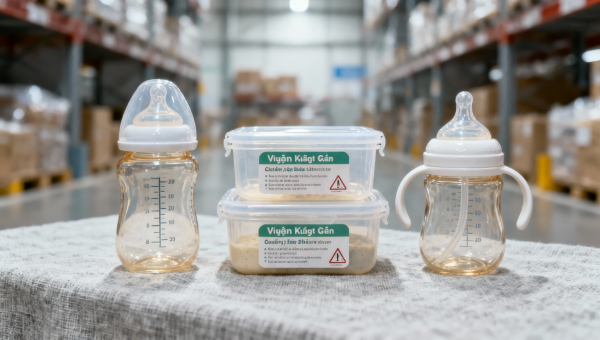
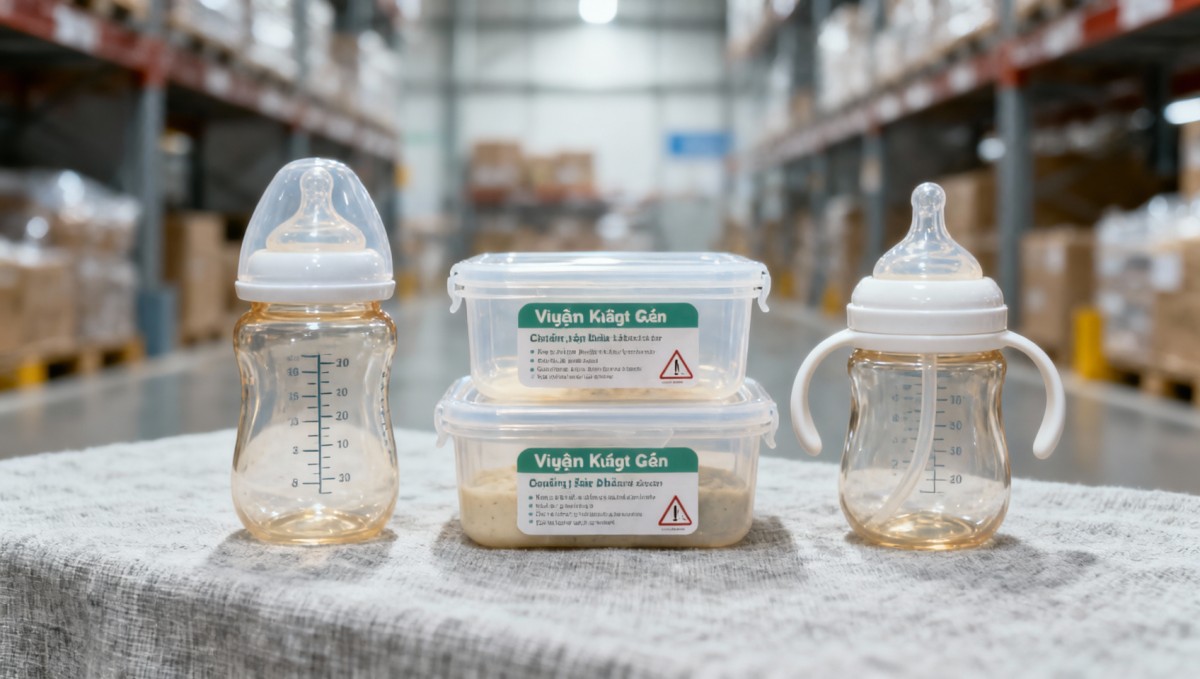
Vietnam’s Ministry of Industry and Trade issued Circular No. 12/2026/TT-BCT on May 6, 2026, requiring bilingual Chinese-Vietnamese labeling for infant feeding utensils—including baby bottles, complementary food containers, and sippy cups—effective July 1, 2026. This regulation directly impacts Chinese exporters of infant feeding and care products, as monolingual labels will no longer satisfy Vietnam’s market registration and customs clearance requirements.
Event Overview
On May 6, 2026, the Ministry of Industry and Trade of Vietnam promulgated Circular No. 12/2026/TT-BCT. The circular stipulates that, starting July 1, 2026, all imported infant feeding utensils must bear product labels and user instructions in both Chinese and Vietnamese. Required bilingual content includes material composition, safety warnings, and usage instructions. The regulation applies to all such products undergoing Vietnam market registration or customs declaration.
Industries Affected by This Regulation
Direct Exporters (China-based)
Chinese enterprises exporting infant feeding products to Vietnam are directly affected because the regulation targets labeling compliance at the point of import registration. Non-compliant labeling—i.e., Chinese-only or Vietnamese-only—will result in rejection of registration applications, delaying or blocking market access.
Contract Manufacturers & OEM/ODM Suppliers
Manufacturers producing under private label or contract for export clients must revise packaging artwork, instruction leaflets, and carton labeling systems. Since bilingual text affects layout, print specifications, and quality control checkpoints, production lines may require revalidation ahead of the July 2026 deadline.
Supply Chain & Logistics Service Providers
Third-party logistics operators, customs brokers, and certification agents handling Vietnam-bound shipments must now verify bilingual labeling prior to shipment release. Inconsistencies between declared documentation and physical labeling may trigger customs inspection delays or rework requests upon arrival in Vietnam.
Label Printing & Packaging Vendors
Vendors supplying printed labels, molded-in text, or engraved markings must adapt to dual-language character sets, font sizing constraints, and regulatory formatting expectations—particularly where space is limited (e.g., on silicone bottle sleeves or small-capacity sippy cup bases).
Key Considerations and Recommended Actions for Stakeholders
Monitor Official Guidance from Vietnam’s General Department of Standards, Metrology and Quality (STAMEQ)
While Circular No. 12/2026/TT-BCT establishes the core requirement, STAMEQ may issue supplementary technical guidelines on acceptable bilingual formatting, font size minimums, or exemptions for certain components (e.g., non-detachable parts). Stakeholders should subscribe to official notifications and verify interpretation through licensed local representatives.
Prioritize High-Volume SKUs and Vietnam-Focused Product Lines
Analysis shows that manufacturers with diversified export portfolios should first audit SKUs currently registered or actively sold in Vietnam. Priority should be given to items with high shipment frequency, short lead times, or pending registration renewals—since these face the earliest operational impact post-July 2026.
Distinguish Between Regulatory Signal and Enforceable Requirement
Observably, this circular reflects a tightening of Vietnam’s consumer product traceability framework—not an isolated labeling update. It signals broader alignment with ASEAN-wide labeling harmonization efforts. However, enforcement capacity (e.g., lab testing for material claims, verification of bilingual accuracy) remains subject to local customs office discretion and resource availability.
Initiate Internal Cross-Functional Alignment Now
Current more suitable preparation includes coordinating between R&D (for material declaration consistency), marketing (for multilingual copywriting), procurement (for label stock lead time), and QA (for updated AQL sampling plans covering bilingual elements). Delaying internal alignment risks last-minute artwork revisions or inventory write-offs of pre-July 2026-labeled stock.
Editorial Perspective / Industry Observation
This circular is better understood as a procedural milestone than a sudden policy shift. From industry perspective, Vietnam has incrementally strengthened labeling oversight since 2022—first for cosmetics, then for children’s toys—and infant feeding products represent the latest category brought into formal bilingual disclosure scope. Analysis shows the timing aligns with Vietnam’s broader push toward stricter post-market surveillance and consumer transparency, rather than targeting any specific country or supplier. That said, its immediate operational weight falls most heavily on China-based exporters due to their dominant share of Vietnam’s imported infant feeding product supply. Continued monitoring is warranted—not only for potential amendments but also for how enforcement evolves across key ports like Ho Chi Minh City and Hai Phong.
Conclusion
This regulation does not introduce new safety standards or testing mandates; instead, it elevates labeling as a gatekeeping condition for market access. Its significance lies less in technical novelty and more in its role as a compliance checkpoint—one that reveals how increasingly granular national-level labeling rules can shape cross-border supply chain execution. For stakeholders, it is more accurate to view Circular No. 12/2026/TT-BCT as an operational signal requiring process adaptation, not a strategic inflection point demanding product redesign or market exit.
Source Attribution
Main source: Ministry of Industry and Trade of Vietnam, Circular No. 12/2026/TT-BCT, effective July 1, 2026 (issued May 6, 2026).
Areas under observation: Technical implementation guidance from Vietnam’s General Department of Standards, Metrology and Quality (STAMEQ); enforcement practices at major entry ports; possible updates to Decree No. 15/2018/ND-CP on labeling of goods.
Related Intelligence
 Skincare OEMAug 16, 2026Amazon Enforces AI Human Metadata Rule for Beauty and Personal Care SellersAmazon now enforces AI human metadata rules for beauty sellers. Learn how to protect listings, traffic, and compliance in skincare, cosmetics, and beauty devices.
 Beauty DevicesAug 15, 2026China to Roll Out Nationwide Cross-Border Cash Pooling for MultinationalsChina to roll out nationwide cross-border cash pooling for multinationals from Sept. 14. Discover how this policy could improve treasury efficiency, liquidity management, and China-linked supply chains.
 Beauty DevicesAug 14, 2026China Imposes Temporary Export Ban on Helium, Affecting Cooling Supply ChainsChina's temporary helium export ban may disrupt cooling supply chains for beauty RF devices and laser systems. Learn what ODMs, buyers, and procurement teams should check now.
![]() Cosmetics & PkgAug 13, 2026PPWR becomes mandatory: Beauty and personal care packaging materials usher in new EPR and PFAS compliance requirementsPPWR takes effect for cosmetics packaging in the EU, bringing EPR registration and PFAS limits. Learn what brands, importers, and suppliers must do now.
Cosmetics & PkgAug 13, 2026PPWR becomes mandatory: Beauty and personal care packaging materials usher in new EPR and PFAS compliance requirementsPPWR takes effect for cosmetics packaging in the EU, bringing EPR registration and PFAS limits. Learn what brands, importers, and suppliers must do now. Cosmetics & PkgAug 12, 2026EU PPWR Now Enforced for Beauty Packaging ComplianceEU PPWR now enforced for beauty packaging compliance: learn how EPR, ERN, heavy metals and PFAS rules affect EU exports, customs clearance and platform sales.
 Cosmetics & PkgAug 11, 2026EU PPWR Rules Take Effect on Aug. 12 for Beauty PackagingEU PPWR rules for beauty packaging take effect on Aug. 12, 2026. Learn key compliance steps, EPR, labeling, PFAS limits, and how to avoid customs delays and fines.
 Smart Pet DevicesAug 10, 2026EU EPR Rules to Cover Smart Pet Devices on Aug. 15EU EPR Rules will cover smart pet devices from Aug. 15, 2026. Learn how smart collars, feeders, and monitoring devices can avoid delisting, customs delays, and compliance risks in the EU.
 Infant Feeding & CareAug 09, 2026CPSC Recalls Baby Sleep Sacks Over Undeclared TDCPPCPSC Recalls Baby Sleep Sacks Over Undeclared TDCPP: learn how this 2026 recall impacts CPC documents, third-party testing, and U.S. baby product compliance for exporters.
 Infant Feeding & CareAug 08, 2026ECHA Adds 5 SVHCs, Importer Notices Due From Oct 2026ECHA adds 5 SVHCs to the Candidate List, with importer notices due from October 2026. Learn how REACH affects exporters, supply chains, and documentation readiness.
 Baby Gear & StrollersAug 07, 2026CPSC Revises Crib Rail Standard for November 2026CPSC revises crib rail standard for November 2026, adding dynamic impact tests and mandatory third-party lab testing. Learn how the new rule affects U.S. market access, compliance, and shipments.
 Electronic & RC ToysAug 06, 2026EU to Require EN IEC 62115:2025 for Electronic ToysEU to Require EN IEC 62115:2025 for Electronic Toys from Oct 1, 2026. Learn scope, battery and AI safety updates, CE compliance risks, and how exporters can avoid customs delays.
 Baby Gear & StrollersAug 05, 2026US Stroller Stability Rule Takes Effect Aug. 15US Stroller Stability Rule Takes Effect Aug. 15: learn how new U.S. stroller compliance, ASTM F833-26a, and CPSC testing rules may affect imports, certification, and shipment readiness.
 Infant Feeding & CareAug 04, 2026ECHA Adds 5 SVHCs, Triggering Baby Care Export ReviewECHA adds 5 SVHCs, prompting an urgent baby care export review for EU-bound products. Learn the 0.1% threshold risks, compliance steps, and how to avoid customs delays and fines.












