
FDA Draft Guidance on Baby Monitor Cybersecurity (May 2026)
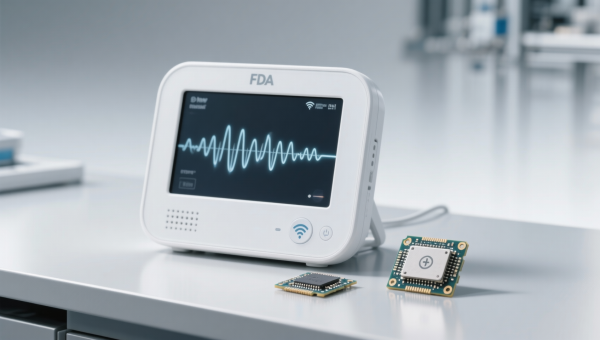
On May 3, 2026, the U.S. Food and Drug Administration (FDA) released the draft guidance Cybersecurity for Infant Monitoring Devices, proposing mandatory default disabling of remote access ports for all nursery monitors entering the U.S. market — including Wi-Fi- or Bluetooth-enabled smart cribs, video baby monitors, and respiratory sensing pads. This development directly affects manufacturers, exporters, and regulatory compliance teams in the infant care hardware and connected device sectors, as non-compliant firmware designs will block clearance via FDA 510(k) premarket notification.
Event Overview
The U.S. Food and Drug Administration (FDA) published the draft guidance Cybersecurity for Infant Monitoring Devices on May 3, 2026. The guidance is scheduled for formal implementation in Q3 2026. It applies to nursery furniture and monitoring devices regulated under FDA’s medical device framework — specifically products with wireless connectivity (Wi-Fi or Bluetooth), such as smart cribs, video baby monitors, and breathing motion detection pads. Key requirements include: (1) remote access ports must be disabled by default in shipped firmware; and (2) first-time activation of remote functionality must require multi-step physical confirmation — e.g., simultaneous press of a hardware button and explicit approval within a companion mobile app. Compliance is mandatory for FDA 510(k) clearance.
Which Subsectors Are Affected
Original Equipment Manufacturers (OEMs) and Contract Manufacturers
OEMs and contract manufacturers — particularly those based in China producing FDA-regulated nursery monitors — are directly affected because firmware architecture must be redesigned to meet the default-disabled port requirement. Impact manifests in engineering timelines (e.g., revalidation of boot sequences and secure onboarding flows), increased testing scope (e.g., penetration testing of local-only modes), and potential delays in 510(k) submission readiness.
Exporters and Regulatory Affairs Firms Supporting U.S. Market Entry
Exporters and third-party regulatory consultants handling FDA submissions face immediate procedural impact. Devices previously certified under legacy cybersecurity assumptions may no longer qualify for 510(k) without updated risk management documentation and verification evidence demonstrating default port disablement and physical+app dual authorization. Submission packages will require new firmware version logs, secure boot attestations, and user flow diagrams.
Component Suppliers (Wireless Module & MCU Vendors)
Suppliers of Wi-Fi/Bluetooth modules and microcontrollers used in infant monitors are indirectly affected: their reference designs and SDKs must support configurable port lockdown at factory reset state and enable hardware-triggered secure provisioning. OEMs may now request updated module certifications or firmware abstraction layers that isolate remote-access logic from core monitoring functions.
What Relevant Companies or Practitioners Should Focus On — and How to Respond Now
Monitor official FDA updates through the docket number and public comment deadline
The draft guidance is open for public comment until August 31, 2026. Stakeholders should track FDA’s official docket (FDA-2026-D-XXXXX) for revisions — especially clarifications on scope boundaries (e.g., whether non-medical-grade audio-only monitors fall under this rule) and acceptable alternatives to physical button + app dual authorization.
Prioritize firmware revision planning for Q2–Q3 2026 product releases
Manufacturers shipping new models to the U.S. after Q3 2026 must embed compliant firmware before final production runs. This includes updating bootloader logic, revising default configuration files, and integrating hardware-based attestation mechanisms. Engineering teams should initiate internal design reviews by June 2026 to align with Q3 implementation timing.
Distinguish between policy signal and enforceable requirement
This is a draft guidance, not a regulation. While FDA strongly encourages adherence, enforcement hinges on final issuance and integration into review checklists for 510(k) submissions. Companies should treat it as an operational signal — not yet a legal mandate — but prepare as if compliance will be required for all new submissions post-Q3 2026.
Update supply chain communication with module and OS platform vendors
OEMs should formally notify wireless module suppliers (e.g., Espressif, Nordic, Silicon Labs) and embedded OS providers (e.g., Mbed OS, Zephyr RTOS maintainers) about the need for configurable port disablement and hardware-triggered provisioning APIs. Early alignment helps avoid late-stage firmware rework.
Editorial Perspective / Industry Observation
Observably, this draft guidance signals FDA’s increasing emphasis on “secure-by-default” principles for consumer-facing connected devices falling under its jurisdiction — even when classification remains Class I (low-risk). Analysis shows the agency is treating remote attack surface reduction not as optional best practice, but as a baseline expectation for devices handling sensitive infant data or enabling remote caregiving functions. It is more accurately understood as a regulatory signal than an immediate enforcement action — but one with high likelihood of codification given consistent FDA cybersecurity posture across recent guidances (e.g., for infusion pumps and insulin delivery systems). The industry should monitor how FDA defines “remote access” in final language, as interpretation could extend implications beyond cloud-connected devices to local network exposure.
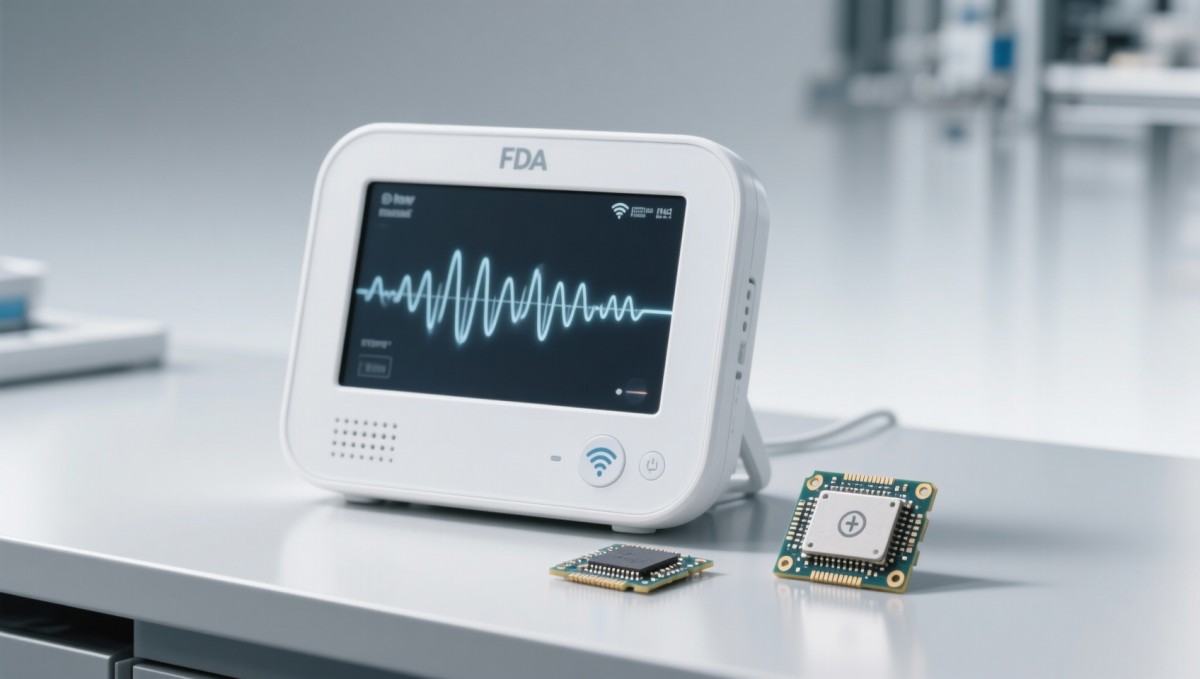
In summary, the FDA’s draft guidance represents a targeted shift in cybersecurity expectations for infant monitoring hardware — not a broad industry overhaul, but a concrete, actionable requirement affecting firmware design, regulatory strategy, and supply chain coordination. It is best understood not as a sudden compliance shock, but as the formalization of an emerging baseline standard for U.S.-bound connected nursery devices.
Source: U.S. Food and Drug Administration (FDA), Draft Guidance: Cybersecurity for Infant Monitoring Devices, issued May 3, 2026. Public comment period open until August 31, 2026. Docket number pending official publication. Note: Final scope, definitions, and enforcement criteria remain subject to change pending FDA review of public comments.
Related Intelligence
 Skincare OEMAug 16, 2026Amazon Enforces AI Human Metadata Rule for Beauty and Personal Care SellersAmazon now enforces AI human metadata rules for beauty sellers. Learn how to protect listings, traffic, and compliance in skincare, cosmetics, and beauty devices.
 Beauty DevicesAug 15, 2026China to Roll Out Nationwide Cross-Border Cash Pooling for MultinationalsChina to roll out nationwide cross-border cash pooling for multinationals from Sept. 14. Discover how this policy could improve treasury efficiency, liquidity management, and China-linked supply chains.
 Beauty DevicesAug 14, 2026China Imposes Temporary Export Ban on Helium, Affecting Cooling Supply ChainsChina's temporary helium export ban may disrupt cooling supply chains for beauty RF devices and laser systems. Learn what ODMs, buyers, and procurement teams should check now.
![]() Cosmetics & PkgAug 13, 2026PPWR becomes mandatory: Beauty and personal care packaging materials usher in new EPR and PFAS compliance requirementsPPWR takes effect for cosmetics packaging in the EU, bringing EPR registration and PFAS limits. Learn what brands, importers, and suppliers must do now.
Cosmetics & PkgAug 13, 2026PPWR becomes mandatory: Beauty and personal care packaging materials usher in new EPR and PFAS compliance requirementsPPWR takes effect for cosmetics packaging in the EU, bringing EPR registration and PFAS limits. Learn what brands, importers, and suppliers must do now. Cosmetics & PkgAug 12, 2026EU PPWR Now Enforced for Beauty Packaging ComplianceEU PPWR now enforced for beauty packaging compliance: learn how EPR, ERN, heavy metals and PFAS rules affect EU exports, customs clearance and platform sales.
 Cosmetics & PkgAug 11, 2026EU PPWR Rules Take Effect on Aug. 12 for Beauty PackagingEU PPWR rules for beauty packaging take effect on Aug. 12, 2026. Learn key compliance steps, EPR, labeling, PFAS limits, and how to avoid customs delays and fines.
 Smart Pet DevicesAug 10, 2026EU EPR Rules to Cover Smart Pet Devices on Aug. 15EU EPR Rules will cover smart pet devices from Aug. 15, 2026. Learn how smart collars, feeders, and monitoring devices can avoid delisting, customs delays, and compliance risks in the EU.
 Infant Feeding & CareAug 09, 2026CPSC Recalls Baby Sleep Sacks Over Undeclared TDCPPCPSC Recalls Baby Sleep Sacks Over Undeclared TDCPP: learn how this 2026 recall impacts CPC documents, third-party testing, and U.S. baby product compliance for exporters.
 Infant Feeding & CareAug 08, 2026ECHA Adds 5 SVHCs, Importer Notices Due From Oct 2026ECHA adds 5 SVHCs to the Candidate List, with importer notices due from October 2026. Learn how REACH affects exporters, supply chains, and documentation readiness.
 Baby Gear & StrollersAug 07, 2026CPSC Revises Crib Rail Standard for November 2026CPSC revises crib rail standard for November 2026, adding dynamic impact tests and mandatory third-party lab testing. Learn how the new rule affects U.S. market access, compliance, and shipments.
 Electronic & RC ToysAug 06, 2026EU to Require EN IEC 62115:2025 for Electronic ToysEU to Require EN IEC 62115:2025 for Electronic Toys from Oct 1, 2026. Learn scope, battery and AI safety updates, CE compliance risks, and how exporters can avoid customs delays.
 Baby Gear & StrollersAug 05, 2026US Stroller Stability Rule Takes Effect Aug. 15US Stroller Stability Rule Takes Effect Aug. 15: learn how new U.S. stroller compliance, ASTM F833-26a, and CPSC testing rules may affect imports, certification, and shipment readiness.
 Infant Feeding & CareAug 04, 2026ECHA Adds 5 SVHCs, Triggering Baby Care Export ReviewECHA adds 5 SVHCs, prompting an urgent baby care export review for EU-bound products. Learn the 0.1% threshold risks, compliance steps, and how to avoid customs delays and fines.












