Nursing Bras Private Label MOQ, Lead Time, and Margin Basics
For sourcing teams evaluating nursing bras private label opportunities, the real decision starts with MOQ, lead time, and margin structure. Understanding these basics helps buyers compare suppliers more accurately, reduce launch risk, and build a product line that meets both retail demand and profitability targets in competitive global markets.
Why are MOQ, lead time, and margin the first questions in nursing bras private label sourcing?
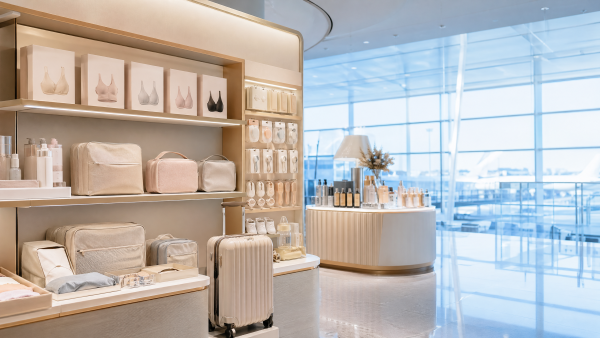
For business evaluators, nursing bras private label is not simply a product category decision. It is a forecasting, compliance, and replenishment decision that affects assortment planning across maternity retail, baby-focused e-commerce, cross-border marketplaces, and even travel retail channels such as airport family stores, destination maternity boutiques, or hotel gift shops serving new mothers. In practical sourcing work, these three variables—MOQ, lead time, and gross margin—usually determine whether a launch is commercially viable within the first 90 to 180 days.
MOQ matters because nursing bras often require size runs, fabric consistency, and packaging coordination. Unlike a one-size accessory, the product must support XS to XXL or similar ranges, and some buyers also need cup-based grading. That means a supplier offering a low total MOQ may still impose hidden minimums per color, per fabric, or per size ratio. For an evaluator, this directly affects inventory exposure, especially when entering a new market or testing a travel-oriented retail format with limited shelf space.
Lead time matters because maternity demand is less forgiving than many impulse categories. If a retailer misses a seasonal campaign, a baby fair, or a planned online promotion window, the lost revenue is rarely recovered in full. Standard development lead time can range from 7 to 21 days for samples, while bulk production often falls between 30 and 60 days depending on fabric sourcing, trim availability, and factory scheduling. When private label nursing bras are intended for multi-country distribution, extra buffer of 10 to 20 days may be needed for testing, labeling checks, and shipment coordination.
What makes this category more sensitive than basic apparel?
The product sits between intimate wear and functional maternity support. Buyers are not only selecting colorways and logo placement; they are assessing stretch recovery, clip durability, skin-contact comfort, leakage pad compatibility, and fit consistency after washing. In travel service environments, where shoppers often make fast decisions with limited fitting opportunities, product comfort and clear size communication become even more important.
Another reason the category draws attention is repeat-purchase potential. A successful nursing bras private label line can create follow-on demand for matching briefs, nursing pads, maternity sleep bras, and travel-ready postpartum kits. That raises the strategic value of the first sourcing decision. A weak supplier fit may not only reduce margin on one SKU, but also delay expansion into an entire maternity assortment.
For procurement teams, the early-stage question is simple: can the supplier support a test launch with manageable quantities, realistic delivery dates, and enough landed margin to justify marketing, returns, and channel fees? If the answer is unclear, the sourcing process should not move to scale discussions yet.
What MOQ range is realistic for nursing bras private label, and how should buyers read it?
In the market, a realistic MOQ for nursing bras private label often starts around 300 to 600 pieces per style for simpler programs, but many factories prefer 800 to 1,500 pieces when custom fabrics, dyeing, packaging, or size complexity are involved. Buyers should not evaluate MOQ as a single number in isolation. The meaningful question is whether that MOQ is total order quantity, per color quantity, or per style-color-size combination.
A supplier may advertise a 500-piece MOQ, yet internally require at least 150 pieces per color and a fixed size ratio such as S:M:L:XL = 1:2:2:1. If a buyer wants three colors, customized hangtags, and broad size coverage for an online travel retail audience, the effective opening order may quickly move above 900 units. This is why evaluation teams should request a full MOQ matrix rather than a headline MOQ figure.
For destination retail and travel-adjacent sales channels, lower opening inventory is often preferred because shelf testing happens in shorter cycles, sometimes 6 to 8 weeks. In such cases, buyers may consider neutral-color launches, limited style variation, or semi-custom packaging to reduce risk. This approach can preserve the private-label feel without forcing a high initial commitment.
Which MOQ questions should a sourcing team ask first?
The best MOQ discussion is structured. Buyers should ask whether the minimum applies to fabric stock, production line setup, logo printing, carton consolidation, or accessory sourcing. They should also ask if replenishment MOQ differs from first-order MOQ. In many cases, repeat orders can be 20% to 40% lower if materials are still available and packaging plates have already been approved.
- Is the MOQ calculated per style, per color, or per total PO?
- Are there separate minimums for custom dyeing, logo hardware, woven labels, or retail boxes?
- What size ratio is mandatory, and can the ratio be adjusted for local demand?
- Can the factory support test orders for one channel before wider roll-out?
- What is the MOQ for reorders within 60 or 90 days?
These questions matter because a buyer serving travel service channels may need tighter case pack planning, bilingual labeling, and faster replenishment than a pure online seller. A factory that is flexible on MOQ but rigid on carton quantities or insert printing may still be a poor fit operationally.
The table below helps business evaluators compare common MOQ structures seen in nursing bras private label projects.
The key takeaway is that MOQ should be translated into inventory risk, not just purchase quantity. For a buyer comparing two suppliers, the more useful metric is often “minimum cash exposure per launch” rather than the official MOQ printed on a quotation sheet.
How long does nursing bras private label usually take, from sampling to bulk delivery?
Lead time in nursing bras private label depends on whether the buyer uses an existing factory pattern or requests a new fit block. A basic private-label adaptation with stock fabric and standard trims may move from sample request to shipment in 45 to 75 days. A more customized program with fabric development, multiple fit rounds, and retail packaging approvals can take 75 to 120 days.
Business evaluators should separate lead time into four stages: design confirmation, sample development, bulk production, and logistics release. Factories may quote only sewing time, while the real project clock also includes artwork approval, fit comments, pre-production sample review, and booking delays. In travel service supply chains, where products may need to arrive ahead of peak holiday passenger traffic or destination shopping periods, missing one stage can shift the entire launch window.
A disciplined sourcing team should ask for milestone dates, not only a final ex-factory date. For example, first sample in 10 days, revised sample in 7 days, PP sample in 5 days, bulk production in 30 to 40 days, and booking plus transit in 15 to 35 days depending on destination. This level of detail is especially valuable when products are allocated across e-commerce and physical retail simultaneously.
What usually delays a project?
The most common delays are not always in sewing capacity. They often come from fabric shade approval, clip component replacement, size grading adjustments, barcode or multilingual packaging changes, and incomplete labeling files. If the buyer serves international travel customers, additional wording requirements for care labels, fiber content, or country-specific packaging may add 3 to 10 working days.
Typical timeline checkpoints
The following table provides a realistic planning framework rather than a fixed promise. Teams can use it to compare supplier discipline and identify where schedule compression is possible.
If a supplier claims unusually short delivery without explaining these checkpoints, evaluators should be careful. Fast quotes are useful only if they include pattern development assumptions, trim source status, and acceptable order complexity.
- Ask whether lead time is counted from deposit date or final sample approval date.
- Confirm if packaging artwork approval is on the critical path.
- Check whether fabric is in stock or made to order.
- Request a buffer of at least 7 to 14 days for first orders.
What margin should buyers expect from nursing bras private label?
Margin expectations vary by channel, positioning, and landed cost discipline. In many sourcing scenarios, buyers assess gross margin targets in bands such as 45% to 70%, but the right benchmark depends on whether the product will be sold through D2C, specialty maternity retail, marketplace platforms, subscription boxes, or travel retail. A nursing bra sold in a destination boutique may support a different markup than one sold online with aggressive discounting and higher return rates.
For nursing bras private label, margin analysis should begin with total landed cost, not FOB alone. Evaluators should include packaging, labeling, freight, import charges where relevant, quality inspection, platform commissions, markdown risk, and customer service costs. Because intimate and maternity categories can have return sensitivity linked to fit, a 5% to 15% returns assumption may materially change the real margin outlook.
Travel service-linked channels add another layer. Airport shops, resort stores, or premium family travel outlets often have higher occupancy or concession costs, but they may also justify premium packaging and urgent-need pricing. In those environments, margin planning should distinguish between base product margin and channel-specific contribution margin.
How should evaluators calculate a realistic target?
A practical method is to work backward from expected retail price and then stress-test the model under different sell-through scenarios. If the planned retail is positioned at mid-market, the buyer should model at least three cases: full-price sales, moderate promotion at 10% to 15%, and clearance exposure for slow sizes. That prevents overly optimistic assumptions during supplier selection.
The table below summarizes a margin planning view that procurement and commercial teams can use during supplier comparison.
This framework helps buyers see why the cheapest ex-factory quote does not always produce the best margin. A slightly higher unit cost from a supplier with better fit stability, lower defect risk, and clearer replenishment terms can outperform a lower-cost offer over a 6-month sales cycle.
How can buyers compare suppliers beyond price when reviewing nursing bras private label?
Price is only one part of supplier evaluation. For nursing bras private label, buyers should compare technical capability, communication quality, sampling discipline, material transparency, and quality control logic. A supplier with good pattern engineering and stable sourcing for clips, elastic, and lining can reduce post-launch issues that are expensive to fix later.
This matters even more if the product is sold through travel service-related retail touchpoints. Those channels often depend on strong first-impression presentation, compact inventory planning, and lower tolerance for stockouts. A supplier that misses a replenishment date by 2 weeks may disrupt not only sales, but also merchandising plans tied to passenger flows or seasonal destination traffic.
Evaluators should also look at how the supplier handles documentation. Clear tech packs, size specs, bill of materials, care label content, and barcode coordination reduce approval cycles. If a factory relies on verbal confirmation for critical details, the risk of mismatch rises significantly on first orders.
What does a strong supplier comparison checklist look like?
- Sampling accuracy: Did the first sample match the requested support level, closure style, and nursing access function?
- Size consistency: Can the factory explain grading rules across at least 4 to 6 size points?
- Material sourcing: Are fabric composition, stretch behavior, and color continuity clearly documented?
- Production planning: Is there a milestone schedule with approval gates and realistic bulk timing?
- Packaging support: Can the supplier adapt inserts, multilingual labels, and retail presentation for different channels?
- Reorder logic: Are lower MOQs or faster repeats possible within one season?
When suppliers score similarly on price, the deciding factors are often sample turnaround, fit communication, and issue resolution speed. For many business evaluators, a supplier’s ability to answer technical questions within 24 to 48 hours is a stronger predictor of smooth execution than a small unit cost advantage.
What are the most common mistakes in nursing bras private label evaluation?
One common mistake is treating all nursing bras as interchangeable. In reality, there are sleep-focused styles, seamless styles, lightly padded options, full-coverage support bras, and pump-compatible variants. If the sourcing brief is vague, quotations may appear comparable while referring to very different product standards. This creates confusion in both MOQ and margin discussions.
Another mistake is underestimating size architecture. Buyers sometimes focus on color and branding first, then discover too late that broad size coverage weakens cost efficiency or complicates stock planning. In categories with intimate fit sensitivity, reducing size complexity too aggressively may improve MOQ on paper but reduce conversion and increase returns after launch.
A third issue is overlooking channel reality. A line designed for online-only sales may not suit travel service retail where packaging clarity, compact assortment, and immediate purchase behavior are different. If the product will be sold in airport family retail, resort boutiques, or destination convenience formats, the assortment should favor reliable sizes, neutral colors, and fast decision-making cues.
How can teams avoid these errors?
Start with a written sourcing brief covering support level, target retail range, expected order quantity, size plan, color count, packaging type, and key market destinations. Then require every supplier to quote against the same brief. This immediately improves comparability and makes MOQ, lead time, and margin analysis more reliable.
It also helps to run a small pilot with one or two core styles before extending into a full family collection. A 60-day market test with disciplined sell-through review can reveal whether the issue is fit, packaging, pricing, or channel mismatch. That is far more useful than opening with too many SKUs and unclear replenishment logic.
Finally, do not separate commercial and technical review. The best nursing bras private label decisions are made when sourcing, merchandising, and quality teams review the same assumptions together. That reduces the chance of winning on price but losing on fit, timeline, or return performance.
What should buyers confirm before requesting quotes or samples?
Before moving forward, buyers should define the launch model. Is the project a test for e-commerce, a rollout for specialty maternity stores, or a curated line for travel retail and family-focused hospitality shops? The answer influences MOQ tolerance, packaging expectations, and margin targets. A supplier can quote more accurately when the intended channel and product role are clear.
At minimum, request quotations using a structured checklist. Include style references, intended fabric feel, desired support level, clip style, padding requirement, logo format, packaging requirement, target quantity, target delivery window, and destination market. If applicable, note whether the assortment must fit compact retail displays or multi-location travel service distribution with replenishment constraints.
Which pre-quote questions create better results?
- What is the practical MOQ after size breakdown, color count, and packaging are included?
- What lead time applies to first sample, fit revision, bulk production, and reorder separately?
- What assumptions are built into the quote regarding fabric stock, trims, and artwork approval?
- What packaging formats are available for online, shelf display, or travel retail presentation?
- What are the likely landed cost drivers that could affect final margin?
For teams that need a clear first step, the most efficient path is to compare 2 to 4 qualified suppliers against the same brief, the same timeline expectations, and the same target channel. That gives a more realistic view of nursing bras private label viability than collecting a large number of inconsistent quotations.
Why work with us?
Global Consumer Sourcing helps business evaluation teams cut through incomplete quotations and surface the supplier details that affect launch success. We focus on the questions that matter in real sourcing decisions: MOQ structure, sample readiness, delivery windows, packaging fit, channel suitability, and practical margin logic across maternity and baby-related product lines.
If you are assessing nursing bras private label opportunities, contact us to discuss parameter confirmation, supplier comparison, product selection logic, lead time planning, sample support, packaging direction, certification-related questions, and quotation alignment. A structured conversation at the start can save weeks of back-and-forth and help you make a more confident sourcing decision.
Related Intelligence
 STEM & Educational ToysOct 22, 2026Blokees Showcases Over 900 Products at the 2026 China International Toy FairBlokees showcases over 900 products at the 2026 China International Toy Fair. Explore Model Kits, BLOKEES WHEELS and key sourcing checks to guide your next purchase.
 Cosmetics & PkgOct 21, 2026BASF Plans Beauty Innovation Showcase at in-cosmetics Asia 2026Explore BASF’s planned beauty innovations at in-cosmetics Asia 2026 in Bangkok, with a focus on skin protection, repair and sustainable solutions for personal care formulators.
 Cosmetics & PkgOct 20, 2026Beauty Tops Amazon’s 2026 Prime Big Deal Days Shopping CategoriesBeauty tops Amazon’s 2026 Prime Big Deal Days at 32% of shoppers, according to Market Defense. Explore what the findings could mean for product selection, inventory and promotional planning.
 Infant Feeding & CareOct 14, 2026What Documents Are Required to Import Baby Formula?What import documents are needed for baby formula? Explore shipment paperwork, health certificates, and market-specific requirements to avoid costly delays and prepare for compliant imports.
 Infant Feeding & CareOct 14, 2026Which Baby Formula Packaging Formats Reduce Shipping Damage?Which baby formula packaging formats reduce shipping damage? Compare metal cans, rigid tubs, and supported pouches to choose better protection and reduce costly transit losses.
 Baby Gear & StrollersOct 14, 2026How Long Does Custom Diaper Bag Production Usually Take?How long does custom diaper bag production usually take? Plan for 30–60 days after sample approval. Discover key lead-time factors and practical tips to avoid delays and launch on schedule.
 Baby Gear & StrollersOct 14, 2026Which Diaper Bag Features Justify a Higher Wholesale Price?What diaper bag features justify a higher wholesale price? Discover durability, comfort, and easy-clean upgrades worth paying for—and source smarter with practical buyer tips.
 Infant Feeding & CareOct 14, 2026How Can Retailers Prevent Baby Clothing Color Bleeding Claims?How can retailers avoid color bleeding claims on baby clothing? Discover testing, supplier controls, and care-label strategies to reduce returns and protect customer trust.
 Infant Feeding & CareOct 14, 2026Which Baby Clothing Materials Are Easier to Source Compliantly?What materials make baby clothing easier to source compliantly? Compare cotton, blends, and certified options, with practical supplier checks to reduce risk and make smarter sourcing decisions.
 Baby Gear & StrollersOct 14, 2026Are Baby Carrier Buckle Failures a Common Reason for Returns?Are baby carrier buckle failures a common return issue? Explore defects, usability complaints, and safety checks to make informed sourcing decisions before your next order.
 Baby Gear & StrollersOct 14, 2026How Do You Compare Baby Carrier Suppliers on Safety and Cost?How do I compare baby carrier suppliers on safety and cost? Learn to verify safety evidence, assess factory controls, and compare total landed costs to make a confident sourcing decision.
 STEM & Educational ToysSep 20, 2026How Do I Verify Age Grading for Educational Toys?How do I verify educational toy age grading? Learn how to assess safety risks, test reports, packaging, and market compliance before buying or selling.
 Corporate & Seasonal GiftsSep 20, 2026Are Promotional Items Worth Ordering for Short Campaigns?Are promotional items worth ordering for short campaigns? Learn how pet brands can choose useful, compliant giveaways that drive measurable engagement, sales, and loyalty.