
How to Choose Titanium Camping Cookware for Weight and Durability
How to Choose Titanium Camping Cookware for Weight and Durability
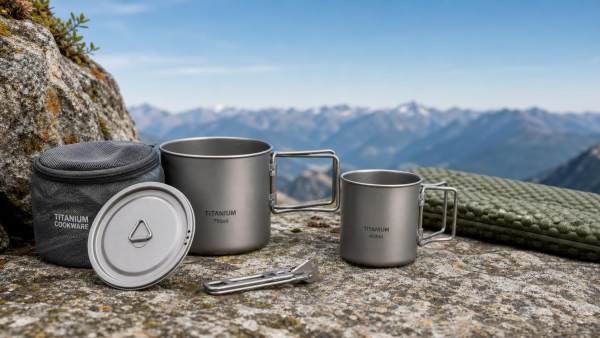
Choosing titanium camping cookware can make a big difference when every ounce and every mile counts.
For outdoor travelers who want reliable gear without extra bulk, titanium offers a smart balance of light weight, strength, and long-term performance.
This guide will help you compare key features, understand durability trade-offs, and find the right cookware for your camping style and travel needs.
Why Titanium Camping Cookware Stands Out
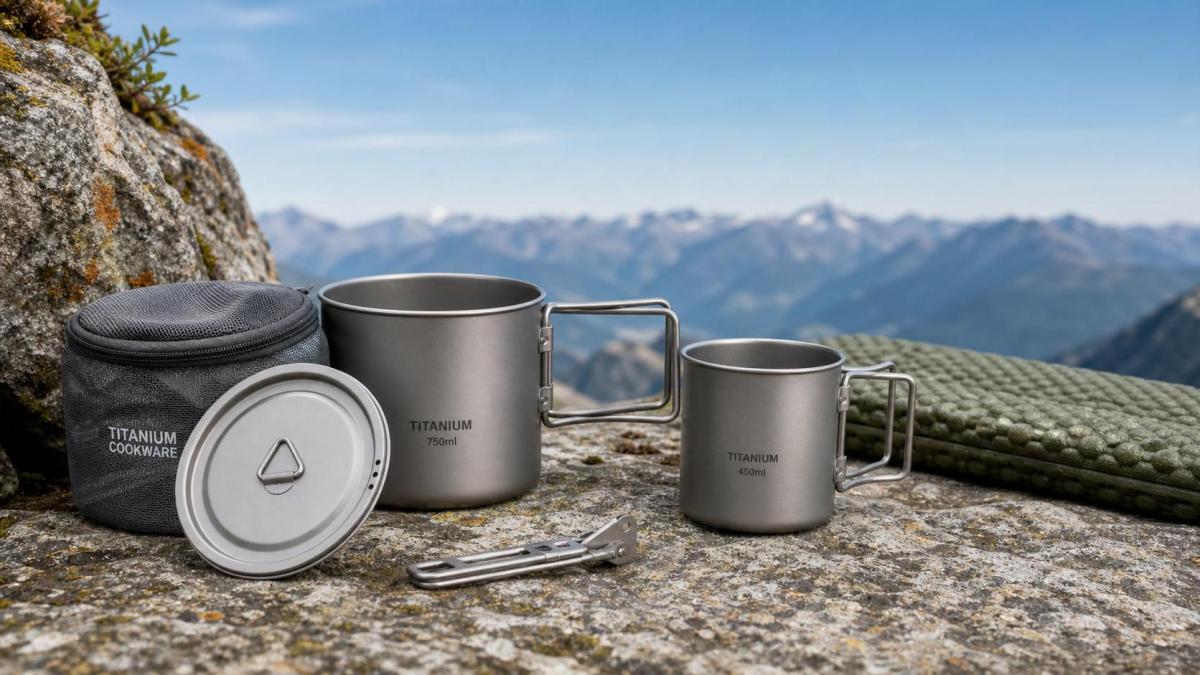
Titanium camping cookware has become a top choice for hikers, backpackers, and overland travelers who care about pack weight.
The biggest reason is simple.
Titanium is extremely light for its strength.
That matters on long walks, steep climbs, and trips where every item competes for space.
Compared with stainless steel, titanium cookware usually cuts noticeable weight.
Compared with aluminum, it often offers better long-term structural durability.
It also resists corrosion very well.
So if your gear sees rain, salt air, rough storage, or frequent use, titanium camping cookware can stay dependable for years.
Still, lightweight gear is not automatically the best fit.
The right choice depends on how you cook, how often you travel, and what trade-offs you accept.
Start with Your Camping Style
Before comparing pots and pans, think about how you actually camp.
This step saves money and avoids buying cookware that looks impressive but feels wrong in use.
Backpacking and Thru-Hiking
If low weight is your first priority, titanium camping cookware is usually an excellent match.
A small pot or mug can cover boiling water, coffee, dehydrated meals, and simple soups.
In this case, fast packing and reduced load matter more than gourmet cooking control.
Car Camping and Family Trips
If your gear stays close to the car, weight matters less.
You may still want titanium camping cookware for durability and rust resistance.
But cooking performance may push you toward larger sets or mixed materials.
Minimalist Travel and Van Life
For compact setups, titanium camping cookware works well because it nests neatly and handles frequent movement.
That makes it practical for travelers who want one reliable kit for many short trips.
Understand the Weight Advantage Clearly
The main reason people choose titanium camping cookware is weight savings.
But not every product gives the same benefit.
A heavy lid, folding handle, or bulky bowl can reduce the advantage.
When comparing options, check total kit weight, not just the pot body.
Also look at usable volume.
An ultralight 450ml mug may be perfect for solo boiling.
It will feel limiting if you need to cook pasta, rice, or shared meals.
A useful way to decide is to match capacity to trip use.
- 450ml to 650ml works for drinks and freeze-dried meals.
- 700ml to 900ml suits most solo backpacking cooking needs.
- 1000ml to 1300ml fits two people or more flexible meal plans.
- Large sets make sense when shared cooking matters more than grams.
What Durability Really Means in Titanium Camping Cookware
Durability is more than surviving one trip.
Good titanium camping cookware should handle repeated heating, packing, washing, and accidental knocks.
Titanium performs well here, but there are still differences between models.
Wall Thickness Matters
Very thin cookware saves weight, but it can dent more easily.
That does not always make it bad.
It just means it suits careful packers better than rough users.
Handle Design Counts
Folding handles are convenient, but weak hinges can become the first failure point.
Look for secure rivets, smooth movement, and heat-resistant grips where possible.
Lid Fit and Rim Strength
A warped lid reduces efficiency, especially in windy conditions.
A stronger rim helps the pot hold shape after long use inside crowded packs.
From a decision point of view, durable titanium camping cookware should feel light, not fragile.
Know the Main Trade-Off: Heat Control
This is where many buyers hesitate.
Titanium camping cookware is excellent for boiling water.
It is less forgiving for delicate cooking.
Because titanium transfers heat differently, food can develop hot spots and burn faster.
That means your cooking habits should guide your purchase.
- If you mostly boil water, titanium camping cookware is a strong choice.
- If you simmer sauces, fry eggs, or cook grains often, test shape and base width carefully.
- If you want versatile camp cooking, consider pairing titanium with a separate pan in another material.
This is not a flaw so much as a design reality.
The lighter the cookware, the more technique often matters.
Features Worth Checking Before You Buy
A good buying decision usually comes down to small details.
These features have the biggest impact on real use.
Graduation Marks
Internal measurement lines help with trail meals and fuel efficiency.
Wide Base Shape
A wider base improves stability and can make heating more even.
Nesting Design
Some titanium camping cookware holds a stove, fuel canister, or utensils inside.
That saves space and keeps your cooking kit organized.
Lid Vent or Strainer Holes
These add convenience if you cook noodles, grains, or pour hot water often.
Surface Finish
A smoother interior is usually easier to clean, especially after sticky meals.
Quick Comparison Table for Smarter Decisions
Common Buying Mistakes to Avoid
Even good gear can disappoint when the fit is wrong.
- Choosing the lightest model without checking pot size.
- Expecting titanium camping cookware to behave like home cookware.
- Ignoring handle comfort when cooking with gloves or cold hands.
- Buying a full set when one pot meets most needs.
- Paying for extras that add weight but not real value.
A more practical approach is to define your most common trip first.
Then choose titanium camping cookware around that use case.
How to Make the Final Choice
If your main goal is fast, efficient, lightweight travel, titanium camping cookware is often the smartest option.
If your meals are simple, the value becomes even clearer.
Choose a size that matches your real portion needs.
Check handles, lid fit, and nesting design before focusing on looks.
Most importantly, be honest about how you cook outdoors.
That is the easiest way to decide whether titanium camping cookware gives you the right mix of weight savings and durability.
When the match is right, it becomes one of the most useful pieces in your travel kit.
Related Intelligence
 Skincare OEMAug 16, 2026Amazon Enforces AI Human Metadata Rule for Beauty and Personal Care SellersAmazon now enforces AI human metadata rules for beauty sellers. Learn how to protect listings, traffic, and compliance in skincare, cosmetics, and beauty devices.
 Beauty DevicesAug 15, 2026China to Roll Out Nationwide Cross-Border Cash Pooling for MultinationalsChina to roll out nationwide cross-border cash pooling for multinationals from Sept. 14. Discover how this policy could improve treasury efficiency, liquidity management, and China-linked supply chains.
 Beauty DevicesAug 14, 2026China Imposes Temporary Export Ban on Helium, Affecting Cooling Supply ChainsChina's temporary helium export ban may disrupt cooling supply chains for beauty RF devices and laser systems. Learn what ODMs, buyers, and procurement teams should check now.
![]() Cosmetics & PkgAug 13, 2026PPWR becomes mandatory: Beauty and personal care packaging materials usher in new EPR and PFAS compliance requirementsPPWR takes effect for cosmetics packaging in the EU, bringing EPR registration and PFAS limits. Learn what brands, importers, and suppliers must do now.
Cosmetics & PkgAug 13, 2026PPWR becomes mandatory: Beauty and personal care packaging materials usher in new EPR and PFAS compliance requirementsPPWR takes effect for cosmetics packaging in the EU, bringing EPR registration and PFAS limits. Learn what brands, importers, and suppliers must do now. Cosmetics & PkgAug 12, 2026EU PPWR Now Enforced for Beauty Packaging ComplianceEU PPWR now enforced for beauty packaging compliance: learn how EPR, ERN, heavy metals and PFAS rules affect EU exports, customs clearance and platform sales.
 Cosmetics & PkgAug 11, 2026EU PPWR Rules Take Effect on Aug. 12 for Beauty PackagingEU PPWR rules for beauty packaging take effect on Aug. 12, 2026. Learn key compliance steps, EPR, labeling, PFAS limits, and how to avoid customs delays and fines.
 Smart Pet DevicesAug 10, 2026EU EPR Rules to Cover Smart Pet Devices on Aug. 15EU EPR Rules will cover smart pet devices from Aug. 15, 2026. Learn how smart collars, feeders, and monitoring devices can avoid delisting, customs delays, and compliance risks in the EU.
 Infant Feeding & CareAug 09, 2026CPSC Recalls Baby Sleep Sacks Over Undeclared TDCPPCPSC Recalls Baby Sleep Sacks Over Undeclared TDCPP: learn how this 2026 recall impacts CPC documents, third-party testing, and U.S. baby product compliance for exporters.
 Infant Feeding & CareAug 08, 2026ECHA Adds 5 SVHCs, Importer Notices Due From Oct 2026ECHA adds 5 SVHCs to the Candidate List, with importer notices due from October 2026. Learn how REACH affects exporters, supply chains, and documentation readiness.
 Baby Gear & StrollersAug 07, 2026CPSC Revises Crib Rail Standard for November 2026CPSC revises crib rail standard for November 2026, adding dynamic impact tests and mandatory third-party lab testing. Learn how the new rule affects U.S. market access, compliance, and shipments.
 Electronic & RC ToysAug 06, 2026EU to Require EN IEC 62115:2025 for Electronic ToysEU to Require EN IEC 62115:2025 for Electronic Toys from Oct 1, 2026. Learn scope, battery and AI safety updates, CE compliance risks, and how exporters can avoid customs delays.
 Baby Gear & StrollersAug 05, 2026US Stroller Stability Rule Takes Effect Aug. 15US Stroller Stability Rule Takes Effect Aug. 15: learn how new U.S. stroller compliance, ASTM F833-26a, and CPSC testing rules may affect imports, certification, and shipment readiness.
 Infant Feeding & CareAug 04, 2026ECHA Adds 5 SVHCs, Triggering Baby Care Export ReviewECHA adds 5 SVHCs, prompting an urgent baby care export review for EU-bound products. Learn the 0.1% threshold risks, compliance steps, and how to avoid customs delays and fines.












