
RCEP Vietnam Zero Tariff for Chinese Fitness Equipment
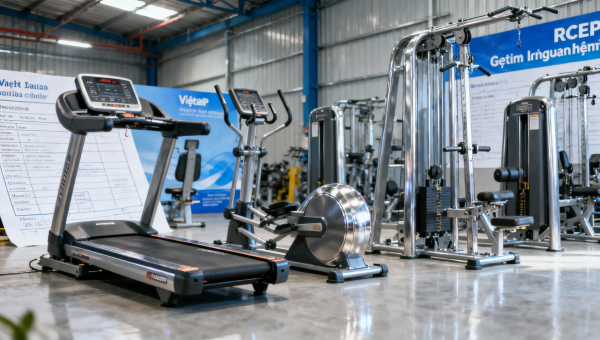
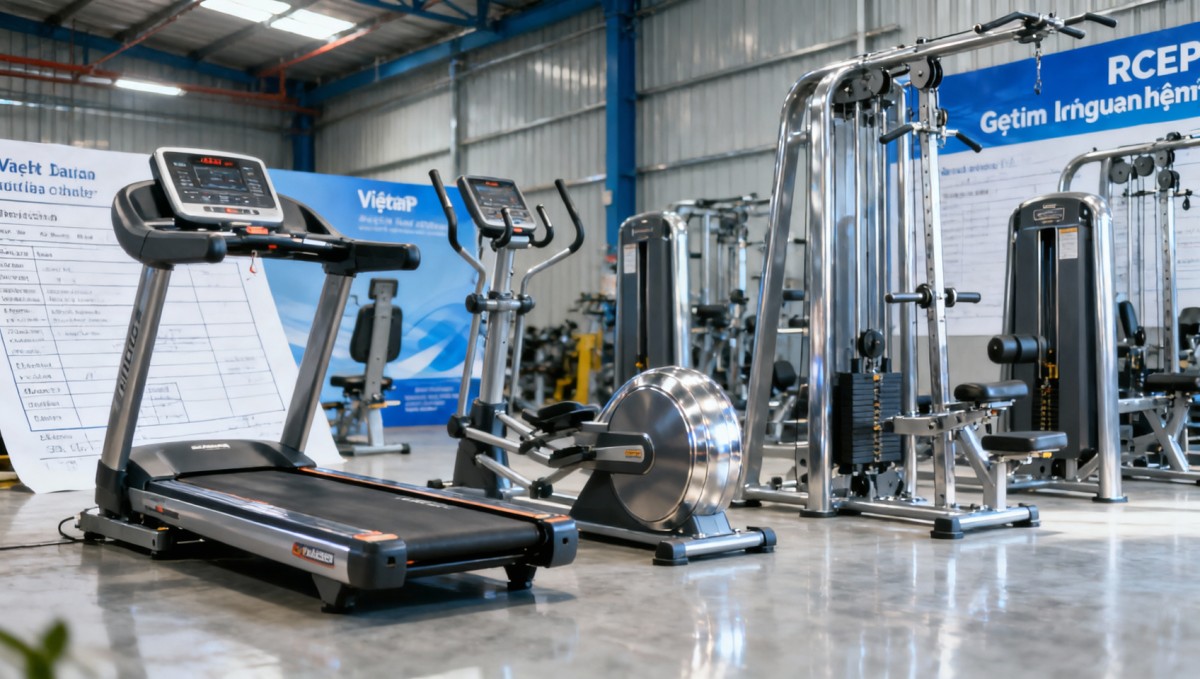
Effective May 1, 2026, Chinese-made fitness equipment qualifying under RCEP rules now enters Vietnam duty-free — but only if accompanied by a full ISO 20957-1:2026 test report issued by a CNAS-accredited laboratory. This development directly affects manufacturers, exporters, and compliance service providers in the global fitness equipment supply chain.
Event Overview
On May 4, 2026, the ASEAN Secretariat of the Regional Comprehensive Economic Partnership (RCEP) issued an official implementation notice confirming that, as of May 1, 2026, fitness equipment (including commercial and domestic treadmills, strength racks, elliptical trainers, etc.) produced in China and meeting RCEP origin criteria are eligible for zero tariff treatment upon import into Vietnam. However, the notice explicitly requires that each shipment must be accompanied by a complete test report based on ISO 20957-1:2026 (Safety requirements for fixed training equipment), issued by a laboratory accredited by the China National Accreditation Service for Conformity Assessment (CNAS). Shipments lacking such a report will be denied RCEP preferential tariff treatment by Vietnamese customs.
Which Subsectors Are Affected
Direct Exporters & Trading Companies: These entities face immediate operational impact because tariff eligibility is now conditional on documentation compliance — not just origin certification. A missing or non-conforming test report invalidates the RCEP benefit, effectively reinstating Vietnam’s MFN tariff rate (typically 5–15% depending on HS code) and potentially triggering customs delays or rejections.
Manufacturers & OEM/ODM Producers: They bear upstream responsibility for product safety testing. Since ISO 20957-1:2026 supersedes earlier editions (e.g., ISO 20957-1:2013), existing test reports — even if CNAS-issued — may no longer satisfy the requirement unless they explicitly reference and comply with the 2026 edition’s updated mechanical, stability, and labeling provisions.
Supply Chain & Logistics Service Providers: Freight forwarders and customs brokers must now verify the presence and validity of the ISO 20957-1:2026 report prior to filing. Their documentation review workflows require updating to include lab accreditation status checks (via CNAS public database) and version-specific clause validation.
Compliance & Testing Support Providers: Laboratories, certification bodies, and technical consultants must confirm whether their current ISO 20957-1:2026 testing scope is formally recognized by CNAS. Non-accredited labs cannot issue valid reports for this purpose — outsourcing to unaccredited third parties carries direct commercial risk.
What Relevant Enterprises or Practitioners Should Focus On Now
Verify CNAS Lab Accreditation Status for ISO 20957-1:2026
Not all CNAS-accredited labs hold authorization for the 2026 edition. Exporters must cross-check the lab’s current CNAS scope certificate (available at cnas.org.cn) to confirm explicit inclusion of ISO 20957-1:2026 — not just “ISO 20957” generically.
Confirm Product-Specific Test Coverage Against ISO 20957-1:2026 Clauses
The 2026 edition introduces new requirements for dynamic load testing, emergency stop functionality (for motorized units), and revised static stability thresholds. Reports must cover all applicable clauses for the specific equipment type — partial or legacy-version testing is insufficient.
Update Internal Documentation Workflows Ahead of Shipment
Export documentation packages must now systematically include: (1) RCEP Certificate of Origin Form AK, (2) full ISO 20957-1:2026 test report with CNAS logo and accreditation number, and (3) a signed declaration confirming test sample traceability to the exported batch.
Monitor for Potential Interpretive Guidance from Vietnamese Customs
While the ASEAN Secretariat issued the rule, its enforcement interpretation rests with Vietnam’s General Department of Vietnam Customs. No official guidance on acceptable report formats or transitional arrangements has been published as of May 2026 — making early engagement with local customs brokers advisable.
Editorial Perspective / Industry Observation
Observably, this update reflects a tightening of RCEP’s conformity assessment layer — moving beyond origin verification toward harmonized technical compliance. It signals that RCEP’s trade facilitation benefits are increasingly contingent on demonstrable alignment with updated international standards, not just regional tariff schedules. Analysis shows this is less a one-off adjustment and more an indicator of broader ASEAN regulatory convergence, especially in consumer safety-critical categories. From an industry perspective, it underscores that RCEP implementation is shifting from paperwork-based eligibility to evidence-based compliance — where testing infrastructure, standard awareness, and documentation rigor now define competitive advantage.
Concluding, this measure does not alter Vietnam’s market access framework in principle, but recalibrates the threshold for accessing its most favorable tariff terms. It is best understood not as a barrier, but as a formalized quality gate — one that rewards preparedness in technical compliance and penalizes procedural oversight. Current readiness hinges less on strategic planning and more on precise, version-aware execution across testing, documentation, and customs coordination.
Source: ASEAN Secretariat, RCEP Implementation Notice (Ref: RCEP/ASEC/NOT/2026/05), issued May 4, 2026. Note: Vietnamese customs’ operational guidance on report acceptance remains pending and requires ongoing observation.
Related Intelligence
 Skincare OEMAug 16, 2026Amazon Enforces AI Human Metadata Rule for Beauty and Personal Care SellersAmazon now enforces AI human metadata rules for beauty sellers. Learn how to protect listings, traffic, and compliance in skincare, cosmetics, and beauty devices.
 Beauty DevicesAug 15, 2026China to Roll Out Nationwide Cross-Border Cash Pooling for MultinationalsChina to roll out nationwide cross-border cash pooling for multinationals from Sept. 14. Discover how this policy could improve treasury efficiency, liquidity management, and China-linked supply chains.
 Beauty DevicesAug 14, 2026China Imposes Temporary Export Ban on Helium, Affecting Cooling Supply ChainsChina's temporary helium export ban may disrupt cooling supply chains for beauty RF devices and laser systems. Learn what ODMs, buyers, and procurement teams should check now.
![]() Cosmetics & PkgAug 13, 2026PPWR becomes mandatory: Beauty and personal care packaging materials usher in new EPR and PFAS compliance requirementsPPWR takes effect for cosmetics packaging in the EU, bringing EPR registration and PFAS limits. Learn what brands, importers, and suppliers must do now.
Cosmetics & PkgAug 13, 2026PPWR becomes mandatory: Beauty and personal care packaging materials usher in new EPR and PFAS compliance requirementsPPWR takes effect for cosmetics packaging in the EU, bringing EPR registration and PFAS limits. Learn what brands, importers, and suppliers must do now. Cosmetics & PkgAug 12, 2026EU PPWR Now Enforced for Beauty Packaging ComplianceEU PPWR now enforced for beauty packaging compliance: learn how EPR, ERN, heavy metals and PFAS rules affect EU exports, customs clearance and platform sales.
 Cosmetics & PkgAug 11, 2026EU PPWR Rules Take Effect on Aug. 12 for Beauty PackagingEU PPWR rules for beauty packaging take effect on Aug. 12, 2026. Learn key compliance steps, EPR, labeling, PFAS limits, and how to avoid customs delays and fines.
 Smart Pet DevicesAug 10, 2026EU EPR Rules to Cover Smart Pet Devices on Aug. 15EU EPR Rules will cover smart pet devices from Aug. 15, 2026. Learn how smart collars, feeders, and monitoring devices can avoid delisting, customs delays, and compliance risks in the EU.
 Infant Feeding & CareAug 09, 2026CPSC Recalls Baby Sleep Sacks Over Undeclared TDCPPCPSC Recalls Baby Sleep Sacks Over Undeclared TDCPP: learn how this 2026 recall impacts CPC documents, third-party testing, and U.S. baby product compliance for exporters.
 Infant Feeding & CareAug 08, 2026ECHA Adds 5 SVHCs, Importer Notices Due From Oct 2026ECHA adds 5 SVHCs to the Candidate List, with importer notices due from October 2026. Learn how REACH affects exporters, supply chains, and documentation readiness.
 Baby Gear & StrollersAug 07, 2026CPSC Revises Crib Rail Standard for November 2026CPSC revises crib rail standard for November 2026, adding dynamic impact tests and mandatory third-party lab testing. Learn how the new rule affects U.S. market access, compliance, and shipments.
 Electronic & RC ToysAug 06, 2026EU to Require EN IEC 62115:2025 for Electronic ToysEU to Require EN IEC 62115:2025 for Electronic Toys from Oct 1, 2026. Learn scope, battery and AI safety updates, CE compliance risks, and how exporters can avoid customs delays.
 Baby Gear & StrollersAug 05, 2026US Stroller Stability Rule Takes Effect Aug. 15US Stroller Stability Rule Takes Effect Aug. 15: learn how new U.S. stroller compliance, ASTM F833-26a, and CPSC testing rules may affect imports, certification, and shipment readiness.
 Infant Feeding & CareAug 04, 2026ECHA Adds 5 SVHCs, Triggering Baby Care Export ReviewECHA adds 5 SVHCs, prompting an urgent baby care export review for EU-bound products. Learn the 0.1% threshold risks, compliance steps, and how to avoid customs delays and fines.












