WeChat Pay Cross-Border B2B QR Code Integration Live in 5 Countries
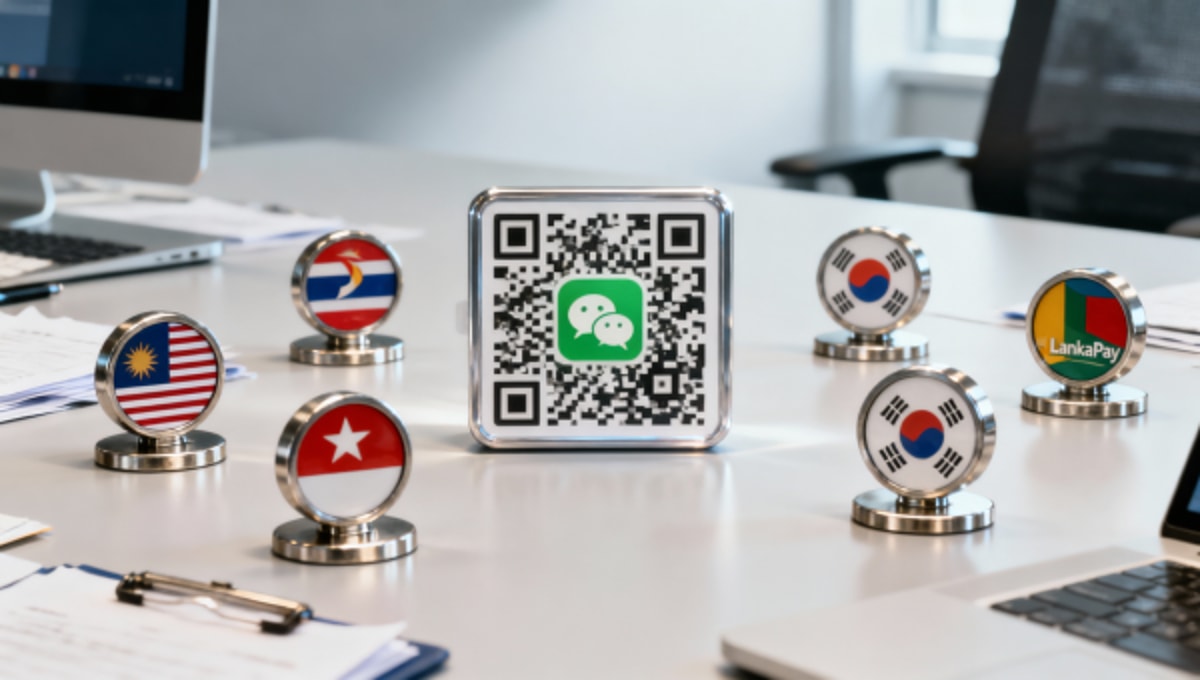
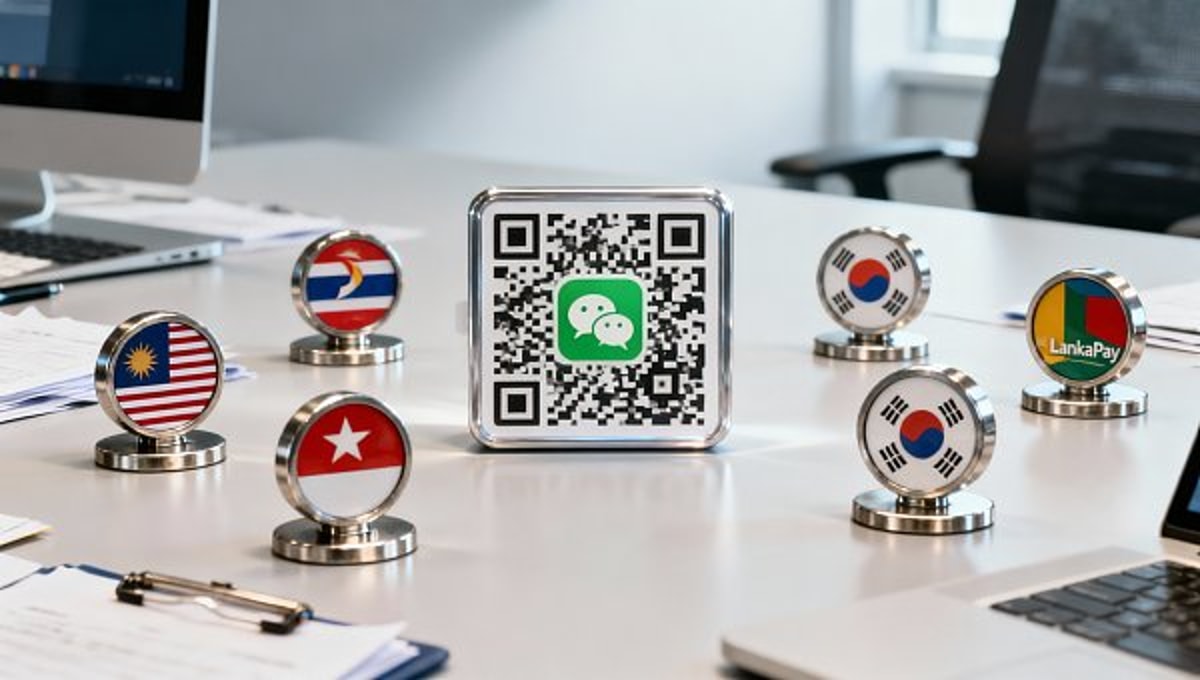
On April 28, 2026, WeChat Pay announced interoperability with local payment systems in South Korea, Sri Lanka, Thailand, Malaysia, and Singapore—including PromptPay, DuitNow, and PayNow. This enables B2B buyers across Southeast Asia and beyond to scan QR codes using their domestic e-wallets, pay in local currency, and settle directly in RMB with Chinese suppliers. The move supports single-transaction limits up to USD 500,000 and funds settlement within two hours. Direct trade enterprises, raw material importers, contract manufacturers, cross-border distributors, and supply chain service providers—particularly those active in ASEAN-China trade corridors—should assess implications for pricing, settlement timing, and documentation workflows.
Event Overview
On April 28, 2026, WeChat Pay confirmed the technical and operational launch of QR code-based cross-border B2B payments with five national payment infrastructures: Korea’s KFTC system, Sri Lanka’s LankaPay, Thailand’s PromptPay, Malaysia’s DuitNow, and Singapore’s PayNow. As of that date, eligible overseas business buyers can initiate RMB-denominated payments to registered Chinese suppliers by scanning a WeChat Pay QR code via their local wallet apps. Settlement occurs in real time with automatic FX conversion at point of payment; the maximum per-transaction amount is USD 500,000, and到账 (funds availability) is guaranteed within two hours post-scan.
Industries Affected
Direct Exporting Enterprises
Chinese manufacturers and trading companies exporting to the five countries now face reduced reliance on traditional bank wires or third-party escrow platforms. Impact centers on faster working capital turnover, lower FX risk exposure due to immediate RMB conversion, and simplified reconciliation where payments map directly to invoice numbers embedded in QR metadata.
Raw Material Importers (in Target Countries)
B2B buyers in Thailand, Malaysia, Singapore, etc., sourcing components or semi-finished goods from China can now execute payments without pre-funding foreign currency accounts or navigating SWIFT delays. The primary impact lies in procurement cycle compression—especially for just-in-time orders—and reduced administrative overhead tied to multi-step remittance approvals.
Contract Manufacturing & OEM Firms
Firms operating under OEM/ODM models—where Chinese factories produce for overseas brands—may see improved cash flow predictability. Since payments are initiated and settled in near real time, order confirmation timelines and production scheduling can be more tightly synchronized with buyer-side procurement calendars.
Cross-Border Distribution & Channel Partners
Regional distributors purchasing inventory from China for resale across ASEAN markets benefit from streamlined settlement, especially when managing multi-currency balance sheets. The ability to pay in local currency while settling in RMB reduces intra-group FX hedging needs and simplifies intercompany accounting for regional HQs.
Supply Chain Service Providers
Third-party logistics firms, customs brokers, and trade finance platforms integrating with WeChat Pay’s B2B API may experience increased demand for bundled services—e.g., QR-linked shipment tracking or automated duty calculation triggers. However, no public documentation confirms API availability beyond the core payment flow.
What Enterprises and Practitioners Should Monitor and Do Now
Track official eligibility criteria and onboarding requirements
WeChat Pay has not published detailed merchant qualification standards (e.g., minimum export volume, required business registration documents, or KYB verification thresholds). Enterprises should monitor WeChat Pay’s official B2B portal and partner banks for updates before initiating integration planning.
Assess readiness for RMB-denominated invoicing and reconciliation
The system requires invoices issued in RMB and linked to QR codes. Companies currently invoicing in USD or local currencies must evaluate ERP or accounting system compatibility, tax reporting alignment (e.g., VAT/GST treatment of FX conversion), and buyer communication protocols for currency standardization.
Distinguish between policy announcement and live operational coverage
Interoperability is confirmed for the five named countries—but coverage is not necessarily universal across all local wallet providers or bank partners within each jurisdiction. For example, DuitNow participation may initially extend only to select Malaysian banks. Verification with local financial institutions remains necessary before commercial deployment.
Prepare supplier-buyer alignment on payment terms and dispute resolution
Since transactions settle within two hours, traditional grace periods for payment verification or chargeback windows no longer apply. Businesses should jointly define acceptance criteria (e.g., delivery confirmation triggers), update terms and conditions, and clarify recourse mechanisms for failed scans or mismatched invoice references.
Editorial Perspective / Industry Observation
Observably, this rollout represents an infrastructure-level upgrade—not merely a new payment channel. It shifts settlement from a multi-day, bank-mediated process to a near-instant, wallet-to-wallet execution layer anchored in RMB. Analysis shows it functions less as a standalone solution and more as a complementary rail alongside existing cross-border systems like CIPS or SWIFT GPI. From an industry perspective, its significance lies in signaling institutional validation of QR-based B2B flows in regulated markets—a development previously limited to domestic use cases. Current adoption remains dependent on bilateral regulatory approvals and local wallet provider participation, meaning scalability beyond the initial five countries will likely follow phased, jurisdiction-specific timelines rather than global rollout.
Consequently, this initiative is best understood not as an immediate replacement for legacy channels, but as an early-stage operational option for high-frequency, mid-value B2B transactions where speed and currency certainty outweigh cost sensitivity.
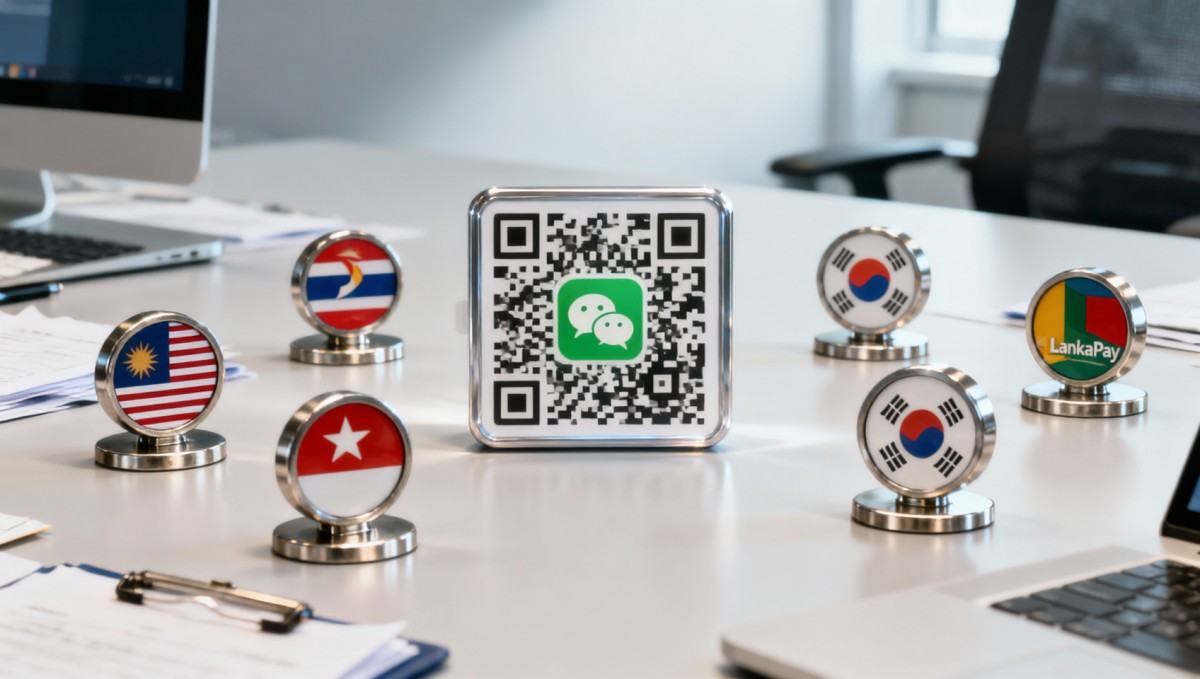
Conclusion: The WeChat Pay cross-border QR integration marks a tangible step toward digitized, RMB-centric B2B settlement in key Asian markets. Its practical value emerges most clearly for businesses with established trade relationships across the five participating countries—and whose operations prioritize speed, transparency, and RMB liquidity over lowest-cost routing. At present, it should be interpreted as an emerging capability requiring careful scoping, not a wholesale shift in payment architecture.
Information Sources: Official WeChat Pay B2B announcement (April 28, 2026); public statements from Bank of Thailand (PromptPay), Central Bank of Malaysia (DuitNow), Monetary Authority of Singapore (PayNow), Bank of Korea (KFTC), and Central Bank of Sri Lanka (LankaPay). Ongoing monitoring is recommended for country-specific implementation scope, merchant onboarding guidelines, and potential expansion to additional jurisdictions.
Related Intelligence
 默认分类May 02, 2026WeChat Pay Cross-Border B2B QR Code Integration Live in 5 CountriesWeChat Pay Cross-Border B2B QR Code Integration now live in 5 countries—fast, RMB-settled payments via local e-wallets. Discover how it transforms ASEAN-China trade.
 Electronic & RC ToysMay 02, 2026RC Toy Orders Shift to South China Cluster, Lead Time Cuts to 6 WeeksRC toy orders are shifting to South China’s Dongguan–Shenzhen–Zhongshan cluster, cutting lead times to just 6 weeks—key insight for importers, suppliers & manufacturers.
 Skincare OEMMay 02, 2026FDA Adds New INCI Codes for Plant Stem Cell ExtractsFDA Adds New INCI Codes for Plant Stem Cell Extracts—get compliant now! Learn key requirements for apple, grape & ginseng extracts and avoid shipment rejection.
 Cosmetics & PkgMay 02, 2026SASO Updates Cosmetics Packaging Rules for Plant-Based ActivesSASO updates cosmetics packaging rules for plant-based actives: New EN 13130 & ISO 11664-4 testing required by Aug 1, 2026. Act now!
 Fitness EquipmentMay 02, 2026THE Alliance Cuts Shanghai–LA Capacity; Fitness Equipment Lead Times Extend to 8–10 WeeksFitness equipment lead times now 8–10 weeks due to THE Alliance’s Shanghai–LA capacity cuts—urgently assess procurement, logistics & contingency plans.
 Smart Pet DevicesMay 02, 2026Japan METI Adds Chinese Smart Litter Boxes to Priority Review ListJapan METI adds Chinese smart litter boxes to priority review—fast-track PSE certification in 7 days. Key for exporters, OEMs & compliance providers.
 Infant Feeding & CareMay 02, 2026RCEP ASEAN Fast Track for Infant Feeding Products LaunchedRCEP ASEAN Fast Track now accelerates infant feeding product clearance for NMPA Class II–certified exporters—cut customs time to 5 days in Singapore & Thailand.
 Corporate & Seasonal GiftsMay 02, 2026Germany UBA Launches Carbon Label Pilot for Corporate GiftsCarbon label pilot launched by Germany’s UBA for corporate gifts—key for printing, ink suppliers & ESG procurement teams. Act now to comply.
 Camping & WaterMay 02, 2026Vietnam Suspends Camping & Water Import Licenses, IP6X+Salt Spray RequiredVietnam suspends Camping & Water import licenses: IP6X dustproof + 96h salt spray testing now mandatory for inflatable pumps & boats.
 STEM & Educational ToysMay 02, 2026CPSC Tightens Battery Compartment Standards for STEM ToysCPSC Tightens Battery Compartment Standards for STEM Toys: New ASTM F963-26 Annex D2 rules take effect July 1, 2026—ensure compliance now to avoid shipment delays and recalls.
 Beauty DevicesMay 01, 20262026 Foshan Tanzhou Auto Industry Expo Spring Edition2026 Foshan Tanzhou Auto Industry Expo Spring Edition features the debut 'Beauty Devices & Smart Cabin' zone—driving cross-industry innovation and global sourcing opportunities.
 Electronic & RC ToysMay 01, 2026RC Toy Orders Shift to South China, Lead Time Cuts to 6 WeeksRC toy orders shift to South China with 6-week lead times—key for importers, OEMs & logistics firms. Discover ICTA-QMS certified factories in Shenzhen/Dongguan now driving speed and reliability.
 STEM & Educational ToysMay 01, 2026CPSC Tightens Battery Compartment Standards for STEM ToysCPSC Tightens Battery Compartment Standards for STEM Toys: New 30 N bite-force test mandatory for U.S. market access starting July 1, 2026—act now to avoid shipment delays.