SASO Updates Cosmetics Packaging Rules for Plant-Based Actives
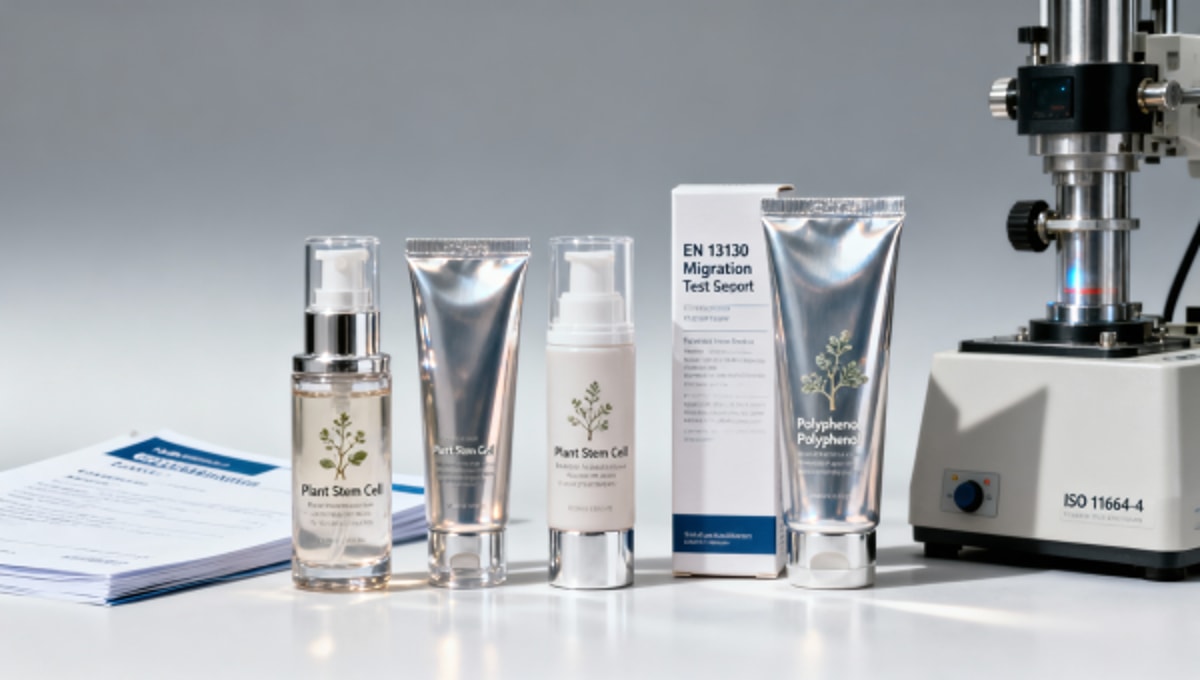
Saudi Arabia’s Standards, Metrology and Quality Organization (SASO) issued an amendment to its cosmetics packaging standard on April 24, 2026 — requiring new safety validation for packaging containing plant-derived active ingredients. Exporters, manufacturers, and suppliers of cosmetic packaging targeting the Saudi market — especially those handling vacuum pump bottles and aluminum-plastic laminated tubes — should closely monitor this development due to its direct impact on compliance timelines and testing requirements.
Event Overview
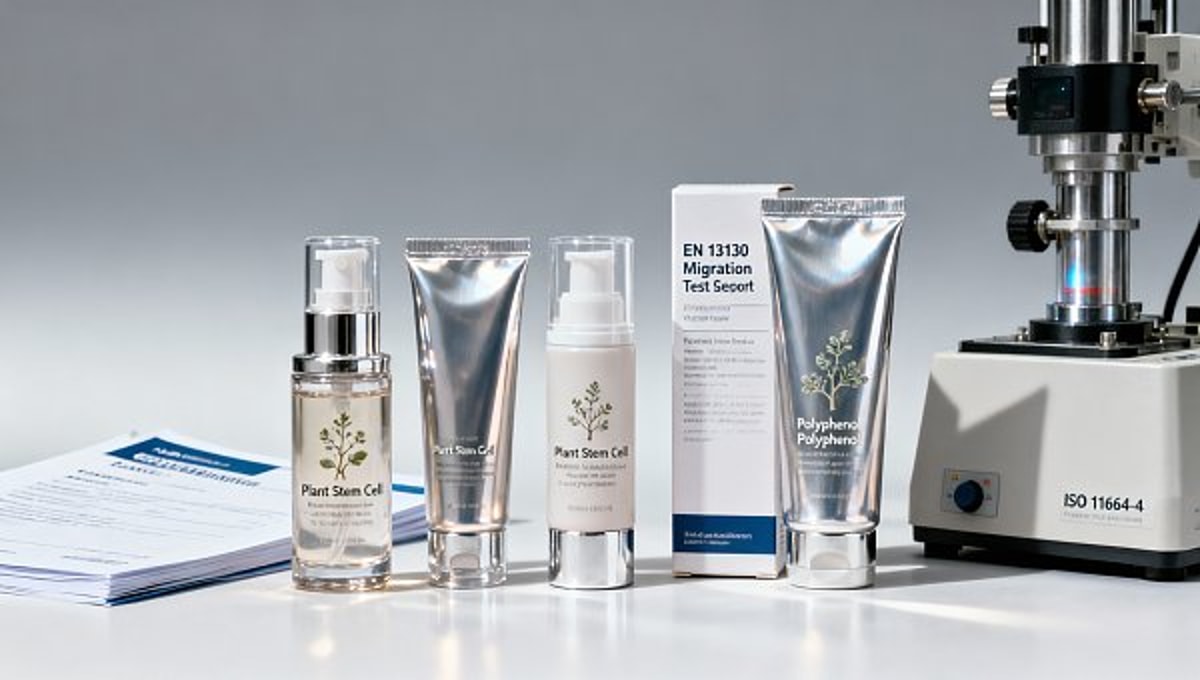
On April 24, 2026, SASO published the SASO Cosmetics Packaging Standard Amendment 2026. The amendment mandates that cosmetic packaging materials used with plant stem cells or polyphenol-based active ingredients must undergo two additional validations: (1) food contact material migration testing per EN 13130, and (2) photostability accelerated aging verification per ISO 11664-4. Enforcement begins August 1, 2026.
Which Subsectors Are Affected
Direct Exporters & Importers
Exporters shipping cosmetic products with plant-derived actives into Saudi Arabia will face new pre-market documentation and test report requirements. Non-compliant packaging may result in customs delays or rejection at port of entry after August 1, 2026.
Raw Material & Component Suppliers
Suppliers of vacuum pump mechanisms, aluminum-plastic laminates, or other primary packaging components must now verify whether their materials meet the updated migration and photostability criteria — particularly when integrated into formulations containing plant stem cells or polyphenols.
Contract Manufacturers & Fillers
Contract manufacturers producing finished goods for Saudi distribution must ensure both formulation and packaging comply jointly. Since the requirement targets the *packaging–active ingredient interface*, co-formulation decisions (e.g., choice of stabilizer or antioxidant) may influence packaging validation outcomes.
Supply Chain & Compliance Service Providers
Third-party testing labs, certification bodies, and regulatory consultants supporting SASO submissions will need to confirm capacity for EN 13130 migration testing and ISO 11664-4 photostability assessment — including method validation and reporting alignment with SASO’s interpretation.
What Stakeholders Should Monitor & Do Now
Track Official Implementation Guidance
SASO has not yet published technical guidance documents clarifying scope boundaries (e.g., threshold concentrations for ‘plant stem cells’ or ‘polyphenols’, or exemptions for legacy stock). Stakeholders should monitor SASO’s official portal and accredited notification bodies for updates through June 2026.
Prioritize High-Risk Product Categories
Focus initial compliance efforts on products using vacuum pump bottles or aluminum-plastic laminated tubes with plant-derived actives — especially those already certified under previous SASO cosmetic regulations but lacking migration or light-stability data.
Distinguish Policy Signal from Operational Requirement
The amendment is a formal regulatory update, not a draft proposal. However, enforcement readiness — including lab capacity, sample preparation protocols, and document translation — remains subject to practical lead times. A gap between publication (April 24) and enforcement (August 1) suggests limited buffer for full validation cycles.
Prepare Documentation & Testing Timelines Early
EN 13130 migration testing typically requires 4–6 weeks; ISO 11664-4 photostability validation may add another 2–3 weeks depending on stress conditions. Companies should initiate testing by early May 2026 to meet the August 1 deadline.
Editorial Observation / Industry Insight
Observably, this amendment reflects SASO’s increasing alignment with EU-level safety expectations for cosmetic packaging — particularly where bioactive ingredients introduce novel interaction risks. Analysis shows the focus on migration and photostability signals a shift from purely microbiological or mechanical performance criteria toward functional chemical safety. From an industry perspective, it is more than a procedural update: it introduces a new layer of formulation–packaging co-validation that affects product development timelines and supplier qualification processes. Current implementation timing — just over three months between publication and enforcement — suggests SASO expects stakeholders to have baseline testing capabilities already in place.
Conclusion: This amendment does not represent a broad overhaul of SASO’s cosmetics framework, but rather a targeted expansion of safety requirements for specific high-activity ingredient–packaging combinations. It is best understood as a compliance milestone for exporters and manufacturers already engaged in the Saudi cosmetics market — not a general market-entry barrier, but a defined technical checkpoint with clear deadlines and test standards.
Information Source: SASO official announcement — SASO Cosmetics Packaging Standard Amendment 2026, published April 24, 2026. Note: Technical annexes, scope definitions, and transitional provisions remain pending official release and are subject to ongoing monitoring.
Related Intelligence
 默认分类May 02, 2026WeChat Pay Cross-Border B2B QR Code Integration Live in 5 CountriesWeChat Pay Cross-Border B2B QR Code Integration now live in 5 countries—fast, RMB-settled payments via local e-wallets. Discover how it transforms ASEAN-China trade.
 Electronic & RC ToysMay 02, 2026RC Toy Orders Shift to South China Cluster, Lead Time Cuts to 6 WeeksRC toy orders are shifting to South China’s Dongguan–Shenzhen–Zhongshan cluster, cutting lead times to just 6 weeks—key insight for importers, suppliers & manufacturers.
 Skincare OEMMay 02, 2026FDA Adds New INCI Codes for Plant Stem Cell ExtractsFDA Adds New INCI Codes for Plant Stem Cell Extracts—get compliant now! Learn key requirements for apple, grape & ginseng extracts and avoid shipment rejection.
 Cosmetics & PkgMay 02, 2026SASO Updates Cosmetics Packaging Rules for Plant-Based ActivesSASO updates cosmetics packaging rules for plant-based actives: New EN 13130 & ISO 11664-4 testing required by Aug 1, 2026. Act now!
 Fitness EquipmentMay 02, 2026THE Alliance Cuts Shanghai–LA Capacity; Fitness Equipment Lead Times Extend to 8–10 WeeksFitness equipment lead times now 8–10 weeks due to THE Alliance’s Shanghai–LA capacity cuts—urgently assess procurement, logistics & contingency plans.
 Smart Pet DevicesMay 02, 2026Japan METI Adds Chinese Smart Litter Boxes to Priority Review ListJapan METI adds Chinese smart litter boxes to priority review—fast-track PSE certification in 7 days. Key for exporters, OEMs & compliance providers.
 Infant Feeding & CareMay 02, 2026RCEP ASEAN Fast Track for Infant Feeding Products LaunchedRCEP ASEAN Fast Track now accelerates infant feeding product clearance for NMPA Class II–certified exporters—cut customs time to 5 days in Singapore & Thailand.
 Corporate & Seasonal GiftsMay 02, 2026Germany UBA Launches Carbon Label Pilot for Corporate GiftsCarbon label pilot launched by Germany’s UBA for corporate gifts—key for printing, ink suppliers & ESG procurement teams. Act now to comply.
 Camping & WaterMay 02, 2026Vietnam Suspends Camping & Water Import Licenses, IP6X+Salt Spray RequiredVietnam suspends Camping & Water import licenses: IP6X dustproof + 96h salt spray testing now mandatory for inflatable pumps & boats.
 STEM & Educational ToysMay 02, 2026CPSC Tightens Battery Compartment Standards for STEM ToysCPSC Tightens Battery Compartment Standards for STEM Toys: New ASTM F963-26 Annex D2 rules take effect July 1, 2026—ensure compliance now to avoid shipment delays and recalls.
 Beauty DevicesMay 01, 20262026 Foshan Tanzhou Auto Industry Expo Spring Edition2026 Foshan Tanzhou Auto Industry Expo Spring Edition features the debut 'Beauty Devices & Smart Cabin' zone—driving cross-industry innovation and global sourcing opportunities.
 Electronic & RC ToysMay 01, 2026RC Toy Orders Shift to South China, Lead Time Cuts to 6 WeeksRC toy orders shift to South China with 6-week lead times—key for importers, OEMs & logistics firms. Discover ICTA-QMS certified factories in Shenzhen/Dongguan now driving speed and reliability.
 STEM & Educational ToysMay 01, 2026CPSC Tightens Battery Compartment Standards for STEM ToysCPSC Tightens Battery Compartment Standards for STEM Toys: New 30 N bite-force test mandatory for U.S. market access starting July 1, 2026—act now to avoid shipment delays.