Beauty OEM pricing can look low until packaging is added
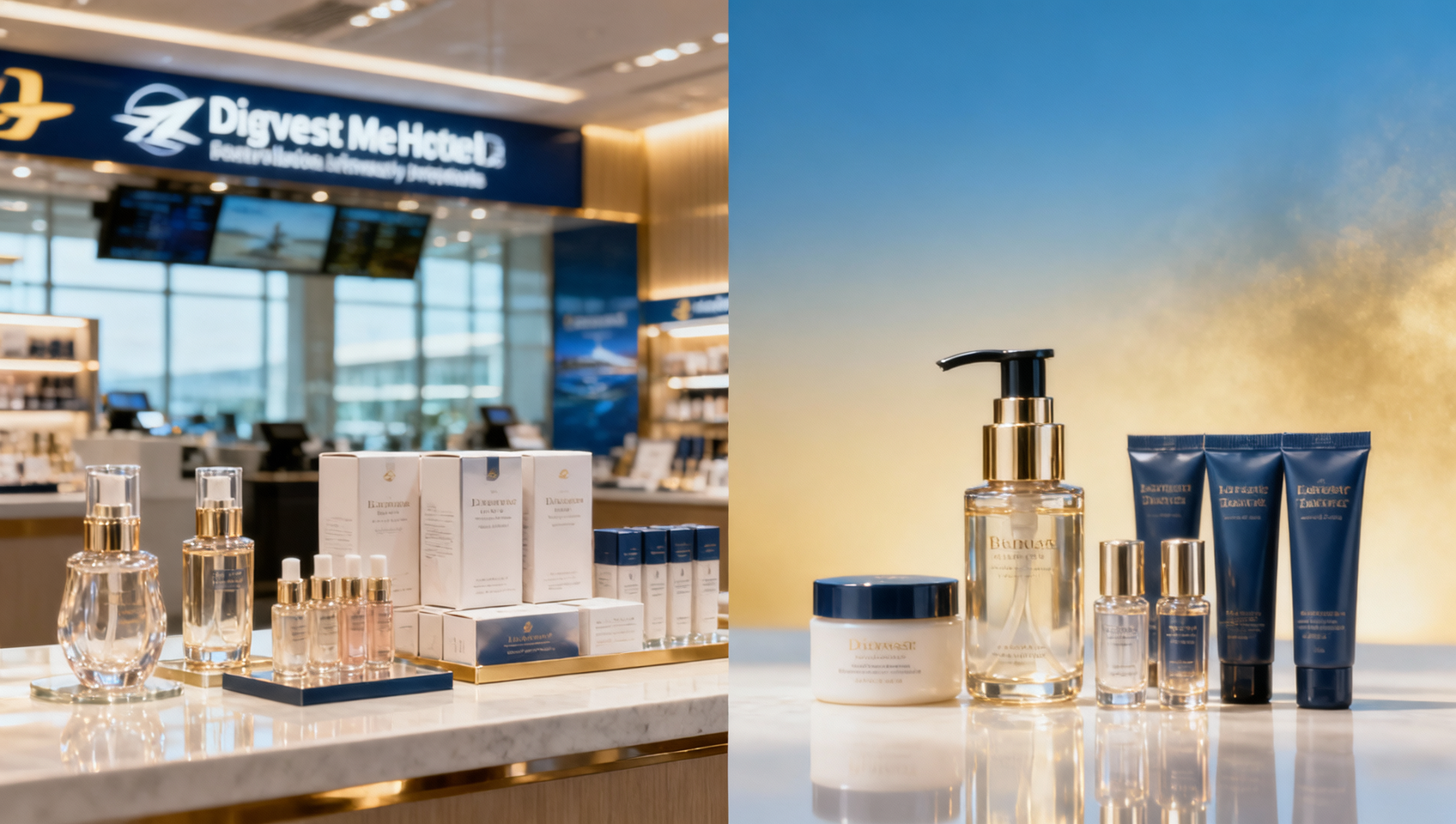
Beauty OEM pricing often appears attractive at first, but real costs can rise quickly once packaging, labeling, and product compliance are included. For buyers comparing beauty OEM, private label manufacturing, and custom manufacturing options across the retail supply chain, understanding these hidden variables is essential. This guide helps sourcing and evaluation teams make clearer brand sourcing decisions while protecting margins, timelines, and market readiness.
For travel retail, hospitality sourcing, airport concessions, resort boutiques, cruise programs, and destination gift channels, this issue is especially relevant. A formula quote may look competitive, but the final landed cost can shift by 15% to 40% once unit cartons, multilingual labeling, tester formats, leak protection, and route-specific compliance are added. That gap affects margin planning, launch timing, and distributor negotiations.
Buyers in tourism services often work across seasonal peaks, region-specific regulations, and space-limited retail environments. That means beauty OEM decisions cannot be evaluated on bulk fill cost alone. Packaging durability, travel-size suitability, shelf appeal, replenishment speed, and destination-specific branding all shape the true sourcing outcome.
Why packaging changes the real cost picture in travel retail beauty sourcing
In tourism services, beauty products are rarely sold as plain factory output. They are sold as a finished retail experience in duty-free stores, hotel amenities programs, spa boutiques, cruise gift shops, and travel-exclusive promotions. A supplier may quote an attractive OEM price for the formula itself, yet the commercial product still needs primary packaging, secondary packaging, labeling, barcodes, shipping protection, and display compatibility.
This cost difference becomes more visible when buyers compare a 30 ml serum, a 50 ml lotion, or a 100 ml body mist intended for travelers. In travel channels, packaging often requires smaller fill sizes, leak-resistant closures, tamper evidence, bilingual or trilingual artwork, and carton formats that fit shelves or counter displays. These additions can raise the per-unit cost by US$0.30 to US$2.50 depending on format, volume, and destination market.
Technical evaluators and procurement teams should also note that packaging cost is not limited to materials. It includes mold setup, sampling rounds, artwork revisions, carton drop testing, insert development, pallet efficiency, and storage impact. A low formula quote may therefore hide a total project cost that is significantly higher than the first RFQ suggests.
For project managers in hotel groups or travel retail programs, the most common mistake is approving a formula based on ex-factory fill pricing before confirming the packaging bill of materials. Once a marketing team asks for metallic decoration, gift-ready folding cartons, mini sizes, or region-specific language panels, timelines can extend by 2 to 6 weeks and approval budgets may need to be reopened.
Common cost layers beyond the base OEM quote
The following table shows how a low initial quote can evolve once a tourism-oriented product moves from formula to shelf-ready item.
The key lesson is simple: buyers should compare total delivered product cost, not base fill cost. In travel-focused sourcing, the packaging system is part of the product, not an optional add-on. This is particularly important for distributors and agents working with narrow margin bands of 25% to 45% in premium retail environments.
Travel service scenarios where hidden packaging costs appear fastest
Not all tourism channels create the same packaging pressure. Airport retail, luxury hotels, cruise lines, wellness resorts, and destination boutiques each have different display rules, logistics needs, and customer expectations. A sourcing team that ignores channel differences may select a supplier that looks cost-effective on paper but performs poorly after rollout.
In airport and duty-free retail, shelf competition is intense. Packaging usually needs stronger visual impact, tamper-evident protection, and better carton finishing. Products may require compact shelf footprints and premium finishing because passenger decision time can be under 30 seconds. In this setting, a standard OEM pack often fails to convert at the desired rate.
In hotel and resort programs, the challenge is different. Amenity lines and spa retail collections often need consistency across 20, 50, or even 200 properties. Packaging must survive warehousing, repeated internal handling, and room-service replenishment cycles. A bottle that leaks only 1% of the time can still create major replacement cost at scale.
Cruise and excursion retail adds another layer. Products must tolerate movement, humidity variation, and longer replenishment intervals. If a reorder cycle is every 6 to 10 weeks rather than every 2 to 3 weeks, packaging reliability becomes a financial control issue rather than just a branding choice.
Channel-specific packaging demands
The table below helps sourcing and commercial teams map packaging expectations to travel service environments before supplier shortlisting begins.
This comparison shows why tourism service buyers should not use a single beauty OEM benchmark across all channels. The right pack for a hotel bathroom may be the wrong pack for an airport shelf. Matching the packaging system to the service environment reduces surprise cost and improves launch readiness.
Practical warning signs during supplier review
- Quotes that list formula cost only, without separate line items for bottle, pump, label, carton, and outer case.
- Lead times shown as 20 to 30 days without clarifying whether artwork approval and packaging sourcing are included.
- Claims that “standard packaging” is sufficient for all channels, even when your program includes duty-free, hospitality, and distribution partners.
- No discussion of transit testing, closure compatibility, or shrink-wrap options for small-format travel items.
How procurement and finance teams should evaluate beauty OEM offers
For financial approvers and sourcing managers, the best way to control hidden cost is to separate the quotation into cost layers. At minimum, buyers should request line-item visibility for formula bulk, filling, primary packaging, secondary packaging, labeling, outer carton, testing, and logistics assumptions. This allows apples-to-apples comparison across 3 to 5 potential suppliers.
A strong B2B sourcing review should also include MOQ implications. In beauty OEM projects linked to tourism services, packaging MOQ often differs from formula MOQ. A supplier may allow a formula batch at 3,000 units, while the custom carton supplier requires 10,000 pieces. That mismatch can increase dead stock risk or force the buyer into a hybrid packaging strategy.
Technical teams should ask whether the quote includes packaging compatibility testing. A pump and a viscous cream, for example, may require 2 to 3 rounds of fit testing. A mist sprayer for a fragrance or body spray may need spray pattern validation and leakage review. If these steps are excluded from the initial quote, the first “cheap” offer can become the most expensive after revisions.
Project owners in travel programs should also map approval points by function. Marketing reviews artwork. Compliance checks claims and label language. Operations reviews case pack and pallet efficiency. Finance checks margin threshold. Without this cross-functional gate process, changes appear late and drive packaging rework fees, expedited freight, or launch delay penalties.
A practical evaluation checklist
- Request a full BOM with separate pricing for bottle, cap, pump, label, carton, insert, and shipper.
- Confirm MOQ for each packaging component, not just the finished product.
- Ask for standard lead time and expedited lead time, such as 30 days versus 18 days.
- Verify how many artwork revisions and packaging samples are included in the quoted development fee.
- Check whether destination-specific compliance review is included for every market in the launch plan.
Cost-control thresholds worth setting internally
Many buyers use a simple control rule: packaging should be reviewed in detail once it exceeds 25% to 35% of the finished unit cost. Another useful trigger is lead time. If custom packaging adds more than 14 days to the launch path, the project should be escalated for timeline risk review. These thresholds are not universal, but they help finance and project teams catch issues early.
For tourism services, landed cost should also be modeled at destination level. A product sold in a luxury resort in Southeast Asia may face very different packaging humidity risk and distribution handling compared with a duty-free kiosk in Europe. One quotation model rarely fits all routes.
Implementation steps for travel-ready private label and custom manufacturing projects
A disciplined rollout process helps reduce both packaging surprises and market-entry delays. Whether the project is a hotel amenity range, a spa-exclusive skincare line, or a destination retail collection, buyers should build the sourcing plan around packaging and compliance from day 1 rather than treating them as final-stage tasks.
A typical project runs in 5 stages over 8 to 16 weeks depending on customization level. Stock packaging with private label artwork may move faster. Full custom molds, premium finishing, or multi-market label adaptation usually extend the cycle. The point is not speed alone; it is avoiding rework after artwork approval or production booking.
Distributors and agents should also build in pilot testing. In tourism services, pilot runs of 200 to 500 units can reveal leakage, display fit, traveler handling issues, and shelf presentation problems before a full production order of 5,000 units or more. This is often far cheaper than correcting a live launch across multiple locations.
When working with a sourcing intelligence platform such as GCS, buyers can use market insight to refine not only supplier selection but also format choice. In many travel environments, the decision between stock packaging and custom packaging is less about prestige and more about balancing speed, compliance, and reorder flexibility.
Recommended rollout flow
This phased approach helps procurement, technical, and finance teams identify the exact point where packaging cost enters the project. It also creates a shared timeline, which is valuable when multiple stakeholders must approve the same beauty product for different travel service environments.
Typical project mistakes to avoid
- Locking the formula before confirming closure compatibility and leak performance.
- Approving artwork without checking country-language combinations for all destinations.
- Comparing quoted unit prices without normalizing pack format, carton quality, and case-pack assumptions.
- Choosing full custom packaging for a first launch when a stock-pack private label route could reduce lead time by 3 to 5 weeks.
FAQ for sourcing teams, distributors, and project owners
How can buyers tell whether a beauty OEM quote is incomplete?
If the quotation does not separate formula, filling, packaging, artwork, testing, and logistics assumptions, it is incomplete for decision-making. Another warning sign is a unit price with no reference to MOQ, lead time, or packaging material specification. In travel retail and hospitality channels, that omission often leads to a 10% to 30% variance between quotation and final approved cost.
Is stock packaging better than custom packaging for tourism services?
Not always, but stock packaging is often a strong option for early-stage launches, seasonal programs, and pilot projects. It can reduce development time by 2 to 5 weeks and lower MOQ exposure. Custom packaging makes more sense when brand differentiation, gift positioning, or premium shelf presence is a clear commercial requirement.
What should finance teams focus on beyond unit price?
Finance should review total delivered cost, minimum order commitments, expected sell-through period, and the cost of timeline delays. In tourism services, a missed seasonal window can be as damaging as a high packaging cost. Evaluating only the ex-factory formula price does not capture inventory risk, redesign fees, or expedited freight exposure.
How long does a travel-ready private label beauty project usually take?
A straightforward stock-pack private label project may take 8 to 10 weeks. A custom manufacturing project with new artwork adaptation, compliance review, and packaging testing commonly takes 12 to 16 weeks. If multiple destinations, language variants, or display formats are involved, buyers should plan for additional review time.
Beauty OEM pricing can look attractive in the first quotation, but tourism service buyers need a finished-product view. Packaging, labeling, and compliance are not side issues; they are core cost drivers that shape launch success in hotels, airports, cruise retail, resorts, and destination stores. Teams that evaluate total product cost, channel-specific packaging fit, MOQ alignment, and approval workflow are better positioned to protect both margin and delivery timelines.
Global Consumer Sourcing supports buyers, distributors, technical reviewers, and commercial decision-makers with practical sourcing intelligence across beauty and retail supply chains. If you are reviewing OEM, private label, or custom manufacturing options for travel retail or hospitality programs, now is the right time to get a clearer cost structure and a more resilient sourcing plan. Contact us to explore tailored sourcing insights, compare supplier pathways, and build a travel-ready beauty product strategy with greater confidence.
Related Intelligence
 Baby Gear & StrollersApr 27, 2026Global Shipping Alliances Cut Shanghai–Rotterdam Capacity by 15%Global shipping alliances cut Shanghai–Rotterdam capacity by 15%—impacting baby strollers & gear exporters, EU retailers, and forwarders. Act now to secure space, assess rail/air alternatives, and build resilient supply chains.
 Camping & WaterApr 27, 2026SASO IEC 62368-3:2026 Released for GCC: IP6X Dust Testing Required for Camping & Water PumpsSASO IEC 62368-3:2026 now mandates IP6X dust testing for camping & water pumps in GCC — act now to avoid customs delays and ensure compliance by Oct 1, 2026.
 Nursery Furniture & MonitorsApr 27, 2026Indonesia BPOM Fast-Tracks Baby Monitor Registration to 14 Working DaysIndonesia BPOM Fast-Tracks Baby Monitor Registration to 14 working days—leverage CNAS reports & ID-SNI 7203:2025 for rapid market entry.
 Corporate & Seasonal GiftsApr 27, 2026TÜV Rheinland Releases Sustainable Gift Packaging White Paper 2026Sustainable gift packaging white paper 2026 by TÜV Rheinland: New LCA rules for VOCs, container loading & last-mile transport — act now to meet IKEA, Douglas Q3 2026 requirements.
 Smart Pet DevicesApr 27, 2026JETRO Summer Inspection: Smart Pet Collars Must Pass JIS T 1002:2026 Bluetooth TestSmart Pet Collars must pass JIS T 1002:2026 Bluetooth 5.4 coexistence testing for JETRO’s 2026 summer inspection — avoid delays, recalls & lost sales in Japan.
 Fitness EquipmentApr 27, 2026CPSC Mandates Emergency Stop & Thermal Cutoff for US Fitness MirrorsCPSC mandates emergency stop & thermal cutoff for US fitness mirrors—urgent compliance required by July 2026. Learn implications for OEMs, importers & suppliers.
 STEM & Educational ToysApr 27, 2026SASO Updates Toy Certification: EN71-3:2026 for STEM Toys in Saudi ArabiaSASO EN71-3:2026 toy certification now mandatory for STEM toys in Saudi Arabia—nickel, cobalt & antimony limits tightened. Act before Aug 1, 2026!
 Infant Feeding & CareApr 27, 2026RCEP Update: Vietnam Cuts Tariffs on Silicone Nipples, Smart Bottles from ChinaRCEP Update: Vietnam cuts tariffs on silicone nipples & smart bottles from China—save 9–13% import costs starting May 1, 2026. Act now!
 Beauty DevicesApr 27, 2026EU EPR Carbon Fee for Smart Beauty Devices Starts June 2026EU EPR Carbon Fee for Smart Beauty Devices starts June 2026 — learn how the new Green Packaging Regulation Fee impacts OEMs, suppliers & EU importers.
 Skincare OEMApr 27, 2026FDA CPIS Mandate Effective July 2026 for US Cosmetic ImportsFDA CPIS mandate takes effect July 2026—learn how skincare OEMs, cosmetic exporters & U.S. importers must comply to avoid shipment delays and entry denials.
 Beauty DevicesApr 26, 2026Global Li-ion Recycling Rate Hits 62%: Beauty Device Battery BOM Cost Down 9%Li-ion recycling hits 62% globally—cutting beauty device battery BOM costs by 9% and lead times to 6 weeks. Act now to boost export agility & margins.
") Smart Pet DevicesApr 26, 2026Vietnam Enforces New Smart Pet Collar Standard (QCVN 135:2026)Vietnam Enforces New Smart Pet Collar Standard (QCVN 135:2026): Bluetooth 5.4 resilience & native Vietnamese voice prompts required by July 1, 2026 — act now to avoid customs delays!
Smart Pet DevicesApr 26, 2026Vietnam Enforces New Smart Pet Collar Standard (QCVN 135:2026)Vietnam Enforces New Smart Pet Collar Standard (QCVN 135:2026): Bluetooth 5.4 resilience & native Vietnamese voice prompts required by July 1, 2026 — act now to avoid customs delays! Nursery Furniture & MonitorsApr 26, 2026Shanghai International Logistics Procurement Expo 2026 ClosesShanghai International Logistics Procurement Expo 2026 closed—AI-powered smart infant & pet health devices led procurement demand. Discover key trends, buyer priorities & 2027 outlook.