Global Li-ion Recycling Rate Hits 62%: Beauty Device Battery BOM Cost Down 9%
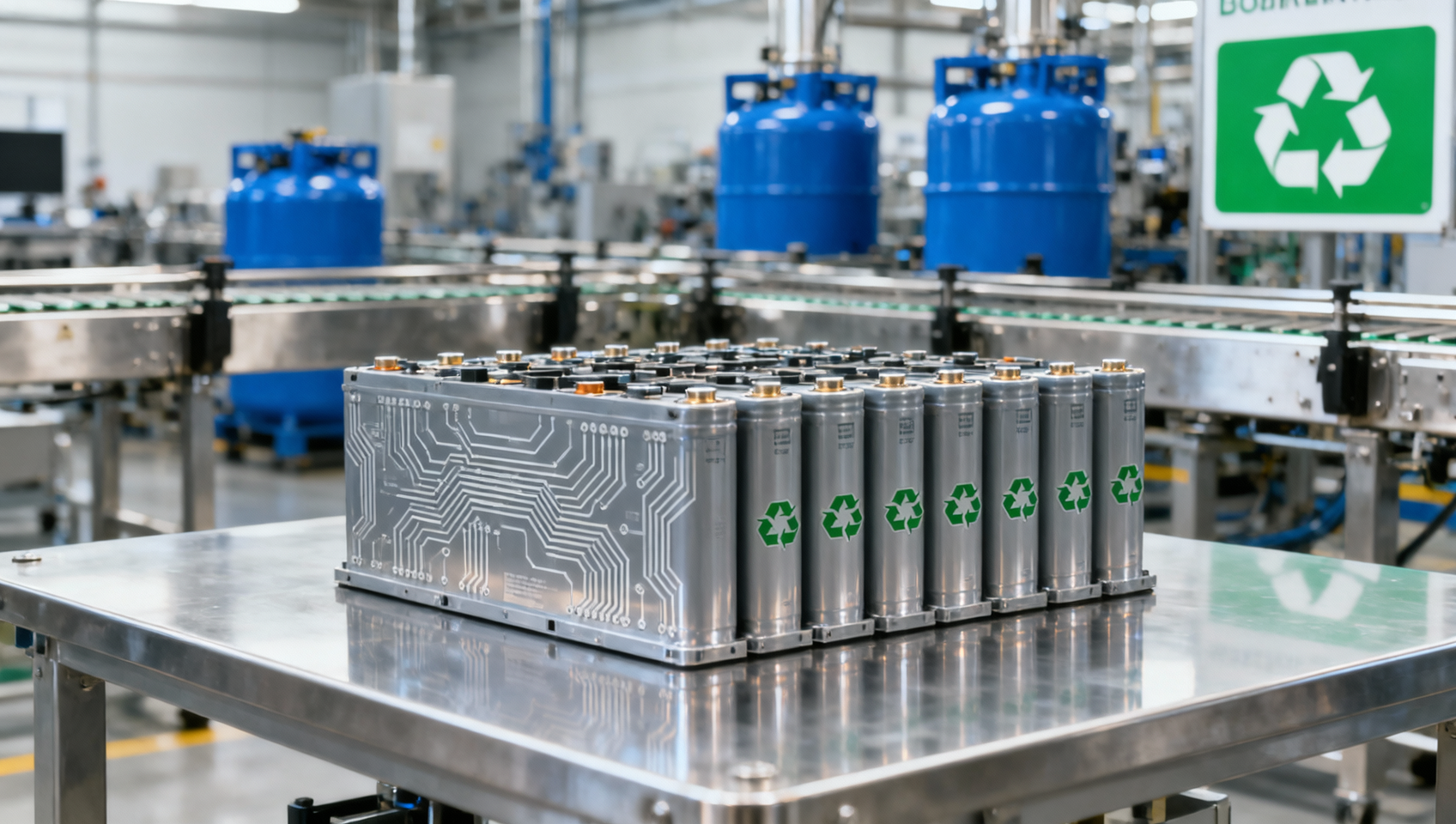
On April 25, 2026, the 2026 Global Battery Circular Economy White Paper reported a global lithium-ion battery recycling rate of 62%, driving downward pressure on cobalt, nickel, and lithium raw material prices. This development has directly reduced bill-of-materials (BOM) costs for battery modules used in Chinese-made beauty devices by 9% year-on-year and shortened average supplier lead times from 8 to 6 weeks — enhancing responsiveness for export-oriented RF and LED phototherapy beauty devices targeting Europe, the U.S., and Japan.
Event Overview
On April 25, 2026, the 2026 Global Battery Circular Economy White Paper confirmed that the global lithium-ion battery recycling rate reached 62%. As a result, prices for cobalt, nickel, and lithium raw materials declined. In parallel, the BOM cost for battery modules in China-manufactured beauty devices decreased by 9% year-on-year, and mainstream suppliers reduced delivery lead times from 8 weeks to 6 weeks.
Industries Affected
Direct Exporters of Beauty Devices
Exporters of RF and LED phototherapy beauty devices face tighter time-to-market windows in regulated markets like the EU, U.S., and Japan. The shortened 6-week battery module lead time improves their ability to align production with seasonal demand spikes or certification cycles — especially critical for SKUs requiring frequent hardware revisions.
Raw Material Procurement Teams
Procurement functions sourcing cobalt, nickel, or lithium compounds for battery cell or module assembly are exposed to price volatility shifts. With recycling contributing to 62% of global lithium-ion material supply, spot pricing and long-term contract terms may reflect increased secondary material availability — though regional disparities in collection infrastructure remain.
OEM/ODM Battery Module Manufacturers
Manufacturers supplying battery modules to beauty device brands benefit from both lower cathode/anode material input costs and more predictable component availability. The 9% BOM cost reduction reflects improved material yield and reuse efficiency — not just commodity price drops — suggesting structural improvements in upstream recycling integration.
Supply Chain & Logistics Service Providers
Third-party logistics and component consolidation providers supporting cross-border beauty device supply chains may see higher order frequency but smaller per-batch volumes, as shorter lead times enable more agile, just-in-time replenishment patterns — particularly for high-rotation SKUs in premium personal care electronics.
What Relevant Enterprises or Practitioners Should Monitor and Act On
Track official updates on regional battery recycling mandates
Current data reflects a global average; however, the EU’s upcoming Battery Regulation (effective 2027) and Japan’s revised Green Procurement Guidelines may impose stricter recycled content thresholds. Enterprises should monitor national-level implementation timelines — not just headline recycling rates.
Focus on battery-dependent beauty device categories with short innovation cycles
RF and LED phototherapy devices are explicitly cited as beneficiaries due to their reliance on compact, high-cycle battery modules and rapid feature iteration. Companies developing ultrasonic, microcurrent, or combination-platform devices should assess whether their current battery specifications align with newly available cost/lead-time advantages.
Distinguish between policy signals and actual procurement readiness
A 62% global recycling rate does not imply uniform material quality or traceability across regions. Suppliers reporting faster lead times may still rely on mixed primary/secondary feedstock. Buyers should verify material origin documentation and electrochemical performance consistency before scaling orders.
Reassess safety-critical validation timelines in light of compressed schedules
Shorter battery module lead times do not automatically shorten full-device regulatory testing (e.g., IEC 62368-1, CE marking, FDA 510(k)). Engineering and compliance teams must proactively align battery qualification cycles with overall product launch roadmaps — avoiding bottlenecks at final certification stages.
Editorial Perspective / Industry Observation
From an industry perspective, this update is better understood as an early-stage signal of circular economy traction in portable energy systems — not yet a fully matured market shift. While 62% represents measurable progress, it remains concentrated in industrial and EV battery streams; consumer electronics battery return rates lag significantly. The 9% BOM reduction and 2-week lead time improvement are tangible outcomes — but they reflect upstream efficiencies rather than broad-based commoditization. Analysts note that sustained cost and lead time gains will depend less on aggregate recycling rates and more on localized collection infrastructure, standardized battery design, and verified chain-of-custody frameworks — all still under active development.
Conclusion
This milestone underscores how advances in battery circularity are beginning to translate into measurable operational advantages for adjacent electronics sectors — particularly those with compact, high-value, rapidly evolving form factors like professional-grade beauty devices. However, the impact remains selective and conditional: benefits accrue most clearly where battery modules are standardized, safety-critical validation is well-established, and export markets enforce consistent technical requirements. It is more accurate to view this as a directional inflection point — not a completed transition.
Source Attribution
Main source: 2026 Global Battery Circular Economy White Paper, published April 25, 2026.
Areas requiring ongoing observation: regional implementation of recycled content mandates, battery module traceability standards for consumer electronics, and comparative recycling rates for small-format vs. large-format lithium-ion cells.
Related Intelligence
 Beauty DevicesApr 26, 2026Global Li-ion Recycling Rate Hits 62%: Beauty Device Battery BOM Cost Down 9%Li-ion recycling hits 62% globally—cutting beauty device battery BOM costs by 9% and lead times to 6 weeks. Act now to boost export agility & margins.
") Smart Pet DevicesApr 26, 2026Vietnam Enforces New Smart Pet Collar Standard (QCVN 135:2026)Vietnam Enforces New Smart Pet Collar Standard (QCVN 135:2026): Bluetooth 5.4 resilience & native Vietnamese voice prompts required by July 1, 2026 — act now to avoid customs delays!
Smart Pet DevicesApr 26, 2026Vietnam Enforces New Smart Pet Collar Standard (QCVN 135:2026)Vietnam Enforces New Smart Pet Collar Standard (QCVN 135:2026): Bluetooth 5.4 resilience & native Vietnamese voice prompts required by July 1, 2026 — act now to avoid customs delays! Nursery Furniture & MonitorsApr 26, 2026Shanghai International Logistics Procurement Expo 2026 ClosesShanghai International Logistics Procurement Expo 2026 closed—AI-powered smart infant & pet health devices led procurement demand. Discover key trends, buyer priorities & 2027 outlook.
 Electronic & RC ToysApr 26, 2026CPSC Proposes New RF Leakage Testing for Wireless Charging ToysCPSC proposes stricter RF leakage testing for wireless charging toys—FCC Part 18B now required. Learn implications for manufacturers, importers & labs.
 Camping & WaterApr 26, 2026RCEP Camping Water Bag Tariff Cut: Indonesia Adopts TPU+Aluminum Laminate SpecRCEP Camping Water Bag tariff cut confirmed: Indonesia mandates TPU+aluminum laminate spec for LKPP tenders — boost compliance & competitiveness now.
 Nursery Furniture & MonitorsApr 26, 2026JETRO Enforces Blockchain Batch Codes for Infant Monitors in Japan Spring SourcingJETRO enforces blockchain batch codes for infant monitors in Japan—critical for spring sourcing & Baby Fair Tokyo 2026. Act now to avoid 14+ day customs delays.
 Corporate & Seasonal GiftsApr 26, 2026TÜV Rheinland Updates Green Gift Packaging LCA RequirementsTÜV Rheinland updates green gift packaging LCA requirements: full-life-cycle carbon heat maps now mandatory for certification—act now to avoid delays.
 Infant Feeding & CareApr 26, 2026Canton Fair Phase III Closes: +63% Inquiries for Infant Feeding Products, Middle East Prioritizes CPC+ISO 8124 Dual CertificationInfant feeding products at Canton Fair Phase III saw +63% inquiries—Middle East buyers now demand CPC+ISO 8124 dual certification. Act now to meet tender requirements.
 Beauty DevicesApr 26, 2026EU Cuts Mn/Si-Fe Alloy Quotas by 25% Amid Manganese VolatilityEU cuts Mn/Si-Fe alloy quotas by 25% amid manganese volatility — impacting beauty devices, pet wearables & infant monitors. Act now to secure supply & revise BOMs.
 Cosmetics & PkgApr 26, 2026NMPA Proposes 27 New Cosmetic Standards, Including Mandatory Hair Dye & Toothpaste RequirementsNMPA proposes 27 new cosmetic standards — including mandatory hair dye & toothpaste requirements. Stay ahead of China’s tightening ingredient regulations.
 Electronic & RC ToysApr 25, 2026CPSC Proposes FCC Part 18B RF Leakage Test for Wireless Charging in Electronic ToysCPSC proposes FCC Part 18B RF leakage testing for wireless charging in electronic toys—critical for Qi2.0/USB-PD3.1 exporters, OEMs & compliance labs.
 Nursery Furniture & MonitorsApr 25, 2026JETRO Spring 2026: Blockchain Batch Code Mandatory for Infant MonitorsJETRO Spring 2026 mandates blockchain batch code for infant monitors — EN60601-1-12 compliance + Hyperledger Fabric registration required. Act now to avoid port rejections!
") Corporate & Seasonal GiftsApr 25, 2026TÜV Rheinland Updates Green Packaging LCA Protocol (2026)TÜV Rheinland Green Packaging LCA Protocol V2.1 (2026) mandates full-life-cycle carbon heatmaps for Corporate & Seasonal Gifts packaging — critical for ALDI/LIDL market access.
Corporate & Seasonal GiftsApr 25, 2026TÜV Rheinland Updates Green Packaging LCA Protocol (2026)TÜV Rheinland Green Packaging LCA Protocol V2.1 (2026) mandates full-life-cycle carbon heatmaps for Corporate & Seasonal Gifts packaging — critical for ALDI/LIDL market access.