RCEP Camping Water Bag Tariff Cut: Indonesia Adopts TPU+Aluminum Laminate Spec
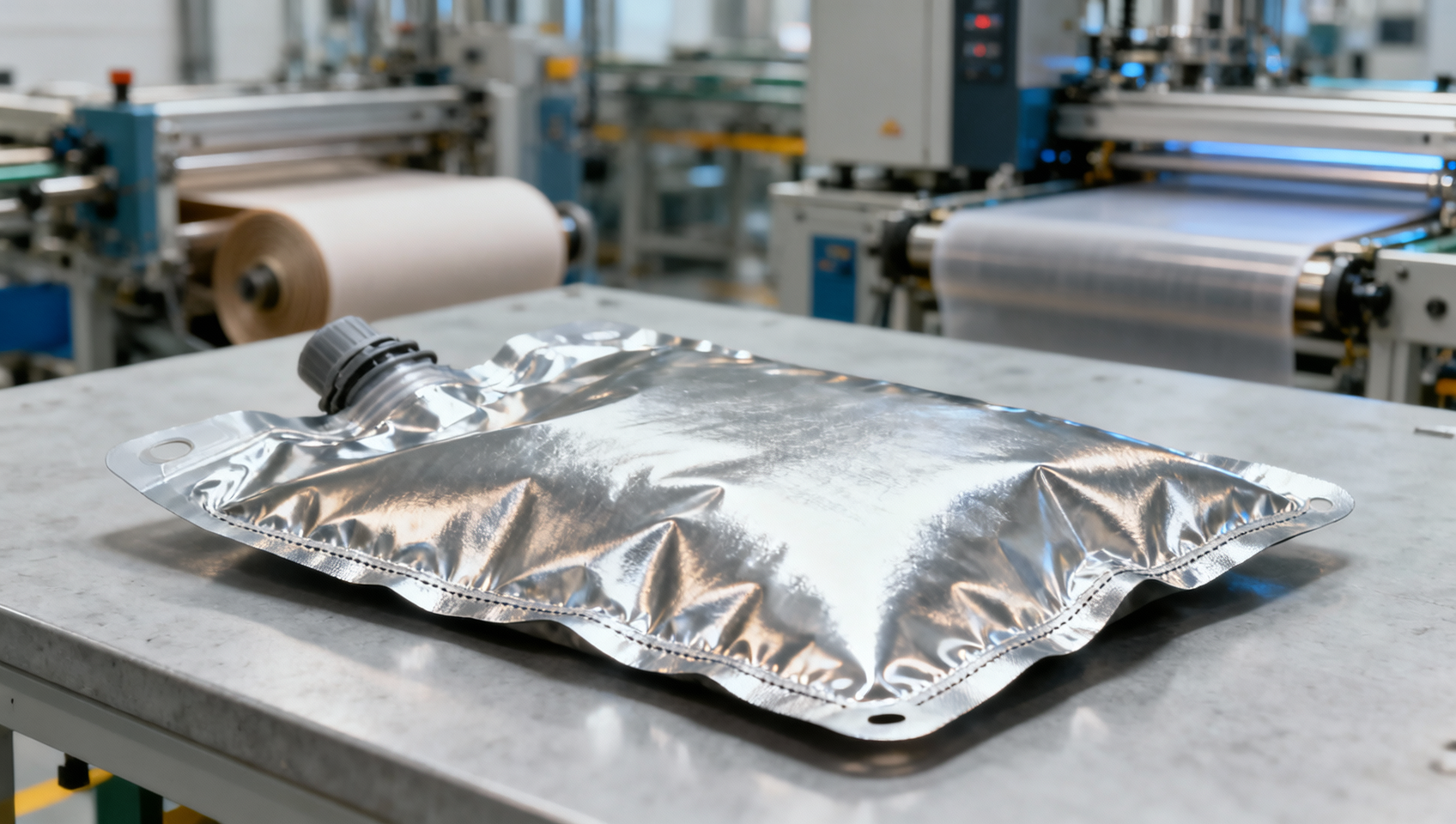
On April 25, 2026, Indonesia’s National Procurement Agency (LKPP) issued its Q2 2026 technical tender notice for outdoor equipment, mandating TPU+aluminum foil laminate construction for camping water bags and confirming a further 0.8% tariff reduction under the RCEP agreement. This development directly impacts exporters and suppliers in the camping gear, flexible packaging, and government procurement supply chain sectors — particularly those engaged with Indonesian public-sector tenders.
Event Overview
On April 25, 2026, Indonesia’s National Procurement Agency (LKPP) published its second-quarter 2026 technical tender notice for outdoor equipment. The notice specifies that camping water bags submitted for government procurement must use a TPU+aluminum foil composite structure — replacing traditional PVC — and qualify for the latest RCEP tariff concession of 0.8%. Chinese leading suppliers have confirmed mass production capability for this specification, with average lead times reduced to four weeks. Two new acceptance criteria are introduced: aluminum foil thickness tolerance of ±2 μm and burst pressure resistance of ≥120 kPa.
Industries Affected
Direct Exporters & Trading Firms
Exporters supplying camping water bags to Indonesia face immediate specification alignment requirements. The shift from PVC to TPU+aluminum foil affects product classification, customs declarations, and compliance documentation. The 0.8% tariff cut improves landed cost competitiveness, but only for compliant submissions — non-conforming bids risk disqualification from LKPP tenders.
Raw Material Suppliers
Suppliers of aluminum foil, TPU film, and laminating adhesives may see increased demand for narrow-tolerance (±2 μm), high-barrier, food-grade materials. The specification does not mandate sourcing origin, but consistency in foil thickness and surface treatment becomes critical to meet the new mechanical and dimensional requirements.
Manufacturers & Contract Converters
Manufacturers must verify lamination process stability to maintain foil thickness control and prevent delamination under pressure testing (≥120 kPa). Equipment calibration, environmental controls during lamination, and batch-level pressure validation become essential — not just final-product sampling.
Distribution & Tender Support Providers
Firms assisting foreign bidders with LKPP tender submission — including technical documentation preparation, local representation, and conformity verification — now require updated checklists covering the TPU+aluminum structure, foil thickness reporting format, and pressure test certification standards referenced in the tender notice.
What Enterprises Should Monitor & Act On
Track official LKPP implementation guidance
The April 25 notice is a technical specification update; full tender documents (including evaluation weightings, required certifications, and sample submission protocols) are expected separately. Companies should monitor LKPP’s official portal for supplementary notices before bid submission deadlines.
Validate compliance against two new physical metrics
Aluminum foil thickness tolerance (±2 μm) and minimum burst pressure (≥120 kPa) are hard technical gates — not optional enhancements. Suppliers should secure third-party lab reports aligned with ISO 2556 or ASTM D4727 prior to tender submission, using test conditions specified in the notice.
Distinguish RCEP eligibility from tender qualification
The 0.8% tariff reduction applies at customs clearance under RCEP rules of origin, but does not guarantee tender acceptance. Compliance with the TPU+aluminum specification is mandatory for bid eligibility — tariff benefit is conditional upon both origin compliance and technical conformity.
Assess lead-time implications across the supply chain
While top-tier Chinese suppliers report 4-week delivery for compliant units, this assumes stable foil supply and no rework cycles. Importers should confirm upstream material lead times (especially for specialty aluminum foil) and build buffer into order planning — especially given the tight thickness tolerance.
Editorial Observation / Industry Perspective
From an industry perspective, this notice signals a formalized transition point in Southeast Asian government procurement standards for outdoor hydration solutions — moving from legacy PVC-based designs toward higher-barrier, lighter-weight composites. Analysis来看, the adoption of TPU+aluminum reflects growing emphasis on durability, recyclability, and functional performance in institutional purchasing, rather than solely cost-driven sourcing. Observation来看, the simultaneous introduction of tighter dimensional control and mechanical testing suggests LKPP is prioritizing long-term reliability over short-term procurement savings. Current more appropriate interpretation is that this is a policy signal with near-term operational impact — not merely a procedural update. Continued attention is warranted as other ASEAN members may align specifications in future RCEP-aligned tenders.
This notice marks a concrete step in the convergence of trade agreement benefits (RCEP tariff cuts) and technical standard harmonization in government procurement. It underscores that preferential tariffs alone do not secure market access — compliance with evolving technical benchmarks is now equally decisive. For stakeholders, it is best understood not as a one-off regulatory change, but as an early indicator of tightening performance expectations across RCEP-partner public-sector outdoor equipment procurement.
Source: Indonesia National Procurement Agency (LKPP) Technical Tender Notice Q2 2026, published April 25, 2026.
Note: Full tender evaluation criteria, certification requirements, and timeline for bid submission remain pending official release and are subject to ongoing observation.
Related Intelligence
 Beauty DevicesApr 26, 2026Global Li-ion Recycling Rate Hits 62%: Beauty Device Battery BOM Cost Down 9%Li-ion recycling hits 62% globally—cutting beauty device battery BOM costs by 9% and lead times to 6 weeks. Act now to boost export agility & margins.
") Smart Pet DevicesApr 26, 2026Vietnam Enforces New Smart Pet Collar Standard (QCVN 135:2026)Vietnam Enforces New Smart Pet Collar Standard (QCVN 135:2026): Bluetooth 5.4 resilience & native Vietnamese voice prompts required by July 1, 2026 — act now to avoid customs delays!
Smart Pet DevicesApr 26, 2026Vietnam Enforces New Smart Pet Collar Standard (QCVN 135:2026)Vietnam Enforces New Smart Pet Collar Standard (QCVN 135:2026): Bluetooth 5.4 resilience & native Vietnamese voice prompts required by July 1, 2026 — act now to avoid customs delays! Nursery Furniture & MonitorsApr 26, 2026Shanghai International Logistics Procurement Expo 2026 ClosesShanghai International Logistics Procurement Expo 2026 closed—AI-powered smart infant & pet health devices led procurement demand. Discover key trends, buyer priorities & 2027 outlook.
 Electronic & RC ToysApr 26, 2026CPSC Proposes New RF Leakage Testing for Wireless Charging ToysCPSC proposes stricter RF leakage testing for wireless charging toys—FCC Part 18B now required. Learn implications for manufacturers, importers & labs.
 Camping & WaterApr 26, 2026RCEP Camping Water Bag Tariff Cut: Indonesia Adopts TPU+Aluminum Laminate SpecRCEP Camping Water Bag tariff cut confirmed: Indonesia mandates TPU+aluminum laminate spec for LKPP tenders — boost compliance & competitiveness now.
 Nursery Furniture & MonitorsApr 26, 2026JETRO Enforces Blockchain Batch Codes for Infant Monitors in Japan Spring SourcingJETRO enforces blockchain batch codes for infant monitors in Japan—critical for spring sourcing & Baby Fair Tokyo 2026. Act now to avoid 14+ day customs delays.
 Corporate & Seasonal GiftsApr 26, 2026TÜV Rheinland Updates Green Gift Packaging LCA RequirementsTÜV Rheinland updates green gift packaging LCA requirements: full-life-cycle carbon heat maps now mandatory for certification—act now to avoid delays.
 Infant Feeding & CareApr 26, 2026Canton Fair Phase III Closes: +63% Inquiries for Infant Feeding Products, Middle East Prioritizes CPC+ISO 8124 Dual CertificationInfant feeding products at Canton Fair Phase III saw +63% inquiries—Middle East buyers now demand CPC+ISO 8124 dual certification. Act now to meet tender requirements.
 Beauty DevicesApr 26, 2026EU Cuts Mn/Si-Fe Alloy Quotas by 25% Amid Manganese VolatilityEU cuts Mn/Si-Fe alloy quotas by 25% amid manganese volatility — impacting beauty devices, pet wearables & infant monitors. Act now to secure supply & revise BOMs.
 Cosmetics & PkgApr 26, 2026NMPA Proposes 27 New Cosmetic Standards, Including Mandatory Hair Dye & Toothpaste RequirementsNMPA proposes 27 new cosmetic standards — including mandatory hair dye & toothpaste requirements. Stay ahead of China’s tightening ingredient regulations.
 Electronic & RC ToysApr 25, 2026CPSC Proposes FCC Part 18B RF Leakage Test for Wireless Charging in Electronic ToysCPSC proposes FCC Part 18B RF leakage testing for wireless charging in electronic toys—critical for Qi2.0/USB-PD3.1 exporters, OEMs & compliance labs.
 Nursery Furniture & MonitorsApr 25, 2026JETRO Spring 2026: Blockchain Batch Code Mandatory for Infant MonitorsJETRO Spring 2026 mandates blockchain batch code for infant monitors — EN60601-1-12 compliance + Hyperledger Fabric registration required. Act now to avoid port rejections!
") Corporate & Seasonal GiftsApr 25, 2026TÜV Rheinland Updates Green Packaging LCA Protocol (2026)TÜV Rheinland Green Packaging LCA Protocol V2.1 (2026) mandates full-life-cycle carbon heatmaps for Corporate & Seasonal Gifts packaging — critical for ALDI/LIDL market access.
Corporate & Seasonal GiftsApr 25, 2026TÜV Rheinland Updates Green Packaging LCA Protocol (2026)TÜV Rheinland Green Packaging LCA Protocol V2.1 (2026) mandates full-life-cycle carbon heatmaps for Corporate & Seasonal Gifts packaging — critical for ALDI/LIDL market access.