Canton Fair Phase III Closes: +63% Inquiries for Infant Feeding Products, Middle East Prioritizes CPC+ISO 8124 Dual Certification
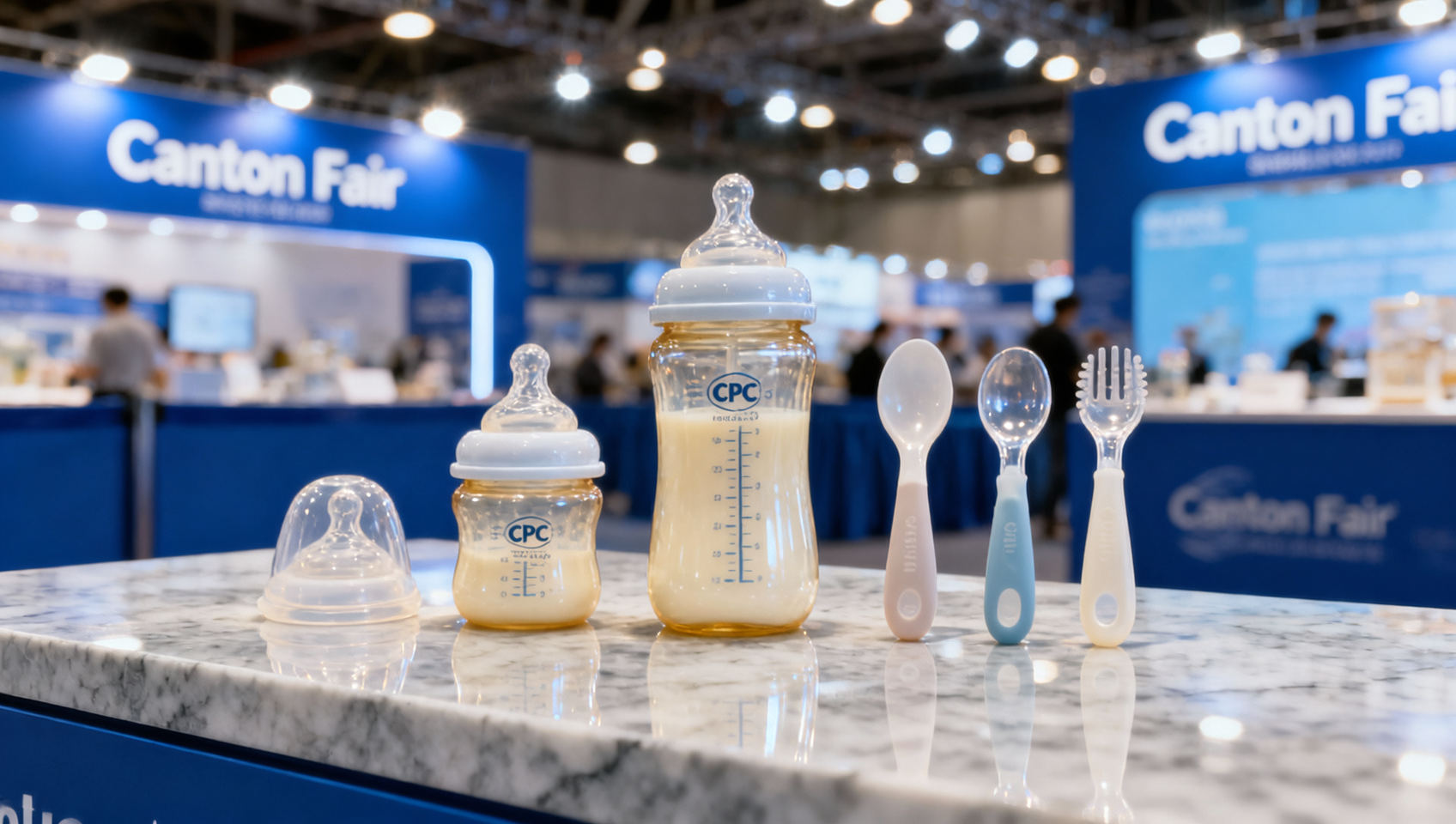
On April 24, 2026, the third phase of the China Import and Export Fair (Canton Fair) — focused on baby, maternity, and children’s products — concluded.婴童喂养类产品 (infant feeding products), including baby bottles, silicone teats, and complementary feeding tools, saw a 63% year-on-year increase in overseas inquiry volume. Notably, buyers from the Middle East accounted for 28% of these inquiries and uniformly required original third-party test reports verifying compliance with both the U.S. Consumer Product Safety Improvement Act (CPC) and ISO 8124 safety standards. This development signals a structural shift in procurement behavior across key export markets — particularly for manufacturers and exporters serving the global infant care sector.
Event Overview
The third phase of the 2026 Canton Fair closed on April 24, 2026. According to official data released by the Canton Fair Organizing Committee, infant feeding products registered a 63% year-on-year rise in overseas buyer inquiries. Among all regional buyer groups, those from the Middle East represented 28% of total inquiries for this category and explicitly requested dual certification documentation: CPC compliance (U.S. federal standard) and ISO 8124 (international toy safety standard), along with original third-party testing reports. No further breakdowns or extended commentary were provided in the official release.
Industries Affected
Direct Export Trading Enterprises
These firms face immediate eligibility pressure in Middle Eastern tenders. The requirement for CPC+ISO 8124 dual certification is now a gatekeeping condition — not merely a preference. Failure to present verified documentation may result in automatic disqualification from formal procurement processes, even if pricing or design are competitive.
Manufacturing Enterprises (OEM/ODM)
Factories producing infant feeding items must verify whether their current production lines, material sourcing, and quality control protocols already meet both CPC and ISO 8124 requirements. Since CPC mandates specific lead, phthalate, and heavy metal limits — and ISO 8124 includes mechanical, flammability, and chemical testing modules — alignment is not automatic, even for facilities certified under one standard alone.
Supply Chain & Testing Service Providers
Third-party testing laboratories and certification consultants specializing in CPC and ISO 8124 are likely to see increased demand for dual-standard verification packages. However, availability of accredited labs capable of issuing both reports — especially with original hard-copy documentation acceptable to Middle Eastern customs or tender authorities — remains a practical bottleneck.
What Relevant Enterprises Should Monitor and Do Now
Confirm certification scope and document authenticity requirements
Middle Eastern procurement entities are specifying ‘original third-party test reports’ — not just certificates of conformity or self-declarations. Exporters must verify whether their existing lab partners issue originals recognized by Gulf Cooperation Council (GCC) or UAE-based tender evaluators, and whether reports include full test parameters aligned with both CPC Section 108 and ISO 8124-1:2018.
Map current product SKUs against dual-standard applicability
Not all infant feeding items fall equally under CPC jurisdiction (e.g., certain non-toy-like feeding tools may be exempt), nor do all require full ISO 8124-3 chemical migration testing. Companies should conduct a SKU-level gap assessment — distinguishing between products requiring full dual compliance versus those needing only partial alignment — to avoid over-investing in unnecessary certifications.
Track upcoming tender announcements in GCC countries
Several Gulf states have recently updated public procurement guidelines to reference CPC and ISO 8124 jointly. While no unified regional regulation exists yet, national-level tenders — especially in Saudi Arabia’s Ministry of Health and UAE’s Dubai Health Authority — are increasingly embedding these references. Monitoring tender portals for explicit citation of both standards is now operationally relevant.
Editorial Observation / Industry Perspective
From an industry perspective, this trend is better understood as an early-stage procurement signal rather than a fully enforced regulatory mandate. The 28% Middle East buyer share reflects concentrated demand from a subset of institutional and wholesale buyers — not yet broad-based market-wide adoption. Analysis来看, the emphasis on dual certification suggests growing risk aversion among importers handling regulated consumer goods, particularly where local product liability frameworks are strengthening. Observation来看, it also highlights fragmentation in global compliance expectations: a single product line may now need to satisfy overlapping — and sometimes technically divergent — safety regimes depending on destination. Current more appropriate interpretation is that CPC+ISO 8124 dual alignment is becoming a de facto commercial prerequisite for market access in select high-potential corridors — not a universal legal requirement.
Conclusion
This Canton Fair outcome does not indicate a new law or mandatory standard change, but rather a measurable shift in buyer expectations within a strategically important export corridor. It underscores that compliance is increasingly treated as a transactional prerequisite — not a background quality attribute. For affected enterprises, the priority is not broad certification rollout, but targeted, evidence-based verification aligned with actual tender requirements and documented buyer specifications. The event is best interpreted as a market-led calibration point — one that rewards precision over presumption.
Source Attribution
Main source: Official data release from the China Import and Export Fair (Canton Fair) Organizing Committee, April 24, 2026. No additional policy documents, regulatory updates, or GCC-wide harmonization initiatives were cited in the release. Ongoing observation is warranted regarding national-level tender language updates in Saudi Arabia, UAE, and Qatar — which are not yet confirmed but represent logical next-step developments.
Related Intelligence
 Beauty DevicesApr 26, 2026Global Li-ion Recycling Rate Hits 62%: Beauty Device Battery BOM Cost Down 9%Li-ion recycling hits 62% globally—cutting beauty device battery BOM costs by 9% and lead times to 6 weeks. Act now to boost export agility & margins.
") Smart Pet DevicesApr 26, 2026Vietnam Enforces New Smart Pet Collar Standard (QCVN 135:2026)Vietnam Enforces New Smart Pet Collar Standard (QCVN 135:2026): Bluetooth 5.4 resilience & native Vietnamese voice prompts required by July 1, 2026 — act now to avoid customs delays!
Smart Pet DevicesApr 26, 2026Vietnam Enforces New Smart Pet Collar Standard (QCVN 135:2026)Vietnam Enforces New Smart Pet Collar Standard (QCVN 135:2026): Bluetooth 5.4 resilience & native Vietnamese voice prompts required by July 1, 2026 — act now to avoid customs delays! Nursery Furniture & MonitorsApr 26, 2026Shanghai International Logistics Procurement Expo 2026 ClosesShanghai International Logistics Procurement Expo 2026 closed—AI-powered smart infant & pet health devices led procurement demand. Discover key trends, buyer priorities & 2027 outlook.
 Electronic & RC ToysApr 26, 2026CPSC Proposes New RF Leakage Testing for Wireless Charging ToysCPSC proposes stricter RF leakage testing for wireless charging toys—FCC Part 18B now required. Learn implications for manufacturers, importers & labs.
 Camping & WaterApr 26, 2026RCEP Camping Water Bag Tariff Cut: Indonesia Adopts TPU+Aluminum Laminate SpecRCEP Camping Water Bag tariff cut confirmed: Indonesia mandates TPU+aluminum laminate spec for LKPP tenders — boost compliance & competitiveness now.
 Nursery Furniture & MonitorsApr 26, 2026JETRO Enforces Blockchain Batch Codes for Infant Monitors in Japan Spring SourcingJETRO enforces blockchain batch codes for infant monitors in Japan—critical for spring sourcing & Baby Fair Tokyo 2026. Act now to avoid 14+ day customs delays.
 Corporate & Seasonal GiftsApr 26, 2026TÜV Rheinland Updates Green Gift Packaging LCA RequirementsTÜV Rheinland updates green gift packaging LCA requirements: full-life-cycle carbon heat maps now mandatory for certification—act now to avoid delays.
 Infant Feeding & CareApr 26, 2026Canton Fair Phase III Closes: +63% Inquiries for Infant Feeding Products, Middle East Prioritizes CPC+ISO 8124 Dual CertificationInfant feeding products at Canton Fair Phase III saw +63% inquiries—Middle East buyers now demand CPC+ISO 8124 dual certification. Act now to meet tender requirements.
 Beauty DevicesApr 26, 2026EU Cuts Mn/Si-Fe Alloy Quotas by 25% Amid Manganese VolatilityEU cuts Mn/Si-Fe alloy quotas by 25% amid manganese volatility — impacting beauty devices, pet wearables & infant monitors. Act now to secure supply & revise BOMs.
 Cosmetics & PkgApr 26, 2026NMPA Proposes 27 New Cosmetic Standards, Including Mandatory Hair Dye & Toothpaste RequirementsNMPA proposes 27 new cosmetic standards — including mandatory hair dye & toothpaste requirements. Stay ahead of China’s tightening ingredient regulations.
 Electronic & RC ToysApr 25, 2026CPSC Proposes FCC Part 18B RF Leakage Test for Wireless Charging in Electronic ToysCPSC proposes FCC Part 18B RF leakage testing for wireless charging in electronic toys—critical for Qi2.0/USB-PD3.1 exporters, OEMs & compliance labs.
 Nursery Furniture & MonitorsApr 25, 2026JETRO Spring 2026: Blockchain Batch Code Mandatory for Infant MonitorsJETRO Spring 2026 mandates blockchain batch code for infant monitors — EN60601-1-12 compliance + Hyperledger Fabric registration required. Act now to avoid port rejections!
") Corporate & Seasonal GiftsApr 25, 2026TÜV Rheinland Updates Green Packaging LCA Protocol (2026)TÜV Rheinland Green Packaging LCA Protocol V2.1 (2026) mandates full-life-cycle carbon heatmaps for Corporate & Seasonal Gifts packaging — critical for ALDI/LIDL market access.
Corporate & Seasonal GiftsApr 25, 2026TÜV Rheinland Updates Green Packaging LCA Protocol (2026)TÜV Rheinland Green Packaging LCA Protocol V2.1 (2026) mandates full-life-cycle carbon heatmaps for Corporate & Seasonal Gifts packaging — critical for ALDI/LIDL market access.