Malaysia SIRIM Updates Eco-Label Rules for Cosmetic Packaging
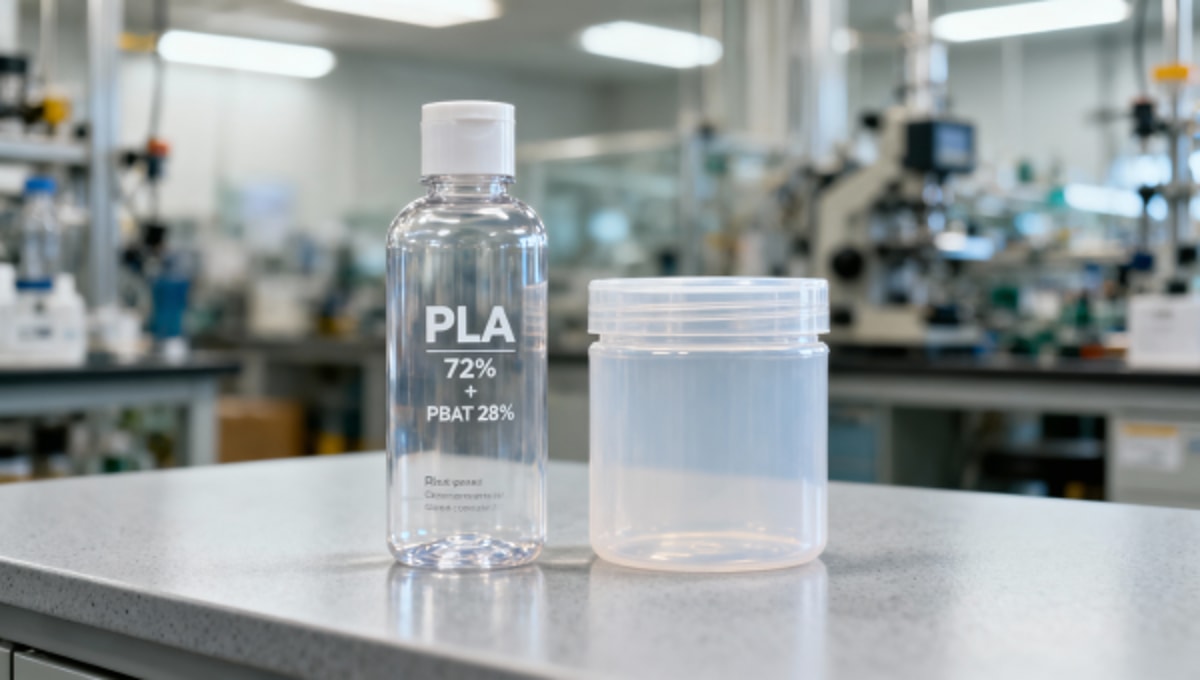
SIRIM Malaysia updated its national standard MS 2685:2026 — specifically Annex D — effective 4 May 2026, introducing mandatory ingredient-level labeling for biobased plastic containers used in cosmetic packaging. This change directly impacts exporters, manufacturers, and suppliers of cosmetic packaging materials, particularly those using polylactic acid (PLA) or polybutylene adipate terephthalate (PBAT). The requirement signals a tightening of environmental compliance thresholds in one of Southeast Asia’s key cosmetics import markets.
Event Overview
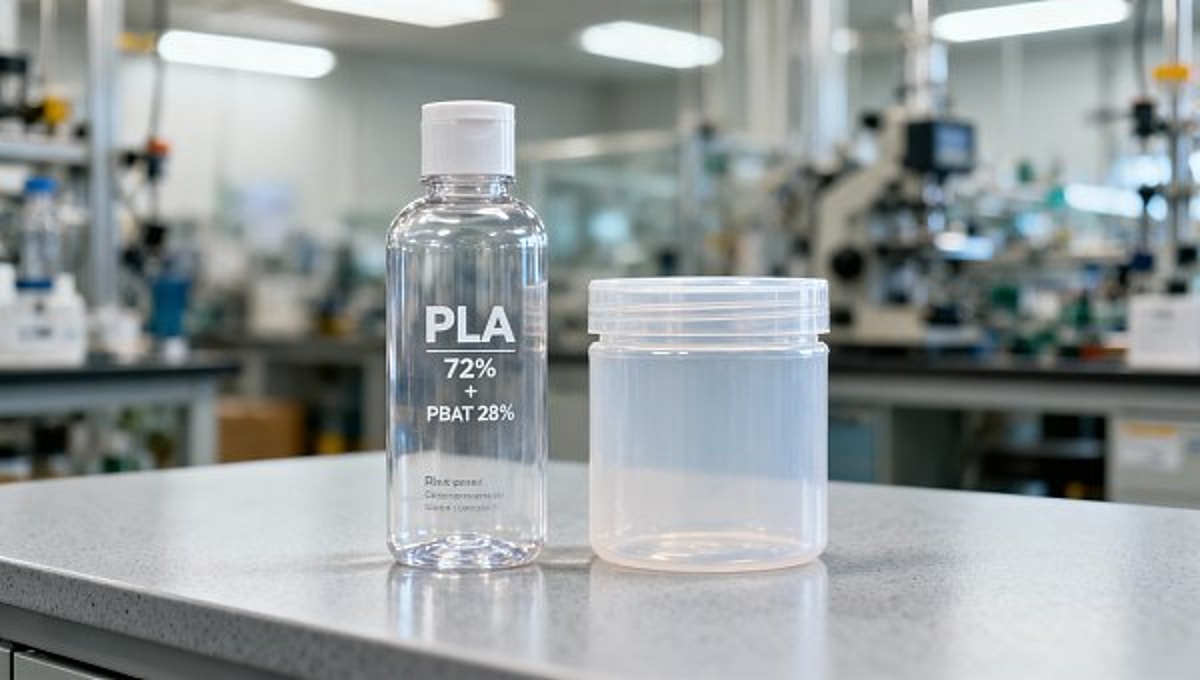
On 4 May 2026, the Standards and Industrial Research Institute of Malaysia (SIRIM) revised Annex D of Malaysian Standard MS 2685:2026. The update mandates that all cosmetic packaging falling under the ‘Cosmetics & Pkg’ category and made with biobased plastics — including PLA and PBAT — must declare the mass percentage of each component on both product labels and customs declaration documents (e.g., ‘PLA 72% + PBAT 28%’). Failure to comply triggers application of a 35% green tariff, treating the item as conventional plastic. Chinese packaging manufacturers are explicitly required to revise their material declaration documentation accordingly.
Industries Affected
Direct Exporters & Trading Companies
Companies exporting cosmetic packaging from China or other jurisdictions into Malaysia face immediate customs clearance implications. Non-compliant labeling may delay shipments or trigger tariff reassessments at entry. The requirement applies at the point of import declaration, meaning accuracy in HS code classification and accompanying documentation is now critical.
Raw Material Suppliers
Suppliers of PLA, PBAT, or blended bioplastics must provide certified compositional data — by mass — to downstream packaging manufacturers. This shifts responsibility upstream: material certificates must now specify exact formulation ratios, not just generic ‘biobased content’ claims.
Contract Packaging & OEM Manufacturers
OEMs producing bottles, jars, or tubes for international cosmetic brands must integrate new labeling specifications into production workflows and quality control checkpoints. Label artwork, mold engraving, and packaging specification sheets require revision to reflect mandated composition statements — even if only visible on secondary or inner labels.
Supply Chain & Compliance Service Providers
Third-party testing labs, customs brokers, and regulatory consultants supporting Malaysia-bound cosmetic packaging must update verification protocols. Pre-shipment audits now need to include label content validation against submitted material declarations and batch-specific test reports.
What Stakeholders Should Monitor and Do Now
Track official SIRIM implementation guidance
While MS 2685:2026 Annex D is published, SIRIM has not yet released detailed enforcement timelines, transitional provisions, or accepted formats for composition disclosure. Stakeholders should monitor SIRIM’s official portal and Malaysia’s Royal Customs Department for circulars or FAQs expected in Q3 2026.
Verify current packaging SKUs against the ‘Cosmetics & Pkg’ scope
The regulation applies only to packaging classified under the ‘Cosmetics & Pkg’ category per MS 2685. Not all PLA/PBAT containers fall under this scope — e.g., general-purpose food-grade or industrial containers are excluded. Companies should cross-check their HS codes and SIRIM product categorization before assuming applicability.
Update internal material documentation systems
Manufacturers must ensure traceability from raw material lot to finished container. This includes revising BOM templates, QC checklists, and export documentation workflows to capture and validate composition percentages — not just material type — for every shipment destined for Malaysia.
Engage with brand owners early on label redesign
Since composition statements must appear on product labels, coordination with cosmetic brand clients is essential. Any changes to label space, language requirements (e.g., bilingual English-Bahasa Malaysia), or regulatory disclaimers must be aligned prior to printing or molding cycles.
Editorial Perspective / Industry Observation
Observably, this update reflects Malaysia’s broader shift toward granular, verifiable sustainability claims — moving beyond broad ‘eco-friendly’ or ‘biodegradable’ labels toward quantified, auditable inputs. Analysis shows it functions less as an immediate trade barrier and more as a signal of evolving regional expectations: future standards in ASEAN may follow similar pathways, requiring full material transparency across packaging supply chains. From an industry perspective, this is not yet a fully operationalized regime — no penalties or audits have been publicly reported post-4 May — but it establishes a clear compliance baseline for 2026–2027 planning cycles. Continued attention is warranted, especially as SIRIM aligns this rule with Malaysia’s National Plastic Action Roadmap and upcoming Extended Producer Responsibility (EPR) framework.
This development underscores how environmental labeling policies are increasingly tied to tariff treatment — transforming sustainability compliance from a marketing consideration into a core logistics and customs function. It is better understood not as a standalone regulatory event, but as an early indicator of how bioplastic traceability will intersect with trade policy in emerging markets.
Information Sources
Main source: Standards and Industrial Research Institute of Malaysia (SIRIM) — Official publication of MS 2685:2026, Annex D (effective 4 May 2026).
Points requiring ongoing observation: Enforcement procedures, transition period details, and official interpretation of ‘Cosmetics & Pkg’ category boundaries remain pending formal clarification from SIRIM or Malaysia’s Ministry of Trade and Industry.
Related Intelligence
 Cosmetics & PkgMay 05, 2026Malaysia SIRIM Updates Eco-Label Rules for Cosmetic PackagingMalaysia SIRIM updates eco-label rules for cosmetic packaging: New MS 2685:2026 Annex D mandates ingredient-level bioplastic labeling — avoid 35% green tariffs!
 Electronic & RC ToysMay 05, 2026ICTI ETP 2026 Requires Blockchain Labor Traceability for RC Toy FactoriesICTI ETP 2026 mandates blockchain labor traceability for RC toy factories—learn how TrusTrace integration, deadlines, and compliance impact Walmart/Target suppliers.
 Nursery Furniture & MonitorsMay 05, 2026Shopee Launches Baby & Maternity Health Whitelist in SEAShopee’s Baby & Maternity Health Whitelist now requires CNAS-CPC certification for nursery furniture & baby monitors in Indonesia, Thailand, Vietnam — act now to avoid listing delays!
 Beauty DevicesMay 05, 2026Korea MFDS: Beauty Device Li-ion Cells Require UN38.3 + KC 62133-2:2026Korea MFDS now mandates UN38.3 + KC 62133-2:2026 for Li-ion cells in beauty devices—critical for exporters, suppliers & importers. Act before 1 Aug 2026!
") Nursery Furniture & MonitorsMay 05, 2026Amazon Japan Removes Non-Compliant Baby Monitors (JIS T 2101:2026)Amazon Japan removed non-compliant baby monitors lacking JIS T 2101:2026 certification and ≤0.3% AI false-alarm rate — act now to restore listings & avoid sales disruption.
Nursery Furniture & MonitorsMay 05, 2026Amazon Japan Removes Non-Compliant Baby Monitors (JIS T 2101:2026)Amazon Japan removed non-compliant baby monitors lacking JIS T 2101:2026 certification and ≤0.3% AI false-alarm rate — act now to restore listings & avoid sales disruption. STEM & Educational ToysMay 05, 2026Ningbo-Zhoushan Port Launches STEM Toy Green LaneSTEM toy green lane launched at Ningbo-Zhoushan Port — fast-track ASTM F963-23 customs clearance for exporters. Save 2.3 days, boost U.S. shipment efficiency!
 Smart Pet DevicesMay 05, 2026SASO Mandates Dual Cybersecurity Certification for Smart Pet Devices in Saudi ArabiaSASO mandates dual cybersecurity certification for smart pet devices in Saudi Arabia—ISO/IEC 27001 + SASO IoT Security Framework V2.3. Act now to secure your CoC before June 1, 2026!
 Baby Gear & StrollersMay 05, 2026Vietnam Customs Launches AI Clearance for Baby StrollersVietnam Customs AI clearance for baby strollers launches May 2026—48-hour clearance if Vietnamese ASCII labels comply. Act now to avoid 5–7 day delays!
 Camping & WaterMay 05, 2026EN 14350-1:2026 Enforced: BPA Migration Limit for Children's Drinkware Reduced to 0.01 mg/kgEN 14350-1:2026 enforced: BPA migration limit slashed to 0.01 mg/kg for children's drinkware — urgent compliance action needed for EU market access.
 Infant Feeding & CareMay 05, 2026FDA Tightens Microbial Migration Limits for Infant Feeding Utensils Effective May 4, 2026FDA tightens microbial migration limits for infant feeding utensils to ≤10 CFU/cm² effective May 4, 2026—key update for exporters, manufacturers & labs. Act now!
 Infant Feeding & CareMay 05, 2026Baby Digital Thermometer OEM: Certification Points That Shouldn’t Be MissedBaby digital thermometer OEM certification can make or break market entry. Learn the key CE, FDA, testing, traceability, and quality control points to approve safer, more reliable suppliers.
 Baby Gear & StrollersMay 05, 2026Wholesale Baby Shoes: Size Planning Tips That Reduce ReturnsWholesale baby shoes size planning tips for travel retail teams: reduce returns, improve supplier alignment, and boost customer satisfaction across global sales channels.
 Corporate & Seasonal GiftsMay 05, 2026Wholesale Baby Hooded Towels: What Makes a Set Feel Gift-ReadyWholesale baby hooded towels feel more gift-ready when they combine soft, safe fabrics, coordinated packaging, and retail appeal—helping distributors boost margins and attract modern buyers.