Korea MFDS: Beauty Device Li-ion Cells Require UN38.3 + KC 62133-2:2026
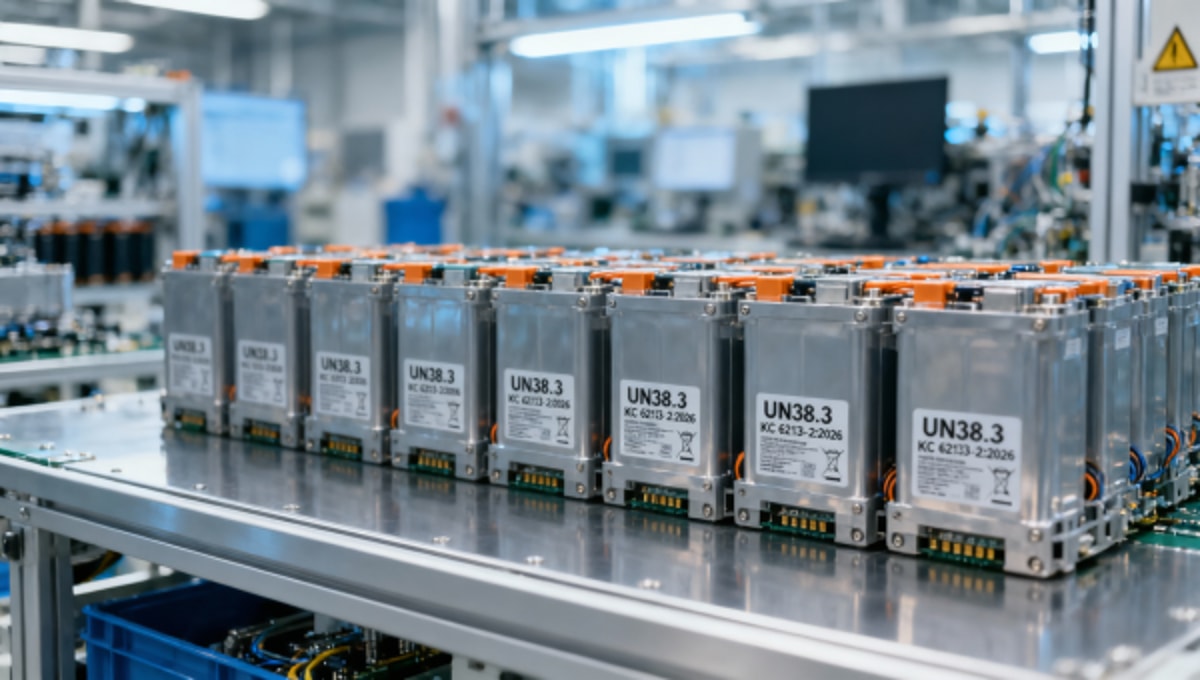
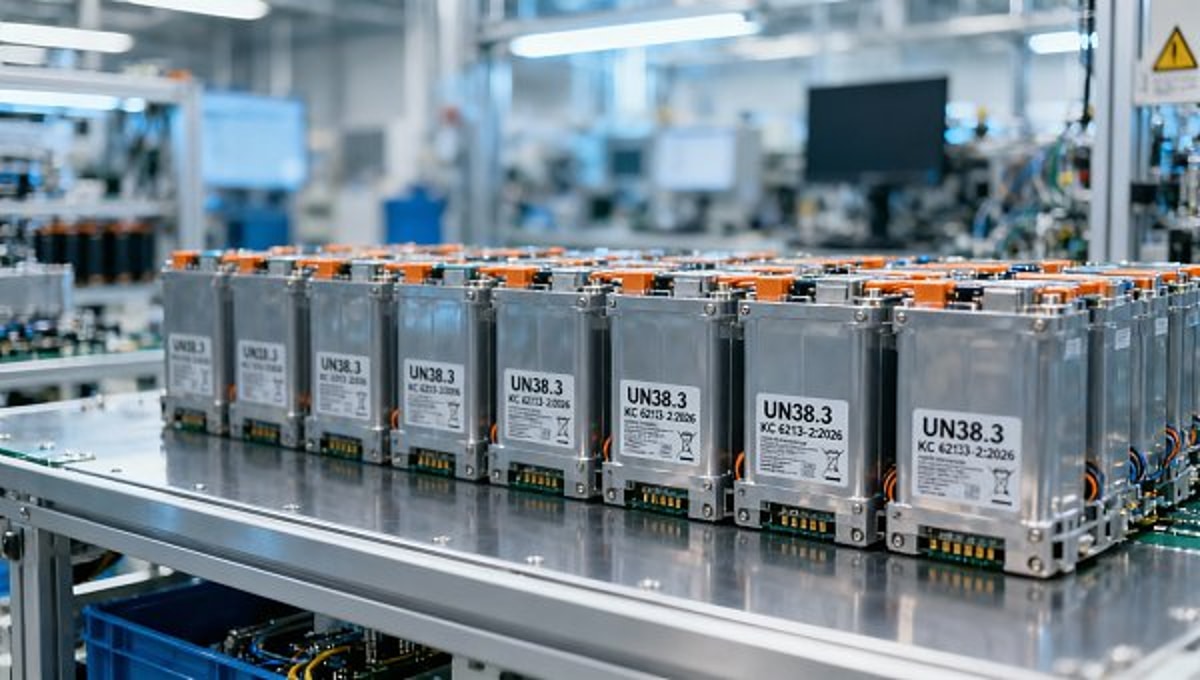
On 4 May 2026, the Korean Ministry of Food and Drug Safety (MFDS) issued WTO/TBT notification G/TBT/N/KOR/1228, mandating dual certification—UN38.3 transport safety testing and the newly revised KC 62133-2:2026 safety standard—for lithium-ion battery cells integrated into beauty devices (e.g., rechargeable RF and microcurrent devices). Enforcement begins 1 August 2026. Exporters and battery module suppliers serving the Korean beauty device market—especially those based in China—must take note, as this directly affects product compliance, market access, and supply chain readiness.
Event Overview
On 4 May 2026, the Korean Ministry of Food and Drug Safety (MFDS) submitted WTO/TBT notification G/TBT/N/KOR/1228 to the WTO Secretariat. The notification states that, effective 1 August 2026, all lithium-ion battery cells used in beauty devices—including but not limited to rechargeable radiofrequency (RF) devices and microcurrent devices—must comply with both UN38.3 (transport safety testing) and KC 62133-2:2026 (safety standard for secondary lithium cells and batteries). The notification further specifies that Chinese battery module suppliers must complete KC factory audits prior to market entry.
Industries Affected by Segment
Direct Exporters of Beauty Devices to Korea
These companies integrate lithium-ion battery cells into finished beauty devices and ship them to Korea. They are affected because MFDS now treats the battery cell—not just the final device—as a regulated component subject to independent certification. Compliance failure may result in customs detention, rejection at port, or post-market recall.
Battery Module Suppliers (e.g., China-based OEM/ODM Cell Integrators)
Suppliers providing battery modules (not bare cells) to beauty device manufacturers face new KC factory audit requirements under KC 62133-2:2026. Unlike previous versions, the 2026 edition introduces updated test criteria and mandatory on-site production facility evaluation—impacting lead time, documentation scope, and audit frequency.
Contract Manufacturers & EMS Providers
Electronics manufacturing service (EMS) providers assembling beauty devices with embedded batteries must verify upstream battery module compliance before integration. Non-compliant modules may invalidate the entire device’s KC certification, triggering retesting or redesign.
Importers & Distributors in Korea
Korean importers and distributors bear legal responsibility for product conformity under MFDS regulations. They must obtain and retain valid UN38.3 test reports and KC 62133-2:2026 certificates—including evidence of completed factory audits—for each battery batch supplied.
What Relevant Enterprises or Practitioners Should Focus On & How to Respond
Monitor official KC certification body updates and MFDS guidance documents
The KC 62133-2:2026 standard is newly introduced; its implementation guidelines, list of accredited testing labs, and accepted audit protocols are still being finalized. Enterprises should track announcements from Korea Testing & Research Institute (KTR) and Korea Certification Agency (KCA), as these will define acceptable evidence formats and transitional arrangements.
Identify high-risk SKUs and prioritize certification for models entering Korea after 1 August 2026
Not all beauty devices use lithium-ion battery cells—but those that do (especially portable, rechargeable units) fall under the mandate. Companies should map their export SKUs against battery chemistry, capacity, and integration method to isolate models requiring immediate UN38.3 + KC 62133-2:2026 alignment.
Distinguish between policy signal and operational readiness
This WTO notification signals regulatory intent—not yet full enforcement detail. While the 1 August 2026 date is fixed, grace periods for existing stock, grandfathering provisions for pre-certified modules, or phased rollout options remain unconfirmed. Enterprises should treat the deadline as binding but await formal KC scheme bulletins before committing to full-scale re-certification.
Initiate supplier coordination and internal documentation review now
UN38.3 reports require third-party lab validation and typically take 4–6 weeks. KC factory audits involve document submission, on-site inspection, and corrective action cycles. Companies should request current UN38.3 reports from battery suppliers, assess audit readiness of manufacturing sites, and align technical files (e.g., BOMs, circuit diagrams, safety test records) with KC 62133-2:2026 Annex A requirements.
Editorial Perspective / Industry Observation
Observably, this notification reflects MFDS’s increasing focus on component-level safety accountability within regulated consumer electronics—not just end-product conformity. Analysis shows it is less a sudden shift than a formalization of long-emerging expectations: Korean regulators have progressively tightened battery oversight since 2022, especially for wearable and personal-use devices with direct skin contact. This measure is better understood as a consolidation of enforcement priorities rather than an entirely new regime. From an industry perspective, it signals that battery compliance is no longer a ‘back-end’ engineering task—it is now a cross-functional prerequisite spanning procurement, QA, regulatory affairs, and logistics. Continuous monitoring remains essential, as KC 62133-2:2026’s technical annexes and audit checklists are still undergoing public consultation.
In summary, the MFDS notification represents a targeted, enforceable requirement—not a general advisory—with concrete implications for market access timelines and supply chain verification. It does not introduce novel safety concepts, but elevates existing international standards (IEC 62133-2) to mandatory national conformity status under Korea’s KC framework. Current interpretation should emphasize procedural readiness over technical novelty: success hinges on timely engagement with accredited labs and auditors—not on fundamental redesign.
Source: WTO/TBT Notification G/TBT/N/KOR/1228, published by the Korean Ministry of Food and Drug Safety (MFDS) on 4 May 2026. Further details on KC 62133-2:2026 implementation—including accredited laboratories and audit checklist—are pending official release from the Korea Certification Agency (KCA) and Korea Testing & Research Institute (KTR).
Related Intelligence
 Cosmetics & PkgMay 05, 2026Malaysia SIRIM Updates Eco-Label Rules for Cosmetic PackagingMalaysia SIRIM updates eco-label rules for cosmetic packaging: New MS 2685:2026 Annex D mandates ingredient-level bioplastic labeling — avoid 35% green tariffs!
 Electronic & RC ToysMay 05, 2026ICTI ETP 2026 Requires Blockchain Labor Traceability for RC Toy FactoriesICTI ETP 2026 mandates blockchain labor traceability for RC toy factories—learn how TrusTrace integration, deadlines, and compliance impact Walmart/Target suppliers.
 Nursery Furniture & MonitorsMay 05, 2026Shopee Launches Baby & Maternity Health Whitelist in SEAShopee’s Baby & Maternity Health Whitelist now requires CNAS-CPC certification for nursery furniture & baby monitors in Indonesia, Thailand, Vietnam — act now to avoid listing delays!
 Beauty DevicesMay 05, 2026Korea MFDS: Beauty Device Li-ion Cells Require UN38.3 + KC 62133-2:2026Korea MFDS now mandates UN38.3 + KC 62133-2:2026 for Li-ion cells in beauty devices—critical for exporters, suppliers & importers. Act before 1 Aug 2026!
") Nursery Furniture & MonitorsMay 05, 2026Amazon Japan Removes Non-Compliant Baby Monitors (JIS T 2101:2026)Amazon Japan removed non-compliant baby monitors lacking JIS T 2101:2026 certification and ≤0.3% AI false-alarm rate — act now to restore listings & avoid sales disruption.
Nursery Furniture & MonitorsMay 05, 2026Amazon Japan Removes Non-Compliant Baby Monitors (JIS T 2101:2026)Amazon Japan removed non-compliant baby monitors lacking JIS T 2101:2026 certification and ≤0.3% AI false-alarm rate — act now to restore listings & avoid sales disruption. STEM & Educational ToysMay 05, 2026Ningbo-Zhoushan Port Launches STEM Toy Green LaneSTEM toy green lane launched at Ningbo-Zhoushan Port — fast-track ASTM F963-23 customs clearance for exporters. Save 2.3 days, boost U.S. shipment efficiency!
 Smart Pet DevicesMay 05, 2026SASO Mandates Dual Cybersecurity Certification for Smart Pet Devices in Saudi ArabiaSASO mandates dual cybersecurity certification for smart pet devices in Saudi Arabia—ISO/IEC 27001 + SASO IoT Security Framework V2.3. Act now to secure your CoC before June 1, 2026!
 Baby Gear & StrollersMay 05, 2026Vietnam Customs Launches AI Clearance for Baby StrollersVietnam Customs AI clearance for baby strollers launches May 2026—48-hour clearance if Vietnamese ASCII labels comply. Act now to avoid 5–7 day delays!
 Camping & WaterMay 05, 2026EN 14350-1:2026 Enforced: BPA Migration Limit for Children's Drinkware Reduced to 0.01 mg/kgEN 14350-1:2026 enforced: BPA migration limit slashed to 0.01 mg/kg for children's drinkware — urgent compliance action needed for EU market access.
 Infant Feeding & CareMay 05, 2026FDA Tightens Microbial Migration Limits for Infant Feeding Utensils Effective May 4, 2026FDA tightens microbial migration limits for infant feeding utensils to ≤10 CFU/cm² effective May 4, 2026—key update for exporters, manufacturers & labs. Act now!
 Infant Feeding & CareMay 05, 2026Baby Digital Thermometer OEM: Certification Points That Shouldn’t Be MissedBaby digital thermometer OEM certification can make or break market entry. Learn the key CE, FDA, testing, traceability, and quality control points to approve safer, more reliable suppliers.
 Baby Gear & StrollersMay 05, 2026Wholesale Baby Shoes: Size Planning Tips That Reduce ReturnsWholesale baby shoes size planning tips for travel retail teams: reduce returns, improve supplier alignment, and boost customer satisfaction across global sales channels.
 Corporate & Seasonal GiftsMay 05, 2026Wholesale Baby Hooded Towels: What Makes a Set Feel Gift-ReadyWholesale baby hooded towels feel more gift-ready when they combine soft, safe fabrics, coordinated packaging, and retail appeal—helping distributors boost margins and attract modern buyers.