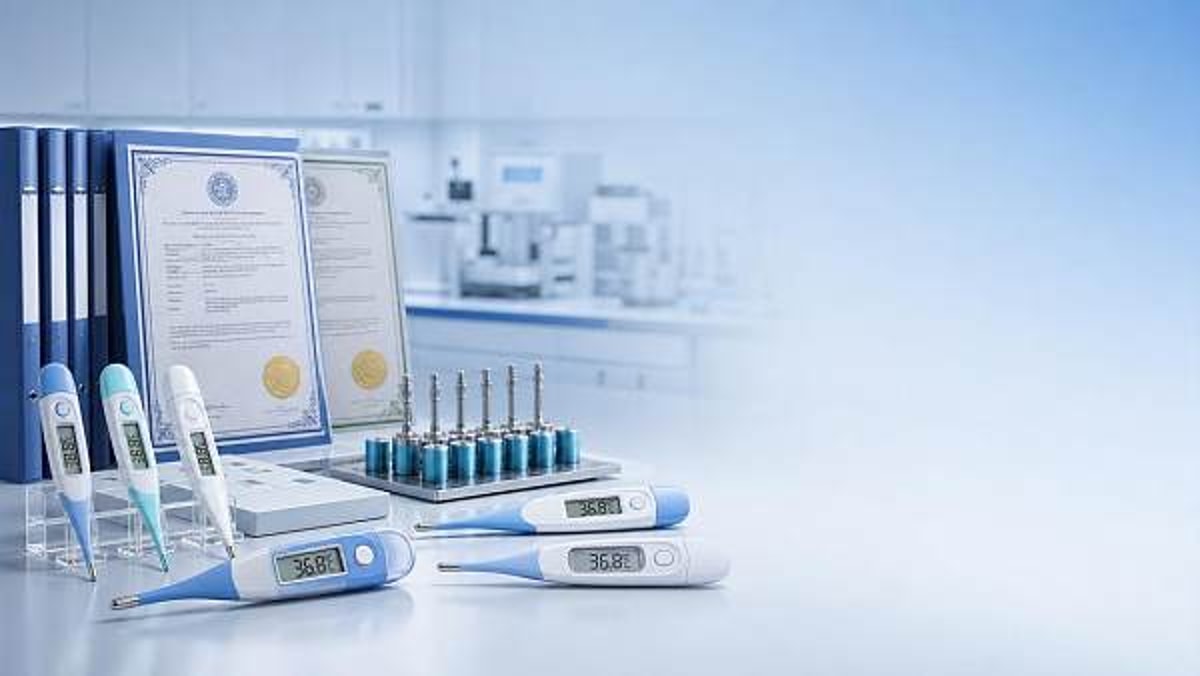
Baby Digital Thermometer OEM: Certification Points That Shouldn’t Be Missed

For technical evaluators assessing a baby digital thermometer OEM, certification is not a box-ticking exercise but a core indicator of product safety, market access, and supplier reliability. From CE and FDA pathways to testing documentation, traceability, and manufacturing controls, missing one critical compliance point can create costly risks. This guide outlines the certification factors that deserve close scrutiny before supplier approval.
What Technical Evaluators Are Really Looking for in a Baby Digital Thermometer OEM
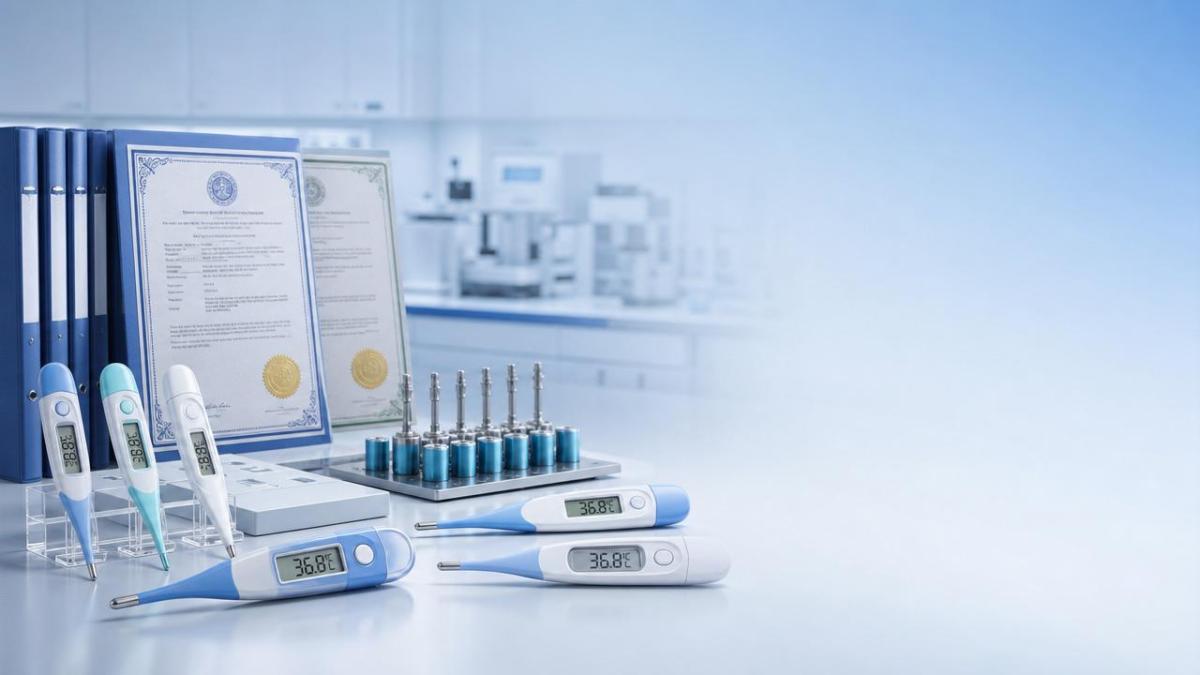
When buyers search for a baby digital thermometer OEM, the real intent is rarely limited to product features. Technical evaluators want to know whether a supplier can consistently deliver a safe, compliant, and market-ready product without creating downstream regulatory or recall risk.
That means the first question is not simply whether the factory “has certificates.” The more important question is whether the OEM understands which certifications apply to a baby-use thermometer, how those certifications were obtained, and whether the supporting quality system can withstand retailer, importer, or regulatory scrutiny.
For infant and maternal care products, certification credibility directly affects market access. A supplier may offer attractive pricing and a modern-looking device, but if its test reports are outdated, its declarations are incomplete, or its manufacturing controls are weak, the sourcing decision becomes high risk. Technical teams know that one missing compliance point can delay launches, trigger customs holds, or damage brand reputation.
In practical terms, technical evaluators are usually assessing four things at once: regulatory fit for destination markets, product safety evidence, manufacturing process control, and the supplier’s ability to maintain compliance through future production runs. A reliable OEM should demonstrate all four, not just provide a folder of PDFs.
Start with Market-Specific Regulatory Pathways, Not Generic Certificates
One of the most common mistakes in supplier screening is accepting generic statements such as “we have CE” or “our product is FDA approved.” For a baby digital thermometer OEM, those phrases are often oversimplified, and sometimes misleading. Evaluators should begin by clarifying the target markets and matching them to the correct regulatory pathway.
For the European market, CE marking is a key requirement, but it is not a standalone certificate purchased from a lab. It is a conformity framework tied to applicable EU legislation. Depending on the product classification and claims, the thermometer may fall under medical device requirements, which means the technical file, risk management, labeling, and conformity assessment all matter.
For the United States, many buyers ask about FDA. Here, evaluators should distinguish between FDA registration, listing, and potential premarket requirements depending on classification. A supplier that says “FDA certified” may be using inaccurate language. Technical teams should ask for exact regulatory status, establishment registration details if applicable, device listing information, and the supporting compliance basis.
Other markets may require UKCA, Health Canada compliance, GCC conformity, or local language labeling and importer records. A capable OEM should not only know its current certifications but also be able to explain how product documents, packaging, and declarations would be adapted for each destination market.
The takeaway is simple: certification must be checked against intended sales geography. A technically mature supplier speaks in terms of applicable regulations, standards, and documentation structure rather than vague marketing claims.
Which Core Certifications and Standards Should Not Be Missed
Although exact requirements vary by market and product type, there are several certification and standards checkpoints that technical evaluators should review closely when assessing a baby digital thermometer OEM.
First, verify compliance with electrical safety and electromagnetic compatibility requirements where applicable. Digital thermometers often contain electronics, batteries, sensors, and display components. That creates a need to confirm product safety under relevant standards and ensure the device will function correctly without hazardous overheating, battery leakage, or interference issues.
Second, check material safety, especially because the product is intended for babies and may contact skin, mouth, or sensitive body areas depending on usage type. Evaluators should review whether plastics, silicone parts, probes, adhesives, and inks are tested for restricted substances. Depending on the market, this may involve RoHS, REACH, phthalate controls, or biocompatibility-related assessments.
Third, examine accuracy and performance standards. A baby digital thermometer is not judged only by whether it turns on. It must measure temperature within specified tolerance ranges and maintain that accuracy over repeated use and production lots. Reliable OEMs should be able to provide validation data, calibration procedures, and consistency evidence tied to the product specification.
Fourth, if the product is sold as a children’s or infant-related consumer item in certain markets, packaging or accessory compliance may also matter. For example, if retail channels require CPSIA-related screening for children’s products, or if lithium battery transport rules apply, those documents need to be accounted for early.
In short, the certificate set should be viewed as a matrix: regulatory compliance, product safety, material compliance, electrical performance, and market-entry documentation. Missing one element can make the rest far less useful.
Why Test Reports Matter More Than Certificate Covers
Technical evaluators should never stop at the cover page of a certificate. In many sourcing projects, the real story sits inside the test report, including sample description, standard version, test conditions, model references, pass criteria, and any exclusions. This is where weak OEMs are often exposed.
A common issue is model mismatch. A supplier may submit a report for a similar thermometer, an older housing version, or a shared platform that is not identical to the quoted product. Even small changes in probe structure, battery type, plastic resin, firmware, or packaging can affect whether prior reports remain valid. Evaluators should match reports against the exact SKU, BOM, and revision.
Date validity also matters. Some standards are updated, and old test reports may no longer reflect current regulatory expectations. Likewise, if production moved to a new factory site or changed a critical component supplier, historical reports may no longer give full assurance. Ask when the product was last tested, whether any material or structural changes occurred afterward, and whether delta testing was performed.
Accreditation status is another essential checkpoint. Reports should come from competent laboratories, ideally with recognized accreditation relevant to the tests performed. A legitimate OEM should be comfortable sharing the lab identity, report number, issue date, and contactable verification path. Resistance or vagueness here is a red flag.
Finally, read limitations and remarks sections carefully. Some reports pass only under narrow conditions or exclude certain accessories, packaging, or claims. Technical teams should verify that the compliance evidence actually covers the marketed configuration, not just a stripped-down lab sample.
Assess the OEM’s Quality Management System, Not Just Product-Level Compliance
Even strong initial test reports do not guarantee stable future compliance. For technical evaluators, the deeper question is whether the baby digital thermometer OEM has a quality management system capable of reproducing compliant output at scale.
ISO 13485 often becomes a major reference point if the thermometer is positioned within medical-device-related regulatory pathways. Even when not strictly mandatory for every commercial scenario, it is a strong indicator that the manufacturer understands design control, risk management, process validation, complaint handling, corrective actions, and document control in a regulated context.
ISO 9001 can also be relevant as a broader quality baseline, but evaluators should not treat it as equivalent to product-specific compliance. A factory may have a general quality certificate and still lack robust controls over calibration, traceability, software revision management, or sterilization-related handling if those apply to the product.
Ask for evidence of incoming quality control, in-process inspection, final functional testing, and calibration management. Temperature measurement devices depend heavily on sensor consistency and assembly accuracy. If probe alignment, thermistor quality, or firmware threshold logic drifts between lots, compliance can erode even when the original sample passed testing.
Technical teams should also review change control procedures. An OEM that can explain how it handles component substitutions, tooling changes, packaging updates, and retesting triggers is usually far safer than one that simply says “we inform customers if needed.” Good suppliers have written engineering change processes and clear approval workflows.
Traceability, Labeling, and Document Control Are Common Failure Points
Many sourcing failures do not start with dramatic safety defects. They start with poor traceability and incomplete documentation. For baby-care devices, that risk is especially serious because retailers, importers, and regulators expect rapid identification of affected lots if a complaint or deviation appears.
Technical evaluators should confirm whether the OEM can trace finished goods back to component batches, production dates, line records, and inspection results. At minimum, there should be lot coding or serial-level logic that supports containment actions. If the supplier cannot clearly explain its traceability chain, post-market risk rises sharply.
Labeling should also be reviewed with the same rigor as the product itself. Required elements may include manufacturer information, importer details, product model, warnings, disposal marks, battery instructions, storage conditions, age-related cautions, and market-specific symbols. Incorrect or incomplete labeling can create noncompliance even when the device hardware is sound.
Document control is another overlooked checkpoint. Evaluators should verify that declarations of conformity, user manuals, artwork, specifications, and reports are revision-controlled. It is not unusual to find an OEM using the latest housing design with an old instruction manual or an outdated declaration referencing superseded standards.
A disciplined supplier can produce a coherent documentation package where every file matches the same product revision. That consistency is often a better indicator of reliability than polished sales presentations.
How to Spot Red Flags During OEM Evaluation
Some warning signs appear repeatedly in thermometer sourcing projects. One is overreliance on downloadable certificates without technical explanation. If the supplier cannot explain what standard was tested, which model was covered, or what changes would require retesting, the compliance foundation may be weak.
Another red flag is inconsistent naming. If the model number on the quotation differs from the report, packaging artwork, declaration, or user manual, that inconsistency should be investigated immediately. Small naming errors can hide larger control problems inside the supplier’s documentation system.
Unclear factory identity is also risky. Sometimes the trading company, certificate holder, and production site are different entities. That is not automatically unacceptable, but technical evaluators should understand exactly who manufactures the product, who owns the technical file, and who is responsible for ongoing conformity maintenance.
Be cautious if the OEM avoids sharing test details until after deposit, cannot provide recent audit records, or appears unable to answer questions about calibration intervals, complaint handling, or nonconformance control. These are not administrative side issues. They directly affect whether the product will remain compliant after commercial launch.
Finally, if pricing is unusually low compared with the certification scope claimed, that gap deserves scrutiny. Maintaining regulated documentation, accredited testing, stable materials, and quality controls carries real cost. A price that seems too good often reflects hidden shortcuts.
A Practical Certification Review Checklist for Supplier Approval
For technical evaluators, the most effective approach is to convert certification review into a structured approval checklist. This reduces the chance of being impressed by isolated documents while missing system-level gaps.
Start by confirming target markets and intended product claims. Then request the exact compliance package tied to the quoted model: test reports, declarations, quality certificates, labeling files, user manuals, BOM references, and factory identity details. Do not review these as separate items. Review them as a connected compliance set.
Next, validate consistency across documents. The model number, product image, manufacturer name, factory address, and standard references should align. Where they do not, ask for written clarification and supporting revision history.
Then assess manufacturing control. Review quality management certificates, audit summaries if available, calibration records, sample inspection protocols, and change control procedures. If possible, align this desk review with a remote or on-site factory audit focused on regulated production discipline rather than general capability alone.
After that, evaluate maintenance readiness. Ask how the supplier monitors regulatory updates, schedules retesting, manages component changes, and handles post-market complaints. An OEM that can maintain compliance over time is more valuable than one that only passed a test once.
Finally, assign approval status by risk tier. A supplier with complete, current, coherent, and verifiable documentation may move forward. A supplier with partial compliance, ambiguous model linkage, or weak process control should be conditionally approved only after corrective actions. This kind of disciplined screening protects both technical integrity and commercial timelines.
Final Takeaway: Certification Is a Reliability Signal, Not Just a Market Entry Requirement
When evaluating a baby digital thermometer OEM, certification should be treated as evidence of overall supplier maturity. The strongest OEMs do not merely send CE or FDA-related documents on request. They demonstrate a clear understanding of regulatory scope, maintain robust test evidence, control materials and processes, and preserve traceability across every production lot.
For technical evaluators, the goal is not to collect the most certificates. It is to determine whether the supplier can support safe, repeatable, and market-compliant production without creating hidden liabilities for the buyer. That requires looking beyond certificate titles and into standards coverage, report validity, labeling accuracy, quality systems, and change management.
If one point deserves emphasis, it is this: a compliant sample is not the same as a compliant supply chain. The best sourcing decisions come from OEMs that can prove both. In baby-care categories, where safety expectations are high and tolerance for error is low, that distinction should never be missed.
Related Intelligence
 Cosmetics & PkgMay 05, 2026Malaysia SIRIM Updates Eco-Label Rules for Cosmetic PackagingMalaysia SIRIM updates eco-label rules for cosmetic packaging: New MS 2685:2026 Annex D mandates ingredient-level bioplastic labeling — avoid 35% green tariffs!
 Electronic & RC ToysMay 05, 2026ICTI ETP 2026 Requires Blockchain Labor Traceability for RC Toy FactoriesICTI ETP 2026 mandates blockchain labor traceability for RC toy factories—learn how TrusTrace integration, deadlines, and compliance impact Walmart/Target suppliers.
 Nursery Furniture & MonitorsMay 05, 2026Shopee Launches Baby & Maternity Health Whitelist in SEAShopee’s Baby & Maternity Health Whitelist now requires CNAS-CPC certification for nursery furniture & baby monitors in Indonesia, Thailand, Vietnam — act now to avoid listing delays!
 Beauty DevicesMay 05, 2026Korea MFDS: Beauty Device Li-ion Cells Require UN38.3 + KC 62133-2:2026Korea MFDS now mandates UN38.3 + KC 62133-2:2026 for Li-ion cells in beauty devices—critical for exporters, suppliers & importers. Act before 1 Aug 2026!
") Nursery Furniture & MonitorsMay 05, 2026Amazon Japan Removes Non-Compliant Baby Monitors (JIS T 2101:2026)Amazon Japan removed non-compliant baby monitors lacking JIS T 2101:2026 certification and ≤0.3% AI false-alarm rate — act now to restore listings & avoid sales disruption.
Nursery Furniture & MonitorsMay 05, 2026Amazon Japan Removes Non-Compliant Baby Monitors (JIS T 2101:2026)Amazon Japan removed non-compliant baby monitors lacking JIS T 2101:2026 certification and ≤0.3% AI false-alarm rate — act now to restore listings & avoid sales disruption. STEM & Educational ToysMay 05, 2026Ningbo-Zhoushan Port Launches STEM Toy Green LaneSTEM toy green lane launched at Ningbo-Zhoushan Port — fast-track ASTM F963-23 customs clearance for exporters. Save 2.3 days, boost U.S. shipment efficiency!
 Smart Pet DevicesMay 05, 2026SASO Mandates Dual Cybersecurity Certification for Smart Pet Devices in Saudi ArabiaSASO mandates dual cybersecurity certification for smart pet devices in Saudi Arabia—ISO/IEC 27001 + SASO IoT Security Framework V2.3. Act now to secure your CoC before June 1, 2026!
 Baby Gear & StrollersMay 05, 2026Vietnam Customs Launches AI Clearance for Baby StrollersVietnam Customs AI clearance for baby strollers launches May 2026—48-hour clearance if Vietnamese ASCII labels comply. Act now to avoid 5–7 day delays!
 Camping & WaterMay 05, 2026EN 14350-1:2026 Enforced: BPA Migration Limit for Children's Drinkware Reduced to 0.01 mg/kgEN 14350-1:2026 enforced: BPA migration limit slashed to 0.01 mg/kg for children's drinkware — urgent compliance action needed for EU market access.
 Infant Feeding & CareMay 05, 2026FDA Tightens Microbial Migration Limits for Infant Feeding Utensils Effective May 4, 2026FDA tightens microbial migration limits for infant feeding utensils to ≤10 CFU/cm² effective May 4, 2026—key update for exporters, manufacturers & labs. Act now!
 Infant Feeding & CareMay 05, 2026Baby Digital Thermometer OEM: Certification Points That Shouldn’t Be MissedBaby digital thermometer OEM certification can make or break market entry. Learn the key CE, FDA, testing, traceability, and quality control points to approve safer, more reliable suppliers.
 Baby Gear & StrollersMay 05, 2026Wholesale Baby Shoes: Size Planning Tips That Reduce ReturnsWholesale baby shoes size planning tips for travel retail teams: reduce returns, improve supplier alignment, and boost customer satisfaction across global sales channels.
 Corporate & Seasonal GiftsMay 05, 2026Wholesale Baby Hooded Towels: What Makes a Set Feel Gift-ReadyWholesale baby hooded towels feel more gift-ready when they combine soft, safe fabrics, coordinated packaging, and retail appeal—helping distributors boost margins and attract modern buyers.