EN 14350-1:2026 Enforced: BPA Migration Limit for Children's Drinkware Reduced to 0.01 mg/kg
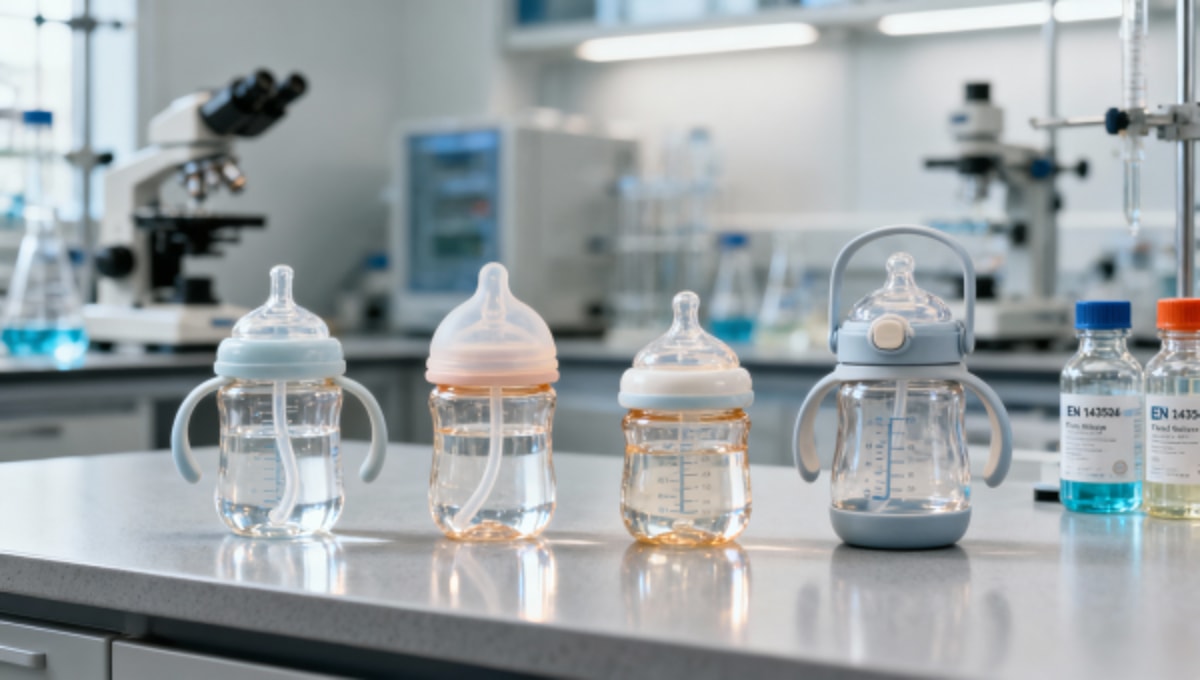
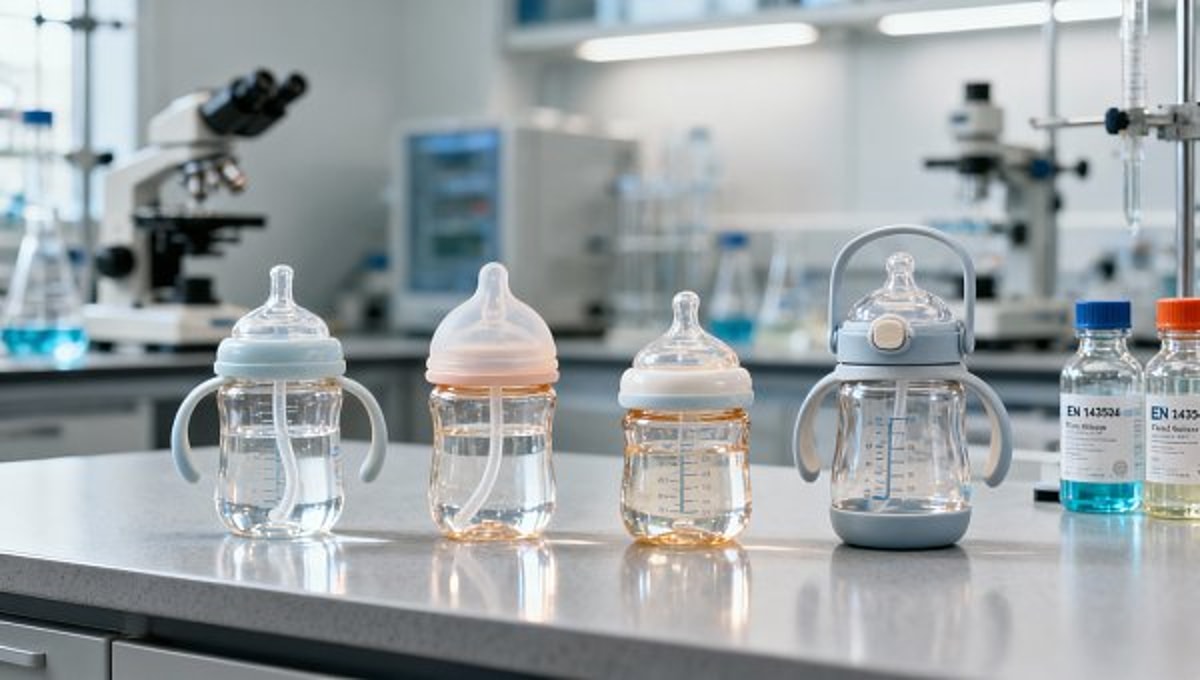
On 4 May 2026, the European Committee for Standardization (CEN) formally enforced EN 14350-1:2026, tightening the specific migration limit for bisphenol A (BPA) in children’s drinking cups from 0.04 mg/kg to 0.01 mg/kg. The standard applies to products under Camping & Water and Infant Feeding & Care categories — directly impacting manufacturers, exporters, and compliance service providers serving the EU market.
Event Overview
The European Committee for Standardization (CEN) announced on 4 May 2026 that EN 14350-1:2026 is now mandatory. This revision reduces the maximum allowable BPA migration level in children’s drinkware from 0.04 mg/kg to 0.01 mg/kg and introduces concurrent monitoring requirements for phthalates. The scope explicitly covers two product groups: Camping & Water, and Infant Feeding & Care. Affected exporters — particularly those based in China — are required to submit full-scope test reports from accredited laboratories such as SGS or Intertek.
Industries Impacted by Segment
Direct Exporters (e.g., Chinese OEM/ODM suppliers)
These companies face immediate compliance pressure because EN 14350-1:2026 is now a de facto market access requirement for placing children’s drinkware on the EU market. Non-compliant products risk customs rejection, recall, or withdrawal from distribution channels.
Raw Material Suppliers (e.g., polymer compounders, BPA-free resin producers)
Suppliers of polycarbonate alternatives or BPA-free copolyesters must verify that their formulations meet the new 0.01 mg/kg migration threshold under standardized testing conditions (e.g., food simulant D, 60°C, 2 h). Supply chain traceability and material declarations become more critical.
Contract Manufacturers & Assemblers
Manufacturers handling final assembly — especially those using multi-material components (e.g., silicone spouts, plastic lids, inner coatings) — must reassess migration contributions from all parts contacting food simulants. Composite migration testing across interfaces is now essential.
Compliance & Testing Service Providers
Laboratories and certification bodies must update test protocols to reflect the revised BPA limit and newly mandated phthalate screening. Clients will require updated test reports referencing EN 14350-1:2026 — not prior editions — for CE marking or importer declarations.
What Relevant Enterprises or Practitioners Should Focus On Now
Confirm applicability against actual product classification
Not all drinkware falls under EN 14350-1:2026. Enterprises should verify whether their products belong to the defined ‘Infant Feeding & Care’ or ‘Camping & Water’ categories per CEN’s scope definition — e.g., sippy cups intended for children under 36 months are clearly in scope; general-purpose reusable bottles may not be.
Re-test existing SKUs with accredited labs under the new limit
Previous test reports citing EN 14350-1:2020 or earlier versions do not satisfy the 0.01 mg/kg requirement. Companies must commission new full-scope tests — including BPA migration (at the tightened limit) and phthalate screening — from SGS, Intertek, or other EU-notified bodies.
Review supplier documentation for upstream materials
Material declarations and DoC (Declaration of Conformity) from resin, colorant, and additive suppliers must now support compliance with the 0.01 mg/kg BPA migration limit — not just ‘BPA-free’ claims. Traceability to batch-level test data is increasingly expected.
Monitor enforcement patterns at EU borders and national market surveillance authorities
While the standard is now mandatory, enforcement intensity may vary across Member States during the initial phase. Observably, national authorities such as Germany’s LAVES or France’s DGCCRF have previously prioritized BPA in infant products — early detection of non-compliant shipments remains likely.
Editorial Perspective / Industry Observation
This revision is better understood as both an operational milestone and a regulatory signal. Analysis shows that the fourfold reduction in BPA migration reflects growing alignment between EN standards and EFSA’s 2023 scientific opinion lowering the TDI for BPA. From an industry perspective, the inclusion of phthalates signals a broader shift toward cumulative chemical risk assessment in food contact materials — not just single-substance limits. Current enforcement does not yet mandate full REACH SVHC screening, but the direction is evident. It is not yet a systemic overhaul, but rather a targeted escalation in high-exposure-use categories where children’s vulnerability is central.
Conclusion
EN 14350-1:2026 represents a calibrated tightening of chemical safety requirements for children’s drinkware — not a paradigm shift, but a measurable step up in evidentiary and procedural expectations. For affected enterprises, it means revalidating product compliance through updated testing, reinforcing supply chain documentation, and distinguishing between formal legal entry requirements and emerging best practices. The most pragmatic interpretation is that this is a binding compliance checkpoint — not merely advisory guidance — and its impact is concentrated, actionable, and time-sensitive.
Information Sources
Main source: Official announcement by the European Committee for Standardization (CEN), published 4 May 2026. Ongoing verification of national market surveillance implementation across EU Member States remains pending and requires continued observation.
Related Intelligence
 Cosmetics & PkgMay 05, 2026Malaysia SIRIM Updates Eco-Label Rules for Cosmetic PackagingMalaysia SIRIM updates eco-label rules for cosmetic packaging: New MS 2685:2026 Annex D mandates ingredient-level bioplastic labeling — avoid 35% green tariffs!
 Electronic & RC ToysMay 05, 2026ICTI ETP 2026 Requires Blockchain Labor Traceability for RC Toy FactoriesICTI ETP 2026 mandates blockchain labor traceability for RC toy factories—learn how TrusTrace integration, deadlines, and compliance impact Walmart/Target suppliers.
 Nursery Furniture & MonitorsMay 05, 2026Shopee Launches Baby & Maternity Health Whitelist in SEAShopee’s Baby & Maternity Health Whitelist now requires CNAS-CPC certification for nursery furniture & baby monitors in Indonesia, Thailand, Vietnam — act now to avoid listing delays!
 Beauty DevicesMay 05, 2026Korea MFDS: Beauty Device Li-ion Cells Require UN38.3 + KC 62133-2:2026Korea MFDS now mandates UN38.3 + KC 62133-2:2026 for Li-ion cells in beauty devices—critical for exporters, suppliers & importers. Act before 1 Aug 2026!
") Nursery Furniture & MonitorsMay 05, 2026Amazon Japan Removes Non-Compliant Baby Monitors (JIS T 2101:2026)Amazon Japan removed non-compliant baby monitors lacking JIS T 2101:2026 certification and ≤0.3% AI false-alarm rate — act now to restore listings & avoid sales disruption.
Nursery Furniture & MonitorsMay 05, 2026Amazon Japan Removes Non-Compliant Baby Monitors (JIS T 2101:2026)Amazon Japan removed non-compliant baby monitors lacking JIS T 2101:2026 certification and ≤0.3% AI false-alarm rate — act now to restore listings & avoid sales disruption. STEM & Educational ToysMay 05, 2026Ningbo-Zhoushan Port Launches STEM Toy Green LaneSTEM toy green lane launched at Ningbo-Zhoushan Port — fast-track ASTM F963-23 customs clearance for exporters. Save 2.3 days, boost U.S. shipment efficiency!
 Smart Pet DevicesMay 05, 2026SASO Mandates Dual Cybersecurity Certification for Smart Pet Devices in Saudi ArabiaSASO mandates dual cybersecurity certification for smart pet devices in Saudi Arabia—ISO/IEC 27001 + SASO IoT Security Framework V2.3. Act now to secure your CoC before June 1, 2026!
 Baby Gear & StrollersMay 05, 2026Vietnam Customs Launches AI Clearance for Baby StrollersVietnam Customs AI clearance for baby strollers launches May 2026—48-hour clearance if Vietnamese ASCII labels comply. Act now to avoid 5–7 day delays!
 Camping & WaterMay 05, 2026EN 14350-1:2026 Enforced: BPA Migration Limit for Children's Drinkware Reduced to 0.01 mg/kgEN 14350-1:2026 enforced: BPA migration limit slashed to 0.01 mg/kg for children's drinkware — urgent compliance action needed for EU market access.
 Infant Feeding & CareMay 05, 2026FDA Tightens Microbial Migration Limits for Infant Feeding Utensils Effective May 4, 2026FDA tightens microbial migration limits for infant feeding utensils to ≤10 CFU/cm² effective May 4, 2026—key update for exporters, manufacturers & labs. Act now!
 Infant Feeding & CareMay 05, 2026Baby Digital Thermometer OEM: Certification Points That Shouldn’t Be MissedBaby digital thermometer OEM certification can make or break market entry. Learn the key CE, FDA, testing, traceability, and quality control points to approve safer, more reliable suppliers.
 Baby Gear & StrollersMay 05, 2026Wholesale Baby Shoes: Size Planning Tips That Reduce ReturnsWholesale baby shoes size planning tips for travel retail teams: reduce returns, improve supplier alignment, and boost customer satisfaction across global sales channels.
 Corporate & Seasonal GiftsMay 05, 2026Wholesale Baby Hooded Towels: What Makes a Set Feel Gift-ReadyWholesale baby hooded towels feel more gift-ready when they combine soft, safe fabrics, coordinated packaging, and retail appeal—helping distributors boost margins and attract modern buyers.