Ningbo-Zhoushan Port Launches STEM Toy Green Lane
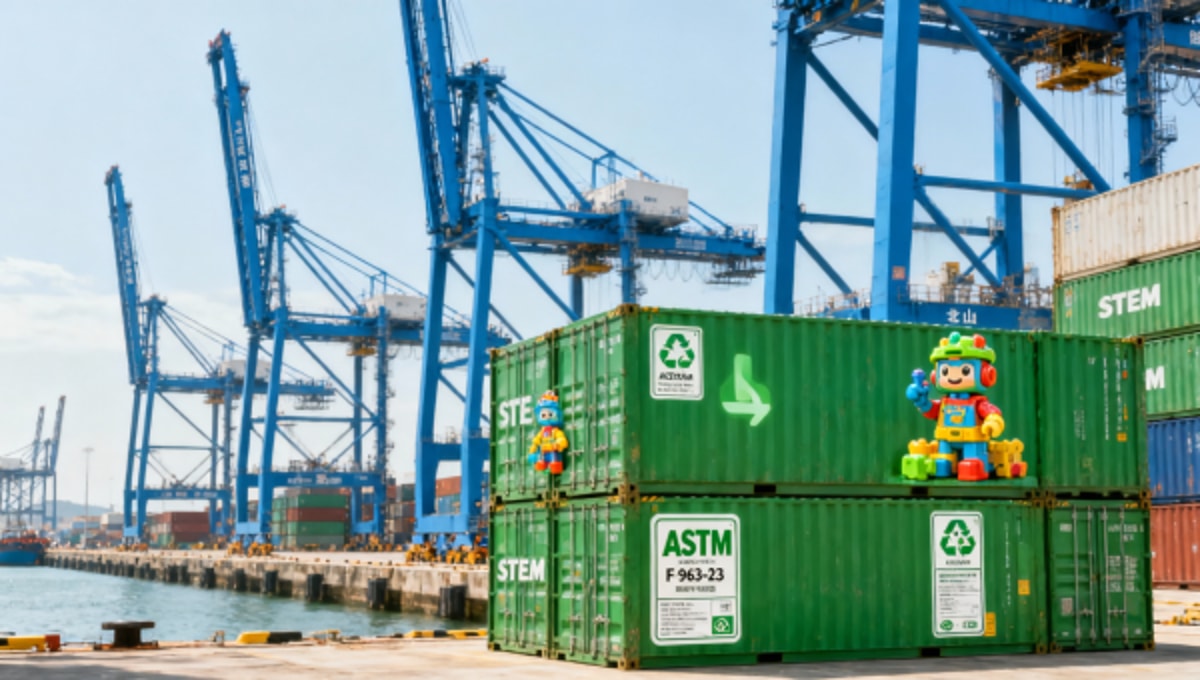
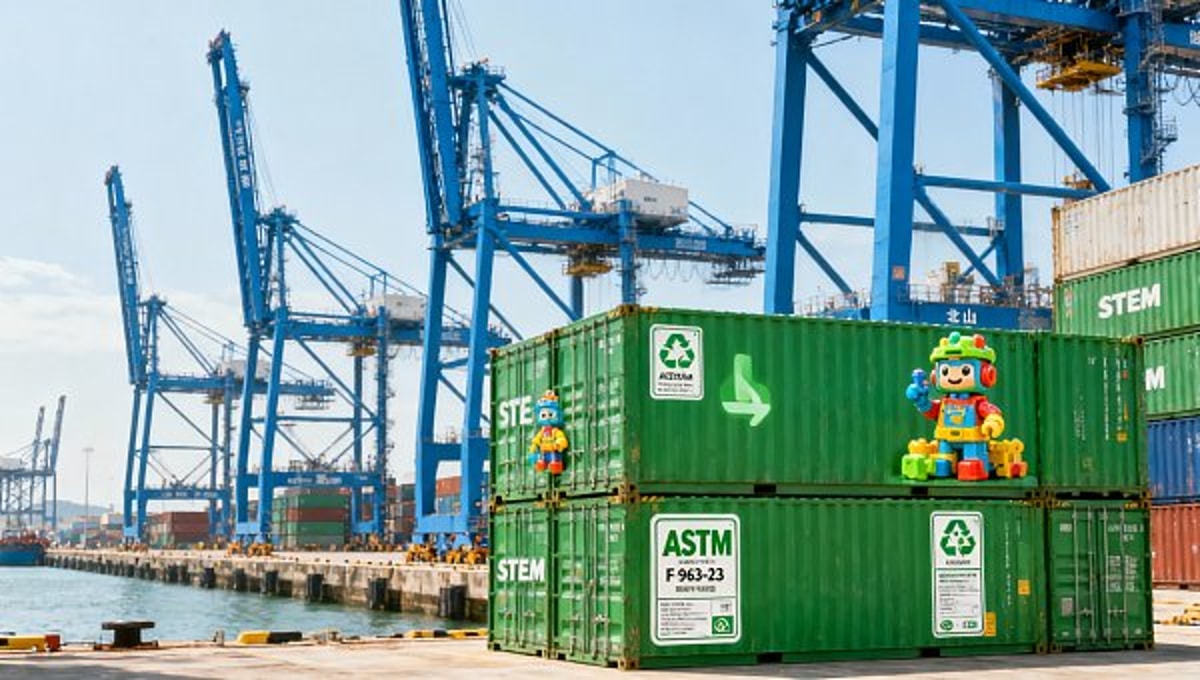
Ningbo-Zhoushan Port officially activated a dedicated green customs clearance channel for STEM and educational toys on May 4, 2026 — the first such initiative in China targeting this high-growth export category. The measure directly affects exporters of children’s learning products, toy manufacturers, logistics service providers, and third-party testing labs serving North American markets, particularly those shipping to the U.S., where ASTM F963-23 compliance is mandatory. Its significance lies not in regulatory novelty, but in operational prioritization: it signals a shift toward risk-based, standards-driven customs facilitation for safety-regulated consumer goods.
Event Overview
On May 4, 2026, Ningbo-Zhoushan Port launched the ‘STEM & Educational Toys Green Customs Clearance Channel’. Under this mechanism, shipments accompanied by valid third-party test reports confirming compliance with ASTM F963-23 — specifically covering heavy metals, small parts, and battery compartment strength — are eligible for ‘immediate release upon declaration’. The channel operates across three core terminals: Beilun, Chuanshan, and Meishan. According to official information, average export delivery time is expected to shorten by 2.3 days.
Industries Affected
Direct Exporters (U.S.-bound STEM toy brands and trading companies)
These entities face immediate pressure to align documentation with the new lane’s requirements. Impact centers on customs clearance predictability: failure to submit compliant ASTM F963-23 reports — especially those explicitly covering the three mandated sub-tests — will exclude shipments from the green lane, reverting them to standard inspection timelines.
Toy Manufacturers (OEM/ODM producers in Zhejiang, Jiangsu, Guangdong)
Manufacturers supplying export-oriented brands must verify that their current testing scope matches the lane’s tripartite requirement (heavy metals, small parts, battery compartment strength). Impact manifests in production planning: if existing reports omit any of these, retesting or report supplementation becomes necessary before shipment, potentially delaying order fulfillment.
Third-Party Testing Laboratories
Labs accredited for ASTM F963-23 testing now see heightened demand for reports explicitly listing the three specified items. Impact is procedural: clients may request revised report formats or addendums confirming coverage — even if the original test included all items — to meet port documentation verification protocols.
Freight Forwarders & Customs Brokers
Service providers handling STEM toy exports must update internal checklists and client advisories to reflect the new document requirement. Impact is operational: misclassification or incomplete submission triggers manual review, negating the time-saving benefit and increasing coordination overhead.
What Enterprises Should Monitor and Act On
Confirm reporting format alignment with port verification criteria
ASTM F963-23 compliance alone is insufficient; reports must clearly state results for heavy metals, small parts, and battery compartment strength as discrete, pass/fail assessments. Enterprises should audit recent test reports for explicit wording — not just overall compliance statements — and request clarifications or revisions from labs if needed.
Verify terminal-level implementation consistency
The lane covers Beilun, Chuanshan, and Meishan terminals, but rollout timing and staff training may vary. Exporters should confirm with their forwarder or port agent whether pre-clearance validation (e.g., document pre-submission checks) is available at their chosen terminal — a step that can prevent last-minute holds.
Distinguish policy signal from universal eligibility
This is not a blanket exemption. Only shipments with validated third-party reports meeting the exact three-item scope qualify. Internal test data, manufacturer self-declarations, or reports referencing older ASTM versions (e.g., F963-17 or F963-20) do not confer eligibility. Treat the lane as a conditional efficiency tool — not a regulatory relaxation.
Prepare for potential upstream ripple effects
If demand surges for narrowly scoped ASTM reports, lab capacity or turnaround times may tighten. Exporters with frequent STEM toy shipments should consider scheduling tests earlier in the production cycle and maintaining a rolling inventory of valid reports per SKU family.
Editorial Observation / Industry Perspective
Observably, this initiative reflects a growing trend in Chinese port authorities: moving beyond broad ‘green lanes’ for general categories (e.g., ‘RCEP goods’) toward precision-targeted facilitation based on verifiable, market-specific safety standards. Analysis shows it functions less as a new regulation and more as an incentive layer — rewarding exporters who already invest in rigorous, internationally aligned conformity assessment. From an industry perspective, its real value emerges only when aligned with end-market compliance strategy; otherwise, it remains an administrative option without material benefit. Continued monitoring is warranted, as similar lanes could expand to other regulated categories (e.g., children’s apparel under CPSIA lead limits) if pilot performance meets efficiency targets.
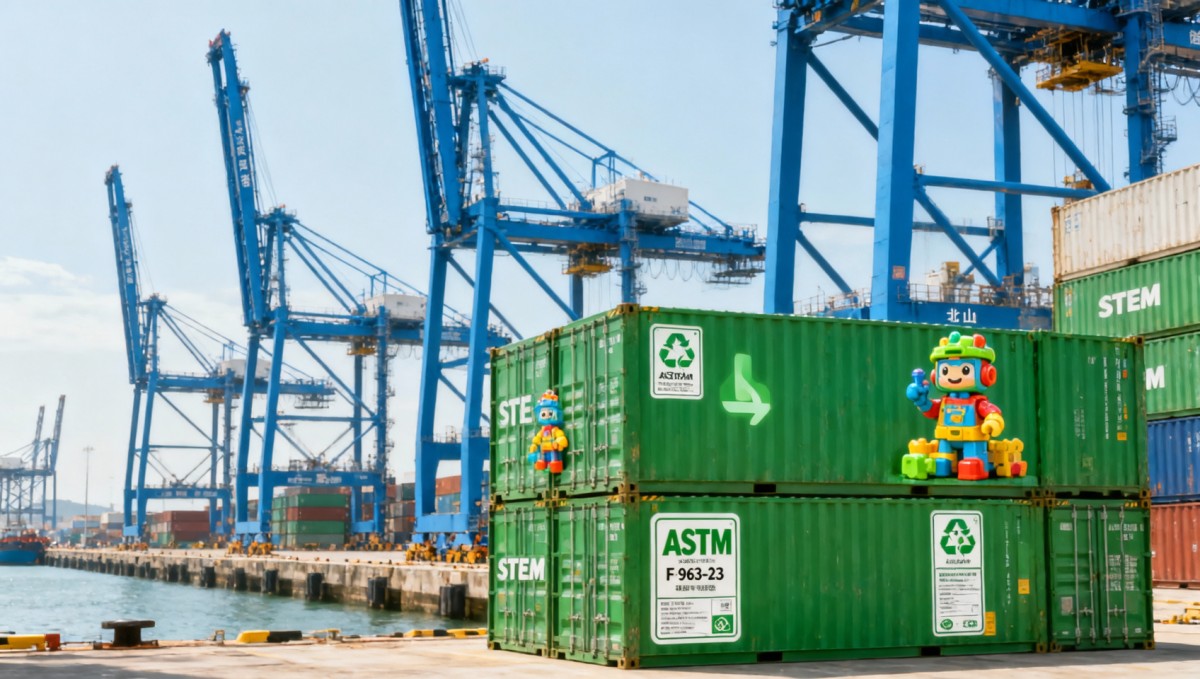
In summary, the Ningbo-Zhoushan Port STEM toy green lane is a targeted operational enhancement — not a regulatory shift — that rewards preparedness in standards documentation. Its current impact is most tangible for exporters with mature U.S. market compliance infrastructure. It is better understood as a time-saving mechanism contingent on precise documentation execution, rather than a structural change to toy export requirements.
Source: Official announcement from Ningbo-Zhoushan Port Group (May 4, 2026).
Note: Implementation details such as document validation workflows, report acceptance thresholds, and potential expansion to additional ports remain subject to ongoing observation.
Related Intelligence
 Cosmetics & PkgMay 05, 2026Malaysia SIRIM Updates Eco-Label Rules for Cosmetic PackagingMalaysia SIRIM updates eco-label rules for cosmetic packaging: New MS 2685:2026 Annex D mandates ingredient-level bioplastic labeling — avoid 35% green tariffs!
 Electronic & RC ToysMay 05, 2026ICTI ETP 2026 Requires Blockchain Labor Traceability for RC Toy FactoriesICTI ETP 2026 mandates blockchain labor traceability for RC toy factories—learn how TrusTrace integration, deadlines, and compliance impact Walmart/Target suppliers.
 Nursery Furniture & MonitorsMay 05, 2026Shopee Launches Baby & Maternity Health Whitelist in SEAShopee’s Baby & Maternity Health Whitelist now requires CNAS-CPC certification for nursery furniture & baby monitors in Indonesia, Thailand, Vietnam — act now to avoid listing delays!
 Beauty DevicesMay 05, 2026Korea MFDS: Beauty Device Li-ion Cells Require UN38.3 + KC 62133-2:2026Korea MFDS now mandates UN38.3 + KC 62133-2:2026 for Li-ion cells in beauty devices—critical for exporters, suppliers & importers. Act before 1 Aug 2026!
") Nursery Furniture & MonitorsMay 05, 2026Amazon Japan Removes Non-Compliant Baby Monitors (JIS T 2101:2026)Amazon Japan removed non-compliant baby monitors lacking JIS T 2101:2026 certification and ≤0.3% AI false-alarm rate — act now to restore listings & avoid sales disruption.
Nursery Furniture & MonitorsMay 05, 2026Amazon Japan Removes Non-Compliant Baby Monitors (JIS T 2101:2026)Amazon Japan removed non-compliant baby monitors lacking JIS T 2101:2026 certification and ≤0.3% AI false-alarm rate — act now to restore listings & avoid sales disruption. STEM & Educational ToysMay 05, 2026Ningbo-Zhoushan Port Launches STEM Toy Green LaneSTEM toy green lane launched at Ningbo-Zhoushan Port — fast-track ASTM F963-23 customs clearance for exporters. Save 2.3 days, boost U.S. shipment efficiency!
 Smart Pet DevicesMay 05, 2026SASO Mandates Dual Cybersecurity Certification for Smart Pet Devices in Saudi ArabiaSASO mandates dual cybersecurity certification for smart pet devices in Saudi Arabia—ISO/IEC 27001 + SASO IoT Security Framework V2.3. Act now to secure your CoC before June 1, 2026!
 Baby Gear & StrollersMay 05, 2026Vietnam Customs Launches AI Clearance for Baby StrollersVietnam Customs AI clearance for baby strollers launches May 2026—48-hour clearance if Vietnamese ASCII labels comply. Act now to avoid 5–7 day delays!
 Camping & WaterMay 05, 2026EN 14350-1:2026 Enforced: BPA Migration Limit for Children's Drinkware Reduced to 0.01 mg/kgEN 14350-1:2026 enforced: BPA migration limit slashed to 0.01 mg/kg for children's drinkware — urgent compliance action needed for EU market access.
 Infant Feeding & CareMay 05, 2026FDA Tightens Microbial Migration Limits for Infant Feeding Utensils Effective May 4, 2026FDA tightens microbial migration limits for infant feeding utensils to ≤10 CFU/cm² effective May 4, 2026—key update for exporters, manufacturers & labs. Act now!
 Infant Feeding & CareMay 05, 2026Baby Digital Thermometer OEM: Certification Points That Shouldn’t Be MissedBaby digital thermometer OEM certification can make or break market entry. Learn the key CE, FDA, testing, traceability, and quality control points to approve safer, more reliable suppliers.
 Baby Gear & StrollersMay 05, 2026Wholesale Baby Shoes: Size Planning Tips That Reduce ReturnsWholesale baby shoes size planning tips for travel retail teams: reduce returns, improve supplier alignment, and boost customer satisfaction across global sales channels.
 Corporate & Seasonal GiftsMay 05, 2026Wholesale Baby Hooded Towels: What Makes a Set Feel Gift-ReadyWholesale baby hooded towels feel more gift-ready when they combine soft, safe fabrics, coordinated packaging, and retail appeal—helping distributors boost margins and attract modern buyers.