Perfume Glass Bottles Wholesale: Cost Factors That Change Your Final Packaging Budget

When evaluating perfume glass bottles wholesale, finance decision-makers need more than unit pricing—they need a clear view of every cost driver shaping the final packaging budget. From mold fees and MOQ requirements to decoration, freight, compliance, and breakage risk, small choices can create major budget swings. This guide breaks down the factors that matter most, helping retail sourcing teams plan smarter, negotiate better, and protect margin.
Why Cost Planning Changes by Business Scenario
In travel retail and tourism service channels, packaging decisions are rarely made in a vacuum. A bottle that works for an airport duty-free fragrance launch may be financially unsuitable for a hotel amenity program, a destination gift shop line, or a cruise retail assortment. That is why perfume glass bottles wholesale should be evaluated by scenario, not by price list alone.
For finance approvers, the key issue is budget volatility. Two suppliers can quote similar bottle prices, yet the final landed packaging cost may differ sharply once decoration complexity, pack-out method, freight routes, and damage allowance are added. In tourism-linked retail, demand can also be seasonal, geographically fragmented, and highly promotion-driven. Those realities change the ideal sourcing strategy.
A smart budget review therefore starts with one question: what selling environment will this bottle serve? Once that is clear, cost trade-offs become easier to model, negotiate, and approve.
The Main Travel-Related Scenarios for Perfume Glass Bottles Wholesale
Different tourism service businesses buy fragrance packaging for different commercial goals. Some need prestige presentation; others need portability, refill logic, or low breakage. The table below helps finance teams compare common scenarios before reviewing supplier quotations for perfume glass bottles wholesale.
This scenario lens is especially useful for companies balancing procurement, merchandising, and finance. The right bottle is not always the most luxurious option; it is the option that best supports sell-through, operational ease, and gross margin in its intended setting.
Scenario 1: Airport Duty-Free Needs Prestige, but Finance Must Watch Complexity
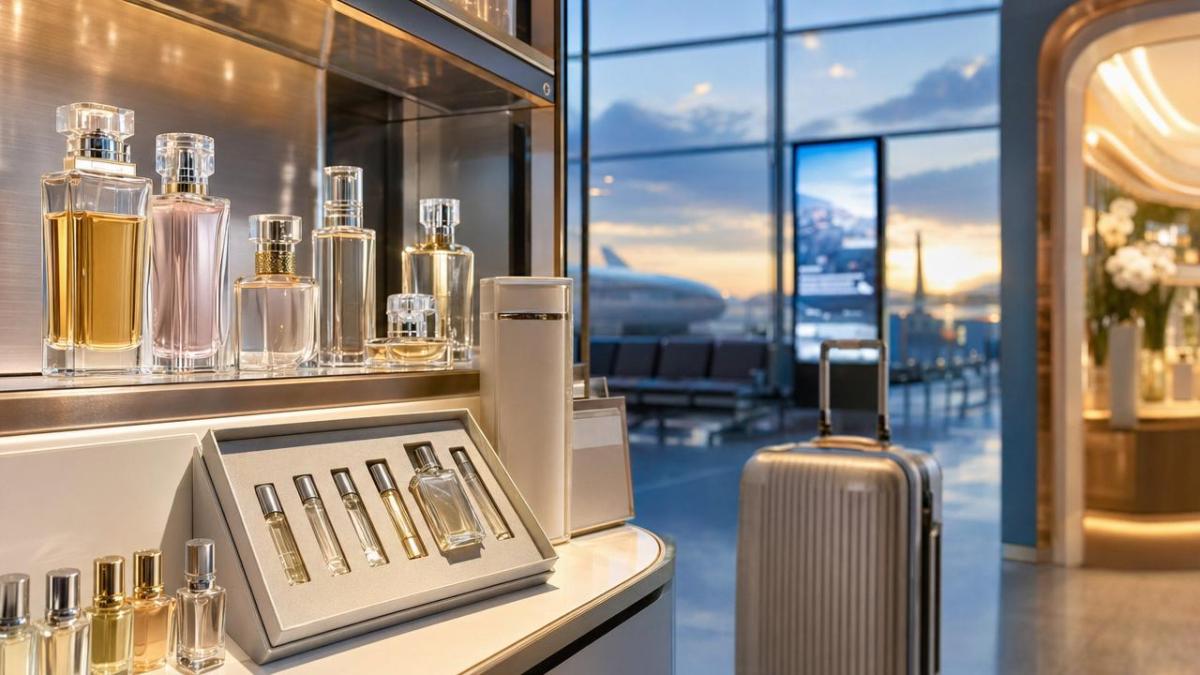
Duty-free and travel retail operators often prefer eye-catching perfume packaging because purchase decisions are fast and visual. Heavy-base bottles, custom silhouettes, gradient coating, metallic printing, and magnetic caps can all improve premium perception. However, each upgrade affects the total perfume glass bottles wholesale budget.
In this scenario, finance teams should ask whether the decorative premium is likely to increase average selling price or conversion rate enough to justify added cost. A visually striking bottle may perform well in a flagship airport store, but if the design increases freight weight, extends production lead time, and raises breakage claims, margin can erode quickly.
The best-fit strategy is often selective premiumization: keep the bottle form recognizable and elegant, but simplify one or two technical features such as frosting layers, color spraying, or cap construction. This preserves travel-retail appeal without letting packaging consume too much of the landed unit cost.
Scenario 2: Hotel and Resort Signature Fragrance Programs Need Reorder Discipline
Hotels, spas, and branded resorts increasingly use signature fragrance products to extend guest experience into retail. Here, the packaging budget is shaped less by one-time launch impact and more by replenishment logic. A custom bottle may support brand storytelling, but a high mold fee can be difficult to absorb if reorder volumes remain modest.
For this scenario, perfume glass bottles wholesale should be reviewed through total program lifecycle cost. That means including initial tooling, annual forecast volume, warehousing burden, and possible SKU refreshes. If the property plans a long-running scent identity with stable demand, custom development can make sense. If the fragrance line is still being tested, standard bottle shapes with branded labeling or silk-screen options usually create better financial flexibility.
Finance approvers should also verify MOQ by component, not just by bottle. Pump, collar, cap, and carton requirements may each carry separate minimums, creating hidden stock exposure.
Scenario 3: Cruise, Airline, and Mobile Travel Channels Prioritize Breakage and Space Efficiency
When products move through cruise ships, airlines, or tightly managed travel logistics networks, packaging durability becomes a cost variable equal to decoration. Finance teams should not judge perfume glass bottles wholesale solely by invoice price if the format is vulnerable during handling, repacking, or onboard storage.
Tall, narrow bottles may look refined but can be unstable in transport. Thick glass may reduce perceived fragility but also raises shipping cost. Unusual caps may enhance presentation but slow pack-out or increase replacement rates. The practical question is: what design reduces total failure cost?
In these travel service scenarios, compact geometries, consistent neck finish standards, and proven transit packaging often outperform highly customized structures. It is wise to request drop-test history, export packing detail, and expected breakage allowance before approval. A slightly higher factory price may be cheaper overall if it lowers damage claims and labor disruption.
Scenario 4: Destination Gift Shops and Seasonal Tourism Launches Need Low-Risk Flexibility
Museums, heritage attractions, destination retailers, and seasonal tourism stores often launch fragrance products in limited windows. Here, the challenge is balancing storytelling value with cautious inventory investment. The biggest mistake is treating a short-run program like a year-round core SKU.
For these buyers, perfume glass bottles wholesale options with ready molds and moderate customization tend to be the best fit. Label-driven design, simpler print methods, and standard accessories reduce upfront commitment. This makes it easier to test scent concepts tied to events, regions, or tourism peaks without tying cash into excess packaging stock.
Finance teams should also compare the cost of “cheap” low-volume orders with the opportunity cost of stockouts. In seasonal tourism, late replenishment can be impossible. Sometimes approving a slightly larger run with standard bottles is financially safer than a tiny bespoke order with long lead times and no reorder agility.
Which Cost Factors Change the Final Packaging Budget Most
Across all scenarios, several variables consistently move the final budget more than buyers expect. Finance reviewers should isolate these during quotation analysis for perfume glass bottles wholesale:
- Mold and tooling fees: important for custom bottle shapes, embossing, or proprietary branding details.
- MOQ structure: bottle MOQ may differ from closure, decoration, and outer pack MOQ.
- Glass weight and shape: directly influence sea freight, pallet efficiency, and breakage rate.
- Decoration method: hot stamping, frosting, coating, and multi-pass printing increase both cost and reject risk.
- Compliance and testing: especially relevant when products move across multiple travel markets with different labeling and material expectations.
- Incoterms and freight timing: urgent shipments for tourism peaks can turn acceptable packaging economics into expensive emergency procurement.
- Damage allowance: if this is ignored in budget planning, real landed cost will be understated.
The lesson is simple: the quoted bottle price is only the opening number. The finance-grade number is the delivered, usable, compliant packaging cost per sellable unit.
How Different Buyer Types Should Judge Supplier Quotes
Not every buyer should evaluate supplier offers in the same way. A global travel retailer, a regional hotel group, and a boutique tourism brand have different risk tolerance and volume logic. That is why perfume glass bottles wholesale sourcing should match organizational scale.
Common Misjudgments in Perfume Glass Bottles Wholesale Budgeting
Several budgeting errors appear repeatedly in tourism-linked fragrance sourcing. First, teams approve packaging based on visual mockups before logistics assumptions are confirmed. Second, they underestimate the cost difference between standard decoration and custom effect layering. Third, they approve custom bottle development without a realistic multi-season sales forecast.
Another frequent issue is failing to match bottle design to channel behavior. Travel buyers often prefer products that are giftable, portable, and easy to handle. If the selected perfume glass bottles wholesale format looks impressive but creates airport handling problems, repacking waste, or shelf inefficiency, the product may underperform despite attractive branding.
Finally, some finance teams overlook supplier communication quality. A reliable supplier that clearly separates bottle cost, decoration cost, accessory cost, and export packaging cost usually creates better approval conditions than a vague low quote with hidden variables.
Practical Approval Checklist for Finance Decision-Makers
Before signing off on any perfume glass bottles wholesale program, finance approvers should confirm:
- Is this bottle aligned with the actual tourism or travel retail scenario?
- What is the total landed packaging cost, not just ex-factory unit price?
- Are tooling fees recoverable over forecast volume within a reasonable time?
- What are the true MOQs for each component and decoration process?
- What breakage rate assumption has been built into the budget?
- Can the supplier support reorders fast enough for seasonal or multi-location demand?
- Does the design create measurable sales value in the intended channel?
Final Takeaway: Match the Bottle Strategy to the Travel Business Model
The best perfume glass bottles wholesale decision is not the cheapest offer and not the most premium concept. It is the choice that fits the business scenario, protects operational efficiency, and supports margin over time. Airport retail may justify selective premium design. Hotel scent programs may benefit from repeatable standardization. Cruise and mobile channels need transit resilience. Seasonal destination launches need flexibility and low upfront risk.
For finance leaders in tourism service businesses, approval quality improves when sourcing discussions move beyond piece price and into total cost logic. Start with the use case, test each cost driver against that scenario, and require suppliers to present transparent cost breakdowns. That is how packaging budgets become more predictable, negotiation becomes stronger, and fragrance programs are better positioned to scale profitably.
Related Intelligence
 Beauty DevicesMay 01, 20262026 Foshan Tanzhou Auto Industry Expo Spring Edition2026 Foshan Tanzhou Auto Industry Expo Spring Edition features the debut 'Beauty Devices & Smart Cabin' zone—driving cross-industry innovation and global sourcing opportunities.
 Electronic & RC ToysMay 01, 2026RC Toy Orders Shift to South China, Lead Time Cuts to 6 WeeksRC toy orders shift to South China with 6-week lead times—key for importers, OEMs & logistics firms. Discover ICTA-QMS certified factories in Shenzhen/Dongguan now driving speed and reliability.
 STEM & Educational ToysMay 01, 2026CPSC Tightens Battery Compartment Standards for STEM ToysCPSC Tightens Battery Compartment Standards for STEM Toys: New 30 N bite-force test mandatory for U.S. market access starting July 1, 2026—act now to avoid shipment delays.
 Infant Feeding & CareMay 01, 2026RCEP ASEAN Adds Fast Track for Infant Feeding ProductsRCEP ASEAN fast tracks infant feeding products—baby bottles, breast pumps & warmers—with NMPA Class II filing. Save 11 days on customs clearance in ASEAN markets.
 Smart Pet DevicesMay 01, 2026Japan METI Expands Smart Pet Device PSE White List: Chinese Self-Cleaning Litter Boxes Gain Priority ReviewJapan METI expands PSE white list for smart pet devices—Chinese self-cleaning litter boxes now qualify for priority PSE review, cutting certification to 12 days.
 Corporate & Seasonal GiftsMay 01, 2026Germany’s UBA Launches Mandatory Carbon Labeling for Corporate Gift InksGermany’s UBA mandates carbon labeling for corporate gift inks—key for exporters, ODMs & ink suppliers. Act now to comply by July 2026.
 Fitness EquipmentMay 01, 2026THE Alliance Cuts Shanghai–LA Capacity: Fitness Equipment Shipment Delays to 8–10 WeeksFitness equipment shipment delays hit 8–10 weeks as THE Alliance cuts Shanghai–LA capacity by 32%. Act now to secure slots, revise ETAs & optimize FOB planning.
 Camping & WaterMay 01, 2026Vietnam Suspends Camping & Water Import Licenses Effective Apr 30, 2026Vietnam suspends Camping & Water import licenses from Apr 30, 2026—IP6X + ASTM B117 testing now mandatory. Act now to avoid shipment delays!
 Cosmetics & PkgMay 01, 2026SASO Updates Cosmetics Packaging Rules for Plant Extracts in Saudi ArabiaSASO cosmetics packaging rules updated: Plant extract cosmetics now require EN 13130 migration & ISO 11341 photostability testing—mandatory for Saudi market access after Aug 1, 2026.
") Skincare OEMMay 01, 2026FDA Adds New Code for Plant Stem Cell Extracts (PCSC-2026)FDA's new PCSC-2026 code for plant stem cell extracts reshapes U.S. cosmetic compliance—key for OEMs, exporters & suppliers. Act now!
Skincare OEMMay 01, 2026FDA Adds New Code for Plant Stem Cell Extracts (PCSC-2026)FDA's new PCSC-2026 code for plant stem cell extracts reshapes U.S. cosmetic compliance—key for OEMs, exporters & suppliers. Act now! Cosmetics & PkgMay 01, 2026Vegan Makeup Wholesale in 2026: What Brands Are Prioritizing NowVegan makeup wholesale in 2026 is driven by compliance, transparency, and private-label agility. See what brands prioritize now and how buyers choose smarter suppliers.
 Skincare OEMMay 01, 2026Organic Face Serum OEM: What Makes Certification and Claims More Complex Than They LookOrganic face serum OEM is more complex than it seems. Explore certification, claims, traceability, and cross-border compliance risks to choose credible partners and launch with confidence.
 Skincare OEMMay 01, 2026Anti Aging Cream Wholesale: How to Judge Formula Value Without Chasing TrendsAnti aging cream wholesale buyers: learn how to judge real formula value through stability, compliance, ingredient logic, and travel-ready performance for smarter sourcing.