Beauty device brand procurement: avoid these early mistakes
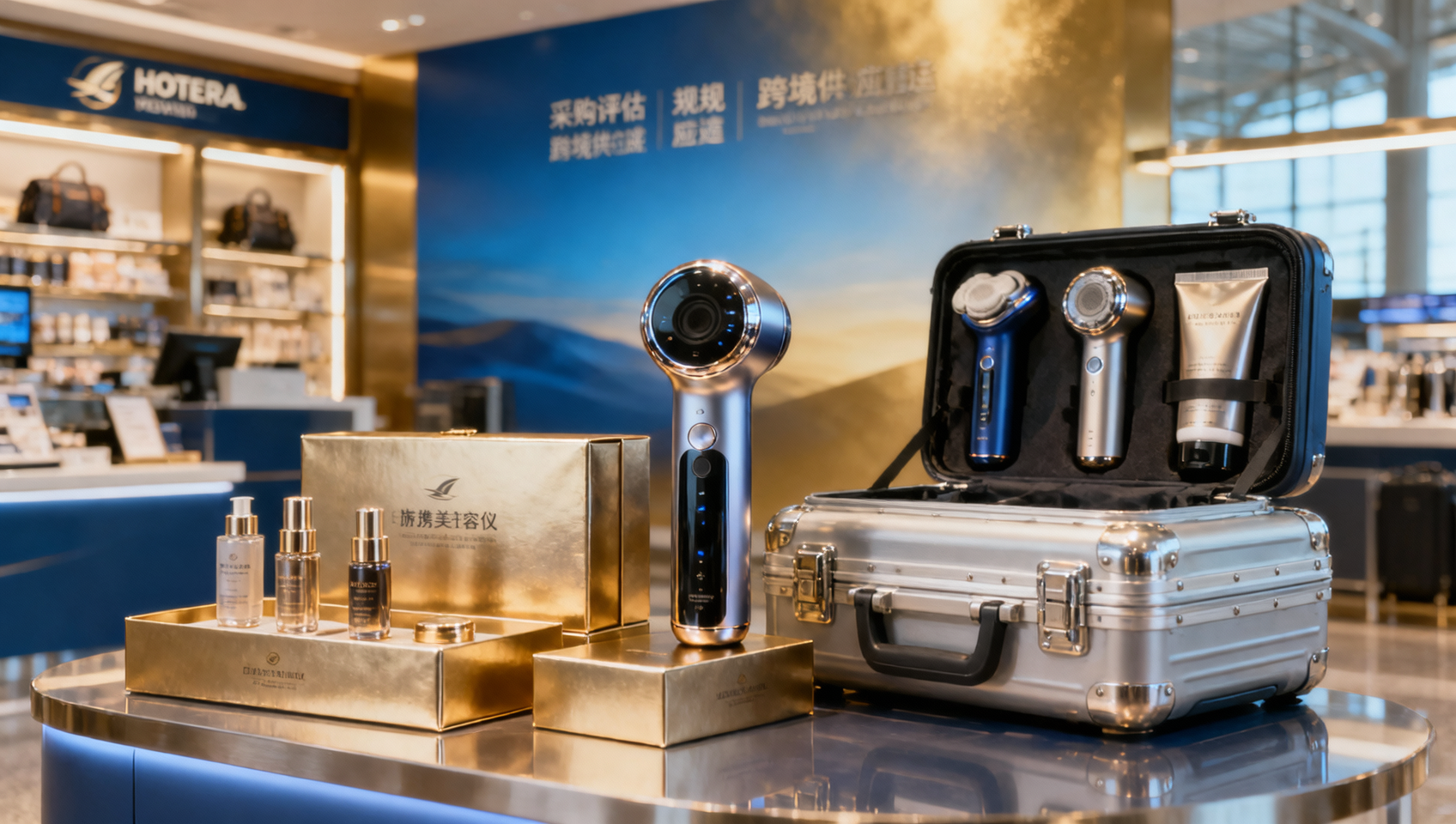
Beauty device brand procurement often fails long before the first order is placed. In a volatile retail market, global buyers need more than price quotes—they need reliable supply chain data, rigorous product testing, and actionable supply chain insights. This guide shows how to avoid early sourcing mistakes, protect compliance, and build smarter brand procurement strategies from the start.
For travel retail operators, airport duty-free buyers, hotel amenity planners, cruise procurement teams, wellness resort managers, and cross-border distributors, the risks are even higher. Beauty devices sold in travel channels must fit tight shelf space, shorter replenishment cycles, multilingual packaging requirements, and stricter safety expectations from both regulators and travelers.
A sourcing error made at the briefing stage can create delays of 4–12 weeks, raise landed cost by 8%–20%, or trigger returns when voltage compatibility, battery transport rules, or labeling standards are overlooked. Early-stage procurement decisions therefore affect not only margin, but also guest satisfaction, sell-through speed, and brand reputation across multiple destinations.
Global Consumer Sourcing (GCS) supports buyers and decision-makers with structured supply chain intelligence for fast-moving retail categories. In beauty device procurement for travel service environments, better outcomes come from disciplined supplier screening, practical compliance checks, and a sourcing model built around channel realities rather than headline unit price.
Why beauty device procurement is uniquely risky in travel service channels
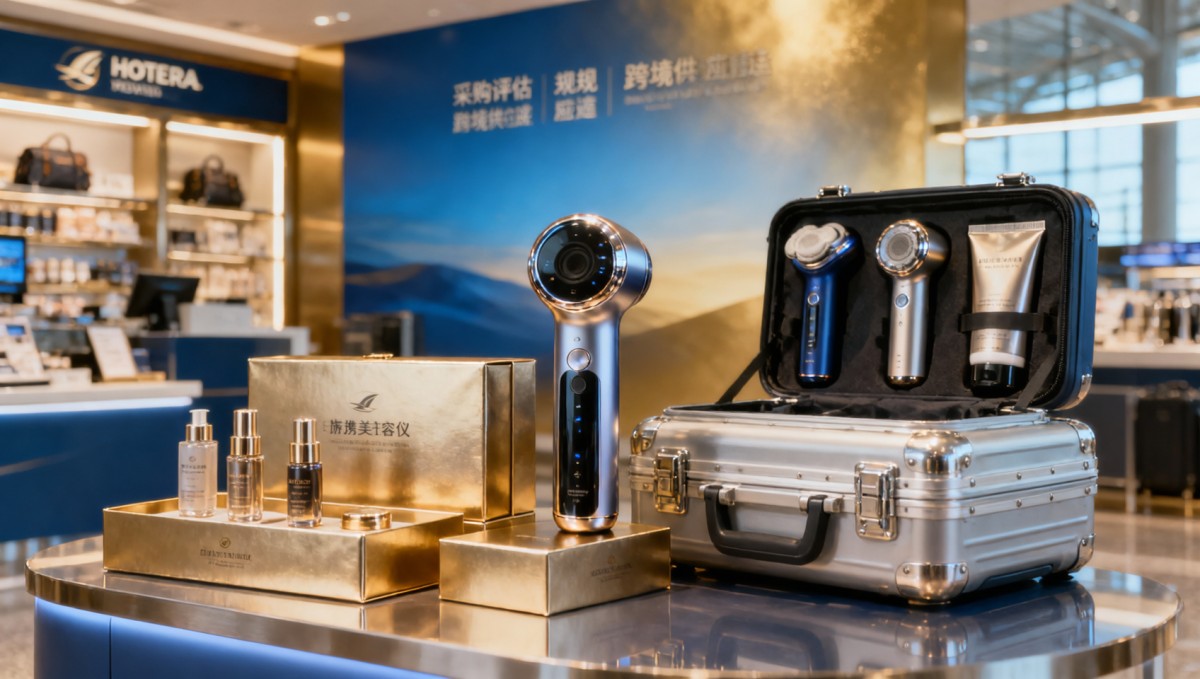
Beauty devices are not standard cosmetics. They may involve batteries, charging components, skin-contact materials, electrical safety requirements, and after-sales expectations. In travel service settings, those variables multiply because products move through airports, hotels, cruise terminals, resort spas, tourism gift shops, and cross-border retail networks with different operating constraints.
A hotel group launching an in-room beauty device kit has different priorities from an airport retailer selling portable skincare tools. One may need low defect rates across 500–2,000 rooms and replacement support within 72 hours, while the other may focus on impulse purchase packaging, multilingual instructions, and compact carton dimensions that improve display density by 15%–25%.
Many early buyers make the mistake of treating procurement as a simple negotiation around MOQ and ex-factory cost. In reality, travel service procurement should start with channel mapping. Buyers need to define whether the device is for resale, guest use, promotional bundles, spa upsell, or distributor supply. Each use case changes the certification scope, packaging format, service model, and replenishment rhythm.
Channel-specific pressure points
Travel service environments create operational pressure that many beauty device brands underestimate. Duty-free and travel retail buyers often work with 6–10 week seasonal windows. Hospitality groups may approve budgets quarterly. Cruise operators may require delivery consolidation 21–45 days before sailing. If a supplier cannot align to these cycles, even a good product becomes commercially weak.
The table below shows how procurement priorities shift across common travel-related buying scenarios.
The key lesson is simple: procurement strategy must match channel mechanics. A product suitable for online D2C may still fail in tourism retail if it creates charging confusion, excess display waste, or high return handling costs. Early alignment between commercial, compliance, and operations teams reduces avoidable risk before supplier comparison even begins.
The first mistakes buyers make before requesting quotations
The most expensive procurement errors usually happen before the first RFQ is sent. Buyers often contact 8–12 factories with incomplete requirements, then compare prices that are not built on the same assumptions. This creates false savings and weakens internal decision-making because technical scope, compliance scope, and logistics scope remain unclear.
Mistake 1: Starting with price instead of use case
If the brief only says “portable facial device” or “beauty tool for travel retail,” suppliers will quote widely different configurations. One factory may include Type-C charging, multilingual manuals, and retail-ready packaging. Another may quote a basic unit without certification testing, insert cards, or spare accessories. A 12% lower unit price may disappear once those hidden items are added.
What to define in the first brief
- Sales or usage scenario: resale, in-room use, spa service add-on, loyalty gift, or distributor stock.
- Target markets: for example EU, US, Middle East, Southeast Asia, or mixed-destination tourism channels.
- Electrical and packaging scope: battery type, charging port, language count, carton size, and display format.
- Service expectations: spare ratio, replacement lead time, defect handling window, and documentation support.
A strong initial brief should usually cover at least 4 categories: product configuration, compliance needs, logistics conditions, and commercial targets. Without that structure, supplier quotations are not truly comparable.
Mistake 2: Skipping cross-functional review
Procurement teams sometimes work in isolation and only involve finance, quality, or operations after supplier shortlisting. That delay increases rework. A finance approver may reject a project because tooling cost is spread incorrectly. A quality manager may flag missing skin-contact documentation. A project manager may discover the delivery plan misses a store opening date by 3 weeks.
Travel service procurement works better when 5 stakeholders review early assumptions: procurement, quality or safety, finance, operations, and the commercial owner. A 30-minute alignment meeting at the start often saves multiple quotation rounds later.
Mistake 3: Assuming all OEM suppliers can support travel retail
Not every OEM or ODM partner understands the needs of airport retail, hotel programs, or destination-based distribution. Some are strong in mass e-commerce but weak in multilingual compliance files, low-volume customization, or mixed-carton consolidation. Buyers should verify actual channel fit rather than relying on generic catalog claims.
A practical screening approach is to request 3 things within the first 7 days: sample lead time, documentation list, and packaging adaptation capability. If a supplier cannot respond clearly, risk will likely rise during sampling and production.
How to evaluate suppliers beyond unit cost
Unit price matters, but in beauty device brand procurement for travel service channels, landed value matters more. Buyers should evaluate suppliers on consistency, documentation quality, packaging flexibility, and delivery reliability. A supplier that is 6% more expensive may still be financially stronger if it reduces damage claims, stockouts, and manual relabeling costs.
Core evaluation dimensions
A balanced supplier scorecard should include at least 6 dimensions: product quality, compliance readiness, packaging support, lead time stability, communication speed, and total cost transparency. For travel retail or hospitality programs, after-sales support and replacement part availability are also important because on-site service interruptions can directly affect guest experience.
The table below provides a practical comparison framework for supplier evaluation during shortlisting.
This framework helps procurement, quality, and finance teams compare suppliers on a common basis. It also makes internal approval easier because the discussion shifts from “Which one is cheaper?” to “Which one is more controllable at launch and during replenishment?”
Red flags during supplier review
- Quotation excludes packaging adaptation, user manual translation, or testing support but presents itself as complete.
- Lead times change significantly between the first and second discussion without a clear reason.
- Factories cannot explain how they handle incoming inspection, finished goods checks, or battery transport packaging.
- Communication gaps exceed 3–5 business days during the sample stage.
In travel service procurement, a weak supplier often reveals itself through operational ambiguity long before it fails in production. Clear documentation, stable timelines, and practical answers are stronger indicators than polished presentations.
Compliance, testing, and packaging checks that should happen early
Compliance should not be a final checkpoint after commercial terms are agreed. For beauty devices, early verification is essential because regulatory, transport, and usage requirements can affect product design, packaging materials, carton labeling, and shipment readiness. In travel service channels, these issues are even more visible because products cross borders frequently and may be inspected at multiple handover points.
Three early checks buyers should prioritize
- Product safety file review: confirm the available test reports, material declarations, instruction content, and intended market documentation before sample approval.
- Transport and battery assessment: check whether the power setup, shipping method, and package design align with standard logistics handling for air, sea, or mixed travel distribution.
- Packaging and labeling validation: review barcode placement, language requirements, warning labels, plug or charging guidance, and display dimensions before mass production artwork release.
A common mistake is to approve a product sample based only on appearance and device function. In reality, the “commercially usable sample” should also include the instruction leaflet, packaging draft, language review, and a preliminary compliance file list. This can reduce launch disruption by 1–2 approval rounds.
Why packaging matters more in tourism retail
Beauty devices sold in tourist-facing environments often need higher readability and lower complexity. Travelers may purchase quickly, open products in transit, or use them in hotels with limited charging options. Packaging should therefore explain essential points within seconds: what the product does, how it charges, whether accessories are included, and how to use it safely.
For many travel retail programs, buyers aim for packaging that supports 2–5 languages, fits standard shelf modules, and reduces unnecessary void space. Even a carton size reduction of 10%–15% can improve storage and display efficiency across airport shops or hotel back-of-house inventory areas.
Early compliance checklist
- Confirm intended destination markets before testing scope is finalized.
- Check skin-contact and electrical documentation together, not separately.
- Review user instructions for language clarity and misuse risk.
- Verify carton markings and battery-related shipping information before booking freight.
When these checks are handled early, procurement teams gain stronger control over launch timing, return risk, and total project cost. They also make life easier for quality managers and finance approvers who need fewer last-minute exceptions.
A practical procurement workflow for travel retail, hospitality, and distribution teams
A disciplined workflow prevents rushed decisions and makes supplier comparison more objective. For beauty device brand procurement in travel services, a 5-stage process is usually effective because it balances speed with control. The exact calendar depends on customization depth, but many projects can move from brief to approved supplier within 6–10 weeks.
Recommended 5-stage process
- Requirement definition: align use case, destination markets, target margin, packaging needs, and approval stakeholders.
- Supplier screening: shortlist 3–5 suppliers based on category capability, documentation readiness, and sample responsiveness.
- Sampling and validation: test product function, packaging fit, compliance file readiness, and transit suitability.
- Commercial and quality approval: confirm landed cost, acceptance criteria, spare plan, and mass production timeline.
- Launch and replenishment setup: define reorder trigger, issue escalation path, and post-launch review metrics.
This workflow is especially useful for project managers, procurement leads, and quality teams working across multiple locations. It creates a shared timeline and reduces the risk that a supplier moves into production before packaging approval or quality criteria are fully signed off.
The table below summarizes a practical approval path that can be adapted to hotels, airports, cruise operators, and destination distributors.
The main value of this process is control at decision gates. Instead of reacting to supplier delays, buyers can identify gaps earlier, compare trade-offs clearly, and protect rollout plans across tourism retail and hospitality operations.
Frequently asked procurement questions from buyers and decision-makers
How many suppliers should a buyer shortlist at the beginning?
For most travel service procurement projects, 3–5 suppliers is a workable range. Fewer than 3 may limit comparison. More than 5 often slows review and creates unnecessary quotation noise. The shortlist should only include suppliers that already meet the basic product category, documentation, and packaging support criteria.
What is a realistic lead time for launch?
A standard launch with moderate customization often needs 6–10 weeks from initial brief to supplier confirmation, then 30–60 days for production depending on volume and packaging complexity. If the project includes new molds, high-language-count packaging, or multi-country approval, buyers should expect a longer timeline and build buffer time into travel retail or hotel program calendars.
Which department should own final approval?
Final approval should not sit with one team alone. Procurement should lead the process, but quality or safety should sign off on technical readiness, finance should review cost structure, and operations should confirm rollout feasibility. For hospitality groups or airport retailers, the commercial owner should also validate channel fit and sales assumptions.
What if a supplier offers a very low MOQ but weak documentation?
That is often a false advantage. A low MOQ may look attractive for pilot programs, but missing files, poor manuals, and unclear transport support can create delays, relabeling costs, or stock that cannot be deployed across targeted tourism channels. Buyers should assess the full cost of readiness, not just the opening order threshold.
Beauty device brand procurement succeeds when early assumptions are tested with discipline. In travel service channels, that means defining the use case clearly, involving quality and operations early, checking compliance before artwork is locked, and comparing suppliers on total execution strength rather than headline price alone.
For buyers, distributors, hospitality groups, and retail decision-makers, GCS helps turn fragmented sourcing decisions into a structured strategy backed by category insight and practical supply chain intelligence. If you are planning a travel retail launch, hotel amenity program, or cross-border beauty device sourcing project, now is the right time to review your procurement framework before avoidable mistakes become expensive. Contact us to discuss your sourcing goals, request a tailored supplier evaluation approach, or explore more solutions for resilient retail supply planning.
Related Intelligence
 Electronic & RC ToysApr 28, 2026ICTA 2026 Q2 RC Toy Sourcing Report: Shift to Guangdong ClusterICTA 2026 Q2 RC Toy Sourcing Report reveals 68% of global electronic RC toy orders shifting to Guangdong’s Shenzhen–Dongguan–Zhongshan cluster — driven by dual-band modules, UL9990 batteries & rapid prototyping. Act now.
 Skincare OEMApr 28, 2026FDA Adds Plant Stem Cell Extract Code to CPIS SystemFDA adds COS-PLS-2026 code for plant stem cell extract in CPIS — vital for skincare OEMs, suppliers & U.S. importers. Act now to ensure compliance by July 1, 2026.
 Nursery Furniture & MonitorsApr 28, 2026Vietnam Exempts Infant Monitors from Local Type TestingVietnam exempts infant monitors from local type testing—leverage your NMPA Class II filing to fast-track Vietnam market entry starting June 1, 2026.
 Corporate & Seasonal GiftsApr 28, 2026UBA to Pilot Carbon Labels for Corporate Gifts in Germany from Q3 2026UBA carbon labels for corporate gifts launch Q3 2026 in Germany—key for OEMs, packaging & print suppliers. Act now to prep LCA data & stay ahead.
 Camping & WaterApr 28, 2026SASO TA-2026-03: Camping Power & Inflatable Pumps Require IP6X + Salt Spray Testing for Saudi MarketSASO TA-2026-03 mandates IP6X + salt spray testing for camping power & inflatable pumps in Saudi Arabia — act now to avoid shipment delays post-Sept 1, 2026.
 Fitness EquipmentApr 28, 2026THE Alliance Cuts Shanghai–LA Capacity by 22% Amid Port CongestionTHE Alliance cuts Shanghai–LA capacity by 22% amid port congestion—impacting fitness equipment exporters, importers & logistics providers with longer lead times and higher deposits.
 Smart Pet DevicesApr 28, 2026Japan METI Launches Smart Pet Device Green Procurement ListSmart Pet Device Green Procurement List launched by Japan METI—key for Chinese exporters of smart pet collars, feeders & water dispensers. Act now to meet JIS T 1002:2026 and NB-IoT requirements.
 Infant Feeding & CareApr 28, 2026RCEP Members Adopt ASEAN-FFL 2026 for Infant Feeding ProductsRCEP Members Adopt ASEAN-FFL 2026 for Infant Feeding Products: New multilingual labelling rules for pacifiers, baby bottles & grinders take effect 1 Dec 2026 in Vietnam, Thailand, Indonesia — act now to avoid customs delays.
 2026/789: Beauty Device Packaging Must Declare Recycled Plastic & LCA") Beauty DevicesApr 28, 2026EU Regulation (EU) 2026/789: Beauty Device Packaging Must Declare Recycled Plastic & LCAEU Regulation (EU) 2026/789 mandates recycled plastic labeling & EN 15804+A2 LCA for beauty devices—act now to ensure EU market access and avoid delays.
Beauty DevicesApr 28, 2026EU Regulation (EU) 2026/789: Beauty Device Packaging Must Declare Recycled Plastic & LCAEU Regulation (EU) 2026/789 mandates recycled plastic labeling & EN 15804+A2 LCA for beauty devices—act now to ensure EU market access and avoid delays. STEM & Educational ToysApr 28, 2026CPSC Requires Nano-Material Migration Testing for STEM Toys from Q2 2026CPSC requires nano-material migration testing for STEM toys starting Q2 2026—key for exporters, OEMs & labs. Act now to ensure compliance with ZnO/TiO₂ saliva/sweat testing.
 Baby Gear & StrollersApr 27, 2026Global Shipping Alliances Cut Shanghai–Rotterdam Capacity by 15%Global shipping alliances cut Shanghai–Rotterdam capacity by 15%—impacting baby strollers & gear exporters, EU retailers, and forwarders. Act now to secure space, assess rail/air alternatives, and build resilient supply chains.
 Camping & WaterApr 27, 2026SASO IEC 62368-3:2026 Released for GCC: IP6X Dust Testing Required for Camping & Water PumpsSASO IEC 62368-3:2026 now mandates IP6X dust testing for camping & water pumps in GCC — act now to avoid customs delays and ensure compliance by Oct 1, 2026.
 Nursery Furniture & MonitorsApr 27, 2026Indonesia BPOM Fast-Tracks Baby Monitor Registration to 14 Working DaysIndonesia BPOM Fast-Tracks Baby Monitor Registration to 14 working days—leverage CNAS reports & ID-SNI 7203:2025 for rapid market entry.