Gift OEM vs private label: which cuts procurement risk
For global buyers comparing gift OEM and private label, the real question is which model lowers procurement risk without slowing growth. Backed by supply chain data, product testing standards, and retail market trends, this guide helps brand procurement teams evaluate cost, compliance, flexibility, and supplier control through practical supply chain insights.
Why gift sourcing risk matters more in travel service retail programs
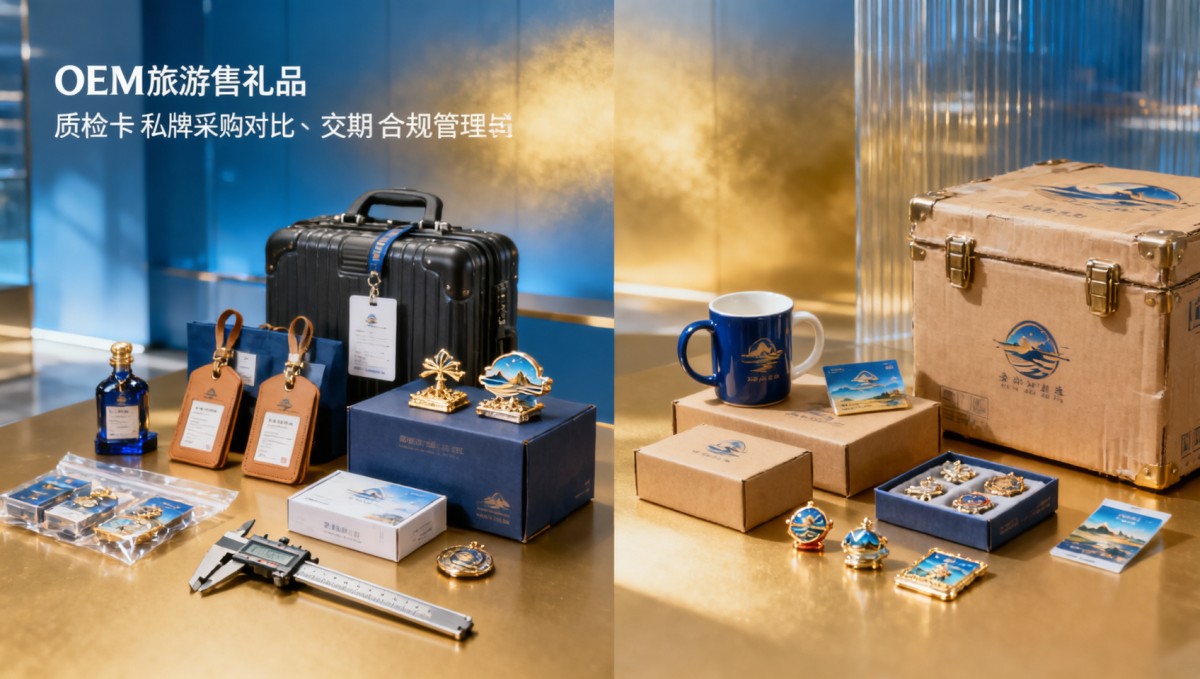
In travel service, gift procurement is rarely just about unit price. Airlines, hotels, resorts, cruise operators, destination retailers, tour companies, and airport stores use gifts to influence guest experience, ancillary revenue, loyalty retention, and brand recall. A delayed delivery by 2–4 weeks can disrupt a seasonal campaign, while a labeling error can stop goods at customs or trigger returns across multiple channels.
This is why the debate around gift OEM vs private label is a risk question first and a branding question second. Procurement teams must evaluate production control, compliance visibility, testing responsibility, and reorder stability. For travel service buyers managing souvenir lines, amenity kits, kids’ travel gifts, seasonal promotions, or onboard retail assortments, the wrong sourcing model can create excess stock, inconsistent quality, or missed launch windows.
Global Consumer Sourcing supports these decisions by connecting retail buyers and brand teams with verified supply chain intelligence across gifts and adjacent consumer categories. That matters when decision-makers need more than supplier promises. They need realistic lead-time ranges, common certification pathways, packaging risk checks, and sourcing options that fit both margin targets and guest-facing brand standards.
For finance approvers, risk often appears in three measurable areas: cash tied up in minimum order quantities, hidden tooling or compliance costs, and replacement expense when quality issues surface after launch. For quality and project teams, the key issues are usually 5 checkpoints: material consistency, artwork accuracy, packaging durability, safety labeling, and batch-to-batch stability. These are the areas where OEM and private label differ most.
Typical travel service gift programs that face sourcing pressure
- Hotel and resort welcome gifts that need short replenishment cycles, often every 30–60 days during peak occupancy periods.
- Airport and destination retail souvenirs that rely on seasonal graphics, local themes, and packaging suitable for duty-free or carry-on handling.
- Tour operator merchandise and event gifts requiring coordinated delivery to multiple regions within a 1–3 week launch window.
- Family travel and kids’ gift packs where safety testing, age grading, and warning labels can affect procurement approval.
Gift OEM vs private label: what changes in procurement control
Gift OEM usually means a buyer develops or modifies a product through a manufacturer based on custom specifications, artwork, materials, dimensions, packaging, or functional details. Private label typically means the supplier already has a ready product platform, and the buyer mainly adds its own branding, packaging, or minor cosmetic changes. Both can work in travel service, but they shift risk ownership in different directions.
OEM gives more design freedom. That is useful for destination-exclusive souvenirs, co-branded hospitality gifts, or differentiated amenity products. But it can add 3 common procurement burdens: longer development cycles, more sample rounds, and greater responsibility for specification accuracy. If your internal team cannot review materials, testing needs, and packaging performance early, OEM may create avoidable delays.
Private label reduces development complexity because the factory has already validated the base product and often has a stable production routine. For buyers launching under time pressure, this can lower execution risk. However, product uniqueness may be limited, and the same base item may also be available to other channels unless exclusivity terms are negotiated in writing.
The comparison below helps procurement, finance, and quality teams assess which model better fits travel retail realities such as short seasons, multi-market compliance, and demand fluctuation.
For travel service businesses with frequent campaign changes and limited time for product engineering, private label often lowers early-stage procurement risk. For brands that need destination exclusivity, stronger merchandising differentiation, or premium packaging experiences, OEM can be the better long-term route if the buyer has a clear approval workflow and enough lead time.
A practical rule for first-time programs
If your launch window is under 8 weeks, your order volume is still being tested, and your internal team has limited compliance resources, private label is often safer. If your annual demand is more predictable, your merchandising team needs exclusivity, and your supplier qualification process already includes testing, packaging drop checks, and artwork controls, OEM becomes more manageable.
Which model cuts risk in cost, lead time, and inventory exposure
Procurement risk is not only about whether a shipment arrives. It is also about whether the total landed cost remains stable across repeated orders. In travel service retail, demand can swing with flight schedules, holiday traffic, local events, and weather-driven tourism patterns. That makes MOQ, replenishment speed, and packaging flexibility just as important as the ex-factory quote.
OEM may look efficient on a per-unit basis once volume scales, especially when custom packaging or bundled accessories improve perceived value. But at the first order stage, buyers may face mold charges, color matching fees, trial runs, or longer approval loops. Private label often avoids some of these setup costs, helping finance teams test assortment performance before committing to larger seasonal buys.
Inventory exposure is another key issue. A resort chain running 20 properties does not want a warehouse full of fully branded gifts if demand changes after one season. Private label allows more flexible rotation because the base product can sometimes be repackaged, relabeled, or reallocated across channels. OEM offers less flexibility if every unit is deeply customized for one destination or campaign.
The cost matrix below is useful for buyers comparing not just price, but procurement risk across development, storage, and replacement scenarios.
A simple buying framework helps. For pilot orders, prioritize flexibility. For mature programs with stable demand across 2–3 seasons, optimize margin and uniqueness. This staged approach reduces financial exposure while giving sourcing teams enough real demand data to decide when OEM investment is justified.
Three ways finance and procurement can lower exposure
- Start with a private label pilot in one region or 5–10 stores before moving to an OEM rollout across the full travel network.
- Separate packaging customization from product customization, so base goods remain more reusable if demand shifts.
- Ask for reorder lead-time scenarios at forecast levels such as small batch, mid batch, and peak season batch rather than relying on one quote.
What should quality, safety, and compliance teams review first
For travel service gift procurement, compliance risk depends on product type, destination market, intended user, and packaging claims. A plush toy sold in an airport store raises different checks than a branded tumbler in a resort shop or a cosmetic gift packed in a hotel welcome set. OEM and private label both require review, but OEM often increases the number of variables that can affect testing scope.
Quality teams should distinguish between product safety, labeling, and transit durability. A supplier may provide a prior test report for a standard private label item, but if the buyer changes material composition, print area, age grade, battery configuration, fragrance content, or primary packaging, the previous documentation may no longer be enough. That is a frequent source of procurement misunderstanding.
In practice, most travel retail buyers should review 4 layers before approval: target market regulations, product category test needs, packaging and labeling language, and shipment protection. For fragile gift items, carton drop and compression performance matter during cross-border transit. For children’s gifts, warning labels and age grading need careful review. For skin-contact or consumable-adjacent items, material declarations become more important.
The table below summarizes a useful compliance checklist for gift OEM and private label decisions in travel service channels.
For procurement teams using GCS-style intelligence and vetted supplier information, the goal is not to overcomplicate sourcing. It is to shorten the time between concept and compliant purchase order. Better sourcing decisions happen when commercial, quality, and logistics teams review the same checklist before sampling starts rather than after production is booked.
A practical 6-point review before confirming production
- Confirm the destination market or markets, especially if the same gift will be sold in airports, hotel boutiques, and e-commerce channels.
- Lock the final artwork, barcode, and warning panel before approving the pre-production sample.
- Ask whether any material substitution is possible during mass production and how approval will be documented.
- Check whether current test evidence matches the exact product version, not just a similar base item.
- Review carton marks and transit pack design if goods move through 2 or more logistics nodes.
- Set an inspection plan with quantity tolerance, critical defects, and acceptable visual variation before shipment.
How to choose the right model for different travel service scenarios
Not every buyer should choose one model for every project. A better strategy is to match the sourcing model to the selling environment, forecast confidence, and brand objective. Travel service channels are fragmented. A cruise retail line, a heritage-site souvenir program, and a hotel room amenity gift set may all need different sourcing logic even when they sit under one company.
Private label is usually the safer option when time-to-market is critical, especially for fast seasonal refreshes, broad tourist appeal items, or test launches with uncertain reorder demand. OEM becomes more attractive when a buyer needs exclusive storytelling, premium gifting, or strong control over form factor and presentation. The more unique the guest experience needs to be, the more OEM can support commercial differentiation.
Project managers should also think about operational complexity. If one product has 3 language versions, two packaging formats, and separate store allocations for airport, hotel, and online channels, then private label with modular packaging may reduce handling mistakes. If the objective is a flagship commemorative product for a major destination or anniversary event, OEM may justify the added coordination work.
The scenario guide below helps align merchandising, finance, and sourcing teams before supplier negotiations begin.
For many buyers, the smartest route is hybrid. Use private label for baseline volume and OEM for hero products. This protects cash flow, shortens replenishment on core sellers, and still creates standout items that support destination branding and higher average transaction value.
Decision signals that point toward OEM
When differentiation matters more than launch speed
Choose OEM if your travel gift line needs custom size, structure, function, multi-part bundling, or a specific unboxing experience that a standard catalog item cannot deliver. This is common in premium hospitality and branded destination merchandise where the product itself becomes part of the guest memory.
When forecast accuracy is improving
OEM becomes less risky when past sell-through data covers at least one full season or 6–12 months of comparable demand. Better forecast visibility reduces the chance of overbuying custom stock.
Decision signals that point toward private label
When speed and replenishment stability lead the project
Choose private label if the project needs quick approval, lower SKU risk, or repeat ordering without extensive engineering review. This is often the better fit for broad tourist gift ranges, trial retail concepts, and price-sensitive hospitality merchandise.
Common mistakes, buyer questions, and how to move forward with fewer surprises
Many sourcing problems do not begin in the factory. They begin in unclear briefs, unrealistic lead-time assumptions, or missing alignment between merchandising, compliance, and finance. Buyers often ask whether gift OEM always carries more risk than private label. The more accurate answer is that OEM carries more variables, while private label carries more limitations. Risk drops when the chosen model fits the actual project conditions.
Another common mistake is comparing prices without comparing approval workload. A lower OEM quote may still become the riskier option if it requires 3 sample rounds, fresh testing, and custom packaging engineering within a narrow 5-week launch target. Likewise, a private label item can still be risky if buyers assume past test documentation automatically covers new packaging claims or modified components.
For GCS readers and sourcing teams, the real advantage comes from structured pre-buy analysis. That means checking the supplier’s category depth, not just one attractive quote; mapping likely compliance needs before artwork finalization; and asking how the supplier handles low-volume repeat orders, packaging revisions, and regional shipping complexity. This is the type of sourcing intelligence that improves both procurement confidence and executive approval.
If you are deciding between gift OEM and private label for a travel service program, use a 4-step process: define the channel, estimate demand range, confirm compliance scope, then compare supplier flexibility. This reduces rushed decisions and makes quotations easier to evaluate on a like-for-like basis.
FAQ: what buyers ask before placing a gift order
How do I know if private label is enough for my travel gift program?
If your priority is speed, manageable MOQ, and lower development effort, private label is often enough. It suits programs where branding can be expressed through packaging, inserts, or sleeves rather than through a fully custom item. It is especially useful for trial launches, short campaigns, and replenishment-heavy categories.
When does OEM become worth the extra work?
OEM becomes worthwhile when the product must support premium positioning, destination exclusivity, or a guest experience that standard catalog items cannot match. If you can support a 4–10 week development timeline and have internal controls for sampling, artwork, and testing review, OEM can create stronger brand value and margin potential.
What should procurement ask suppliers before approving samples?
Ask for the exact production lead time, sample revision policy, MOQ by variant, packaging options, material substitution rules, and what existing test documentation applies to the final item. Also ask how defects, replacement orders, and urgent replenishments are handled during peak travel seasons.
Can one supplier support both OEM and private label?
Yes, and that can be useful. A supplier with both capabilities can help brands start with private label for speed, then move selected SKUs into OEM once demand is proven. This phased model is often the most practical way to balance procurement risk and differentiation.
Why work with GCS when evaluating gift OEM vs private label
Choosing between gift OEM and private label is easier when buyers can compare sourcing models through category-specific intelligence instead of generic supplier claims. GCS helps procurement teams, brand owners, project leaders, and quality reviewers assess gifts and adjacent consumer categories through practical market visibility, manufacturing context, and compliance-aware decision support.
For travel service organizations, this means stronger planning across souvenir programs, amenity retail, promotional gifting, and seasonal merchandise. Instead of evaluating only price, teams can compare lead-time structures, customization paths, packaging implications, and likely compliance checkpoints before budget approval. That shortens internal alignment and reduces sourcing mistakes that surface late in the buying cycle.
If you need support, the most useful discussions usually focus on 6 topics: product selection, customization level, target market requirements, expected order volume, delivery window, and sample strategy. With those inputs, buyers can quickly identify whether OEM or private label is the safer route for the current program and whether a hybrid sourcing plan would perform better.
Contact us to discuss gift product selection for travel service channels, realistic lead-time ranges, packaging choices, sample planning, certification and labeling checkpoints, or quotation comparisons across OEM and private label options. If your team is balancing guest experience, cost control, and supply continuity, a structured sourcing review can save weeks of rework and reduce avoidable procurement risk before production begins.
Related Intelligence
 Electronic & RC ToysApr 28, 2026ICTA 2026 Q2 RC Toy Sourcing Report: Shift to Guangdong ClusterICTA 2026 Q2 RC Toy Sourcing Report reveals 68% of global electronic RC toy orders shifting to Guangdong’s Shenzhen–Dongguan–Zhongshan cluster — driven by dual-band modules, UL9990 batteries & rapid prototyping. Act now.
 Skincare OEMApr 28, 2026FDA Adds Plant Stem Cell Extract Code to CPIS SystemFDA adds COS-PLS-2026 code for plant stem cell extract in CPIS — vital for skincare OEMs, suppliers & U.S. importers. Act now to ensure compliance by July 1, 2026.
 Nursery Furniture & MonitorsApr 28, 2026Vietnam Exempts Infant Monitors from Local Type TestingVietnam exempts infant monitors from local type testing—leverage your NMPA Class II filing to fast-track Vietnam market entry starting June 1, 2026.
 Corporate & Seasonal GiftsApr 28, 2026UBA to Pilot Carbon Labels for Corporate Gifts in Germany from Q3 2026UBA carbon labels for corporate gifts launch Q3 2026 in Germany—key for OEMs, packaging & print suppliers. Act now to prep LCA data & stay ahead.
 Camping & WaterApr 28, 2026SASO TA-2026-03: Camping Power & Inflatable Pumps Require IP6X + Salt Spray Testing for Saudi MarketSASO TA-2026-03 mandates IP6X + salt spray testing for camping power & inflatable pumps in Saudi Arabia — act now to avoid shipment delays post-Sept 1, 2026.
 Fitness EquipmentApr 28, 2026THE Alliance Cuts Shanghai–LA Capacity by 22% Amid Port CongestionTHE Alliance cuts Shanghai–LA capacity by 22% amid port congestion—impacting fitness equipment exporters, importers & logistics providers with longer lead times and higher deposits.
 Smart Pet DevicesApr 28, 2026Japan METI Launches Smart Pet Device Green Procurement ListSmart Pet Device Green Procurement List launched by Japan METI—key for Chinese exporters of smart pet collars, feeders & water dispensers. Act now to meet JIS T 1002:2026 and NB-IoT requirements.
 Infant Feeding & CareApr 28, 2026RCEP Members Adopt ASEAN-FFL 2026 for Infant Feeding ProductsRCEP Members Adopt ASEAN-FFL 2026 for Infant Feeding Products: New multilingual labelling rules for pacifiers, baby bottles & grinders take effect 1 Dec 2026 in Vietnam, Thailand, Indonesia — act now to avoid customs delays.
 2026/789: Beauty Device Packaging Must Declare Recycled Plastic & LCA") Beauty DevicesApr 28, 2026EU Regulation (EU) 2026/789: Beauty Device Packaging Must Declare Recycled Plastic & LCAEU Regulation (EU) 2026/789 mandates recycled plastic labeling & EN 15804+A2 LCA for beauty devices—act now to ensure EU market access and avoid delays.
Beauty DevicesApr 28, 2026EU Regulation (EU) 2026/789: Beauty Device Packaging Must Declare Recycled Plastic & LCAEU Regulation (EU) 2026/789 mandates recycled plastic labeling & EN 15804+A2 LCA for beauty devices—act now to ensure EU market access and avoid delays. STEM & Educational ToysApr 28, 2026CPSC Requires Nano-Material Migration Testing for STEM Toys from Q2 2026CPSC requires nano-material migration testing for STEM toys starting Q2 2026—key for exporters, OEMs & labs. Act now to ensure compliance with ZnO/TiO₂ saliva/sweat testing.
 Baby Gear & StrollersApr 27, 2026Global Shipping Alliances Cut Shanghai–Rotterdam Capacity by 15%Global shipping alliances cut Shanghai–Rotterdam capacity by 15%—impacting baby strollers & gear exporters, EU retailers, and forwarders. Act now to secure space, assess rail/air alternatives, and build resilient supply chains.
 Camping & WaterApr 27, 2026SASO IEC 62368-3:2026 Released for GCC: IP6X Dust Testing Required for Camping & Water PumpsSASO IEC 62368-3:2026 now mandates IP6X dust testing for camping & water pumps in GCC — act now to avoid customs delays and ensure compliance by Oct 1, 2026.
 Nursery Furniture & MonitorsApr 27, 2026Indonesia BPOM Fast-Tracks Baby Monitor Registration to 14 Working DaysIndonesia BPOM Fast-Tracks Baby Monitor Registration to 14 working days—leverage CNAS reports & ID-SNI 7203:2025 for rapid market entry.