International supply shifts affecting holiday gift MOQ planning
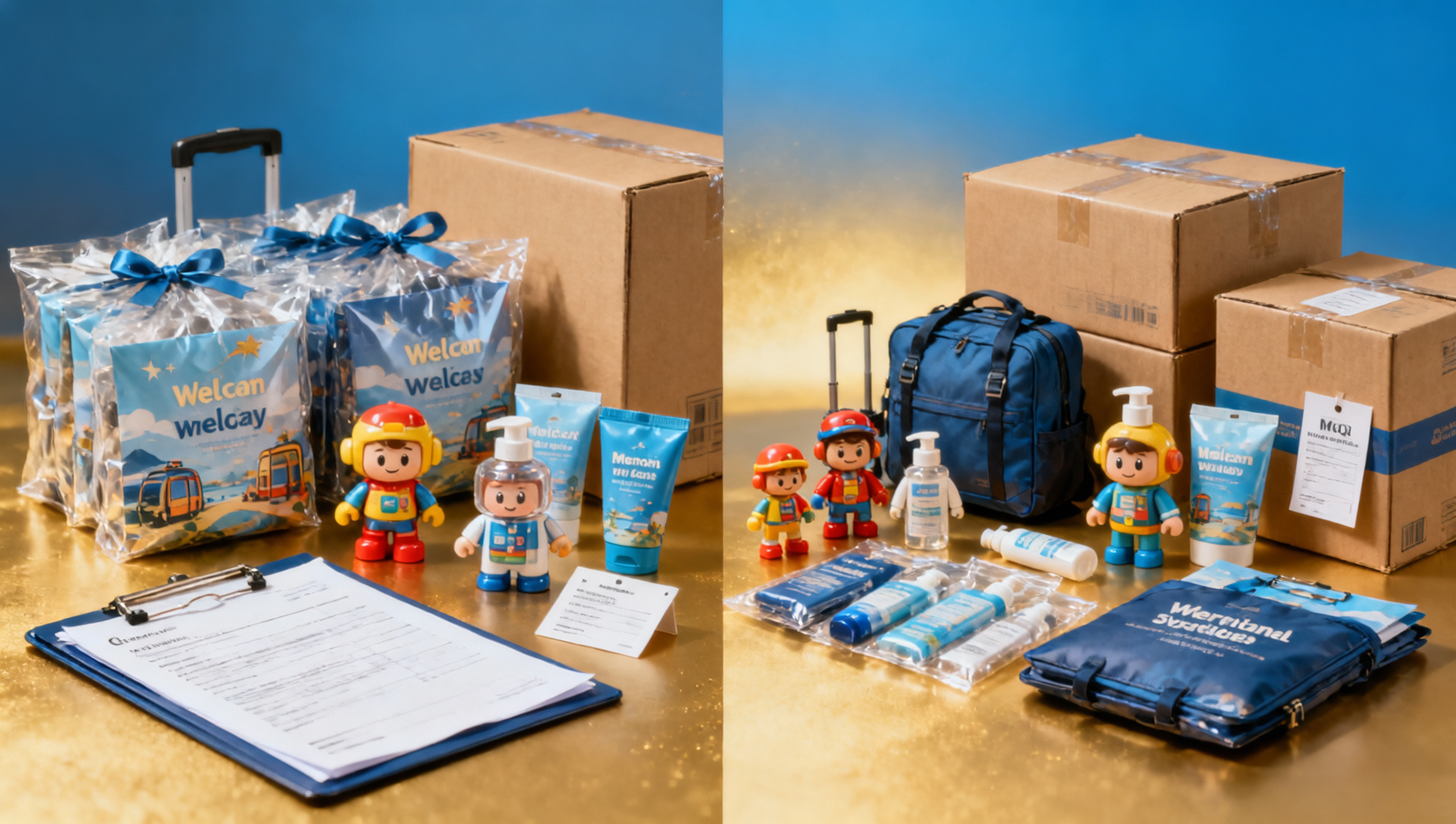
Holiday gift MOQ planning is being reshaped by international supply volatility, tighter product safety standards, and faster shifts in international retail demand. Drawing on retail analysis, supply chain research, and retail data, this article highlights how buyers can align brand supply decisions with product regulations, reduce risk, and turn timely retail insights into smarter sourcing strategies for peak seasonal performance.
Why holiday gift MOQ planning has become harder for travel service buyers and retail partners
For travel service businesses, holiday gift MOQ planning is no longer a simple volume discussion with a supplier. Hotels, resorts, attraction operators, cruise programs, airport retailers, and destination gift distributors now face a moving target: demand can change within 2–6 weeks, inbound traveler profiles can shift by region, and promotional windows often compress during peak seasonal campaigns. When those demand swings meet unstable international supply, MOQ decisions start affecting margin, delivery reliability, and guest satisfaction at the same time.
This is especially important for tourism-linked gifting programs. A holiday welcome kit, branded toy, travel-size beauty set, or family souvenir bundle may look like a merchandising issue, but in practice it touches procurement, compliance, operations, finance, and brand teams. If the MOQ is too high, stock sits in storage after the festive season. If it is too low, the buyer may lose price leverage, face split shipments, or miss critical retail dates by 7–15 days.
Global Consumer Sourcing helps buyers read these shifts earlier. Its coverage across Gifts & Toys, Beauty & Personal Care, Baby & Maternity, Pet Economy, and Sports & Outdoors gives travel service teams a broader view of what is happening upstream in manufacturing and downstream in consumer demand. That matters when a tourism brand is building a holiday assortment for multiple channels such as front-desk upsell, duty-free partnership, family travel packs, or distributor-led regional campaigns.
The practical question is not whether MOQ still matters. It does. The real question is how to set a viable MOQ under uncertain lead times, changing compliance obligations, and multi-market demand signals. A disciplined MOQ plan usually requires 3 layers of review: expected sell-through, replenishment feasibility, and safety documentation readiness.
Where the pressure comes from during peak travel gifting cycles
Peak holiday purchasing in travel service often overlaps with supplier congestion, port delays, year-end factory scheduling, and promotional deadlines. A buyer sourcing a private-label amenity gift or festive toy set may face a 30–60 day production window, but artwork approval, packaging confirmation, and compliance file review can already consume 10–20 days before mass production starts. That reduces room for correction if forecast assumptions prove wrong.
- Demand volatility: passenger mix, route changes, and destination traffic can alter product preferences faster than traditional MOQ models assume.
- Compliance timing: children’s items, cosmetics, or battery-powered souvenirs may require extra label checks, test coordination, or file verification before shipment release.
- Cash flow pressure: finance teams often prefer smaller commitments, while suppliers may only offer workable unit economics above certain volume thresholds.
- Operational complexity: travel service operators may need channel-specific packouts for hotel, airport, excursion, and wholesale distribution at the same time.
Because of these constraints, MOQ planning should be treated as a cross-functional decision rather than a purchasing formality. That approach reduces rushed buying, late rework, and seasonal markdown exposure.
How international supply shifts change MOQ decisions in real travel service scenarios
International supply shifts rarely affect all holiday gift categories in the same way. A plush souvenir for family travelers, a branded mini toiletry set for resort guests, and a travel accessory bundle for premium tour operators can each carry different material constraints, factory specialization needs, and documentation requirements. That is why travel service buyers should avoid using one MOQ rule across every gift line.
A more practical method is to separate products into low-risk replenishment items, medium-risk seasonal promotional items, and high-risk regulated or customized items. Low-risk lines may tolerate lower opening MOQs if replenishment is possible in 3–5 weeks. High-risk items often require earlier commitment because testing, packaging compliance, or custom mold scheduling can extend total lead time to 8–12 weeks.
The table below shows how holiday gift MOQ planning changes by travel service use case. It helps information researchers, sourcing teams, quality managers, and financial approvers evaluate where flexibility is realistic and where larger early commitments may still be justified.
The key takeaway is that MOQ planning should follow scenario logic, not supplier habit. In tourism-linked channels, the same unit cost target can produce very different outcomes depending on shelf life, guest turnover, and how quickly inventory can be redistributed between locations.
Three supply signals buyers should track before fixing MOQ
Before confirming holiday gift MOQ planning, project managers and sourcing teams should validate three signals. First, production continuity: are the key materials stable, or is the supplier facing intermittent component allocation? Second, compliance readiness: can the supplier provide the required declarations, test references, and labeling support in the target market timeline? Third, replenishment practicality: if the first order underperforms or overperforms, can the line be adjusted within the selling season?
- Check material and component dependency for the next 6–10 weeks, especially for decorated packaging, batteries, plush accessories, and cosmetic components.
- Confirm whether the item belongs to a standard platform product or a fully customized build, because the MOQ logic can differ significantly.
- Review transit and customs timing against campaign start date, not only against factory ex-works date.
These checks help decision-makers defend MOQ choices internally. They also reduce conflict between commercial urgency and quality or compliance controls.
What procurement, finance, quality, and operations should evaluate together
In many organizations, holiday gift MOQ planning fails because each department reviews the order from a different angle. Procurement wants cost efficiency, finance wants manageable commitment, operations wants on-time stock availability, and quality teams want complete documentation before shipment. For travel service companies, this tension is even stronger because late delivery can disrupt guest experience in a fixed holiday window.
A better approach is to score MOQ decisions against a shared evaluation grid. Instead of debating unit cost alone, teams should compare order options against at least 5 checkpoints: demand confidence, lead-time stability, compliance complexity, storage exposure, and reorder feasibility. This turns MOQ planning into a controlled decision rather than a negotiation based on instinct.
The following table can be used during sourcing review meetings for private-label travel gifts, holiday amenities, festive toy packs, and branded retail bundles. It is especially useful when business evaluators and financial approvers need to understand why a lower MOQ is not always the safer choice.
This comparison shows why an apparently cheaper MOQ strategy may cost more later. If the product needs market-specific labeling, multi-language packaging, or child-safety review, too small a run can increase the cost per usable unit and limit supplier commitment during peak season.
A practical 4-step review framework
1. Confirm demand bands
Build at least 3 forecast bands: conservative, base, and upside. For travel service channels, these can be linked to occupancy, passenger throughput, booking pace, or distributor pre-commitments. This helps teams see whether MOQ is aligned with realistic demand, not optimistic assumptions.
2. Map non-negotiable compliance items
Quality and safety managers should identify the documents or checks that cannot be compressed. Depending on product type, this may include age labeling, ingredient information, warning statements, packaging traceability, or importer labeling. Those steps often require 1–3 review rounds.
3. Test reorder realism
Ask whether a repeat order can arrive before the holiday selling window closes. If reorder lead time is 5–7 weeks and the campaign lasts only 4 weeks, the lower MOQ option may not actually be flexible.
4. Approve the fallback plan
Before issuing the PO, decide what happens if demand drops or delivery slips. Can stock move to another region? Can the packaging be de-seasonalized? Can the product be converted into a year-round amenity or retail bundle? This protects both finance and operations.
Compliance, product safety, and documentation risks that can break MOQ assumptions
Many holiday gift MOQ planning errors start with a basic mistake: treating all gifts as simple promotional merchandise. In tourism and travel service, gift items often include regulated features such as cosmetics, children’s use, food-contact components, batteries, textiles, or decorative packaging with claim language. Once those features are present, MOQ planning must account for documentation workload and not just production volume.
For example, a resort sourcing a festive beauty set for premium guests may need to verify ingredient labeling and destination-market packaging content. A family attraction ordering branded toy packs may need age grading and warning statement accuracy. Even when certification pathways differ by market, buyers still need enough time for document review, packaging confirmation, and pre-shipment checks. In practice, these steps can add 1–2 weeks if handled late.
GCS is valuable here because buyers do not only need product inspiration; they need sourcing intelligence tied to manufacturing realities. When reviewing potential gift lines, decision-makers can compare category-specific risk signals, supplier readiness patterns, and market-entry considerations across consumer sectors that often overlap with travel retail programs.
Common compliance checkpoints before MOQ approval
- Product category definition: is the item a toy, cosmetic, travel accessory, promotional pack, or mixed bundle? Classification affects documentation and warning language.
- Packaging and label review: check barcode placement, importer information, age warnings, material markings, and local language requirements where applicable.
- Sample retention and approval timing: allow enough time for revised samples, especially when custom printing, scent, color, or decoration is involved.
- Pre-shipment verification: plan carton checks, labeling verification, and quantity confirmation before cargo release, not after arrival risk becomes expensive.
These checkpoints matter because a delayed compliance file can neutralize the apparent benefit of a low MOQ. If the shipment misses the festive activation date, the lower stock position no longer protects the business. It simply becomes late inventory.
Typical mistake: customizing too early, standardizing too late
A frequent mistake in holiday gift MOQ planning is heavy customization before the buyer has validated demand. Travel service businesses sometimes request fully custom colors, seasonal artwork, multilingual boxes, and location-specific inserts in the first order. That can raise MOQ thresholds and increase artwork approval cycles from a few days to 2–3 weeks.
A more resilient method is staged customization. Start with a standard base item that has proven manufacturability, then add lighter customization through sleeves, tags, belly bands, inserts, or secondary packaging. This often lowers risk while preserving brand relevance for hotels, destination shops, and distributor networks.
Frequently asked questions about holiday gift MOQ planning under international supply pressure
The questions below reflect what travel service buyers, project managers, quality reviewers, and distributors commonly ask when balancing demand uncertainty with supplier conditions. They are also useful for internal alignment before seasonal purchase approval.
How early should travel service companies start holiday gift MOQ planning?
For standard items with limited customization, 8–12 weeks before launch is often a workable planning window. For private-label, child-related, cosmetic, or multi-component gift sets, many teams should begin 12–16 weeks earlier. This does not mean placing the final PO immediately, but it does mean confirming supplier options, sample path, and compliance scope before the market becomes crowded.
Is a lower MOQ always better during uncertain demand?
Not always. A lower MOQ reduces stock risk, but it may raise unit cost, weaken supplier priority, and make compliance cost less efficient. It is most useful when replenishment is realistic within the selling season, the product has low regulatory complexity, and the business can accept less packaging customization. If those conditions are missing, a slightly higher MOQ may be commercially safer.
What products are most sensitive to international supply shifts?
Items with multiple components, custom packaging, batteries, fragrance elements, or child-use claims usually react more sharply to supply disruption. In travel service channels, this includes festive toy packs, beauty gift sets, mixed amenity bundles, and decorative seasonal accessories. These products require closer review of lead times, documentation, and packaging dependencies.
How can distributors and regional agents reduce MOQ risk?
They can pool stable core SKUs across markets, delay final regional customization where possible, and share demand signals earlier with brand owners. Another effective step is to separate evergreen items from short-window festive variants. That allows common stock to move even if one regional holiday campaign underperforms.
Why work with GCS when seasonal sourcing decisions need sharper evidence
Holiday gift MOQ planning works best when buyers can connect demand, supplier capability, and compliance risk in one view. That is where Global Consumer Sourcing adds practical value. Instead of relying on fragmented signals, travel service buyers and retail partners can use GCS intelligence to compare sourcing options across consumer categories, monitor manufacturing trends, and identify where private-label opportunities remain commercially realistic.
For information researchers and technical evaluators, GCS helps narrow the field faster by highlighting category dynamics, safety considerations, and sourcing patterns that affect launch timing. For business reviewers and finance approvers, it supports more defensible decisions around MOQ, customization depth, and timing of commitment. For quality and project teams, it creates a better basis for asking the right supplier questions before cost, timing, and compliance start pulling in different directions.
If you are planning seasonal gifts for hotels, resorts, tourism retail, travel amenities, distributor networks, or destination-led holiday campaigns, contact GCS to discuss specific sourcing questions. You can consult on MOQ strategy, category selection, supplier comparison, expected lead-time ranges, packaging options, certification and labeling considerations, sample planning, and quotation communication paths for peak-season execution.
A stronger holiday program usually starts with better early decisions. If your team needs support in balancing order volume, compliance readiness, customization level, and delivery timing, GCS can help you turn market intelligence into an actionable sourcing plan before seasonal pressure narrows your options.
Related Intelligence
 2026/789 on Beauty Device Packaging Takes Effect") Beauty DevicesApr 29, 2026EU Regulation (EU) 2026/789 on Beauty Device Packaging Takes EffectEU Regulation (EU) 2026/789 mandates 30% recycled plastic & LCA declarations for beauty device packaging — act now to avoid Amazon.de/fr rejections!
Beauty DevicesApr 29, 2026EU Regulation (EU) 2026/789 on Beauty Device Packaging Takes EffectEU Regulation (EU) 2026/789 mandates 30% recycled plastic & LCA declarations for beauty device packaging — act now to avoid Amazon.de/fr rejections! Electronic & RC ToysApr 29, 2026ICTA: RC Toy Orders Shift to South China, Lead Time Cuts to 6 WeeksICTA reports RC toy orders shifting to South China—78% now flow to Guangdong’s cluster, cutting lead times to just 6 weeks. Act now to optimize sourcing, compliance & logistics.
 STEM & Educational ToysApr 29, 2026CPSC Nanomaterial Migration Rule for STEM Toys Effective Q3 2026CPSC Nanomaterial Migration Rule for STEM Toys: New ASTM F963–24 testing (≤0.05 mg/cm²/h) mandatory from Oct 1, 2026—avoid detention & recalls.
 Fitness EquipmentApr 29, 2026THE Alliance Cuts Shanghai–LA Capacity by 22%: Fitness Equipment Delays ExtendFitness equipment shippers: THE Alliance cuts Shanghai–LA capacity by 22% in May 2026—delays, surcharges, and 12–14-week bookings loom. Act now.
 Smart Pet DevicesApr 29, 2026Japan METI Expands Smart Pet Device White List, 10-Day Certification for Chinese DevicesJapan METI expands Smart Pet Device white list—Bluetooth 5.3+ collars & AI feeders now qualify for fast 10-day certification. Key opportunity for Chinese exporters.
 Infant Feeding & CareApr 29, 2026ASEAN-FFL 2026: RCEP Infant Feeding Labeling Rules Take EffectASEAN-FFL 2026 labeling rules take effect April 2026—ensure RCEP infant feeding product compliance now to avoid shelf bans & delays.
 Corporate & Seasonal GiftsApr 29, 2026Germany UBA to Pilot Carbon Labelling for Corporate GiftsGermany UBA's 2026 carbon labelling pilot for corporate gifts mandates ISO 14067 LCAs — vital for Chinese exporters, printers & ink suppliers targeting EU green procurement.
 Nursery Furniture & MonitorsApr 29, 2026Vietnam MOIT Eases Infant Monitor Registration, Requires NMPA Class II FilingVietnam MOIT eases infant monitor registration: NMPA Class II filing now accepted—skip local testing, cut time-to-market. Key for China-Vietnam medtech exporters.
 Camping & WaterApr 29, 2026SASO Mandates IP6X + Salt Spray for Camping Power & Inflators in Saudi ArabiaSASO mandates IP6X + salt spray for camping power stations & inflators in Saudi Arabia—act now to avoid shipment delays and customs rejection.
") Skincare OEMApr 29, 2026FDA Adds Plant Stem Cell Extract Code to CPIS (Apr 2026)FDA adds 'Plant Stem Cell Extract' code to CPIS—urgent compliance action needed for skincare OEMs, suppliers & importers before July 1, 2026.
Skincare OEMApr 29, 2026FDA Adds Plant Stem Cell Extract Code to CPIS (Apr 2026)FDA adds 'Plant Stem Cell Extract' code to CPIS—urgent compliance action needed for skincare OEMs, suppliers & importers before July 1, 2026. Electronic & RC ToysApr 28, 2026ICTA 2026 Q2 RC Toy Sourcing Report: Shift to Guangdong ClusterICTA 2026 Q2 RC Toy Sourcing Report reveals 68% of global electronic RC toy orders shifting to Guangdong’s Shenzhen–Dongguan–Zhongshan cluster — driven by dual-band modules, UL9990 batteries & rapid prototyping. Act now.
 Skincare OEMApr 28, 2026FDA Adds Plant Stem Cell Extract Code to CPIS SystemFDA adds COS-PLS-2026 code for plant stem cell extract in CPIS — vital for skincare OEMs, suppliers & U.S. importers. Act now to ensure compliance by July 1, 2026.
 Nursery Furniture & MonitorsApr 28, 2026Vietnam Exempts Infant Monitors from Local Type TestingVietnam exempts infant monitors from local type testing—leverage your NMPA Class II filing to fast-track Vietnam market entry starting June 1, 2026.