TÜV Rheinland Updates Green Packaging Certification for Corporate Gifts
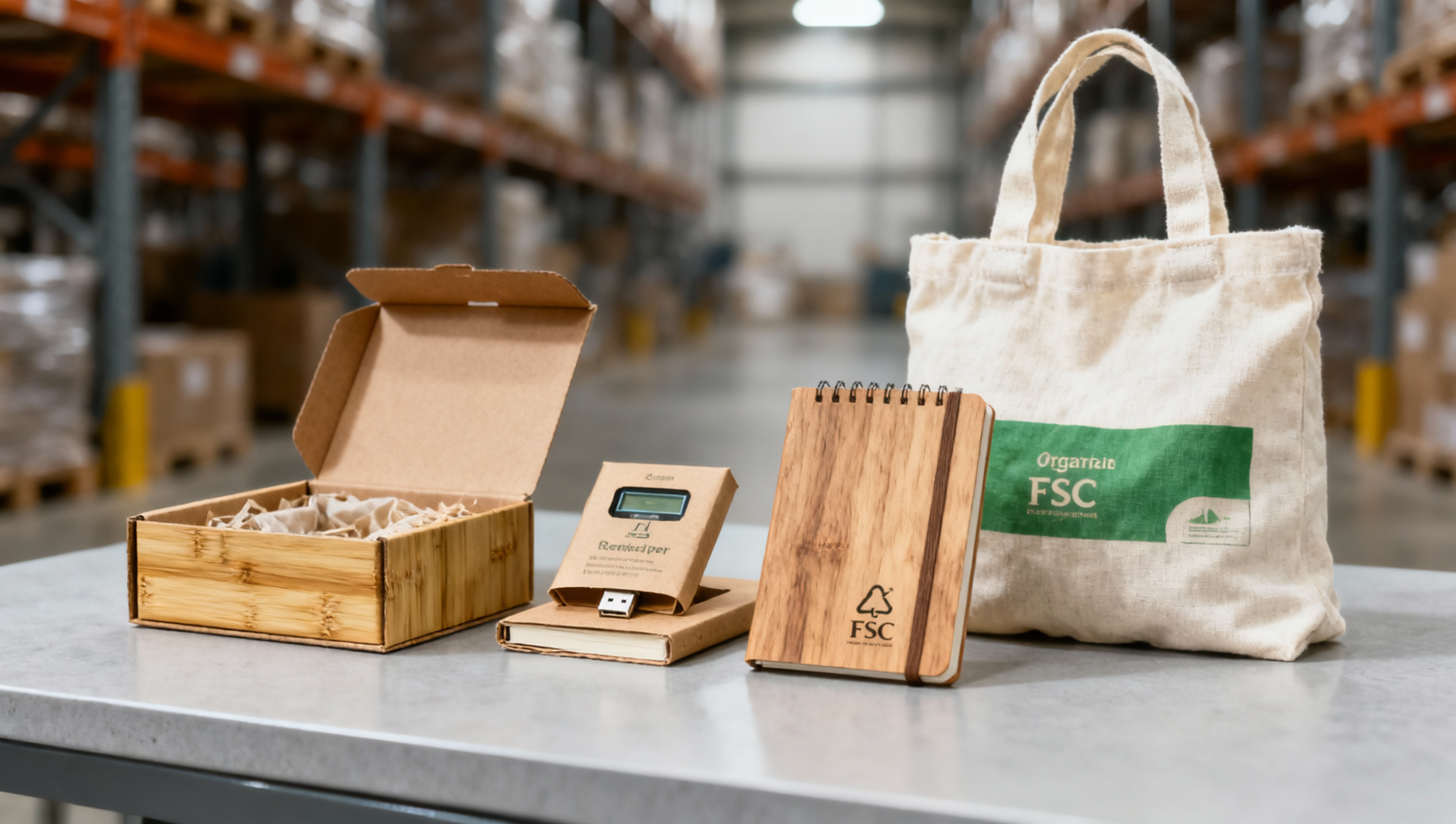
On April 18, 2026, German certification body TÜV Rheinland upgraded its ‘Green Packaging Certification’ standard for corporate and seasonal gifts—introducing mandatory life cycle assessment (LCA) reporting and carbon footprint heat maps. This change directly affects OEM manufacturers, export-oriented gift suppliers, and ESG procurement teams in the corporate gifting value chain.
Event Overview
On April 18, 2026, TÜV Rheinland revised its ‘Green Packaging Certification’ requirements for Corporate & Seasonal Gifts. Applicants must now submit an LCA report compliant with ISO 14040, visualized as a heat map showing carbon emission shares across three stages: raw material acquisition, manufacturing, and transportation. Certification labels will not be issued to applications failing this requirement. As a result, non-compliant products lose eligibility for ESG-aligned procurement by major German enterprises. Factories in East China’s OEM gift sector are beginning to adopt LCA modeling tools in bulk.
Industries Affected
Direct Export & Trading Enterprises
These firms act as intermediaries between Chinese OEMs and European corporate buyers. They are affected because certification is now a prerequisite for tender participation in Germany’s ESG-driven procurement processes—especially for B2B gifting contracts with large enterprises. The impact manifests in tighter documentation requirements, longer lead times for certification renewal, and increased pre-shipment compliance verification responsibilities.
OEM & Contract Manufacturing Firms
East China–based gift OEMs face direct operational impact: they must generate ISO 14040–compliant LCA data—not just for packaging, but for the full product system (including materials, assembly, and logistics). The heat map format adds visualization and interpretability demands beyond basic reporting. Non-compliance blocks access to certified-label branding and associated procurement channels.
Raw Material Suppliers
Suppliers of paper, bioplastics, recycled textiles, or metal components used in corporate gifts are indirectly affected. Buyers increasingly request upstream LCA data (e.g., cradle-to-gate emissions per kg of kraft board or bamboo fiber) to populate OEM-level reports. Lack of traceable, stage-specific environmental data may reduce supplier competitiveness in tier-1 OEM sourcing rounds.
Supply Chain & Certification Support Providers
Consultancies, LCA software vendors, and third-party verification bodies serving the gift industry are seeing rising demand for ISO 14040–aligned modeling support and heat map generation services. However, no official TÜV-endorsed tool or template has been published; current adoption relies on internal capacity building or vendor partnerships.
What Relevant Enterprises or Practitioners Should Focus On
Monitor Official Guidance on Heat Map Specifications
While the requirement for a heat map is confirmed, TÜV Rheinland has not yet published standardized formatting rules (e.g., color coding, granularity of sub-stages, acceptable data sources). Enterprises should track updates from TÜV’s official communications channel—not third-party summaries—to avoid misalignment during submission.
Prioritize High-Volume, Germany-Bound Product Lines
Given resource constraints, companies should identify top 3–5 SKUs by export volume to Germany and initiate LCA modeling for those first. This avoids blanket implementation and allows calibration of methodology before scaling across portfolios.
Distinguish Between Certification Signal and Procurement Enforcement
The updated standard is active as of April 18, 2026—but enforcement timing within buyer procurement systems may vary. Some German corporates may require certification only for new tenders post-July 2026, while others may apply it retroactively to renewals. Companies should confirm timelines directly with key customers rather than assume immediate cutoffs.
Prepare Internal Data Collection Protocols Now
LCA modeling depends on reliable primary data: energy use per production batch, transport distances and modes, material weights and origins. Teams should begin mapping existing ERP, logistics, and supplier data fields against ISO 14040 inventory requirements—even before selecting modeling software—to reduce implementation lag.
Editorial Perspective / Industry Observation
From an industry perspective, this update is best understood not as a standalone compliance shift, but as a signal of tightening linkage between packaging certification and full-product environmental accountability. Analysis来看, TÜV Rheinland is effectively extending scope from ‘green packaging’ to ‘low-carbon gifting systems’—using certification as a lever to pull upstream supply chain transparency. Observation来看, the heat map requirement reflects growing buyer preference for intuitive, comparative sustainability visualization—not just pass/fail labels. Current more relevant interpretation is that this is a procedural escalation, not yet a market-wide barrier: adoption remains concentrated among Tier-1 German enterprises, and SME buyers have not yet signaled parallel requirements. Still, the move signals accelerating convergence between ESG procurement criteria and technical environmental accounting standards in the corporate gifts space.
In summary, the April 2026 TÜV Rheinland update marks a formal step toward embedding quantitative carbon accountability into green packaging certification for corporate gifts. It does not introduce new environmental science, but elevates reporting rigor and visualization expectations. For industry participants, it is less a sudden disruption and more a calibrated nudge toward structured LCA readiness—particularly for firms targeting high-ESG-demand markets like Germany. The current situation is better understood as an early-stage operational alignment phase, not a fully enforced market gate.
Source: Public announcement by TÜV Rheinland dated April 18, 2026, regarding revision of Green Packaging Certification criteria for Corporate & Seasonal Gifts. Note: Heat map formatting guidelines, phased enforcement details, and OEM support resources remain pending official publication and are subject to ongoing observation.
Related Intelligence
 Beauty DevicesApr 19, 2026Global Li-ion Recycling Rate Hits 62.3%: Beauty Device BOM Cost Down 9%Li-ion recycling rate hits 62.3% — driving 9% BOM cost reduction for beauty devices. Discover how cascade utilization is reshaping global supply chains & boosting margins.
 Cosmetics & PkgApr 19, 2026FDA Mandates Independent VCRP Registration for Cosmetic Packaging as of Apr 19, 2026FDA mandates independent VCRP registration for cosmetic packaging by Apr 19, 2026—avoid Import Alert 66-12. Act now to secure U.S. market access.
 Nursery Furniture & MonitorsApr 19, 2026Canton Fair Phase III: Smart Infant Monitors Surge Amid EN60601-1-12 DemandSmart infant monitors surge at Canton Fair Phase III amid rising EN60601-1-12 compliance demand — discover why Middle East buyers now prioritize medical-grade safety.
 Camping & WaterApr 19, 2026RCEP Cuts Tariff on China-Made Camping Water Bags by 0.8% for TPU+Aluminum LaminateRCEP cuts tariff by 0.8% on China-made camping water bags with TPU+aluminum laminate — unlock duty savings & win Indonesian tenders now.
 Corporate & Seasonal GiftsApr 19, 2026TÜV Rheinland Updates Green Packaging Certification for Corporate GiftsGreen Packaging Certification now requires LCA reports & carbon heat maps for corporate gifts—key for OEMs, exporters & ESG procurement. Act before July 2026.
 Smart Pet DevicesApr 19, 2026Vietnam Requires ISO 13485 + Vietnamese Manual for Smart Pet CollarsISO 13485 + Vietnamese manual now mandatory for smart pet collars in Vietnam—key compliance update for exporters, certifiers & logistics partners.
 Infant Feeding & CareApr 19, 2026JETRO Mandates Blockchain Traceability for Silicone in Infant Feeding ProductsBlockchain traceability for silicone in infant feeding products is now mandated by JETRO — ensure compliance with AntChain/ZhiXin Chain to clear Japanese customs.
 STEM & Educational ToysApr 19, 2026SASO Shortens AI-STEM Toy EMC Certification to 24 HoursSASO Shortens AI-STEM Toy EMC Certification to 24 Hours — Chinese manufacturers can now accelerate Saudi market access with pre-embedded PCB-level EMC filtering and verified design docs.
 Cosmetics & PkgApr 19, 2026EU EPR Mandatory Registration in France & Germany Takes Effect Apr 18, 2026EU EPR mandatory registration in France & Germany starts Apr 18, 2026 — Chinese cosmetic packaging exporters must act now to avoid delisting, delays & fines.
 Camping & WaterApr 19, 2026CPSC Tightens Import Inspection for Camping Water BladdersCPSC Tightens Import Inspection for Camping Water Bladders: Urgent ASTM F2739-23 cold-flex compliance required at −20°C—avoid shipment rejection & re-export.
 Camping & WaterApr 18, 2026CPSC Launches New TPU Camping Bladder ChecksCPSC launches TPU camping bladder checks: Critical −20°C performance enforcement for exporters, suppliers & OEMs. Act now to avoid U.S. customs delays.
 Beauty DevicesApr 18, 2026Global Li-ion Battery Recycling Rate Hits 62.3%Li-ion battery recycling rate hits 62.3%—cutting BOM costs for beauty & smart pet device batteries. Discover how LFP cathode savings boost margins and compliance readiness.
 Beauty DevicesApr 18, 2026Canton Fair Phase II Preview: Beauty Device Inquiries +41% YoYBeauty device inquiries surge +41% YoY ahead of Canton Fair Phase II — Middle East buyers prioritize RF safety & energy efficiency certification.