Vietnam Requires ISO 13485 + Vietnamese Manual for Smart Pet Collars
On April 18, 2026, Vietnam’s Ministry of Industry and Trade (MOIT) updated its regulatory framework for imported smart pet devices—specifically GPS and health-monitoring collars—bringing them under medical device controls. This change directly affects Chinese exporters, certification providers, technical documentation services, and cross-border logistics operators serving the pet tech sector.
Event Overview
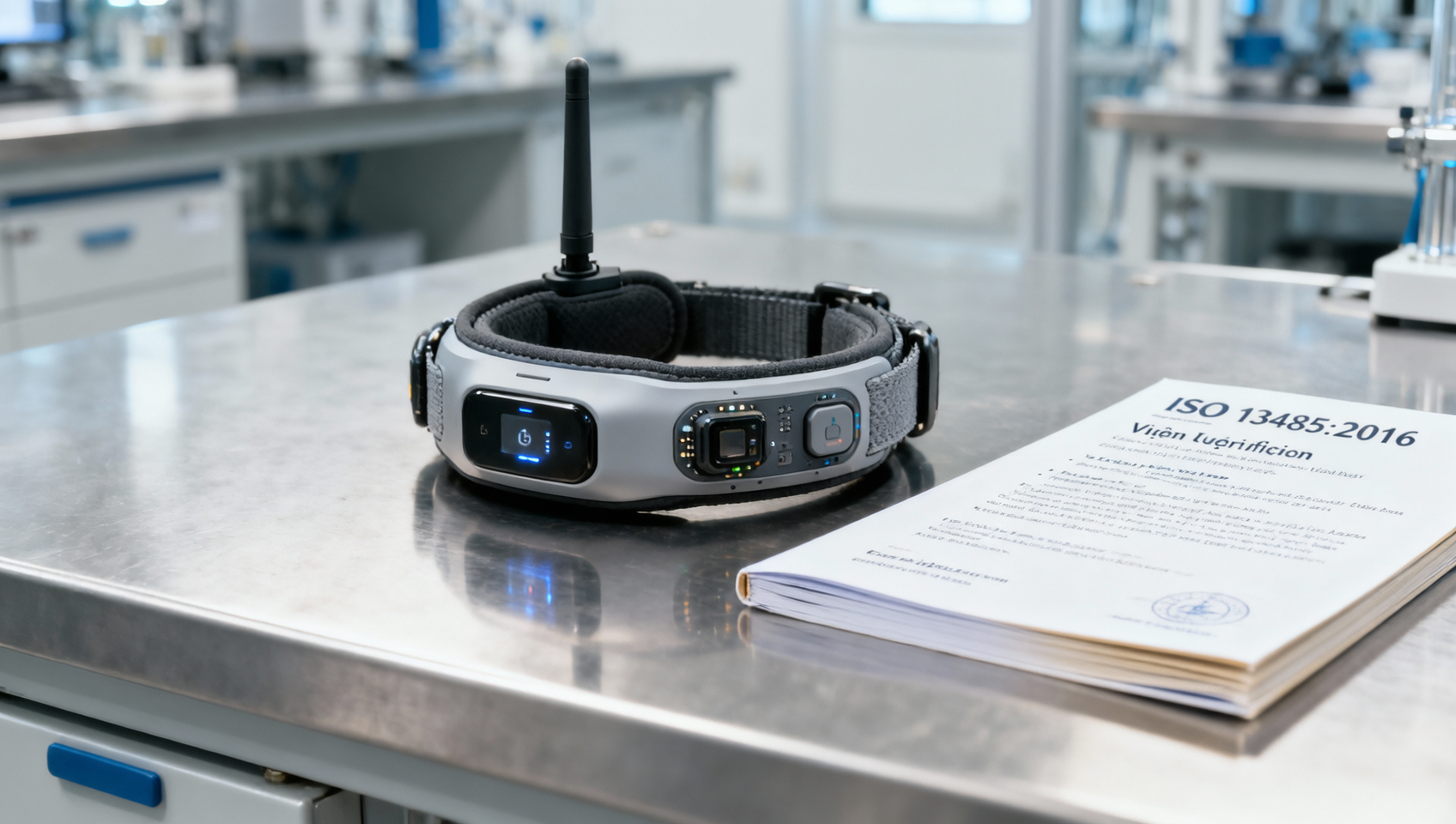
On April 18, 2026, MOIT issued an amendment to Notification No. 12/2026/TT-BCT, adding GPS and health-monitoring smart pet collars to the category of regulated medical devices. As of this update, importers must submit two mandatory documents: (1) a valid ISO 13485:2016 certificate issued to the Chinese manufacturer, and (2) a Vietnamese-language user manual certified by Vietnam’s Ministry of Justice. Previously, these requirements applied only to devices classified as medical-grade; this expansion now covers consumer-facing pet wearables previously outside the scope.
Which Subsectors Are Affected
Direct Exporters (China-based)
Chinese manufacturers exporting smart pet collars to Vietnam are now subject to medical device compliance obligations. The requirement for ISO 13485:2016 certification—previously uncommon among non-medical IoT hardware producers—introduces new audit, documentation, and renewal burdens. Impact manifests in delayed customs clearance, increased pre-shipment verification time, and potential shipment rejection if certification or translation validation is incomplete.
Technical Documentation & Localization Providers
Firms offering Vietnamese-language manual translation and legal certification services face heightened demand—but also stricter accountability. The mandate specifies certification by Vietnam’s Ministry of Justice, not just notarization or standard translation. This raises the bar for service providers’ familiarity with Vietnam’s judicial certification procedures and timelines.
Cross-Border Logistics & Customs Agents
Freight forwarders and customs brokers handling pet tech shipments into Vietnam must now verify both ISO 13485 validity (including scope alignment with product function) and Ministry of Justice certification status *before* filing import declarations. Absence or discrepancy in either document triggers automatic hold or return—increasing administrative overhead and risk of demurrage charges.
Distributor & E-commerce Platforms (Vietnam-based)
Vietnamese importers and online retailers sourcing smart pet collars from China must reassess supplier qualification processes. Pre-approval of ISO 13485 scope and manual certification status becomes a prerequisite—not optional—to avoid post-import compliance gaps. Inventory planning may require longer lead times to accommodate certification verification cycles.
What Relevant Enterprises or Practitioners Should Focus On Now
Confirm ISO 13485 scope coverage before shipment
ISO 13485 certificates must explicitly cover “design and manufacture of wearable animal health monitoring devices” or equivalent functional language. Generic certificates covering “electronic components” or “IoT hardware” without device-specific scope are insufficient per current MOIT interpretation.
Initiate Vietnamese manual certification early—allow 10–15 working days
Ministry of Justice certification requires submission through authorized Vietnamese legal representatives or licensed translation agencies. Processing typically takes 10–15 business days; rush processing is not officially available. Delayed certification cannot be remedied post-arrival.
Review existing contracts and Incoterms for compliance responsibility allocation
Export contracts should clearly assign responsibility for ISO 13485 maintenance, manual translation, and judicial certification. Under FOB or EXW terms, Vietnamese importers bear full compliance risk unless contractually shifted. Revising clauses now mitigates future disputes.
Monitor MOIT’s official portal for guidance on transitional arrangements
The amended notification does not specify a grace period. While enforcement is expected to begin immediately upon publication (April 18, 2026), MOIT may issue clarifications on implementation timing or grandfathering for pending shipments. Subscribing to MOIT’s official notices is recommended.
Editorial Perspective / Industry Observation
From industry perspective, this regulatory shift signals Vietnam’s broader effort to align pet health technology oversight with ASEAN Medical Device Directive (AMDD) principles—treating data-driven animal wellness tools as de facto medical devices when they perform diagnostic or therapeutic functions. Analysis来看, it is less a sudden policy pivot and more a formalized extension of existing risk-based classification logic already applied to human-wearable health tech. Current more appropriate understanding is that this reflects Vietnam’s incremental regulatory maturation—not an isolated trade barrier. Observation来看, the inclusion of over 70% of Chinese pet tech exporters suggests MOIT prioritized high-volume, functionally convergent categories first, implying further device categories (e.g., smart feeders with health analytics) could follow.
Conclusion
This update marks a structural shift in market access conditions—not merely an administrative tweak. It elevates compliance from a commercial formality to a technical and procedural prerequisite. For stakeholders, the change is best understood as an operational inflection point: one requiring proactive alignment across manufacturing, documentation, and customs workflows—not reactive problem-solving after shipment.
Information Sources
Primary source: Vietnam Ministry of Industry and Trade (MOIT), Notification No. 12/2026/TT-BCT, Annex amendment dated April 18, 2026. Pending observation: MOIT has not yet published accompanying guidance on transitional measures, scope interpretation, or certification verification channels—these remain subjects for ongoing monitoring.
Related Intelligence
 Beauty DevicesApr 19, 2026Global Li-ion Recycling Rate Hits 62.3%: Beauty Device BOM Cost Down 9%Li-ion recycling rate hits 62.3% — driving 9% BOM cost reduction for beauty devices. Discover how cascade utilization is reshaping global supply chains & boosting margins.
 Cosmetics & PkgApr 19, 2026FDA Mandates Independent VCRP Registration for Cosmetic Packaging as of Apr 19, 2026FDA mandates independent VCRP registration for cosmetic packaging by Apr 19, 2026—avoid Import Alert 66-12. Act now to secure U.S. market access.
 Nursery Furniture & MonitorsApr 19, 2026Canton Fair Phase III: Smart Infant Monitors Surge Amid EN60601-1-12 DemandSmart infant monitors surge at Canton Fair Phase III amid rising EN60601-1-12 compliance demand — discover why Middle East buyers now prioritize medical-grade safety.
 Camping & WaterApr 19, 2026RCEP Cuts Tariff on China-Made Camping Water Bags by 0.8% for TPU+Aluminum LaminateRCEP cuts tariff by 0.8% on China-made camping water bags with TPU+aluminum laminate — unlock duty savings & win Indonesian tenders now.
 Corporate & Seasonal GiftsApr 19, 2026TÜV Rheinland Updates Green Packaging Certification for Corporate GiftsGreen Packaging Certification now requires LCA reports & carbon heat maps for corporate gifts—key for OEMs, exporters & ESG procurement. Act before July 2026.
 Smart Pet DevicesApr 19, 2026Vietnam Requires ISO 13485 + Vietnamese Manual for Smart Pet CollarsISO 13485 + Vietnamese manual now mandatory for smart pet collars in Vietnam—key compliance update for exporters, certifiers & logistics partners.
 Infant Feeding & CareApr 19, 2026JETRO Mandates Blockchain Traceability for Silicone in Infant Feeding ProductsBlockchain traceability for silicone in infant feeding products is now mandated by JETRO — ensure compliance with AntChain/ZhiXin Chain to clear Japanese customs.
 STEM & Educational ToysApr 19, 2026SASO Shortens AI-STEM Toy EMC Certification to 24 HoursSASO Shortens AI-STEM Toy EMC Certification to 24 Hours — Chinese manufacturers can now accelerate Saudi market access with pre-embedded PCB-level EMC filtering and verified design docs.
 Cosmetics & PkgApr 19, 2026EU EPR Mandatory Registration in France & Germany Takes Effect Apr 18, 2026EU EPR mandatory registration in France & Germany starts Apr 18, 2026 — Chinese cosmetic packaging exporters must act now to avoid delisting, delays & fines.
 Camping & WaterApr 19, 2026CPSC Tightens Import Inspection for Camping Water BladdersCPSC Tightens Import Inspection for Camping Water Bladders: Urgent ASTM F2739-23 cold-flex compliance required at −20°C—avoid shipment rejection & re-export.
 Camping & WaterApr 18, 2026CPSC Launches New TPU Camping Bladder ChecksCPSC launches TPU camping bladder checks: Critical −20°C performance enforcement for exporters, suppliers & OEMs. Act now to avoid U.S. customs delays.
 Beauty DevicesApr 18, 2026Global Li-ion Battery Recycling Rate Hits 62.3%Li-ion battery recycling rate hits 62.3%—cutting BOM costs for beauty & smart pet device batteries. Discover how LFP cathode savings boost margins and compliance readiness.
 Beauty DevicesApr 18, 2026Canton Fair Phase II Preview: Beauty Device Inquiries +41% YoYBeauty device inquiries surge +41% YoY ahead of Canton Fair Phase II — Middle East buyers prioritize RF safety & energy efficiency certification.