SASO Shortens AI-STEM Toy EMC Certification to 24 Hours
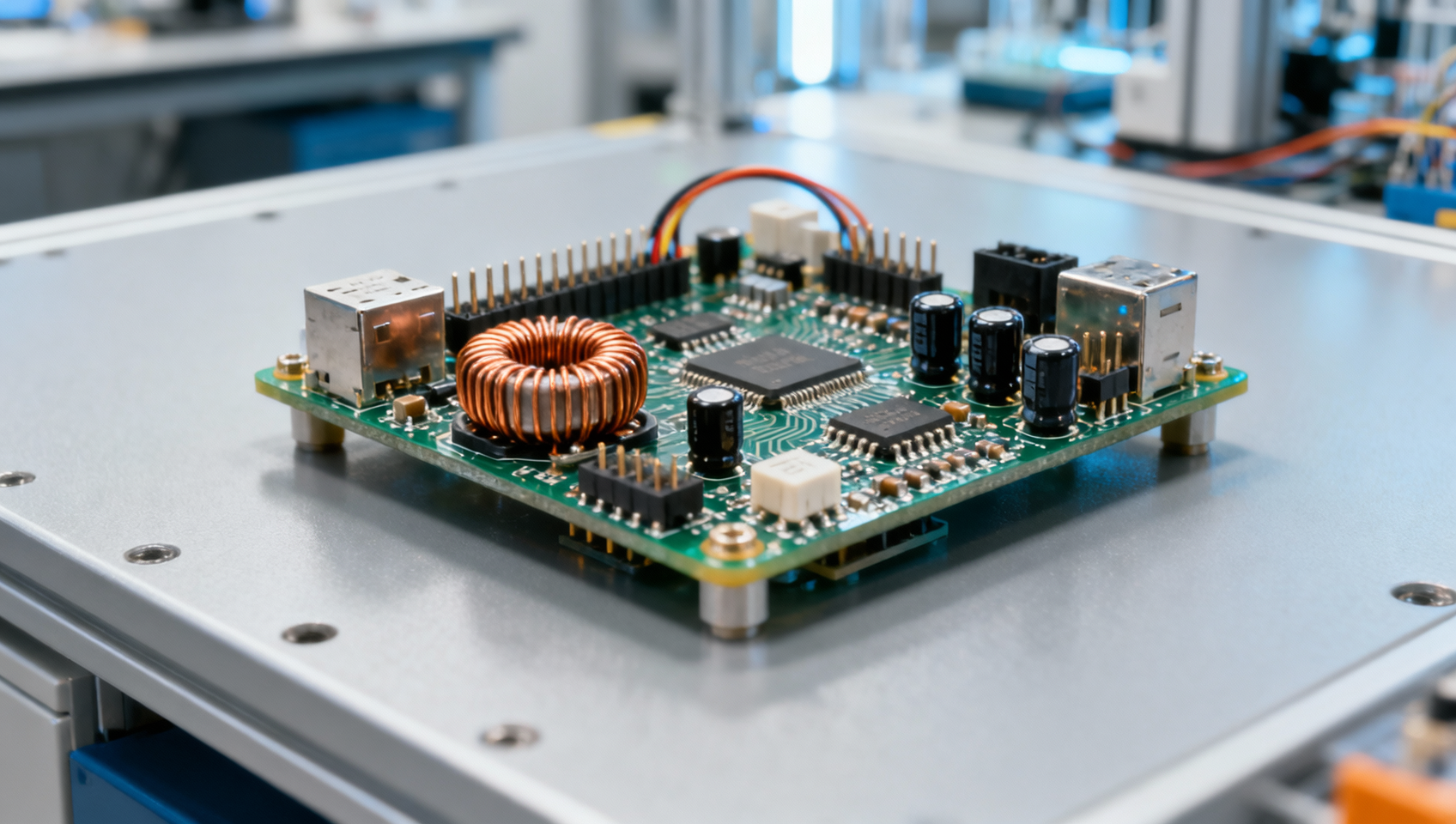
Saudi Arabia’s Standards, Metrology and Quality Organization (SASO) announced on April 18, 2026, a 24-hour expedited certification pathway for STEM and educational toys integrating AI voice or image recognition modules — provided Chinese manufacturers pre-embed EMC filtering circuits at the PCB level and submit verified design documentation. This development directly impacts exporters, ODM suppliers, and compliance service providers serving the Middle East toy and edtech markets.
Event Overview
On April 18, 2026, SASO issued an official notice introducing a ‘green channel’ for STEM and educational toys containing AI-based voice or image recognition functionality. Under this pathway, the combined electromagnetic compatibility (EMC) pre-scan and type testing cycle is reduced to 24 hours. The prerequisite is that manufacturers — specifically those based in China — must implement EMC shielding design (including onboard filtering circuits) at the PCB layout stage and supply a formal design verification report. No additional details regarding fee structure, scope of eligible AI modules, or enforcement timeline beyond the announcement date have been disclosed.
Industries Affected
ODM/OEM Toy Manufacturers (China-based)
These firms are directly affected because SASO’s requirement mandates hardware-level design changes prior to prototype validation. Impact manifests as revised PCB layout workflows, earlier involvement of EMC engineers in product development, and added documentation burden for design verification — all before sample submission to test labs.
Export Trading Companies (Middle East-focused)
Trading firms handling STEM toy shipments to Saudi Arabia face compressed internal lead times: certification no longer acts as a post-production bottleneck, but shifts upstream into design handover and engineering review phases. Delays now stem more from incomplete design packages than lab queue times.
Compliance & Testing Service Providers
Third-party labs and regulatory consultants must adapt service offerings to include pre-certification PCB design audits and rapid-turnaround verification reporting — not just post-fabrication testing. Their role evolves toward early-stage technical advisory support.
Component Sourcing & Supply Chain Managers
Procurement teams must now verify component-level EMC performance (e.g., AI SoCs, microphone arrays, camera modules) against pre-embedded filter requirements. Component selection decisions increasingly influence final certification eligibility — not just functional performance.
What Stakeholders Should Monitor and Do Now
Track SASO’s official implementation guidance
Current notice confirms timing and condition (PCB-level EMC design + verification report), but lacks technical annexes — e.g., minimum filter topology, acceptable test standards (IEC/CISPR variants), or accepted formats for design reports. Stakeholders should monitor SASO’s portal and accredited bodies for updates within Q2 2026.
Review active and upcoming STEM toy designs for EMC readiness
Manufacturers should audit current PCB layouts targeting Saudi export — especially those with AI modules launched after Q1 2026 — to confirm presence of dedicated filtering components (e.g., common-mode chokes, ferrite beads, RC networks) near high-speed interfaces and RF-sensitive sections. Layouts without such provisions will not qualify for the 24-hour path.
Distinguish policy signal from operational readiness
The 24-hour claim reflects a procedural target under ideal conditions — not guaranteed turnaround for all submissions. Real-world execution depends on lab capacity, report completeness, and absence of non-conformities in first-run testing. Treat it as a conditional acceleration mechanism, not a universal SLA.
Prepare cross-functional alignment between R&D, QA, and export teams
Engineering sign-off on EMC design must now precede procurement and assembly. QA departments need updated checklists covering filter placement, schematic annotation, and BOM traceability. Export teams require training to validate incoming design reports before shipment scheduling.
Editorial Perspective / Industry Observation
From industry perspective, this move is less about immediate certification relief and more about institutionalizing upstream compliance discipline. Analysis来看, SASO is shifting enforcement emphasis from end-product conformity to design-intent verification — aligning with global trends seen in EU RED and UKCA frameworks. Observation来看, the 24-hour window functions primarily as a reward for demonstrable engineering diligence, not a reduction in technical rigor. Current更值得关注的是 how quickly Chinese ODMs can institutionalize PCB-level EMC reviews — not whether the timeline is achievable for isolated cases. It更适合理解为 a structural nudge toward hardware-level regulatory foresight, rather than a short-term logistics fix.
This initiative signals growing regulatory sophistication in Gulf markets — where technical market access barriers are evolving from basic safety checks toward embedded system integrity. For stakeholders, the takeaway is not speed alone, but the rising cost of overlooking electromagnetic design in early development stages. The 24-hour certification is conditional; the underlying requirement — pre-emptive EMC integration — is now non-negotiable for targeted products.
Source: Official SASO public notice dated April 18, 2026. Further technical specifications and acceptance criteria remain pending publication — ongoing monitoring advised.
Related Intelligence
 Beauty DevicesApr 19, 2026Global Li-ion Recycling Rate Hits 62.3%: Beauty Device BOM Cost Down 9%Li-ion recycling rate hits 62.3% — driving 9% BOM cost reduction for beauty devices. Discover how cascade utilization is reshaping global supply chains & boosting margins.
 Cosmetics & PkgApr 19, 2026FDA Mandates Independent VCRP Registration for Cosmetic Packaging as of Apr 19, 2026FDA mandates independent VCRP registration for cosmetic packaging by Apr 19, 2026—avoid Import Alert 66-12. Act now to secure U.S. market access.
 Nursery Furniture & MonitorsApr 19, 2026Canton Fair Phase III: Smart Infant Monitors Surge Amid EN60601-1-12 DemandSmart infant monitors surge at Canton Fair Phase III amid rising EN60601-1-12 compliance demand — discover why Middle East buyers now prioritize medical-grade safety.
 Camping & WaterApr 19, 2026RCEP Cuts Tariff on China-Made Camping Water Bags by 0.8% for TPU+Aluminum LaminateRCEP cuts tariff by 0.8% on China-made camping water bags with TPU+aluminum laminate — unlock duty savings & win Indonesian tenders now.
 Corporate & Seasonal GiftsApr 19, 2026TÜV Rheinland Updates Green Packaging Certification for Corporate GiftsGreen Packaging Certification now requires LCA reports & carbon heat maps for corporate gifts—key for OEMs, exporters & ESG procurement. Act before July 2026.
 Smart Pet DevicesApr 19, 2026Vietnam Requires ISO 13485 + Vietnamese Manual for Smart Pet CollarsISO 13485 + Vietnamese manual now mandatory for smart pet collars in Vietnam—key compliance update for exporters, certifiers & logistics partners.
 Infant Feeding & CareApr 19, 2026JETRO Mandates Blockchain Traceability for Silicone in Infant Feeding ProductsBlockchain traceability for silicone in infant feeding products is now mandated by JETRO — ensure compliance with AntChain/ZhiXin Chain to clear Japanese customs.
 STEM & Educational ToysApr 19, 2026SASO Shortens AI-STEM Toy EMC Certification to 24 HoursSASO Shortens AI-STEM Toy EMC Certification to 24 Hours — Chinese manufacturers can now accelerate Saudi market access with pre-embedded PCB-level EMC filtering and verified design docs.
 Cosmetics & PkgApr 19, 2026EU EPR Mandatory Registration in France & Germany Takes Effect Apr 18, 2026EU EPR mandatory registration in France & Germany starts Apr 18, 2026 — Chinese cosmetic packaging exporters must act now to avoid delisting, delays & fines.
 Camping & WaterApr 19, 2026CPSC Tightens Import Inspection for Camping Water BladdersCPSC Tightens Import Inspection for Camping Water Bladders: Urgent ASTM F2739-23 cold-flex compliance required at −20°C—avoid shipment rejection & re-export.
 Camping & WaterApr 18, 2026CPSC Launches New TPU Camping Bladder ChecksCPSC launches TPU camping bladder checks: Critical −20°C performance enforcement for exporters, suppliers & OEMs. Act now to avoid U.S. customs delays.
 Beauty DevicesApr 18, 2026Global Li-ion Battery Recycling Rate Hits 62.3%Li-ion battery recycling rate hits 62.3%—cutting BOM costs for beauty & smart pet device batteries. Discover how LFP cathode savings boost margins and compliance readiness.
 Beauty DevicesApr 18, 2026Canton Fair Phase II Preview: Beauty Device Inquiries +41% YoYBeauty device inquiries surge +41% YoY ahead of Canton Fair Phase II — Middle East buyers prioritize RF safety & energy efficiency certification.