Toy Logistics Costs Often Spike at the Last Mile
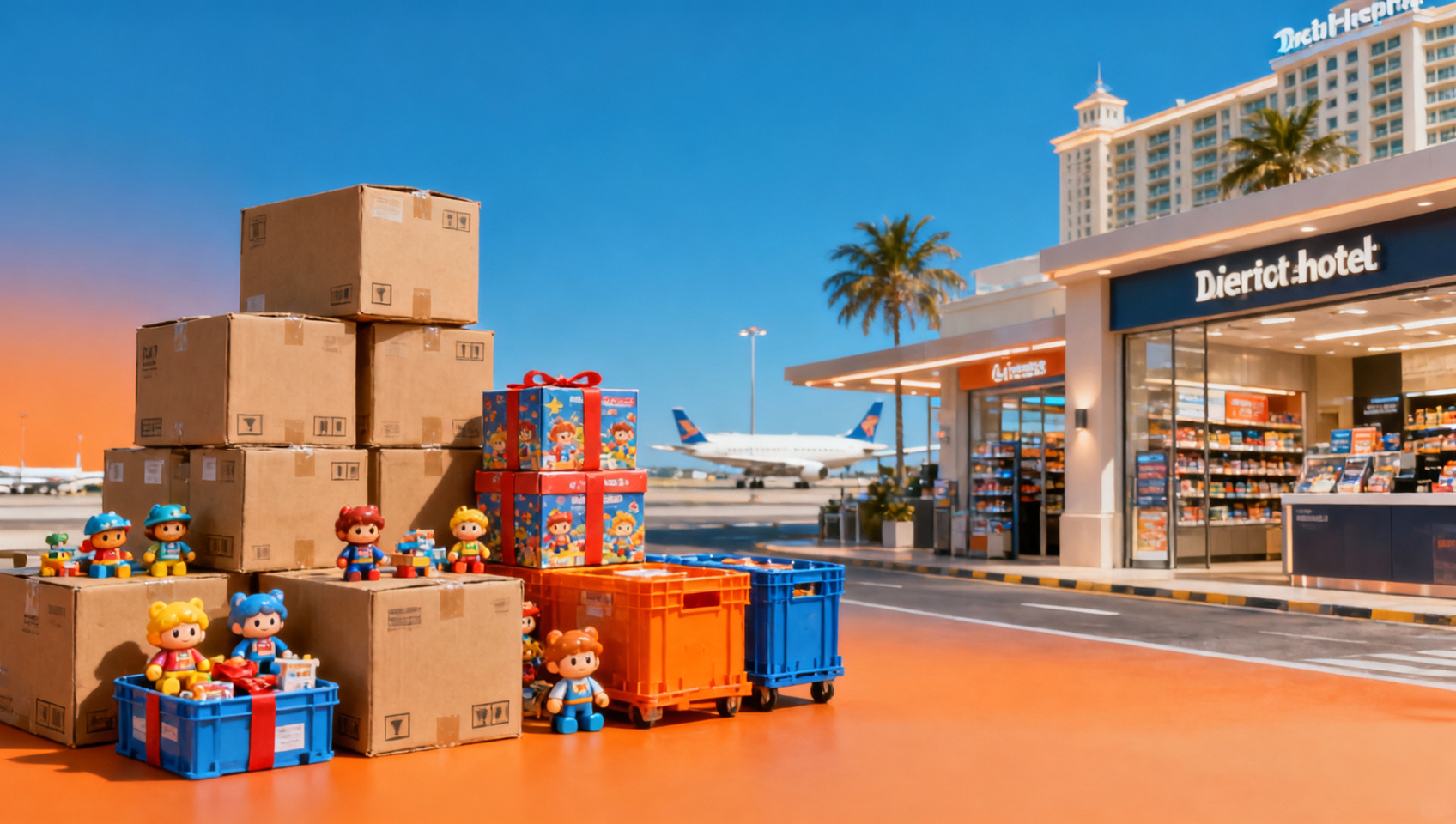
In toy ecommerce, profits can vanish quickly when toy logistics costs surge at the last mile. For buyers, operators, and decision-makers in travel service-linked retail channels, understanding how toy certification, toy inspection, packaging choices, and cross-border fulfillment affect total landed cost is essential to protecting margins, speed, and customer satisfaction.
This challenge is especially relevant in travel services, where toys are sold through airport retail, resort gift shops, cruise onboard stores, family attraction outlets, destination pop-up shops, and travel-linked ecommerce programs. In these channels, demand can rise sharply during holidays, school breaks, and peak tourism windows, yet fulfillment expectations remain tight, often within 24 to 72 hours for domestic delivery or 5 to 10 days for cross-border replenishment.
For procurement teams, finance approvers, quality managers, and project leaders, last-mile toy logistics is not a narrow freight topic. It affects landed cost, shelf readiness, safety compliance, returns, damaged goods rates, seasonal markdown risk, and ultimately customer satisfaction in high-traffic travel environments. A small miscalculation in packaging size, destination handling, or certification readiness can erase margin faster than a factory unit-price increase.
For businesses using market intelligence from Global Consumer Sourcing, the practical objective is clear: reduce avoidable logistics leakage while keeping toy products compliant, saleable, and aligned with travel retail demand. The most resilient operators treat last-mile cost control as a cross-functional project spanning sourcing, packaging engineering, inspection planning, channel forecasting, and destination-specific delivery design.
Why the Last Mile Becomes So Expensive in Travel Service Toy Channels
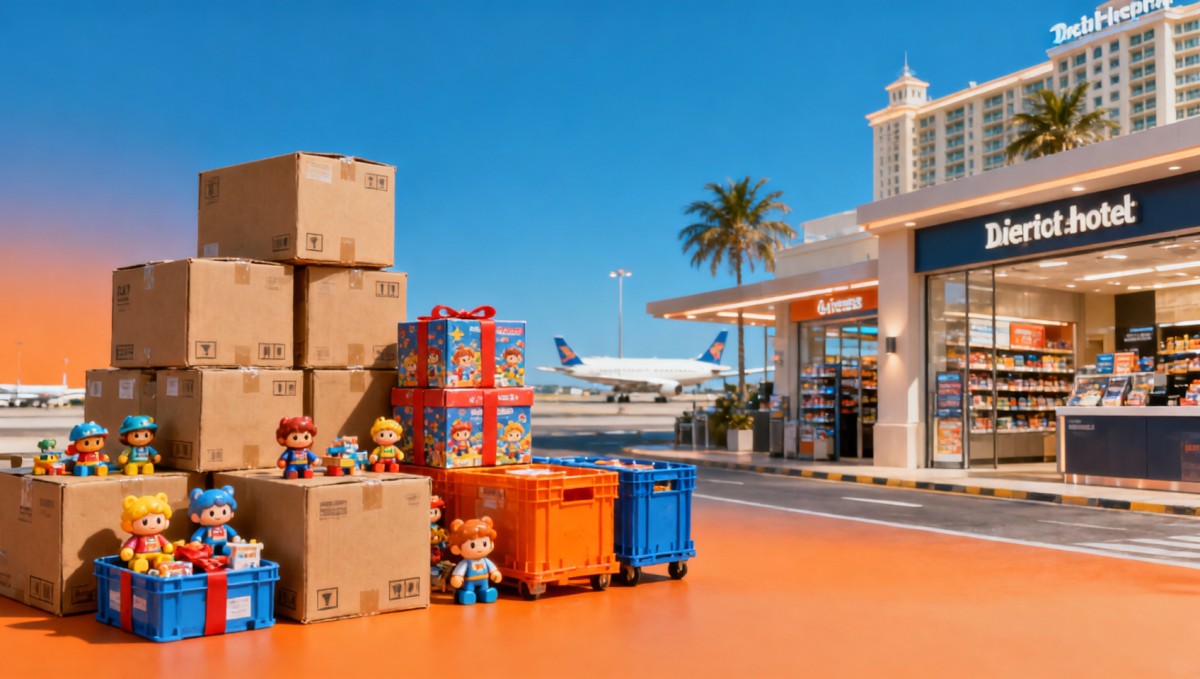
Travel service-linked toy retail is structurally different from standard mass retail. Demand is concentrated in locations with premium rents, limited backroom space, strict delivery windows, and highly variable passenger or visitor flow. A toy that moves profitably through a regional warehouse can become far less profitable when it must reach an airport concession, a cruise terminal, or a resort boutique in a narrow 4-hour delivery slot.
The last mile often spikes because toys are relatively light but frequently bulky. Plush items, boxed educational sets, battery-operated toys, and gift-ready bundles consume more cubic volume than their invoice value might justify. When dimensional weight exceeds actual weight, final-mile courier pricing can rise by 15% to 40%, especially on parcels above common thresholds such as 40 cm x 30 cm x 20 cm.
Travel retail also has a compressed selling window. Seasonal toy programs linked to summer travel, year-end holidays, or family vacation periods may have only 6 to 10 weeks of peak conversion. If replenishment arrives late by even 3 to 5 days, the lost sell-through opportunity can be more damaging than the freight surcharge itself. This is why operators must evaluate logistics cost together with sales velocity, not in isolation.
Another cost driver is returns complexity. In tourism-linked channels, return rates for toys can vary from 3% to 12% depending on age grading clarity, packaging damage, and battery or compliance issues. A returned item from a resort customer or cross-border traveler may require reverse logistics, inspection, re-labeling, or disposal. Each of these steps adds operational friction and hidden cost that often begins with poor last-mile planning.
Key cost triggers procurement teams should map early
- Bulky packaging that pushes parcels into a higher dimensional weight bracket.
- Multi-stop delivery routes to hotels, attractions, airport stores, or cruise provisioning points.
- Insufficient destination forecasting, leading to emergency shipments at 1.5x to 3x normal cost.
- Compliance holds related to CPC, CE, labeling, battery declaration, or age-grade warnings.
- Product damage in transit due to weak carton strength or display-ready packaging that is not logistics-ready.
The table below shows how common travel service toy channel features influence last-mile cost behavior and margin risk.
The main lesson is that last-mile toy logistics is not only about freight rates. In travel services, it is a location, packaging, timing, and compliance problem. Teams that map these four variables early usually gain more control over margin than teams that negotiate unit price alone.
How Certification, Inspection, and Packaging Shape Total Landed Cost
Many toy programs fail on cost because teams separate sourcing from compliance and packaging. In reality, toy certification, toy inspection, and package design directly affect logistics efficiency. A toy that passes production but lacks complete documentation can be stopped before cross-border handover. A toy with retail-attractive but fragile packaging may survive warehouse storage but arrive dented at a resort boutique, triggering rejection or markdown.
In travel service environments, compliance readiness matters even more because replenishment cycles are short. If a batch misses required safety labeling, battery notice language, or destination-specific documentation, the correction cycle can add 7 to 21 days. During a peak travel season, that delay can remove most of the commercial opportunity tied to a themed promotion or family travel campaign.
Inspection planning also affects freight mode. When inline inspection and final random inspection are scheduled properly, buyers are more likely to consolidate shipments and avoid expensive split dispatches. If defects are detected late, teams often pay premium airfreight or express parcel fees to replace only a fraction of the order. Those replacement flows are where last-mile costs become disproportionately high.
Packaging is the most underestimated lever. A 10% reduction in outer carton volume can materially improve parcel economics, pallet density, and store replenishment handling. For travel-linked toy retail, packaging should satisfy at least 3 requirements at the same time: compliance visibility, shelf appeal, and transport durability. If one of these is missing, costs reappear elsewhere in the supply chain.
Practical checkpoints before booking cross-border toy shipments
- Confirm market-specific documentation such as CPC, CE-related declarations, labeling files, and warning statements before cargo cutoff.
- Run carton-drop and compression checks for gift-box formats that will travel through parcel networks.
- Verify battery classification, if applicable, at least 5 to 7 days before booking.
- Align pre-shipment inspection with route planning so that defect remediation does not force partial dispatch.
The following table connects compliance and packaging decisions to their likely landed-cost impact in travel service toy distribution.
For finance and sourcing teams, the takeaway is practical: reducing last-mile cost starts long before dispatch. The most effective savings often come from earlier document control, stronger inspection sequencing, and packaging redesign rather than from courier negotiation alone.
Selecting the Right Fulfillment Model for Travel Retail and Destination-Based Sales
There is no single best fulfillment model for toys in travel services. The right setup depends on sales velocity, destination complexity, SKU count, seasonality, and required replenishment speed. A family resort chain with 20 locations will need a different network from an airport gift operator with 3 terminals or a cruise retail program with weekly provisioning windows.
In most cases, buyers should compare at least 3 options: direct-to-store shipment, regional hub distribution, and hybrid fulfillment that combines import consolidation with local parcel or van delivery. Direct-to-store can reduce handling touches, but it usually works only when order volumes are predictable. Regional hubs add one more node, yet they often cut emergency freight and improve stock balancing across destinations.
Hybrid models are increasingly useful for travel-linked ecommerce and click-and-collect offers. For example, toys marketed to travelers before departure or during hotel stay may need parcel delivery to a hotel desk, airport pickup point, or local attraction partner. In these cases, service reliability within 24 to 48 hours can matter more than the lowest nominal transport rate.
Distributors and channel managers should also examine minimum order economics. If average replenishment per location falls below a practical carton threshold, such as 1 to 3 cartons per drop, unit delivery cost increases sharply. That is why assortment planning, carton configuration, and reorder frequency must be aligned with the fulfillment model from the start.
Model comparison for toy distribution in travel service settings
The table below compares three common fulfillment approaches used in travel-related toy retail and destination commerce.
In practice, many operators begin with direct shipment, then move to a hub or hybrid model once they exceed 15 to 30 delivery points or start facing recurring stockouts. The right transition timing depends on order frequency, store density, and service-level targets, but waiting too long usually means paying repeated last-minute freight premiums.
Four metrics that matter during model selection
- Average delivery cost per sellable unit, not per shipment only.
- Lead time reliability across peak tourism weeks, ideally measured in 24-hour bands.
- Damage and return rate by packaging type and destination class.
- Inventory coverage, often targeted at 2 to 4 weeks for seasonal toy assortments.
A Cost-Control Framework for Buyers, Finance Teams, and Quality Managers
Controlling last-mile toy logistics in travel services requires a shared framework, not isolated decisions. Procurement may focus on factory terms, finance may focus on landed margin, and quality teams may focus on compliance and defect rates. Unless these functions use the same cost map, the business will keep solving one problem while creating another.
A workable framework starts with six cost buckets: factory price, compliance and inspection cost, packaging cost, international freight, destination handling, and reverse logistics risk. This method allows decision-makers to compare a lower-cost toy that needs rework against a slightly higher-cost toy with stronger packaging, better documentation readiness, and lower final-mile loss. In many travel channels, the second option produces the better net result.
Teams should also establish trigger thresholds. For example, if last-mile cost exceeds 12% to 18% of landed cost for a standard toy item, or if damage-related claims exceed 2% to 3% of shipments, the product should enter review. These thresholds vary by channel, but fixed checkpoints make it easier for approvers to act before leakage spreads across a seasonal program.
For quality and safety managers, the framework must include inspection gates linked to logistics outcomes. A compliant toy that arrives unsellable due to crushed packaging still fails commercially. Therefore, product acceptance should cover safety, labeling, transit endurance, and shelf presentation as a combined standard, especially for toys sold as gifts in premium travel locations.
Recommended review process before approving a toy program
- Validate target channel: airport, resort, cruise, attraction retail, or travel ecommerce.
- Estimate demand by a 4-week, 8-week, and peak-period scenario.
- Check compliance path, inspection timing, and packaging durability.
- Compare at least 2 fulfillment models and 2 packaging configurations.
- Approve only after reviewing total landed cost and service risk together.
The table below provides a practical review template that can be shared across sourcing, operations, quality, and finance stakeholders.
This type of shared review structure helps technical evaluators, procurement leads, and financial approvers speak the same language. It turns last-mile cost from a reactive issue into a measurable sourcing decision.
Common Mistakes, FAQs, and Practical Next Steps
The most common mistake in travel service toy distribution is assuming that high demand will absorb logistics inefficiency. In reality, fast-moving family travel locations are often the least forgiving because they need clean packaging, reliable replenishment, and consistent compliance. Another frequent error is prioritizing attractive retail packaging without checking dimensional cost and transit durability together.
Project managers also underestimate the planning gap between factory readiness and destination readiness. A toy may be production-complete, but without tested cartons, approved labels, inspection clearance, and a destination delivery plan, it is not operationally ready. That final 10% of preparation often determines whether the last mile is routine or expensive.
For distributors and agents, the most effective next step is to build channel-specific toy assortments instead of using one packaging and fulfillment method for every travel location. Airport gift, family resort retail, and travel ecommerce have different service expectations, different delivery access conditions, and different tolerance for returns. Matching toy format to channel can reduce both logistics leakage and unsold inventory.
How can buyers reduce last-mile toy logistics cost without hurting presentation?
Start by redesigning package volume before negotiating freight. Even a 5% to 10% carton cube reduction can improve dimensional pricing and pallet density. Then test shelf-ready packaging against parcel or multi-touch transport conditions. The goal is not plain packaging, but efficient packaging that remains giftable and durable.
What lead times should travel-linked toy retailers plan for?
As a working range, cross-border replenishment programs often need 2 to 4 weeks for standard planning cycles, while urgent recovery shipments can move in 5 to 10 days at much higher cost. For high season launches, buyers should lock documentation and packaging decisions at least 3 to 6 weeks before cargo handover.
Which teams should be involved in toy program approval?
At minimum, include procurement, operations, finance, quality or safety, and the channel owner. For travel services, destination operations or concession management should also participate because local receiving windows, access limits, and visitor patterns have a direct impact on the last mile.
Practical action checklist
- Review toy packaging dimensions before final artwork approval.
- Sequence certification, labeling, and inspection before booking deadlines.
- Choose a fulfillment model based on destination density and reorder frequency.
- Track damage, returns, and freight-per-unit for each travel channel separately.
- Use market intelligence to match toy assortments to real travel demand patterns.
Toy logistics costs often spike at the last mile because the issue sits at the intersection of compliance, packaging, fulfillment design, and destination complexity. For travel service-linked retail, the winning strategy is not just cheaper transport. It is better planning across certification, inspection, packaging engineering, and channel-specific distribution.
Global Consumer Sourcing helps buyers, operators, distributors, and decision-makers evaluate these moving parts with greater clarity across gifts and toys supply chains. If you are reviewing a new toy assortment, cross-border travel retail program, or destination fulfillment strategy, now is the right time to get a tailored sourcing and logistics approach. Contact us to explore a more resilient, margin-protective solution.
Related Intelligence
 Cosmetics & PkgApr 23, 2026SAMR Penalizes 7 Platforms for 'Ghost Food Delivery' PackagingSAMR penalizes 7 platforms for 'ghost food delivery' packaging—critical for infant pouch & supplement container suppliers. Verify your Food-Related Product Production License now to secure global orders.
 Cosmetics & PkgApr 23, 2026EU EPR Dual-Country Registration Effective for Cosmetics PackagingEU EPR Dual-Country Registration is now mandatory for cosmetics packaging in France & Germany—register with ADEME and EAR by April 2026 to avoid delisting.
 Cosmetics & PkgApr 23, 2026US FDA Enforces VCRP Registration for Cosmetic Packaging as of Apr 22, 2026US FDA mandates VCRP registration for cosmetic packaging as of Apr 22, 2026 — learn how bottles, tubes & aerosol cans must comply to clear U.S. customs.
 Corporate & Seasonal GiftsApr 23, 2026TÜV Rheinland LCA Rule for Green Gift Packaging Takes Effect in EUTÜV Rheinland LCA Rule for Green Gift Packaging is now live in EU—mandatory carbon heat maps & certified LCAs required for DE/AT/NL market access. Act now!
 Beauty DevicesApr 23, 2026Global Li-ion Recycling Rate Hits 62%: Beauty Device Battery BOM Cost Down 9%Li-ion recycling rate hits 62% — beauty device battery BOM costs drop 9%. Discover how this boosts margins, cuts lead times, and strengthens global supply agility.
 Nursery Furniture & MonitorsApr 23, 2026Canton Fair Phase III: Baby Monitors Surge, EN60601-1-12 Focus in Middle EastCanton Fair Phase III: Baby monitors surge 142%—Middle East buyers prioritize EN60601-1-12:2023 compliance. Discover key implications for exporters & certifiers.
 Infant Feeding & CareApr 23, 2026JETRO Mandates Blockchain Batch Codes for Infant Silicone Feeding ProductsJETRO mandates blockchain batch codes for infant silicone feeding products—pacifiers, teething rings & spoons—to ensure traceability and market access in Japan. Act now!
 STEM & Educational ToysApr 23, 2026SASO Cuts AI Module Certification for STEM Toys to 24 HoursSASO Cuts AI Module Certification for STEM Toys to 24 Hours — Fast-track CoC for voice/image AI toys entering Saudi Arabia. Act now before summer procurement!
 Smart Pet DevicesApr 23, 2026Vietnam Enforces ISO 13485 + Vietnamese Manual for Smart Pet CollarsVietnam enforces ISO 13485 + Vietnamese manual for smart pet collars—key compliance update impacting exporters, OEMs & importers. Act now!
 Camping & WaterApr 23, 2026RCEP Camping Water Bag Tariff Cut: Indonesia Updates TPU+Aluminum SpecRCEP Camping Water Bag tariff cut + TPU+aluminum spec update in Indonesia—key implications for OEMs, material suppliers & exporters. Act now!
 Cosmetics & PkgApr 22, 2026SAMR Penalizes 7 Platforms for 'Ghost Kitchen' Packaging ViolationsSAMR penalizes 7 platforms for 'ghost kitchen' packaging violations—critical for food-grade packaging OEMs, suppliers & procurement teams. Act now.
 Camping & WaterApr 22, 2026RCEP Camping Water Bags: Indonesia Cuts Tariff, Sets TPU+Aluminum SpecRCEP Camping Water Bags: Indonesia cuts tariff to 3.4% & mandates TPU+aluminum spec—key opportunity for exporters, TPU suppliers & converters in ASEAN-China supply chains.
 Corporate & Seasonal GiftsApr 22, 2026TÜV Green Packaging LCA Threshold Effective Apr 2026TÜV Green Packaging LCA Threshold takes effect Apr 2026 — mandatory carbon heatmaps & ISO-compliant LCAs for holiday, wedding &文创 packaging. Act now to meet EU tender requirements.