Toy Suppliers That Scale Fast Without Losing QC Control
Fast-scaling toy suppliers must grow without compromising QC, safety, or delivery reliability. For buyers evaluating ODM toys, OEM toys, and private label toys, the challenge is finding partners that can expand capacity while protecting compliance, product consistency, and brand reputation. This guide explores how leading toy suppliers balance speed with control, helping sourcing teams, quality managers, and decision-makers reduce risk and build stronger supply strategies.
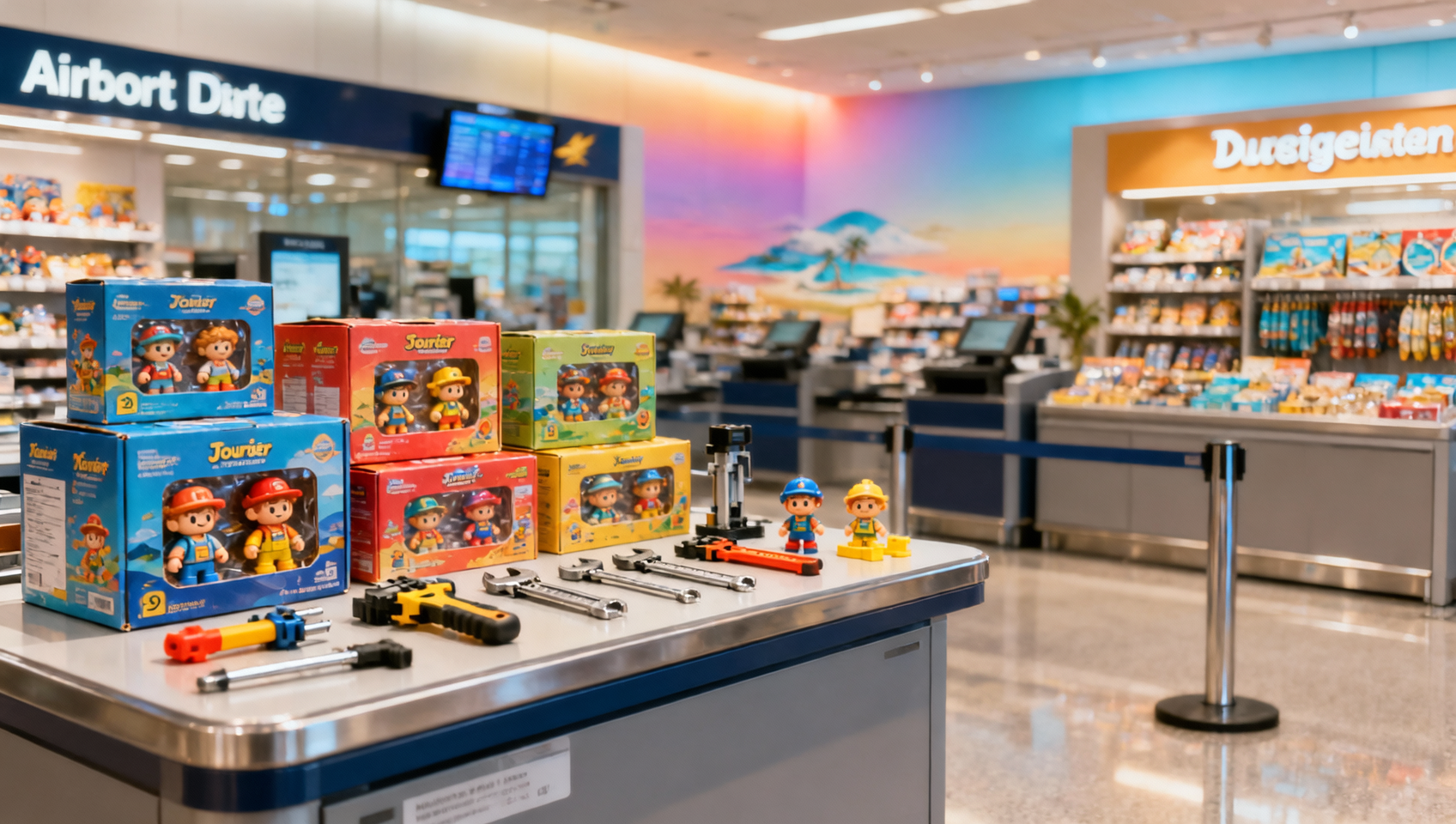
For travel retail, this issue is even more sensitive. Toy assortments sold through airport stores, destination gift shops, resort boutiques, cruise retail programs, and tourist attraction outlets often face compressed replenishment windows, multilingual labeling needs, and stricter brand-risk exposure. A delayed shipment before a peak holiday, a failed safety test, or inconsistent packaging across regions can disrupt revenue across multiple travel channels at once.
That is why buyers in tourism services increasingly assess toy suppliers not only on price and capacity, but on process discipline. A supplier that can move from a 5,000-unit pilot run to 80,000 or 100,000 units over 8–12 weeks, while keeping defect rates controlled and compliance files current, is far more valuable than a factory that simply promises speed.
For operators, technical evaluators, commercial teams, finance approvers, QC managers, and distributors, the decision framework must connect sourcing reality with travel retail demand patterns. The sections below focus on what scalable control really looks like, how to audit it, and how Global Consumer Sourcing supports better decisions in the Gifts & Toys segment tied to modern retail supply chains.
Why Scalable QC Matters in Travel Retail Toy Supply
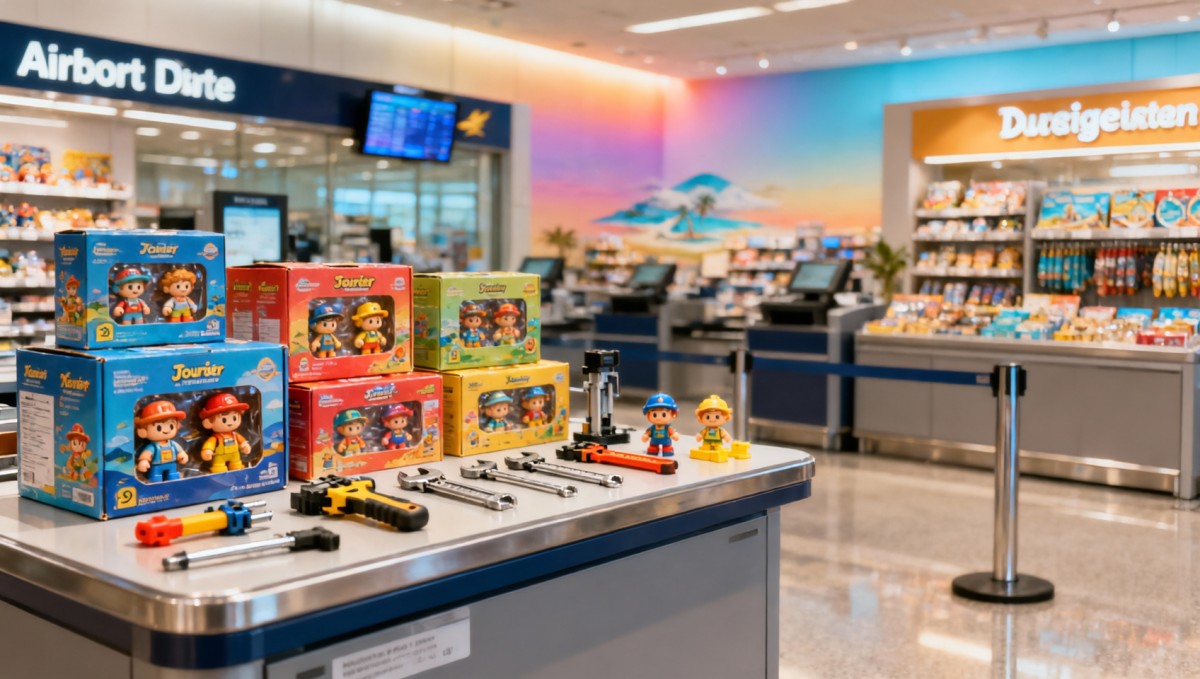
Travel-service retail environments work differently from standard domestic retail. A souvenir toy program for airports or theme destinations may require 3 sales waves in a single season, with each wave using slightly different packaging, promotional inserts, or language versions. If a supplier grows output too quickly without locking in process controls, the first issues usually appear in color variance, packaging mismatch, accessory loss, or barcode inconsistency.
For tourism-focused distribution, toy suppliers also operate under narrower replenishment timelines. A normal production cycle for a standard toy SKU may sit at 30–45 days, but urgent top-up orders for a resort chain or cruise operator may need shipping readiness in 15–25 days. Speed without a stable QC checkpoint system often leads to increased rework, missed ETD dates, or shipment holds at inspection.
The commercial risk is larger than a single defective batch. In travel retail, shelf space is limited, seasonality is sharp, and replacement windows are short. Missing a 6-week summer tourist rush or a 4-week holiday travel period can reduce the practical sales life of a product by 30% to 50%. For finance teams, that means tied-up inventory and markdown pressure. For brand owners, it may mean losing future placement with retail operators.
Common pressure points when suppliers scale fast
The weak points are usually operational rather than theoretical. Additional lines may use new workers with less training, substitute components may enter the line, and documentation may lag behind engineering changes. In travel retail programs, even a small unapproved revision can create customs friction or retailer rejection if carton marks, age grading, or destination labels no longer match approved files.
- Line expansion without matching in-line inspection ratios, such as keeping 1 inspector for 3 lines instead of 1 inspector for every 1–2 active lines.
- Supplier onboarding that adds sub-suppliers in under 2 weeks without material validation or sample retention.
- Packaging changes made close to shipment, often within 72 hours of carton sealing, which raises labeling and assortment errors.
- Testing and compliance files not updated when components, inks, plastics, or battery parts are changed.
A scalable toy supplier for tourism channels should therefore be assessed as a controlled system, not just a manufacturing site. Buyers should look for evidence of line balancing, approved materials control, retained golden samples, staged inspection gates, and escalation rules that can function under growth pressure.
How to Evaluate a Toy Supplier’s Ability to Scale Without Losing Control
The most reliable evaluation method combines operational, quality, compliance, and business indicators. Buyers in tourism services should not rely only on factory size, because a large factory can still perform poorly during a fast ramp-up. What matters is whether the supplier can add volume in controlled increments while preserving approved specifications for destination retail channels.
A practical review starts with 4 checkpoints: capacity realism, process stability, compliance continuity, and delivery resilience. Capacity realism asks whether monthly output can rise by 20%–40% without adding unmanaged subcontracting. Process stability checks whether first-pass yield, defect logging, and rework thresholds are documented. Compliance continuity verifies that test reports and labeling files still match scaled production. Delivery resilience looks at buffer planning for packing, inspection, and export handoff.
Core supplier evaluation criteria
The table below summarizes a practical decision model for sourcing teams serving travel retail and tourism-linked toy programs.
The key takeaway is that scaling is safe only when growth is documented. A supplier that can show batch records, line checks, retained samples, and revision approval logs gives tourism buyers a stronger basis for commercial approval than one that relies on verbal assurances.
Questions commercial and technical teams should ask
- How many active SKUs can be produced at the same time without mixing components or packaging?
- What is the normal lead time for a first order, repeat order, and emergency replenishment order?
- Which inspections are done in-house, and which are done by third parties before export?
- How are multilingual labels, destination-specific assortments, and travel-retail pack formats controlled?
Decision note for finance approvers
The lowest ex-factory price is rarely the lowest total cost if failure rates rise during scale-up. A 2%–4% increase in landed cost for stronger QC can be justified if it reduces claims, chargebacks, repacking, and missed seasonal sell-through. This is especially relevant for destination channels where replenishment opportunities are limited.
QC Systems That Support Fast Growth Across ODM, OEM, and Private Label Toys
Different sourcing models create different quality risks. ODM toys move faster because the core design already exists, but they may need extra review for branding, packaging, and regional compliance. OEM toys provide more customization, yet they increase engineering-change exposure. Private label toys often combine speed and branding demands, which makes packaging control and artwork sign-off especially important for travel merchants and tourism distributors.
A scalable QC system should cover at least 5 layers: approved sample control, raw material verification, in-process inspection, final random inspection, and shipment release review. When order volume doubles, the system should not merely repeat old habits; it should increase frequency and tighten documentation. For example, line patrol checks may move from every 3 hours to every 1–2 hours during new-worker onboarding or urgent travel-season production.
What good QC discipline looks like during volume expansion
In mature factories, QC is tied to workflow rather than personality. Operators know the approved sample, supervisors control batch separation, and quality staff record nonconformities by defect type. This matters for tourism channels where multiple SKUs may be bundled for gift sets, destination collections, or promotional displays.
- Golden sample retention for every SKU and every packaging version used in travel retail.
- Incoming material checks on plastics, paint, textile parts, printed materials, and batteries where applicable.
- Lot coding or batch traceability that allows quick isolation of a defective run within 24 hours.
- Final inspection before carton sealing and again before container loading for mixed-SKU orders.
The following comparison helps buyers match QC expectations with sourcing model type.
For travel service buyers, this comparison highlights one practical point: QC must extend beyond the toy itself. Packaging, shelf presentation, multilingual inserts, display readiness, and destination SKU separation can be as commercially important as product functionality.
Compliance, Safety, and Delivery Reliability for Tourism-Facing Supply Chains
When toys are sold through tourism-linked channels, safety and documentation must travel across jurisdictions. Airport retail, cross-border e-commerce tied to tourism brands, and resort gift programs may involve different market entry rules. Buyers therefore need suppliers that understand how to maintain documentation consistency while shipping to multiple destinations over rolling order cycles.
In practical terms, safety control means more than holding historical test reports. The supplier should confirm that current production materials still align with the approved standard set for the destination market, whether that involves CE, CPC, or other applicable documentation. If the factory changes a resin, print ink, fabric accessory, or small-component source, the buyer should know whether revalidation is needed before shipment.
Delivery planning standards that reduce seasonal risk
Travel retail programs often fail not because production is impossible, but because planning buffers are too small. A safer delivery structure usually includes 3 buffers: production buffer, inspection buffer, and logistics buffer. For example, a 35-day order should not be planned as 33 days of production plus 2 days of dispatch. A more resilient plan may use 25–28 days production, 3–5 days inspection and rework allowance, and 4–7 days export handling buffer depending on route complexity.
The table below outlines a useful control map for tourism-oriented toy sourcing teams.
The strongest conclusion here is simple: compliance and delivery are linked. A supplier that controls materials, records revisions, and protects inspection time is better positioned to deliver on time to airports, resorts, attractions, and travel distributors without creating downstream claims.
What QC and safety managers should document
At minimum, maintain approved samples, labeling proofs, packing specifications, inspection records, defect photos, and shipment-release signoff. For repeat programs, refresh the review every 6–12 months or sooner if any component, market, or retail format changes.
A Practical Sourcing Framework for Buyers Using Global Consumer Sourcing
Decision-makers in tourism services need more than a supplier list. They need market intelligence, sourcing filters, compliance visibility, and a way to compare capabilities across Gifts & Toys suppliers serving fast-moving retail channels. This is where Global Consumer Sourcing adds strategic value. Instead of treating sourcing as a one-time quote exercise, buyers can use GCS insights to evaluate supplier maturity, product category fit, and readiness for regional expansion.
For distributors, agents, and procurement leads, an effective sourcing framework usually follows 5 steps: identify category demand, pre-screen suppliers by manufacturing and compliance fit, validate samples and packaging accuracy, review QC process depth, and confirm expansion readiness before committing to broader multi-market orders. This is particularly useful for toy programs linked to tourist destinations, museum stores, airport duty-paid retail, and family-oriented hospitality merchandise.
Suggested implementation workflow
- Define channel demand by traveler profile, price band, seasonality, and replenishment frequency.
- Shortlist suppliers able to support ODM, OEM, or private label toys with target compliance coverage.
- Run sample validation for product finish, packaging, label accuracy, and retail presentation.
- Audit production controls, inspection records, and delivery planning before scaling beyond pilot volume.
- Launch with controlled first orders, then expand in phases such as 5,000 units, 20,000 units, and 50,000-plus units based on performance.
This phased approach is useful for finance and operational teams because it creates measurable checkpoints. Instead of approving full expansion on optimism, companies can approve budget and volume after evidence of consistency. That reduces the risk of overcommitting to a supplier that performs well in sampling but struggles during commercial-scale execution.
FAQ for tourism and travel retail buyers
How long should a first toy order usually take?
For many standard projects, a first order may require 30–45 days after sample approval, while repeat orders can often move in 20–35 days. Highly customized OEM toys or mixed-pack travel assortments may need longer if packaging development and compliance review are still open.
What defect threshold is acceptable for commercial review?
Buyers often align final inspection with agreed AQL practices, but they should also define critical defects as non-negotiable. For travel retail, packaging and labeling defects deserve special attention because even low product defect rates can still trigger retailer rejection if barcode or language details are wrong.
When is a supplier ready for multi-market expansion?
Usually after at least 2–3 successful shipment cycles with stable quality, accurate documentation, and on-time performance. Expansion is safer when the supplier has already demonstrated control over destination-specific labeling and mixed-order packing formats.
For organizations building a stronger toy sourcing strategy in tourism services, the priority is clear: select partners that can prove disciplined scale, not just promise it. Strong suppliers combine production agility with documented QC, safety alignment, and delivery planning that supports high-visibility travel retail channels.
Global Consumer Sourcing helps buyers, quality teams, and commercial leaders evaluate these capabilities with greater precision across the Gifts & Toys market. If you are reviewing ODM toys, OEM toys, or private label toys for airport retail, resort stores, cruise programs, destination gift outlets, or distributor networks, now is the right time to refine your supplier criteria.
Contact GCS to explore category intelligence, compare scalable toy suppliers, and build a sourcing plan that protects quality while supporting faster growth. Reach out to discuss your target market, compliance needs, and retail timeline, and get a more tailored supply strategy for your next launch.
Related Intelligence
 Cosmetics & PkgApr 20, 2026SAMR Penalizes 7 Platforms for Unlicensed Food PackagingSAMR penalizes 7 platforms for unlicensed food packaging—key implications for manufacturers, platforms & suppliers. Learn compliance must-dos now.
 Beauty DevicesApr 20, 2026Global Li-ion Recycling Rate Hits 62%: Impact on Beauty Device Battery SupplyLi-ion recycling rate hits 62% — unlocking cost savings, faster lead times & MOQ flexibility for beauty device battery supply. Act now.
 Nursery Furniture & MonitorsApr 20, 2026Canton Fair Phase III: Infant Monitor Inquiries Surge, EN60601-1-12 Focus in Middle EastEN60601-1-12 compliance surges at Canton Fair Phase III as Middle East buyers prioritize certified infant monitors — act now to meet GCC market demands.
 Camping & WaterApr 20, 2026RCEP Cuts Tariff on Camping Water Bags for IndonesiaRCEP cuts tariff on camping water bags for Indonesia to 4.2%—boosting export opportunities. Dunia Luar’s new TPU + food-grade aluminum specs demand urgent compliance.
 Corporate & Seasonal GiftsApr 20, 2026TÜV Rheinland Enforces LCA Heatmap for Green Gift PackagingTÜV Rheinland now requires an LCA heat map for Green Gift Packaging certification—key for exporters, manufacturers & brand licensees targeting EU markets. Act now!
 Smart Pet DevicesApr 20, 2026Vietnam Enforces ISO 13485 + Vietnamese Manual for Smart Pet CollarsVietnam enforces ISO 13485 + Vietnamese manual for smart pet collars — essential compliance for exporters, manufacturers & distributors targeting the growing pet tech market.
 Infant Feeding & CareApr 20, 2026JETRO Spring 2026 Inspection: Silicone Infant Feeding Products Require Blockchain Batch CodesSilicone infant feeding products for Japan must now carry blockchain batch codes per JETRO Spring 2026 inspection—ensure compliance for pacifiers, teething rings & spoons.
 STEM & Educational ToysApr 20, 2026SASO Accelerates AI-Enabled STEM Toy Certification to 24 HoursSASO AI-STEM toy certification now in 24 hours — but only with pre-embedded EMC shielding. Act fast: meet new Saudi AI toy compliance rules.
 Cosmetics & PkgApr 20, 2026EU EPR Dual-Country Registration Effective for Beauty PackagingEU EPR dual-country registration is now mandatory for beauty packaging in France & Germany—act now to avoid customs delays, fines up to €100k, and lost market access.
 Cosmetics & PkgApr 20, 2026FDA Requires Separate VCRP Registration for Cosmetic Packaging as of April 19, 2026FDA requires separate VCRP registration for cosmetic packaging by April 19, 2026—critical for Chinese OEMs, U.S. importers & suppliers. Act now to avoid port detentions.
 Beauty DevicesApr 19, 2026Global Li-ion Recycling Rate Hits 62.3%: Beauty Device BOM Cost Down 9%Li-ion recycling rate hits 62.3% — driving 9% BOM cost reduction for beauty devices. Discover how cascade utilization is reshaping global supply chains & boosting margins.
 Cosmetics & PkgApr 19, 2026FDA Mandates Independent VCRP Registration for Cosmetic Packaging as of Apr 19, 2026FDA mandates independent VCRP registration for cosmetic packaging by Apr 19, 2026—avoid Import Alert 66-12. Act now to secure U.S. market access.
 Nursery Furniture & MonitorsApr 19, 2026Canton Fair Phase III: Smart Infant Monitors Surge Amid EN60601-1-12 DemandSmart infant monitors surge at Canton Fair Phase III amid rising EN60601-1-12 compliance demand — discover why Middle East buyers now prioritize medical-grade safety.