Where Private Label Toys Often Go Wrong on Safety Claims
Private label toys can fail on safety claims long before they reach the shelf—through weak testing, vague certifications, or poor supplier controls. For buyers comparing OEM toys, ODM toys, and toy suppliers, these gaps create serious compliance and brand risks. This article explores where claims often break down and what decision-makers should verify to protect product quality, market access, and consumer trust.
For travel retail, hospitality groups, airport stores, resort gift shops, cruise operators, and destination distributors, the issue is even more sensitive. A toy sold in a family resort, onboard shop, or travel-themed retail channel is not just a consumer item; it is part of the guest experience, brand promise, and liability chain. When a private label toy carries unsupported safety claims, the operational fallout can include customs delays, urgent recalls, refund costs, and reputational damage across multiple markets within 7–30 days.
For sourcing teams, technical reviewers, quality managers, commercial evaluators, and financial approvers, the goal is not simply to buy lower-cost toys. The goal is to validate whether a supplier’s claims can withstand real inspection, cross-border shipping, retail audits, and end-user complaints. In travel service supply chains, where seasonal windows may be only 8–12 weeks, weak compliance discipline can erase the margin advantage of private label sourcing very quickly.
Why Safety Claims Break Down in Travel Retail Toy Sourcing
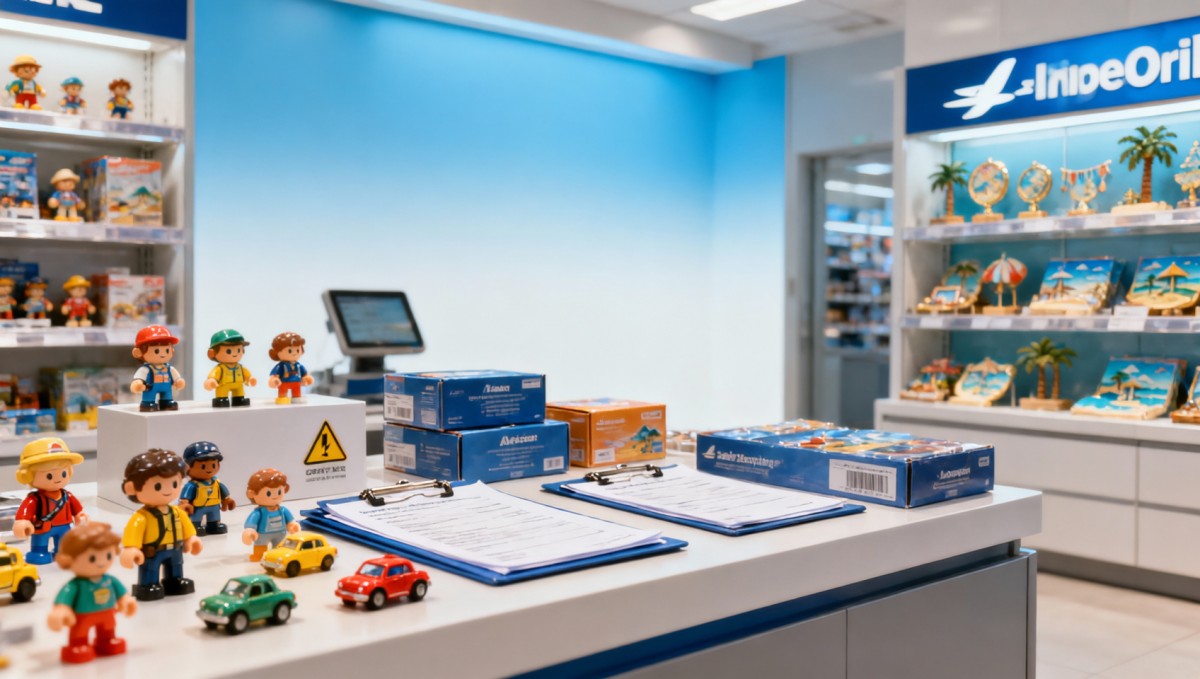
Travel service operators often source toys for high-turnover, experience-led environments: museum gift shops, theme parks, family hotels, airport duty-paid stores, and cruise retail programs. In these channels, products move fast, packaging must be compact, and demand spikes can be sharp during school holidays or peak tourism months. That commercial speed creates pressure to approve suppliers in 2–4 weeks, sometimes before full documentation has been reviewed.
The first breakdown usually happens when safety language is treated as a marketing statement instead of a documented compliance position. Terms like “child-safe,” “non-toxic,” “CPC ready,” or “CE approved” are often printed in catalogs or quotations without linking them to exact product structures, age grading, material compositions, or destination-market rules. For travel buyers serving 3 or more regional markets, that gap can create immediate exposure.
A second problem is product variation. An OEM toy sample shown to a buyer may use one resin grade, one paint set, and one accessory specification, but the final ODM or private label run may change components for cost or lead time reasons. Even a small substitution in coating, magnet strength, cord length, or stuffing density can invalidate previous test assumptions. This is especially risky in impulse-buy travel retail formats where compact toys, souvenir items, and plush lines are frequently modified.
Common failure points before shelf placement
The most common weak points are not always dramatic factory failures. They are often document-control failures, version-control errors, and assumption gaps between commercial and technical teams. A sourcing manager may approve pricing, while a compliance reviewer assumes testing is still pending, and the distributor assumes labeling is already market-ready.
- Test reports are issued for a similar product, not the exact SKU, colorway, or material combination.
- Certificates are shared as PDFs without bill-of-material linkage, revision date checks, or lab scope review.
- Age grading is copied from comparable toys rather than determined by actual design features and use conditions.
- Packaging warnings are translated poorly for multi-country travel channels, creating legal and consumer-information gaps.
Why travel service channels face higher operational risk
Unlike a single-country online store, a travel service business may need one toy line to work across hotel boutiques, airport concession partners, inbound tourism retail, and third-party distributors. That means one compliance weakness can affect 4–6 stakeholders at once: buyer, operator, brand owner, importer, warehouse, and retail outlet. The result is not only a product issue but also an operational disruption across merchandising calendars and guest service teams.
The table below shows where safety claims most often fail during the sourcing cycle for travel-focused toy programs.
The key conclusion is simple: most safety failures happen upstream, not at the point of sale. For travel service businesses, upstream discipline matters because once goods enter a seasonal network, replacement options become expensive and slow. Preventing one failed batch is often worth more than negotiating a 3% unit-price reduction.
What Buyers Should Verify Beyond Generic Certificates
A certificate by itself rarely answers the real sourcing question: does this exact toy, in this exact version, for this exact market, meet the requirements needed for lawful sale and operational confidence? Travel service procurement teams should review certificates together with product specifications, packaging layouts, component lists, and factory change-control history. This reduces the risk of relying on documents that are technically valid but commercially irrelevant.
In practice, decision-makers should separate four layers of verification. First is product identity: SKU, dimensions, materials, color variants, and accessory count. Second is destination compliance: whether the toy is intended for the US, EU, UK, Middle East, or multi-market distribution. Third is production consistency: whether the factory can maintain the tested configuration over runs of 3,000, 10,000, or 50,000 units. Fourth is labeling accuracy across all travel retail touchpoints.
Core review checklist for technical and commercial teams
The strongest review process combines technical detail with procurement practicality. A finance approver may focus on landed cost, but if the compliance file is incomplete, the real cost picture is misleading. Freight storage, rework, relabeling, and product withdrawal can easily add 8%–20% to total project cost in cross-border channels.
- Confirm the test report matches the final product bill of materials, not only the pre-sales sample.
- Review whether age grading aligns with design features such as small parts, cords, magnets, stuffing, or detachable accessories.
- Check if packaging includes country-specific warnings, importer identity, batch traceability, and readable instructions.
- Verify the issuing laboratory scope, report date, and whether retesting is needed after any design or material change.
- Require a supplier declaration on change control for at least the next 6–12 months of repeat orders.
Documents that matter most in private label toy programs
Not all documents carry equal value. Commercial teams should prioritize records that connect tested products to shipped products. A glossy certificate summary has less practical value than a full report linked to artwork, BOM version, and factory inspection notes.
The following table helps travel retail buyers compare document types by procurement value.
For buyers managing travel-related distribution, this layered review helps balance speed and control. It is possible to move fast without reducing standards, but only if sourcing, QC, legal review, and merchandising teams are aligned on approval gates. A 5-step review process is often more efficient than resolving one post-shipment compliance dispute.
OEM vs ODM vs Trading Supplier: Where Safety Accountability Changes
Not all toy suppliers carry the same level of safety responsibility, and this distinction matters in travel service procurement. An OEM toy supplier may manufacture to your drawings and approved specifications, while an ODM partner may offer ready-made designs with light customization. A trading company may coordinate factories but have less direct control over process consistency. The compliance risk profile changes in each model.
In travel retail, buyers often prefer ODM for speed because launch windows can be narrow and assortment refreshes frequent. However, faster access to a design does not eliminate the need for validation. A ready-made toy may already have some test history, but once packaging, branding, accessories, or destination labeling changes, the existing safety file may no longer be sufficient for your final use case.
How accountability shifts by sourcing model
The most effective buyers map accountability before price negotiation is finalized. That means defining who owns sample approval, test scheduling, packaging sign-off, production change control, and shipment release. Without this map, suppliers can claim that compliance was “under process,” while buyers assume it was “already covered.”
- OEM model: buyer has more design control, but also more responsibility to ensure every technical feature has been assessed.
- ODM model: supplier may provide baseline compliance files, but buyer must verify whether those files still apply after customization.
- Trading supplier model: documentation may be available, but traceability to the actual producing factory can be weaker.
Practical selection factors for travel channel procurement
When the end customer is a traveler, parent, or gift buyer making a quick purchase in a hotel, airport, or attraction store, the toy must be safe, easy to understand, and properly labeled. Packaging errors or unsupported claims are more visible in these environments because staff often have limited technical knowledge and rely on packaging to answer buyer questions.
The table below compares sourcing models for private label travel retail toy programs.
The practical takeaway is not that one model is always safer than another. It is that buyers need a sourcing model that matches their internal control capacity. If your travel retail team lacks in-house compliance review, a lower-cost option can become a higher-risk option very quickly.
Building a Safer Approval Workflow for Multi-Market Travel Distribution
The best way to prevent weak safety claims is to install a disciplined approval workflow before production starts. For travel service organizations distributing into multiple tourism and retail environments, a useful model has 5 stages: supplier pre-screening, sample validation, compliance review, production control, and shipment release. Each stage should have named owners and documentary checkpoints.
Supplier pre-screening should cover factory capability, category familiarity, communication speed, and documentation quality. A supplier that takes 5 business days to answer a basic compliance question during sampling may create far bigger delays when urgent customs clarifications arise later. In most B2B travel programs, response discipline is almost as important as unit cost.
A 5-step workflow that reduces approval risk
- Pre-qualification: review product category experience, target markets served, and document completeness.
- Sample matching: confirm the tested sample and the quoted sample are structurally identical.
- Artwork and labeling review: verify warnings, age grading, importer details, and destination language accuracy.
- Pre-shipment inspection: confirm finished goods, packaging, and batch coding match approved files.
- Release control: do not authorize shipment until all approval records are closed and version matched.
Operational safeguards that help distributors and operators
Distributors, concession partners, and travel retail operators should also build traceability into receiving and replenishment workflows. Even a simple batch log tied to inbound date, vendor code, and packaging version can reduce investigation time from several days to a few hours if a complaint arises. For businesses with 20 or more retail points, traceability discipline becomes a commercial necessity, not just a compliance preference.
Another useful safeguard is to set re-approval triggers. If the supplier changes paint, fabric, print method, accessory pack, carton wording, or subcontractor, the product should return to review. Many claim failures occur because teams assume that “small changes” do not affect compliance. In reality, small changes are often exactly where problems begin.
For travel service businesses looking to improve sourcing resilience, the value of a specialist intelligence platform is clear. Structured market insights, supplier screening logic, and product safety context can shorten learning curves for non-specialist buying teams while improving coordination between commercial, technical, and finance stakeholders.
FAQ for Travel Buyers, Quality Teams, and Decision-Makers
How often should private label toys be rechecked if the supplier says nothing changed?
At minimum, review each repeat order against the last approved BOM, packaging file, and production site. If the toy is sold across 2 or more markets, many buyers also conduct periodic file reviews every 6–12 months. Any change in material source, accessory, artwork, or labeling should trigger immediate reassessment before shipment.
Is a lower MOQ worth accepting from a less transparent supplier?
Not always. A low MOQ can help with seasonal travel assortments, but weak transparency increases the chance of hidden costs later. If a supplier offers 1,000 units instead of 5,000 units but cannot provide clear product-to-document traceability, the savings may disappear through delays, relabeling, or inventory write-downs.
What should finance approvers ask before authorizing a first order?
They should ask four practical questions: what documents support the safety claim, who verified the exact SKU match, what rework costs could arise if packaging is rejected, and how much inventory exposure exists if one batch fails. This turns compliance from a technical side issue into a measurable cost-control issue.
Which teams need to be involved in travel retail toy approval?
At minimum, involve sourcing, quality or safety, packaging review, and the commercial owner of the retail channel. For larger programs, legal review and distributor coordination should also be included. A cross-functional approval loop may add 3–5 days, but it often prevents much larger losses later.
Private label toy safety claims often go wrong not because the market lacks standards, but because buyers, suppliers, and channel partners fail to connect claims to exact products, exact documents, and exact destination requirements. In travel service environments, where guest trust, seasonal timing, and cross-border distribution all matter, this gap can quickly become a commercial and operational problem.
Global Consumer Sourcing helps retail buyers, brand owners, distributors, and sourcing teams evaluate supplier credibility, compliance readiness, and market-fit decisions with greater clarity. If you are assessing OEM toys, ODM toys, or broader toy supplier options for travel retail and hospitality channels, now is the right time to review your approval process, compare supplier risk profiles, and build a stronger sourcing framework. Contact us to explore tailored sourcing intelligence, supplier evaluation support, and practical guidance for safer, more resilient product programs.
Related Intelligence
 Cosmetics & PkgApr 20, 2026SAMR Penalizes 7 Platforms for Unlicensed Food PackagingSAMR penalizes 7 platforms for unlicensed food packaging—key implications for manufacturers, platforms & suppliers. Learn compliance must-dos now.
 Beauty DevicesApr 20, 2026Global Li-ion Recycling Rate Hits 62%: Impact on Beauty Device Battery SupplyLi-ion recycling rate hits 62% — unlocking cost savings, faster lead times & MOQ flexibility for beauty device battery supply. Act now.
 Nursery Furniture & MonitorsApr 20, 2026Canton Fair Phase III: Infant Monitor Inquiries Surge, EN60601-1-12 Focus in Middle EastEN60601-1-12 compliance surges at Canton Fair Phase III as Middle East buyers prioritize certified infant monitors — act now to meet GCC market demands.
 Camping & WaterApr 20, 2026RCEP Cuts Tariff on Camping Water Bags for IndonesiaRCEP cuts tariff on camping water bags for Indonesia to 4.2%—boosting export opportunities. Dunia Luar’s new TPU + food-grade aluminum specs demand urgent compliance.
 Corporate & Seasonal GiftsApr 20, 2026TÜV Rheinland Enforces LCA Heatmap for Green Gift PackagingTÜV Rheinland now requires an LCA heat map for Green Gift Packaging certification—key for exporters, manufacturers & brand licensees targeting EU markets. Act now!
 Smart Pet DevicesApr 20, 2026Vietnam Enforces ISO 13485 + Vietnamese Manual for Smart Pet CollarsVietnam enforces ISO 13485 + Vietnamese manual for smart pet collars — essential compliance for exporters, manufacturers & distributors targeting the growing pet tech market.
 Infant Feeding & CareApr 20, 2026JETRO Spring 2026 Inspection: Silicone Infant Feeding Products Require Blockchain Batch CodesSilicone infant feeding products for Japan must now carry blockchain batch codes per JETRO Spring 2026 inspection—ensure compliance for pacifiers, teething rings & spoons.
 STEM & Educational ToysApr 20, 2026SASO Accelerates AI-Enabled STEM Toy Certification to 24 HoursSASO AI-STEM toy certification now in 24 hours — but only with pre-embedded EMC shielding. Act fast: meet new Saudi AI toy compliance rules.
 Cosmetics & PkgApr 20, 2026EU EPR Dual-Country Registration Effective for Beauty PackagingEU EPR dual-country registration is now mandatory for beauty packaging in France & Germany—act now to avoid customs delays, fines up to €100k, and lost market access.
 Cosmetics & PkgApr 20, 2026FDA Requires Separate VCRP Registration for Cosmetic Packaging as of April 19, 2026FDA requires separate VCRP registration for cosmetic packaging by April 19, 2026—critical for Chinese OEMs, U.S. importers & suppliers. Act now to avoid port detentions.
 Beauty DevicesApr 19, 2026Global Li-ion Recycling Rate Hits 62.3%: Beauty Device BOM Cost Down 9%Li-ion recycling rate hits 62.3% — driving 9% BOM cost reduction for beauty devices. Discover how cascade utilization is reshaping global supply chains & boosting margins.
 Cosmetics & PkgApr 19, 2026FDA Mandates Independent VCRP Registration for Cosmetic Packaging as of Apr 19, 2026FDA mandates independent VCRP registration for cosmetic packaging by Apr 19, 2026—avoid Import Alert 66-12. Act now to secure U.S. market access.
 Nursery Furniture & MonitorsApr 19, 2026Canton Fair Phase III: Smart Infant Monitors Surge Amid EN60601-1-12 DemandSmart infant monitors surge at Canton Fair Phase III amid rising EN60601-1-12 compliance demand — discover why Middle East buyers now prioritize medical-grade safety.