Maternity Backpack OEM Delays Often Start With Pocket Layout
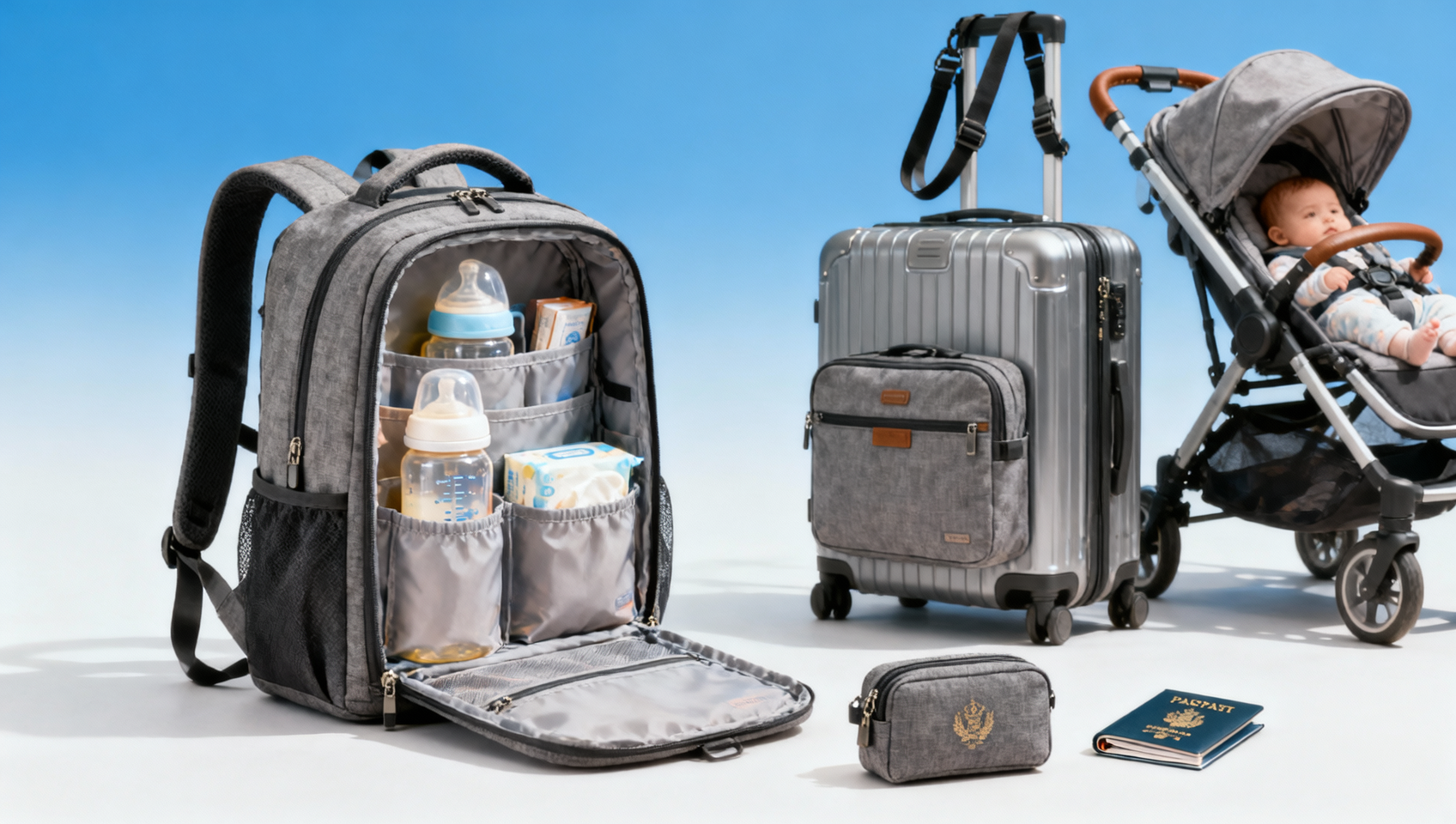
When maternity backpack OEM timelines slip, the problem often starts with pocket layout, not production speed. For buyers comparing baby diaper bags wholesale options, smart organization affects tooling, compliance, and end-user appeal. This article explains how pocket design influences sampling, cost control, and launch risk for brands sourcing in the baby and maternity category.
For sourcing teams serving travel retail, family tourism operators, airport concession buyers, maternity specialty distributors, and D2C baby brands, the backpack is not just a bag. It is a mobile organization system used during flights, road trips, hotel transfers, stroller walks, and day tours. A poor pocket layout can trigger repeated sample revisions, higher trim complexity, and avoidable delays of 2–6 weeks across development and bulk approval.
That matters to procurement managers, technical reviewers, quality teams, and financial approvers alike. Pocket count, insulation placement, zipper path, wipe-access openings, and anti-theft storage all affect tooling, sewing sequence, test readiness, and final landed cost. In travel service channels where seasonal launches and replenishment timing are critical, layout errors become commercial risk, not just design risk.
Why Pocket Layout Becomes a Hidden Critical Path in Maternity Backpack OEM
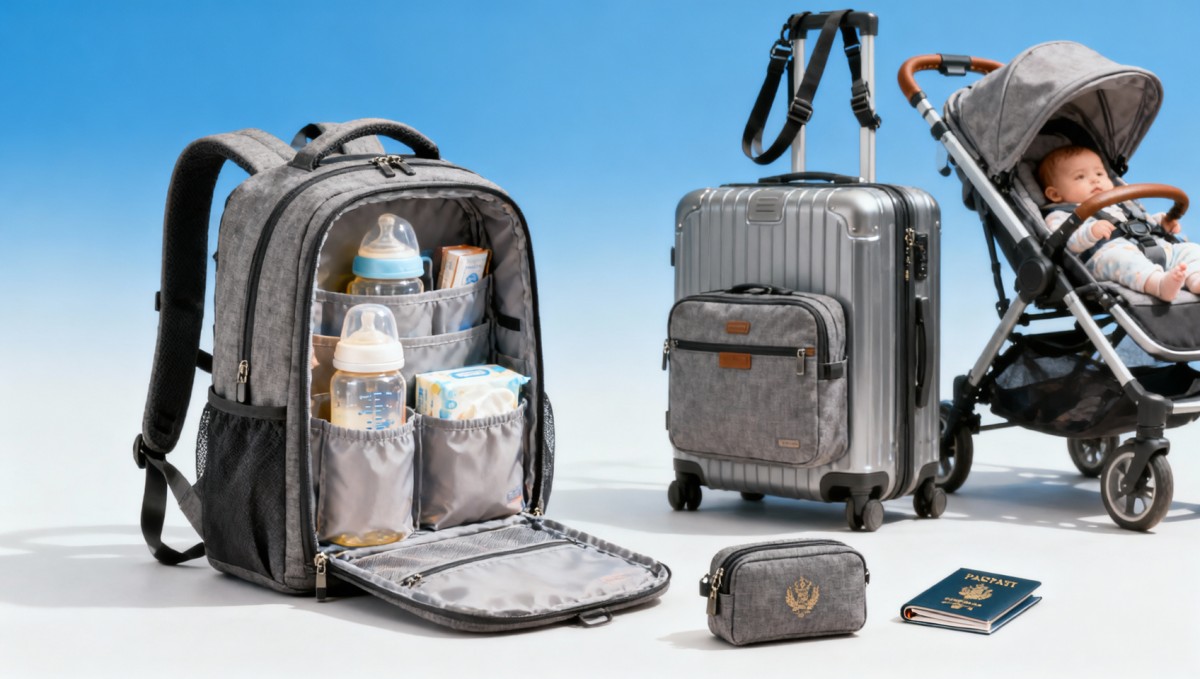
In maternity backpack OEM projects, buyers often focus first on fabric, logo treatment, MOQ, and unit price. Yet the pocket layout usually determines whether the product can move from drawing to approved sample in 10–15 days or stall for 30–45 days. Each added pocket changes pattern pieces, seam allowance planning, reinforcement positions, and internal binding routes.
For travel-oriented use, the layout must support fast access in motion. Parents in airports or on long-distance coach transfers need one-hand access to wipes, bottles, passports, and chargers. If the front bottle zone conflicts with the main zipper arc or stroller strap anchoring, the factory may need to rebuild the panel construction. That is where delay often starts.
Technical evaluation teams should review not only the number of compartments but also pocket interaction. A backpack with 12 pockets may look premium in a line sheet, but if 4 pockets overlap the same seam path, labor time rises sharply. In practical OEM development, moving from 8 to 12 functional compartments can increase sewing operations by 10%–18%, depending on foam, lining, and zipper type.
For the travel service industry, where retail buyers need reliable restock windows before holiday traffic or outbound family travel peaks, even a 14-day sample delay can disrupt launch planning. That is especially true for distributors supplying resort shops, travel accessory retailers, and maternity product bundles tied to seasonal tourism demand.
The Most Common Layout Conflicts
The most frequent design bottlenecks are not dramatic engineering failures. They are small structural conflicts that compound across revisions. Buyers can reduce risk by flagging these early in the tech pack.
- Front insulated bottle pockets that interfere with full-opening clamshell access.
- Side tissue or wipe dispensers placed too close to hidden anti-theft pockets.
- Laptop or tablet sleeves added to a diaper bag body without adjusting back-panel stiffness.
- Wet-dry compartments positioned where seam sealing or waterproof lining becomes difficult.
- Lower-pocket bottle holders that reduce base stability during gate waiting, train travel, or hotel check-in use.
Why this matters for cost approval
Finance approvers usually see only the quoted FOB range, but pocket architecture can alter cost in 3 direct ways: extra material consumption, more labor minutes, and higher rework probability. Even a seemingly minor change such as adding elastic organizers to 2 interior walls may add 0.15–0.40 USD per unit at scale, before considering development overhead.
How Pocket Design Affects Sampling Speed, Tooling, and Compliance Readiness
Sample rooms do not slow down because factories are unwilling to prioritize orders. They slow down because unclear pocket architecture creates decision loops. When the brand team changes internal dividers after the first prototype, the factory may need to alter pattern dimensions, interlining support, zipper tape length, and bartack positions. This turns a 1-round sample process into 3 rounds.
Compliance teams should also note that layout influences test readiness. Baby and maternity backpacks used in travel settings often require attention to accessible small components, chemical compliance of lining and trims, and durability in repetitive opening cycles. If a bottle pocket uses low-grade insulation foam or a wipe slot exposes edge binding, the bag may fail internal brand standards even before third-party testing is scheduled.
From a project management perspective, every extra sample round can add 7–12 days. If custom molding is involved for logo pullers, magnetic closures, or proprietary stroller hooks, the delay may extend to 21 days. Travel retail buyers planning for summer or year-end family travel campaigns should therefore lock the pocket hierarchy before color approval, not after.
Typical delay triggers by pocket type
The table below shows how specific pocket configurations tend to affect OEM development for baby diaper bags wholesale programs serving travel-related sales channels.
The key takeaway is not that brands should avoid advanced organization features. It is that each functional pocket should justify its development cost and timeline impact. For travel service retail channels, the best-performing designs often combine 6–9 highly usable compartments rather than 12–15 weakly differentiated ones.
A practical 4-step review sequence
- Confirm travel use case: air travel, day trip, stroller touring, or commuting.
- Rank pocket priority into must-have, useful, and optional.
- Check seam overlap and panel conflicts before the first sample.
- Freeze the layout before custom trim, color card, and bulk costing approval.
This sequence helps technical reviewers and sourcing managers reduce avoidable design churn. It also gives suppliers a cleaner basis for BOM preparation, lead-time quoting, and quality planning.
Pocket Layout Decisions That Influence Travel Use Value and Commercial Performance
In travel service channels, the winning maternity backpack is the one that improves movement, access, and packing confidence. Parents navigating terminals, sightseeing routes, or family hotel stays rarely judge a product by fabric alone. They notice whether the bottle stands upright, whether wipes can be reached with one hand, and whether passports or phones are secure in crowded transit environments.
That means layout must be mapped against actual travel scenarios. A backpack built for urban commuting may not work well for tourism retail. For example, two insulated front pockets can help on long transfers, but if they make the bag too deep for under-seat placement, customer satisfaction may fall. Likewise, a large rear compartment is useful, but not if it slows access during security checks.
Distributors and retail buyers should therefore compare pocket architecture through use outcomes, not design sketches. A balanced travel-ready maternity backpack usually includes 1 main cavity, 2 side quick-access zones, 1 secure valuables pocket, 1 wet or laundry section, and 3–5 internal organizers. That level of organization supports family trips without overcomplicating production.
Recommended layout priorities by travel scenario
The following comparison helps sourcing teams align product structure with channel demand, target users, and merchandising goals.
This table shows why layout decisions should be tied to sales channel. The same diaper backpack may be positioned differently for travel accessory wholesalers, maternity boutiques, or destination retail. Matching the pocket plan to the travel scenario helps improve sell-through and reduces overdesign.
What buyers should avoid
- Designing for every scenario at once, which often results in bulky, unstable bags.
- Adding decorative pockets that increase labor but do not improve travel convenience.
- Ignoring under-seat, stroller, and luggage-handle compatibility during evaluation.
- Overlooking cleanability of food-contact-adjacent or milk-storage sections.
For operators, quality teams, and decision makers, the commercial objective is clear: fewer but better-performing compartments usually create a stronger product story and smoother OEM execution.
A Procurement Framework for Buyers, Quality Teams, and Approval Stakeholders
A successful baby diaper bags wholesale program needs alignment across product, sourcing, quality, and finance. Pocket layout is one of the few design elements that affects all four. Procurement teams need predictable cost, quality managers need testable construction, operators need usable access, and business leaders need on-time launch. A structured review framework reduces internal disagreement and supplier-side rework.
One practical method is to score every proposed layout on 5 dimensions: usability, manufacturability, compliance risk, cost impact, and travel-channel relevance. Use a 1–5 scale and set a minimum acceptance threshold, such as 18 out of 25. If a design scores high on visual appeal but low on manufacturability, revise before sampling instead of hoping the factory can absorb complexity later.
This kind of scorecard is especially useful when the order will be distributed across multiple channels, such as online retail, airport shops, travel accessories distributors, and maternity specialty resellers. It helps prevent feature creep caused by too many internal stakeholders adding “just one more pocket” without evaluating downstream effects.
Suggested evaluation matrix
Before approving sample round 1, teams can use the matrix below to compare layout options in a disciplined way.
The matrix helps stakeholders speak the same language. Instead of debating abstract design preference, teams can compare measurable impacts. That is valuable for project managers handling delivery schedules and for financial approvers balancing margin against feature complexity.
Checklist for smoother OEM execution
- Freeze the pocket map in the tech pack with dimensions and opening direction.
- Approve the intended travel scenario before adding premium features.
- Request a pocket interaction review, not only a visual mockup.
- Set sample and pre-production approval gates at 2 key milestones.
- Align quality checks on zipper durability, seam stress, lining safety, and access function.
By standardizing these checkpoints, buyers reduce launch risk and improve supplier communication. For B2B programs with repeat orders, this framework also makes future style extension much faster.
FAQ for Sourcing Maternity Backpacks in Travel-Focused Retail Channels
How many pockets are ideal for a travel-ready maternity backpack?
For most travel-oriented diaper backpacks, 6–9 functional pockets are enough. Below that, users may struggle with organization during flights or day trips. Above 10–12, the design often becomes harder to manufacture efficiently unless the structure is carefully engineered. The right number depends on whether the bag targets air travel, road trips, stroller touring, or daily commuting with travel crossover.
What pocket features most often justify a higher OEM cost?
Insulated bottle sections, wet-dry compartments, anti-theft rear pockets, and one-hand wipe-access openings are the most commercially defensible upgrades. They improve real travel use and can support stronger retail positioning. Decorative layered pockets, in contrast, often increase labor without creating equivalent user value.
How long should buyers allow for sample approval if the pocket layout is customized?
A realistic planning window is 2–4 weeks for the first sample and 1–2 additional weeks if layout revision is needed. If custom trims, molded hardware, or multiple insulation materials are involved, total development may extend to 5–7 weeks. Buyers targeting peak travel seasons should work backward from launch and protect at least one revision cycle in the calendar.
Which teams should sign off on layout before bulk production?
At minimum, sign-off should include sourcing, technical evaluation, quality or safety review, and business approval. If the product is sold through travel retail or tourism-related channels, merchandising and channel sales teams should also confirm whether the organization features match shopper expectations. Early cross-functional approval is often cheaper than late-stage correction.
Pocket layout is one of the earliest and most overlooked causes of maternity backpack OEM delay. For buyers in travel service, retail sourcing, and baby product distribution, the right layout does more than improve storage. It shortens sample cycles, stabilizes cost, supports compliance readiness, and strengthens the product’s value in real travel use.
Global Consumer Sourcing helps buyers and manufacturing partners evaluate these details with a commercial lens, especially in fast-moving baby and maternity categories where timing, functionality, and trust matter. If you are comparing baby diaper bags wholesale options or planning a private-label maternity backpack range, now is the right time to review the pocket architecture before production complexity grows. Contact us to discuss sourcing strategy, request a tailored evaluation framework, or explore more solutions for travel-focused retail supply planning.
Related Intelligence
 Cosmetics & PkgApr 20, 2026SAMR Penalizes 7 Platforms for Unlicensed Food PackagingSAMR penalizes 7 platforms for unlicensed food packaging—key implications for manufacturers, platforms & suppliers. Learn compliance must-dos now.
 Beauty DevicesApr 20, 2026Global Li-ion Recycling Rate Hits 62%: Impact on Beauty Device Battery SupplyLi-ion recycling rate hits 62% — unlocking cost savings, faster lead times & MOQ flexibility for beauty device battery supply. Act now.
 Nursery Furniture & MonitorsApr 20, 2026Canton Fair Phase III: Infant Monitor Inquiries Surge, EN60601-1-12 Focus in Middle EastEN60601-1-12 compliance surges at Canton Fair Phase III as Middle East buyers prioritize certified infant monitors — act now to meet GCC market demands.
 Camping & WaterApr 20, 2026RCEP Cuts Tariff on Camping Water Bags for IndonesiaRCEP cuts tariff on camping water bags for Indonesia to 4.2%—boosting export opportunities. Dunia Luar’s new TPU + food-grade aluminum specs demand urgent compliance.
 Corporate & Seasonal GiftsApr 20, 2026TÜV Rheinland Enforces LCA Heatmap for Green Gift PackagingTÜV Rheinland now requires an LCA heat map for Green Gift Packaging certification—key for exporters, manufacturers & brand licensees targeting EU markets. Act now!
 Smart Pet DevicesApr 20, 2026Vietnam Enforces ISO 13485 + Vietnamese Manual for Smart Pet CollarsVietnam enforces ISO 13485 + Vietnamese manual for smart pet collars — essential compliance for exporters, manufacturers & distributors targeting the growing pet tech market.
 Infant Feeding & CareApr 20, 2026JETRO Spring 2026 Inspection: Silicone Infant Feeding Products Require Blockchain Batch CodesSilicone infant feeding products for Japan must now carry blockchain batch codes per JETRO Spring 2026 inspection—ensure compliance for pacifiers, teething rings & spoons.
 STEM & Educational ToysApr 20, 2026SASO Accelerates AI-Enabled STEM Toy Certification to 24 HoursSASO AI-STEM toy certification now in 24 hours — but only with pre-embedded EMC shielding. Act fast: meet new Saudi AI toy compliance rules.
 Cosmetics & PkgApr 20, 2026EU EPR Dual-Country Registration Effective for Beauty PackagingEU EPR dual-country registration is now mandatory for beauty packaging in France & Germany—act now to avoid customs delays, fines up to €100k, and lost market access.
 Cosmetics & PkgApr 20, 2026FDA Requires Separate VCRP Registration for Cosmetic Packaging as of April 19, 2026FDA requires separate VCRP registration for cosmetic packaging by April 19, 2026—critical for Chinese OEMs, U.S. importers & suppliers. Act now to avoid port detentions.
 Beauty DevicesApr 19, 2026Global Li-ion Recycling Rate Hits 62.3%: Beauty Device BOM Cost Down 9%Li-ion recycling rate hits 62.3% — driving 9% BOM cost reduction for beauty devices. Discover how cascade utilization is reshaping global supply chains & boosting margins.
 Cosmetics & PkgApr 19, 2026FDA Mandates Independent VCRP Registration for Cosmetic Packaging as of Apr 19, 2026FDA mandates independent VCRP registration for cosmetic packaging by Apr 19, 2026—avoid Import Alert 66-12. Act now to secure U.S. market access.
 Nursery Furniture & MonitorsApr 19, 2026Canton Fair Phase III: Smart Infant Monitors Surge Amid EN60601-1-12 DemandSmart infant monitors surge at Canton Fair Phase III amid rising EN60601-1-12 compliance demand — discover why Middle East buyers now prioritize medical-grade safety.