Outdoor equipment costs rise fast when testing is delayed
In outdoor equipment sourcing, delayed testing can quickly turn manageable budgets into rising costs across the retail supply chain. For buyers evaluating outdoor equipment, sports ODM, private label manufacturing, and product compliance, early validation is critical to avoid rework, missed launch windows, and supplier risk. This article explores how faster testing decisions strengthen brand sourcing, improve custom manufacturing outcomes, and protect margins in competitive global markets.
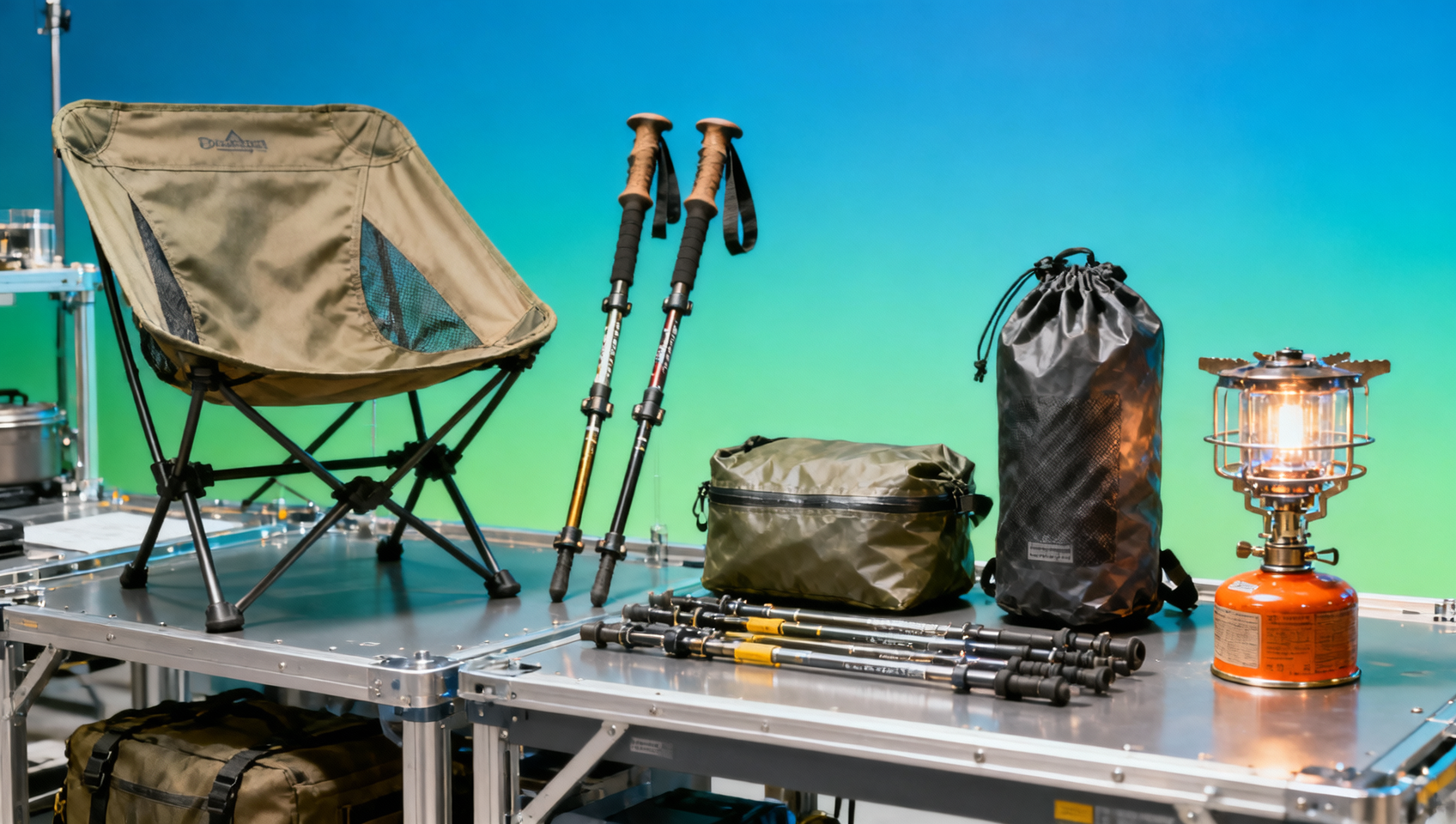
For travel service operators, destination retailers, adventure tour organizers, resort procurement teams, and distribution partners, outdoor equipment is not just merchandise. It supports guest experience, rental safety, seasonal revenue, and brand reputation. When testing is postponed until late-stage production, even a simple item such as a camp chair, trekking pole, dry bag, or portable stove can trigger cascading delays across sourcing, logistics, merchandising, and launch planning.
This matters to information researchers comparing suppliers, technical evaluators reviewing materials and specifications, procurement managers balancing lead time and cost, finance approvers assessing total landed cost, and project leaders coordinating launch calendars. In a market shaped by compressed travel seasons and high review sensitivity, testing speed is increasingly tied to margin protection.
Why delayed testing drives costs higher in travel-related outdoor equipment programs
Travel service businesses often source outdoor equipment under tight seasonal deadlines. Summer hiking assortments, guided camping kits, glamping accessories, ski trip support gear, and hotel activity equipment may all need to be finalized 60–120 days before market launch. If compliance testing, durability checks, or field validation starts too late, every downstream task becomes more expensive.
The first cost increase usually appears in rework. A backpack with incorrect seam strength, a cooler with insulation below expected performance, or a folding table with unstable load-bearing performance may require tooling adjustment, material replacement, packaging revision, and a second round of sampling. In practical sourcing cycles, one failed test can add 2–4 weeks, while two correction rounds can push a project back by 30–45 days.
The second pressure point is logistics. When products miss standard booking windows, buyers may move from consolidated ocean freight to split shipments or even air freight for urgent replenishment. For travel service sellers preparing for a holiday travel peak, the gap between standard shipping and expedited shipping can erase the planned gross margin on a private label product line.
A third cost driver is channel disruption. Distributors, resort stores, and activity operators plan around fixed selling periods. If outdoor equipment fails to reach the market during a 10–16 week peak travel window, markdown risk rises sharply. In many cases, the product itself may still be acceptable after fixes, but the commercial timing is no longer optimal.
Where the hidden costs usually appear
Late testing rarely adds only laboratory fees. It also affects engineering time, additional supplier communication, resubmission handling, packaging updates, booking changes, and delayed content preparation for e-commerce and travel retail channels. For B2B buyers, the real cost is the combined effect of time loss, inventory imbalance, and missed demand.
- Additional sample rounds, often increasing sample and courier cost by 15%–30%
- Production slot loss when the factory shifts capacity to another buyer
- Rush packaging and label corrections for compliance statements or warnings
- Late booking charges and fragmented shipment costs across multiple destinations
- Revenue loss from missing resort, tour, or seasonal retail launch dates
The table below shows how delay points can change total sourcing economics for travel-focused outdoor equipment programs.
The practical takeaway is clear: testing delays rarely remain isolated. In travel service supply chains, they spread across sourcing, merchandising, destination delivery, and sales timing. Early validation is usually less expensive than late-stage correction, even when upfront testing budgets appear higher on paper.
What should be tested early for outdoor equipment used in travel service channels
Not every product needs the same validation sequence, but travel-related outdoor equipment usually requires a structured early-test plan. Buyers serving adventure travel, resort retail, rental fleets, and distributor networks should focus on the 3 layers that most often affect commercialization: material safety, functional performance, and use-condition durability.
Material safety comes first because failures here can invalidate the whole sourcing plan. Fabrics, coatings, foams, plastics, metal finishes, and contact materials should be reviewed before final color and trim approval. Waiting until bulk production to confirm restricted substances, odor, migration, or chemical suitability raises both compliance and recall exposure.
Functional performance is the second layer. A hydration pack may need leak testing, a portable lantern may require battery and runtime review, and a folding stool may need stability and load verification. For travel service operators, acceptable performance is not theoretical. Gear may be used by first-time tourists, rental guests, or mixed-age groups, which makes tolerance for failure much lower.
The third layer is use-condition durability. Outdoor equipment sold or deployed in tourism settings faces UV exposure, moisture, sand, rough transport, frequent setup, and repeated handling. A product that passes a factory bench check may still perform poorly after 50–200 usage cycles in guided tour or rental scenarios.
Priority test checklist by product category
The right testing priorities depend on the category, but the matrix below provides a practical guide for travel service procurement and technical review teams.
For many buyers, a smart sequence is to test high-risk materials at the prototype stage, key performance during pre-production, and random verification again before shipment. This 3-step model can reduce avoidable redesigns and supports stronger supplier accountability.
Typical thresholds buyers should define before final quotation
- Target load range, such as 100–150 kg for folding seating or support products
- Cycle expectations, such as 500–2,000 open-close actions for movable parts
- Water resistance or exposure tolerance for rain, splash, or damp storage environments
- Runtime expectations, such as 4–8 hours for lights used in guest packages
- Packaging drop tolerance for multi-stop tourism distribution routes
When technical specifications are clear before quotation and tooling commitment, sourcing teams can compare suppliers on a like-for-like basis. That improves forecast accuracy for finance teams and prevents disputes later over what “tested quality” was supposed to mean.
How faster testing improves supplier selection, cost control, and launch timing
Fast testing is not just about speed. It improves decision quality. In outdoor equipment sourcing for travel service businesses, early lab checks and practical field validation help teams identify which supplier can truly support the required specification, compliance path, and delivery window. This is especially important in OEM and ODM projects where supplier capability can vary widely even when quotations look similar.
For procurement teams, faster testing shortens the period of uncertainty. Instead of waiting until bulk production to learn whether a tent accessory, insulated container, or camp kitchen item will pass, buyers can make go or no-go decisions within the first 10–20 days of supplier engagement. That allows purchasing managers to lock production earlier and negotiate with greater confidence.
For finance approvers, early validation supports clearer cost forecasting. Total cost should include more than quoted unit price. It should also cover sample iterations, inspection frequency, likely defect handling, packaging changes, shipment timing, and possible markdown exposure. A supplier with a unit price 4% lower can become the more expensive option if delayed testing adds two resubmission rounds and a rushed shipping plan.
For project managers, testing speed supports launch discipline. Travel service promotions often depend on fixed windows tied to school holidays, festival travel, ski season, hiking season, or destination reopening schedules. If technical approval slips, content creation, distributor sales preparation, and inventory deployment all move back together.
Supplier comparison factors that become clearer with early validation
The following comparison framework helps buyers evaluate beyond unit price and identify operational readiness for travel service demand.
A useful rule for B2B buyers is to classify suppliers in 3 tiers: technically ready, conditionally ready, and commercially risky. This method helps align sourcing, finance, and project teams around shared decision criteria instead of reacting only to the lowest quote.
A practical 5-step testing-to-launch workflow
- Define usage scenario: rental, resale, guided tour use, or hotel guest program.
- Lock core specifications and non-negotiable thresholds within the first 5–7 days.
- Test prototype materials and critical functions before tooling or bulk booking.
- Approve pre-production samples only after corrective issues are closed.
- Run shipment-stage verification for appearance, labeling, and key performance points.
This workflow improves cross-functional visibility and limits expensive surprises late in the cycle. It is particularly effective for private label outdoor equipment sold through travel retailers, destination stores, and activity package programs.
Common mistakes buyers make when testing outdoor equipment too late
One common mistake is assuming a visually acceptable sample is commercially ready. A product may look premium in a showroom but fail under actual use. Travel service buyers should remember that guest behavior is often less predictable than controlled internal testing. Rental gear, excursion equipment, and high-turnover retail items are exposed to rougher conditions and more handling variation than standard home-use products.
Another mistake is separating testing from sourcing negotiation. When quality expectations are not written into the RFQ, technical review happens too late and suppliers are forced to adapt after price confirmation. That usually creates friction over who pays for rework. In many cases, a cheaper initial quotation reflects undefined testing scope rather than true efficiency.
A third error is ignoring packaging and transit conditions. Travel service channels often require multi-leg transport: factory to consolidation hub, hub to port, port to destination warehouse, and finally to resorts, tour operators, or retail points. Even if the product passes function tests, weak packaging can still produce damage rates above the acceptable 1%–2% threshold for premium merchandise.
The fourth mistake is using generic testing standards without reference to actual commercial context. Equipment intended for occasional retail use may need different validation than gear expected to support daily rental, guided trekking groups, or high-humidity coastal tourism markets.
Risk signals procurement teams should not overlook
- Supplier samples pass informal review but lack structured test documentation or corrective action records.
- Specification sheets change after quotation without a matching update in test scope or timeline.
- Packaging design is finalized before load, drop, or moisture exposure review.
- Lead times under 30 days are promised on customized goods without clear validation milestones.
- Different factories are used for sample and bulk production, increasing consistency risk.
These warning signs do not always mean a supplier is unsuitable, but they should trigger deeper technical and commercial review. For travel service buyers handling large seasonal programs, even a small failure rate can scale quickly across multiple destinations or channel partners.
FAQ: questions frequently raised by sourcing and approval teams
How early should testing start?
For most customized outdoor equipment, core material and function testing should begin during prototype or first sample review, ideally 45–90 days before planned production. Waiting until final pre-shipment inspection is usually too late for cost-effective correction.
Which products need the fastest testing turnaround?
Products with safety relevance, moving parts, heat sources, or heavy rental usage need priority. This often includes folding furniture, portable lighting, cook gear, trekking accessories, and waterproof storage products used in adventure travel or resort activity programs.
What should finance teams ask before approval?
They should review not only unit cost, but also testing budget, correction cycle assumptions, transit plan, planned safety stock, and contingency for expedited freight. A 2%–5% testing investment can prevent a much larger margin loss later.
How can distributors reduce launch risk?
Distributors should ask for pre-production validation records, packaging verification, and a realistic replenishment lead time. It is also useful to confirm whether the supplier can support staggered shipments for different destination markets without compromising consistency.
Building a stronger sourcing framework with GCS insight and early validation discipline
In modern travel service supply chains, profitable outdoor equipment sourcing depends on timing as much as on price. Brands, buyers, and commercial teams need a sourcing framework that connects market demand, supplier capability, compliance expectations, and realistic test sequencing. Early validation turns sourcing from reactive problem-solving into controlled commercial planning.
This is where intelligence-led sourcing becomes valuable. By tracking product trends, category risk, manufacturing readiness, and compliance expectations across sports and outdoors, GCS helps buyers ask better questions earlier. That is especially useful for private label programs, destination retail assortments, and OEM or ODM projects where missed deadlines can affect not just one shipment, but an entire season.
A disciplined model typically combines 4 elements: category-specific testing priorities, supplier comparison based on evidence, milestone-based approval, and cross-functional alignment between technical, procurement, project, and finance stakeholders. When these elements are in place, buyers can reduce rework, stabilize delivery schedules, and improve confidence in product launch timing.
For distributors, agents, and travel retail partners, the benefit is also strategic. Reliable testing decisions support better assortment planning, fewer complaints, and stronger repeat orders from commercial customers who value operational consistency as much as design appeal.
What decision-makers should do next
- Review current outdoor equipment programs and identify where testing starts too late in the cycle.
- Map high-risk categories by safety relevance, seasonal dependency, and expected use frequency.
- Set 3-stage validation checkpoints for prototype, pre-production, and shipment readiness.
- Use supplier comparisons that include responsiveness, corrective capability, and consistency, not only price.
- Align commercial launch dates with realistic testing and booking lead times.
When testing decisions move forward in the timeline, cost control improves, supplier risk becomes easier to manage, and travel service businesses gain more flexibility in launch planning. If you are evaluating outdoor equipment sourcing, custom manufacturing, or private label supply options, now is the right time to refine your approval process. Contact us to discuss your category needs, request a tailored sourcing approach, or explore more solutions for resilient global outdoor equipment programs.
Related Intelligence
 Baby Gear & StrollersApr 27, 2026Global Shipping Alliances Cut Shanghai–Rotterdam Capacity by 15%Global shipping alliances cut Shanghai–Rotterdam capacity by 15%—impacting baby strollers & gear exporters, EU retailers, and forwarders. Act now to secure space, assess rail/air alternatives, and build resilient supply chains.
 Camping & WaterApr 27, 2026SASO IEC 62368-3:2026 Released for GCC: IP6X Dust Testing Required for Camping & Water PumpsSASO IEC 62368-3:2026 now mandates IP6X dust testing for camping & water pumps in GCC — act now to avoid customs delays and ensure compliance by Oct 1, 2026.
 Nursery Furniture & MonitorsApr 27, 2026Indonesia BPOM Fast-Tracks Baby Monitor Registration to 14 Working DaysIndonesia BPOM Fast-Tracks Baby Monitor Registration to 14 working days—leverage CNAS reports & ID-SNI 7203:2025 for rapid market entry.
 Corporate & Seasonal GiftsApr 27, 2026TÜV Rheinland Releases Sustainable Gift Packaging White Paper 2026Sustainable gift packaging white paper 2026 by TÜV Rheinland: New LCA rules for VOCs, container loading & last-mile transport — act now to meet IKEA, Douglas Q3 2026 requirements.
 Smart Pet DevicesApr 27, 2026JETRO Summer Inspection: Smart Pet Collars Must Pass JIS T 1002:2026 Bluetooth TestSmart Pet Collars must pass JIS T 1002:2026 Bluetooth 5.4 coexistence testing for JETRO’s 2026 summer inspection — avoid delays, recalls & lost sales in Japan.
 Fitness EquipmentApr 27, 2026CPSC Mandates Emergency Stop & Thermal Cutoff for US Fitness MirrorsCPSC mandates emergency stop & thermal cutoff for US fitness mirrors—urgent compliance required by July 2026. Learn implications for OEMs, importers & suppliers.
 STEM & Educational ToysApr 27, 2026SASO Updates Toy Certification: EN71-3:2026 for STEM Toys in Saudi ArabiaSASO EN71-3:2026 toy certification now mandatory for STEM toys in Saudi Arabia—nickel, cobalt & antimony limits tightened. Act before Aug 1, 2026!
 Infant Feeding & CareApr 27, 2026RCEP Update: Vietnam Cuts Tariffs on Silicone Nipples, Smart Bottles from ChinaRCEP Update: Vietnam cuts tariffs on silicone nipples & smart bottles from China—save 9–13% import costs starting May 1, 2026. Act now!
 Beauty DevicesApr 27, 2026EU EPR Carbon Fee for Smart Beauty Devices Starts June 2026EU EPR Carbon Fee for Smart Beauty Devices starts June 2026 — learn how the new Green Packaging Regulation Fee impacts OEMs, suppliers & EU importers.
 Skincare OEMApr 27, 2026FDA CPIS Mandate Effective July 2026 for US Cosmetic ImportsFDA CPIS mandate takes effect July 2026—learn how skincare OEMs, cosmetic exporters & U.S. importers must comply to avoid shipment delays and entry denials.
 Beauty DevicesApr 26, 2026Global Li-ion Recycling Rate Hits 62%: Beauty Device Battery BOM Cost Down 9%Li-ion recycling hits 62% globally—cutting beauty device battery BOM costs by 9% and lead times to 6 weeks. Act now to boost export agility & margins.
") Smart Pet DevicesApr 26, 2026Vietnam Enforces New Smart Pet Collar Standard (QCVN 135:2026)Vietnam Enforces New Smart Pet Collar Standard (QCVN 135:2026): Bluetooth 5.4 resilience & native Vietnamese voice prompts required by July 1, 2026 — act now to avoid customs delays!
Smart Pet DevicesApr 26, 2026Vietnam Enforces New Smart Pet Collar Standard (QCVN 135:2026)Vietnam Enforces New Smart Pet Collar Standard (QCVN 135:2026): Bluetooth 5.4 resilience & native Vietnamese voice prompts required by July 1, 2026 — act now to avoid customs delays! Nursery Furniture & MonitorsApr 26, 2026Shanghai International Logistics Procurement Expo 2026 ClosesShanghai International Logistics Procurement Expo 2026 closed—AI-powered smart infant & pet health devices led procurement demand. Discover key trends, buyer priorities & 2027 outlook.