Outdoor equipment sourcing gets tricky with mixed materials
Outdoor equipment sourcing becomes far more complex when products combine plastics, metals, textiles, foams, and coatings across one design. For buyers managing brand sourcing, private label manufacturing, and product compliance, mixed materials can affect cost, durability, certifications, and supplier selection throughout the retail supply chain. This article explores how sourcing teams can reduce risk, compare custom manufacturing options, and work more effectively with outdoor equipment and sports ODM partners.
Why mixed-material outdoor equipment is harder to source than it first appears
For most sourcing teams, the real issue is not that a product uses many materials. The issue is that every added material creates another point of cost, testing, quality, and supplier coordination risk. In outdoor equipment, that risk grows quickly because products often need to perform under impact, moisture, UV exposure, temperature shifts, abrasion, and repeated use.
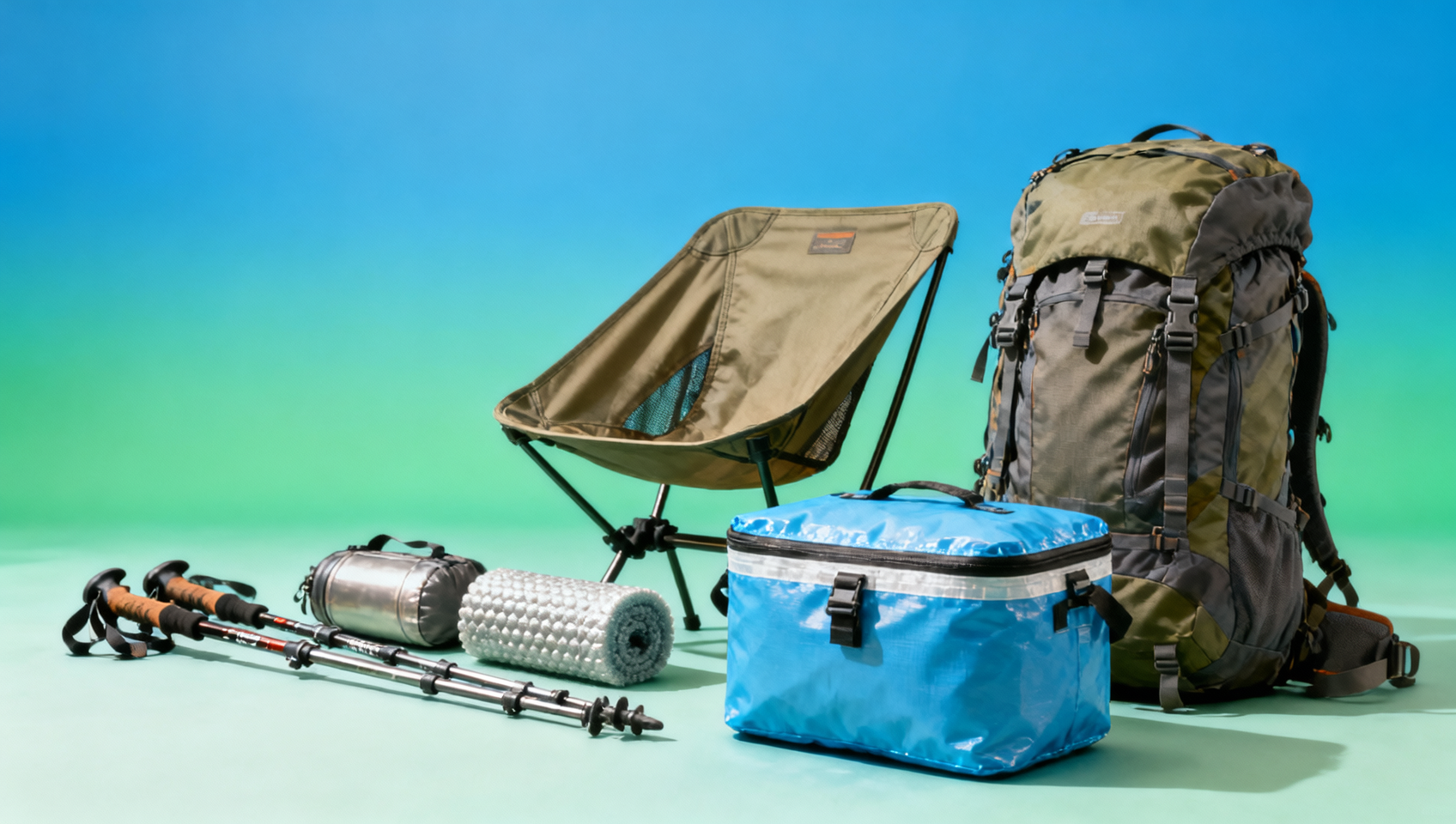
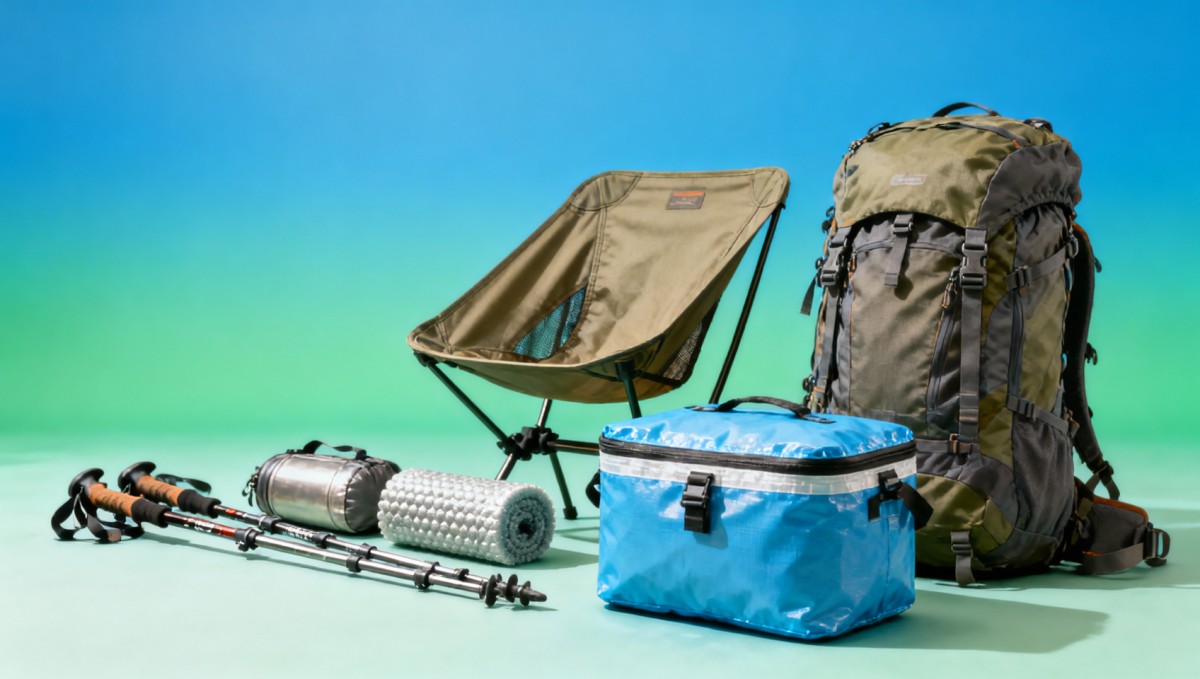
A trekking pole, cooler bag, camping chair, hydration pack, or protective sports accessory may combine aluminum, injection-molded plastic, woven fabric, EVA foam, rubber, adhesives, zippers, buckles, and surface coatings. Each component may come from a different upstream source, and each one can change product performance, compliance requirements, and landed cost.
For procurement teams, this means one practical conclusion: mixed-material sourcing should be managed as an engineering and risk-control process, not just a price comparison exercise. The cheapest quote can easily become the highest-cost decision if material compatibility, testing scope, or assembly consistency are not validated early.
What buyers, engineers, and approvers usually care about most
Across technical evaluation, procurement, commercial review, and finance approval, the main concerns are usually very consistent.
- Will the product hold up in real outdoor use? Buyers want confidence that seams, joints, molded parts, coated surfaces, and load-bearing elements will not fail in the field.
- Can the supplier control all materials consistently? A factory may be strong in sewing or metalwork but weak in foam lamination, plastic molding precision, or coating stability.
- What compliance and testing will be required? Mixed materials may trigger broader chemical, mechanical, flammability, labeling, or market-specific safety obligations.
- What will happen to lead time and MOQs? The more specialized the material mix, the more likely the project will face slower development, tooling dependencies, and higher minimums.
- Is the quoted cost sustainable at scale? Low pilot pricing may not reflect volatile resin, alloy, textile, or coating inputs across full production cycles.
- Can this be adapted for private label or custom manufacturing? Brand owners need to know whether color, logo, packaging, trim, or structural changes are realistic without creating new quality problems.
If an article or supplier conversation does not answer these questions clearly, decision-makers still lack what they need.
Where mixed materials create the biggest sourcing risks
In outdoor equipment and sports product manufacturing, sourcing risks usually appear in a few repeatable areas.
1. Material compatibility
Different materials expand, flex, absorb moisture, and age differently. A coating that looks fine in a sample may crack after cold-weather folding. A bonded foam-textile layer may delaminate after humidity exposure. A metal-plastic junction may loosen under repeated load. Compatibility matters more than the individual specification of any single part.
2. Assembly complexity
As products become more modular and functional, assembly steps increase. That raises the chance of inconsistent bonding, stitch variation, hardware misalignment, or cosmetic defects. Factories that look capable on paper may struggle to maintain repeatability once production volumes rise.
3. Testing gaps
Many suppliers can provide raw material declarations, but that does not prove finished-product performance. Outdoor equipment often requires a combination of material-level and finished-goods testing, especially when products are used under stress, near children, or in regulated consumer markets.
4. Supply chain fragmentation
If the supplier relies heavily on external partners for molded parts, anodizing, coatings, fabric finishing, or custom trims, quality control becomes harder to trace. Multi-tier subcontracting can also reduce visibility on compliance documents and increase delay risk.
5. Cost instability
Mixed-material products are more exposed to fluctuations in petrochemical inputs, textile pricing, metal costs, and finishing surcharges. Buyers reviewing only ex-factory unit cost may miss hidden cost pressure from yield loss, scrap, packaging complexity, or rework.
How to evaluate an outdoor equipment supplier beyond the quotation sheet
When sourcing mixed-material outdoor products, supplier evaluation should go beyond standard commercial checks. The most useful assessment combines manufacturing fit, quality discipline, and project coordination capability.
Check whether the factory’s core process matches the product’s risk point
If the product’s main risk lies in frame strength, molded joint accuracy, or load-bearing hardware, a supplier with strong metal and tooling control may be the better lead partner. If the risk lies in fabric durability, seam construction, waterproofing, or cut-and-sew consistency, a textile-focused factory may be more suitable. Not every “outdoor equipment manufacturer” is equally strong across all process categories.
Review in-house versus outsourced processes
Ask which steps are truly controlled in-house: molding, sewing, tube processing, lamination, pad printing, coating, packaging, and testing. The more critical steps are outsourced, the more project management and incoming inspection discipline matter.
Assess development response speed
For OEM and ODM projects, development speed says a lot about factory maturity. A capable partner should be able to comment clearly on structure feasibility, material substitutions, likely failure points, and cost-performance tradeoffs rather than simply accepting every request.
Request evidence of similar product experience
Experience with mixed-material sporting goods, camping accessories, hydration systems, portable outdoor furniture, protective gear, or travel-related outdoor products can significantly reduce trial-and-error risk. Similarity of construction often matters more than similarity of end category.
What compliance and testing teams should clarify early
One of the biggest mistakes in mixed-material sourcing is discussing compliance too late. Outdoor equipment may not always fall into one narrow regulatory box, but that does not reduce the need for structured verification.
Teams should clarify the following early in the sourcing cycle:
- Target markets: US, EU, UK, Middle East, and Asia may require different documentation, labeling, and chemical restrictions.
- Product use scenario: Is the item load-bearing, skin-contact, child-adjacent, food-contact, or used in harsh environments?
- Material declarations: Plastics, coatings, adhesives, inks, and foams often require closer chemical review.
- Mechanical performance testing: Tensile strength, seam strength, compression, impact, load, fatigue, and drop testing may all be relevant depending on the item.
- Weather and aging performance: UV resistance, corrosion, hydrolysis, colorfastness, and abrasion testing are often more important in outdoor categories than buyers first expect.
For procurement and commercial teams, the takeaway is simple: compliance should be part of supplier selection, not just final shipment release. A factory that understands certification pathways and documentation control can save both time and downstream dispute cost.
How to compare custom manufacturing options without losing margin
Private label and custom outdoor equipment programs often look attractive because they allow brand differentiation. But mixed materials can make customization expensive if specifications are not prioritized correctly.
A practical way to compare options is to separate changes into three groups:
Low-risk customizations
- Color changes on standard materials
- Logo printing or embroidery
- Packaging upgrades
- Minor trim substitutions
Medium-risk customizations
- Fabric weight changes
- Foam density changes
- Hardware substitutions
- Coating or finish upgrades
High-risk customizations
- Structural redesign
- New mold development
- Bonding method changes
- Major size or load-bearing modifications
This framework helps sourcing and finance teams understand where margin risk is likely to appear. Not all custom features create equal commercial value. The best sourcing decisions usually protect the product’s core performance while limiting changes that trigger tooling, retesting, or unstable assembly yield.
How sourcing teams can reduce delays and quality disputes
Mixed-material projects perform better when sourcing teams use a more structured development workflow. This is especially important for cross-functional teams involving procurement, engineering, QA, compliance, and finance.
- Lock the use case before finalizing materials. “Outdoor use” is too broad. Define load, environment, frequency, and expected lifetime.
- Create a material risk map. Identify which materials affect safety, durability, chemical compliance, and appearance most.
- Approve critical components separately. Do not rely only on a final assembled sample.
- Test to failure where needed. For sports and outdoor products, failure-mode learning is often more useful than pass/fail-only review.
- Validate pilot production, not just prototypes. Many issues appear only during scaled assembly.
- Document substitution rules. State clearly which materials may not be changed without buyer approval.
- Align on defect standards early. Mixed-material products often generate disputes over color variation, glue marks, surface finish, and fitting tolerances.
These steps are not excessive. They are often what separates stable commercial sourcing from repeated rework cycles.
When a higher-cost supplier may actually be the better sourcing decision
For financial approvers and business evaluators, this is often the most important judgment call. A higher quoted unit cost may still be the better investment if the supplier offers stronger control over critical materials, faster development correction, lower defect rates, and better documentation for retail or cross-border compliance.
In mixed-material outdoor equipment sourcing, total sourcing value often comes from:
- Lower failure and return risk
- Better testing readiness
- More predictable lead times
- Lower hidden rework cost
- Greater private label consistency
- Stronger support for long-term SKU expansion
That is especially relevant for distributors, importers, and retail brand owners who need continuity across seasons and replenishment cycles. The right supplier is not just a maker of one product. They are part of the product line’s risk structure.
Conclusion: mixed-material sourcing needs cross-functional judgment, not just supplier outreach
Outdoor equipment sourcing gets tricky with mixed materials because material diversity multiplies risk across design, testing, manufacturing, compliance, and cost control. For buyers and brand teams, the smartest response is not simply to request more quotations. It is to evaluate which supplier can control the full product reality most effectively.
If your team is sourcing sports and outdoor products for private label, OEM, or ODM development, focus on the factors that actually change business outcomes: material compatibility, finished-product testing, process ownership, customization risk, and long-term supply stability. That approach leads to better supplier selection, fewer surprises, and stronger retail performance.
Related Intelligence
 Baby Gear & StrollersApr 27, 2026Global Shipping Alliances Cut Shanghai–Rotterdam Capacity by 15%Global shipping alliances cut Shanghai–Rotterdam capacity by 15%—impacting baby strollers & gear exporters, EU retailers, and forwarders. Act now to secure space, assess rail/air alternatives, and build resilient supply chains.
 Camping & WaterApr 27, 2026SASO IEC 62368-3:2026 Released for GCC: IP6X Dust Testing Required for Camping & Water PumpsSASO IEC 62368-3:2026 now mandates IP6X dust testing for camping & water pumps in GCC — act now to avoid customs delays and ensure compliance by Oct 1, 2026.
 Nursery Furniture & MonitorsApr 27, 2026Indonesia BPOM Fast-Tracks Baby Monitor Registration to 14 Working DaysIndonesia BPOM Fast-Tracks Baby Monitor Registration to 14 working days—leverage CNAS reports & ID-SNI 7203:2025 for rapid market entry.
 Corporate & Seasonal GiftsApr 27, 2026TÜV Rheinland Releases Sustainable Gift Packaging White Paper 2026Sustainable gift packaging white paper 2026 by TÜV Rheinland: New LCA rules for VOCs, container loading & last-mile transport — act now to meet IKEA, Douglas Q3 2026 requirements.
 Smart Pet DevicesApr 27, 2026JETRO Summer Inspection: Smart Pet Collars Must Pass JIS T 1002:2026 Bluetooth TestSmart Pet Collars must pass JIS T 1002:2026 Bluetooth 5.4 coexistence testing for JETRO’s 2026 summer inspection — avoid delays, recalls & lost sales in Japan.
 Fitness EquipmentApr 27, 2026CPSC Mandates Emergency Stop & Thermal Cutoff for US Fitness MirrorsCPSC mandates emergency stop & thermal cutoff for US fitness mirrors—urgent compliance required by July 2026. Learn implications for OEMs, importers & suppliers.
 STEM & Educational ToysApr 27, 2026SASO Updates Toy Certification: EN71-3:2026 for STEM Toys in Saudi ArabiaSASO EN71-3:2026 toy certification now mandatory for STEM toys in Saudi Arabia—nickel, cobalt & antimony limits tightened. Act before Aug 1, 2026!
 Infant Feeding & CareApr 27, 2026RCEP Update: Vietnam Cuts Tariffs on Silicone Nipples, Smart Bottles from ChinaRCEP Update: Vietnam cuts tariffs on silicone nipples & smart bottles from China—save 9–13% import costs starting May 1, 2026. Act now!
 Beauty DevicesApr 27, 2026EU EPR Carbon Fee for Smart Beauty Devices Starts June 2026EU EPR Carbon Fee for Smart Beauty Devices starts June 2026 — learn how the new Green Packaging Regulation Fee impacts OEMs, suppliers & EU importers.
 Skincare OEMApr 27, 2026FDA CPIS Mandate Effective July 2026 for US Cosmetic ImportsFDA CPIS mandate takes effect July 2026—learn how skincare OEMs, cosmetic exporters & U.S. importers must comply to avoid shipment delays and entry denials.
 Beauty DevicesApr 26, 2026Global Li-ion Recycling Rate Hits 62%: Beauty Device Battery BOM Cost Down 9%Li-ion recycling hits 62% globally—cutting beauty device battery BOM costs by 9% and lead times to 6 weeks. Act now to boost export agility & margins.
") Smart Pet DevicesApr 26, 2026Vietnam Enforces New Smart Pet Collar Standard (QCVN 135:2026)Vietnam Enforces New Smart Pet Collar Standard (QCVN 135:2026): Bluetooth 5.4 resilience & native Vietnamese voice prompts required by July 1, 2026 — act now to avoid customs delays!
Smart Pet DevicesApr 26, 2026Vietnam Enforces New Smart Pet Collar Standard (QCVN 135:2026)Vietnam Enforces New Smart Pet Collar Standard (QCVN 135:2026): Bluetooth 5.4 resilience & native Vietnamese voice prompts required by July 1, 2026 — act now to avoid customs delays! Nursery Furniture & MonitorsApr 26, 2026Shanghai International Logistics Procurement Expo 2026 ClosesShanghai International Logistics Procurement Expo 2026 closed—AI-powered smart infant & pet health devices led procurement demand. Discover key trends, buyer priorities & 2027 outlook.