Supply chain insights for safer camping water products
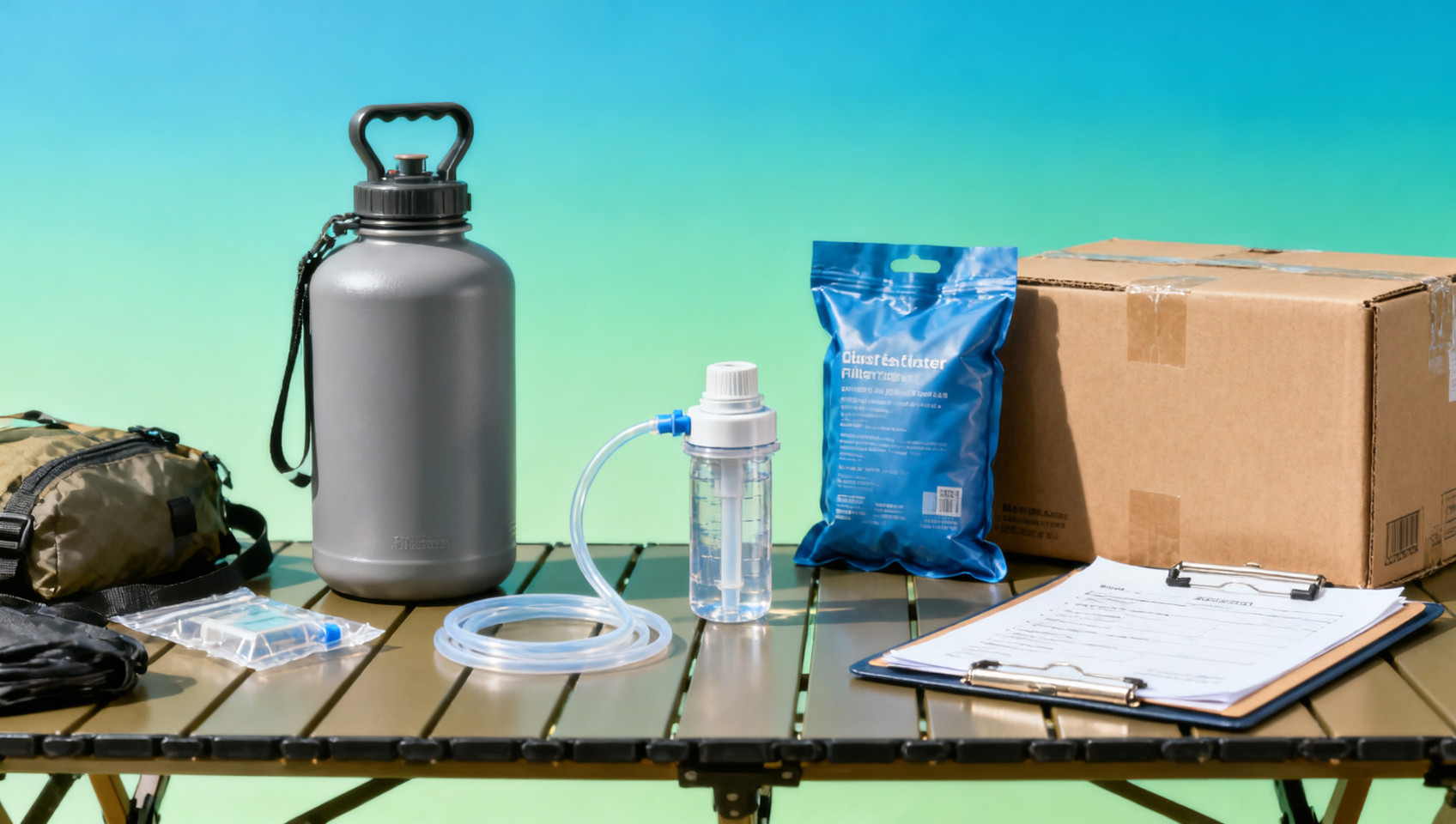
Safer camping water products start with stronger supply chain insights. By combining supply chain data, product testing, and real-time retail market signals, global buyers and brand procurement teams can reduce compliance risks, improve quality control, and identify reliable manufacturing partners. This guide explores how informed sourcing decisions support safer products, faster market response, and more resilient supply strategies.
For travel service businesses, outdoor retailers, campsite operators, tour organizers, and sourcing teams, water-related camping gear is more than a seasonal category. It directly affects user safety, brand reputation, refund rates, and distributor confidence. A weak sourcing decision can lead to leaking hydration reservoirs, unsafe bottle materials, poor filter performance, or delayed replenishment during peak travel months.
That is why supply chain visibility matters at every stage, from raw material selection and lab testing to packaging review and delivery planning. When procurement, quality, finance, and project stakeholders work from shared supplier intelligence, they can make better decisions on compliance, cost control, and launch timing across the sports and outdoors travel market.
Why camping water product safety depends on supply chain visibility
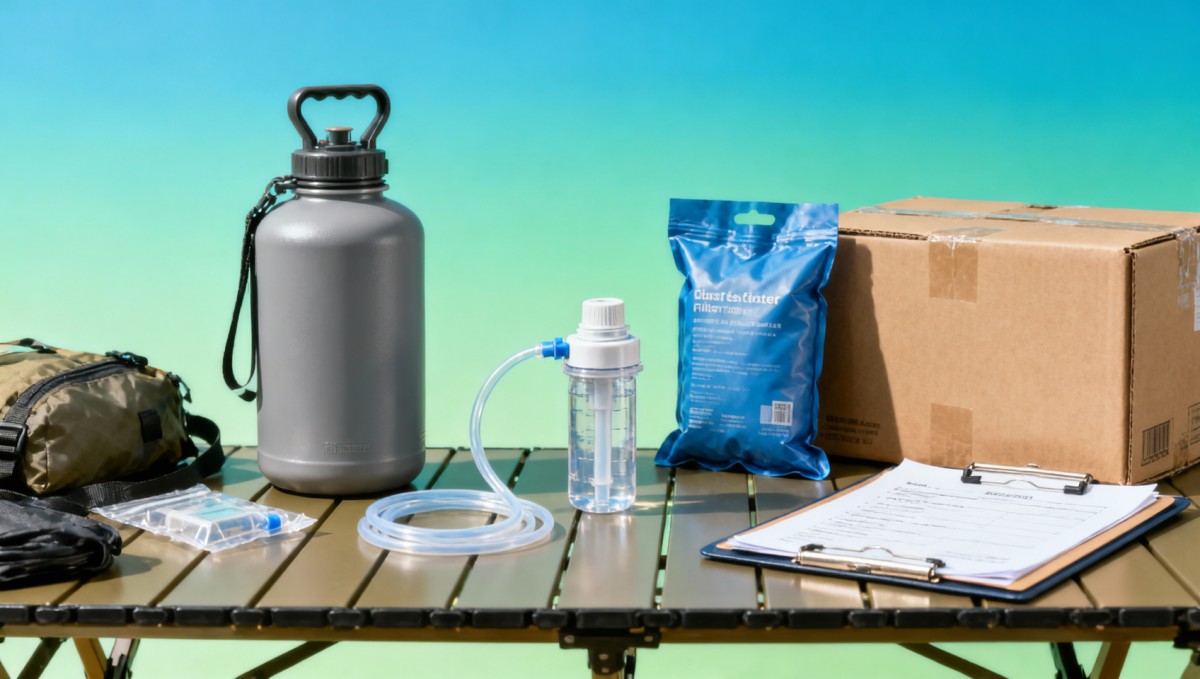
Camping water products include reusable bottles, hydration bladders, portable filters, collapsible containers, purification accessories, and insulated drink systems. In travel service channels, these products often face rough transport, variable temperatures, and repeated field use. A product that performs well in a showroom may fail after 7–10 days of outdoor exposure if materials, seals, or valves are poorly controlled upstream.
Supply chain visibility helps buyers identify where risk actually starts. In many cases, the issue is not the finished product itself, but inconsistent resin grades, unverified food-contact materials, irregular assembly practices, or missing batch traceability. For safety teams and sourcing managers, having access to supplier process data, audit history, and testing routines reduces blind spots before purchase orders are released.
This is especially important in travel and outdoor categories where buying cycles are compressed. Many retailers and travel gear distributors place seasonal orders 90–120 days ahead of peak demand. If a compliance issue is discovered only after inbound inspection, the recovery window may shrink to less than 3 weeks, creating stock gaps, express freight costs, or forced SKU cancellations.
For financial approvers, better visibility also improves cost predictability. A low-price supplier may appear attractive at quote stage, but if defect rates rise above 2%–3%, warranty claims, reverse logistics, and emergency re-sourcing can quickly erase any landed-cost advantage. Safer camping water products are therefore not only a quality topic but a margin protection strategy.
Key supply chain risk signals to monitor
- Frequent raw material substitution without documented approval or updated test reports.
- Factories that outsource molding, printing, and final assembly across 3 or more uncoordinated subcontractors.
- Lead times that change from 25 days to 45 days within one season, indicating unstable capacity planning.
- Missing migration, odor, leakage, pressure, or drop-test records for food-contact and hydration components.
- No lot coding or incomplete traceability for lids, filters, seals, or silicone parts.
What reliable visibility should include
At minimum, buyers should expect 4 layers of information: material disclosure, production process controls, quality inspection records, and shipment readiness status. When these data points are updated consistently, procurement teams can compare suppliers on more than price and lead time. That gives project managers and distributors a stronger base for launch planning and channel allocation.
Critical product and compliance checks before sourcing decisions
In camping and travel applications, product safety evaluation should match actual usage conditions. A bottle used for day hikes may only need basic leak resistance and material safety checks, while a gravity filter or hydration system for multi-day trekking requires broader validation, including flow consistency, component durability, and contamination control. Buyers should separate cosmetic acceptance from performance-critical testing.
For quality and safety managers, the most practical approach is to build a pre-purchase checklist around 5 categories: food-contact material suitability, sealing integrity, mechanical durability, labeling accuracy, and packaging robustness. This reduces the chance that procurement teams approve a supplier based only on sample appearance or trade show presentation.
The table below outlines common checks that are highly relevant for camping water products sold through travel service, retail, and distribution channels. These are not one-size-fits-all legal determinations, but they reflect widely used sourcing review areas for outdoor consumer goods.
A key takeaway is that product safety is rarely confirmed by a single certificate or sample test. It depends on whether the factory can reproduce the same standard at scale across 1,000 units, 10,000 units, or multiple replenishment runs. That is why batch-level consistency should be discussed before commercial terms are finalized.
Practical review points for sourcing teams
- Request current test records tied to the exact material and production version, not only to a legacy sample.
- Check whether colorants, logos, straws, and valves come from the same approved bill of materials.
- Confirm shelf-life, cleaning guidance, and replacement intervals for filters or soft components.
- Review packaging drop resistance for e-commerce delivery, especially for direct-to-consumer travel gear.
- Set acceptance criteria before production starts, including leakage tolerance, odor limits, and labeling rules.
A note on certification interpretation
Certifications and test reports remain important, but buyers should treat them as decision inputs rather than automatic proof of ongoing production control. A report dated 12 months ago may not reflect current resin sources, mold changes, or updated accessory suppliers. For higher-risk products, periodic verification every 6–12 months is often a more prudent approach.
How buyers can evaluate manufacturers for quality, lead time, and resilience
Choosing a manufacturer for safer camping water products requires balancing price, engineering capability, quality systems, and delivery stability. In travel service and outdoor retail, one delayed shipment can affect promotions, tour departures, distributor commitments, and marketplace rankings. That is why supplier evaluation should cover both product competence and operational resilience.
A useful method is to score suppliers across 4 dimensions: technical fit, compliance readiness, production planning, and communication discipline. This helps enterprise decision-makers compare vendors objectively instead of relying on sales presentations. It also helps finance teams understand why a slightly higher unit cost may create lower total risk over a 6-month or 12-month business cycle.
Lead times for standard bottles or containers may range from 25–40 days, while custom hydration systems, branded filter products, or mixed-material assemblies can extend to 45–75 days depending on tooling, print approvals, and packaging configuration. Buyers should ask not only for average lead time, but also for deviation range during peak season.
Resilient suppliers also show discipline in documentation. They can provide approved material lists, process checkpoints, incoming inspection logic, and nonconformance handling steps. When a factory cannot explain how it isolates defective batches within 24–48 hours, that is a serious concern for safety managers and distribution partners.
Supplier comparison framework for camping water products
The matrix below gives procurement and project teams a practical way to compare suppliers before nomination. It is especially useful when evaluating OEM or ODM partners serving sports and outdoor travel channels.
If two suppliers quote similar pricing, the better choice is often the one with stronger change control and clearer communication cadence. Weekly production updates, 48-hour issue escalation, and pre-shipment inspection transparency can save far more than a 3% unit-cost difference in high-service travel channels.
Common selection mistakes
- Approving a supplier based on one attractive prototype without validating bulk production consistency.
- Ignoring component suppliers for caps, filters, and silicone seals even though they drive many failure points.
- Using only FOB price comparisons and excluding testing, packaging loss, and return handling costs.
- Skipping secondary supplier mapping for core SKUs needed during the top 8–12 weeks of the camping season.
Building a safer sourcing workflow from sampling to post-shipment review
A stronger sourcing workflow converts supply chain insight into repeatable execution. For travel-focused brands and distributors, this means setting clear checkpoints before, during, and after production. A structured process reduces internal friction between procurement, quality, operations, and finance because each team knows what evidence is required at each gate.
An effective workflow usually has 5 stages: supplier prequalification, sample and documentation review, pilot production validation, mass production monitoring, and post-shipment performance feedback. The purpose is not to add bureaucracy, but to catch high-cost issues early, when they are still manageable within standard development timelines.
For example, a hydration bottle program with custom packaging may require 2–3 sample rounds over 3–5 weeks, followed by a pilot run and final inspection. If cap torque, print adhesion, or carton drop resistance are not reviewed until final packing, corrective action may push shipment beyond the intended retail or tour launch window.
Post-shipment review is often overlooked. Yet field feedback from campers, tour operators, and end consumers can reveal failure patterns that factory inspection alone does not catch. Tracking return reasons for at least the first 60–90 days after launch helps buyers decide whether to maintain, correct, or replace a supplier for the next season.
Recommended workflow for procurement and quality teams
- Prequalification: review capability, material transparency, audit readiness, and likely lead time range.
- Sampling: test leakage, usability, odor, cleaning ease, and packaging suitability under real travel scenarios.
- Pilot validation: confirm that approved samples can be reproduced in a controlled mini-batch.
- Mass production oversight: monitor critical checkpoints, change requests, and shipment readiness weekly.
- Market feedback loop: record defect categories, claim frequency, and replacement-part demand after delivery.
How this supports different stakeholders
Procurement teams gain cleaner supplier comparisons. Quality leaders gain faster issue escalation. Finance teams gain fewer surprise costs from returns and air freight. Project managers gain more realistic launch calendars. Distributors and travel service operators gain more dependable product availability during high-demand periods. In practical terms, the workflow turns isolated sourcing decisions into a coordinated risk-control system.
Market signals, demand planning, and FAQ for smarter procurement
Safer sourcing is not just about factory controls. It also depends on reading market signals early enough to align inventory, product mix, and replenishment strategy. In the travel service and outdoor retail space, demand can shift quickly around holiday periods, regional weather patterns, and new consumer preferences such as lightweight hydration, eco-conscious materials, or compact purification solutions.
Brands that combine retail sell-through observations with supplier capacity data are better positioned to avoid both stockouts and excess inventory. A practical review cycle is every 2–4 weeks during the pre-season build and every 1–2 weeks during the main selling period. This cadence allows teams to adjust reorder plans, packaging priorities, and channel allocation before bottlenecks become expensive.
For distributors and travel program buyers, the safest strategy is often a tiered assortment: one core bottle line with stable replenishment, one premium hydration SKU for higher-value consumers, and one compact emergency or filtration option for specialized travel scenarios. This spread balances demand volatility and reduces dependence on a single high-risk product type.
FAQ: what buyers most often ask
How long does sourcing a custom camping water product usually take?
For a relatively simple branded bottle, development and first production often take 6–10 weeks. For hydration systems, filter-integrated designs, or custom molds, the process may extend to 10–16 weeks depending on revisions, test requirements, and packaging complexity.
Which indicators matter most during supplier review?
The most useful indicators are material consistency, leak-test discipline, traceability, issue response time, and actual lead-time reliability. Unit price matters, but in outdoor travel categories it should be assessed alongside defect exposure, packaging damage rate, and replenishment stability.
Are lower-MOQ suppliers always better for new programs?
Not necessarily. A low MOQ can reduce entry risk, but some factories offer small runs at the expense of process control or material consistency. Buyers should compare MOQ against testing discipline, documentation quality, and the supplier’s ability to scale if demand doubles within one season.
How can travel service businesses reduce complaint rates after launch?
Provide clear instructions on cleaning, replacement cycles, temperature limitations, and intended use. Many complaint patterns come from misuse rather than core product defects. Better packaging information, realistic performance claims, and spare-part planning can reduce avoidable claims within the first 30–60 days.
Safer camping water products are built through better information, not guesswork. When sourcing teams combine supplier transparency, realistic testing, market timing, and structured approval workflows, they create stronger protection for end users and stronger margins for the business. Global Consumer Sourcing supports this approach by helping buyers, brand owners, and decision-makers identify reliable manufacturing partners, monitor category trends, and evaluate supply chain risks with greater confidence. If you are planning a new outdoor water product range or upgrading an existing sourcing program, contact us to discuss tailored sourcing insights, supplier evaluation support, and safer product strategies for your market.
Related Intelligence
 2026/789 on Beauty Device Packaging Takes Effect") Beauty DevicesApr 29, 2026EU Regulation (EU) 2026/789 on Beauty Device Packaging Takes EffectEU Regulation (EU) 2026/789 mandates 30% recycled plastic & LCA declarations for beauty device packaging — act now to avoid Amazon.de/fr rejections!
Beauty DevicesApr 29, 2026EU Regulation (EU) 2026/789 on Beauty Device Packaging Takes EffectEU Regulation (EU) 2026/789 mandates 30% recycled plastic & LCA declarations for beauty device packaging — act now to avoid Amazon.de/fr rejections! Electronic & RC ToysApr 29, 2026ICTA: RC Toy Orders Shift to South China, Lead Time Cuts to 6 WeeksICTA reports RC toy orders shifting to South China—78% now flow to Guangdong’s cluster, cutting lead times to just 6 weeks. Act now to optimize sourcing, compliance & logistics.
 STEM & Educational ToysApr 29, 2026CPSC Nanomaterial Migration Rule for STEM Toys Effective Q3 2026CPSC Nanomaterial Migration Rule for STEM Toys: New ASTM F963–24 testing (≤0.05 mg/cm²/h) mandatory from Oct 1, 2026—avoid detention & recalls.
 Fitness EquipmentApr 29, 2026THE Alliance Cuts Shanghai–LA Capacity by 22%: Fitness Equipment Delays ExtendFitness equipment shippers: THE Alliance cuts Shanghai–LA capacity by 22% in May 2026—delays, surcharges, and 12–14-week bookings loom. Act now.
 Smart Pet DevicesApr 29, 2026Japan METI Expands Smart Pet Device White List, 10-Day Certification for Chinese DevicesJapan METI expands Smart Pet Device white list—Bluetooth 5.3+ collars & AI feeders now qualify for fast 10-day certification. Key opportunity for Chinese exporters.
 Infant Feeding & CareApr 29, 2026ASEAN-FFL 2026: RCEP Infant Feeding Labeling Rules Take EffectASEAN-FFL 2026 labeling rules take effect April 2026—ensure RCEP infant feeding product compliance now to avoid shelf bans & delays.
 Corporate & Seasonal GiftsApr 29, 2026Germany UBA to Pilot Carbon Labelling for Corporate GiftsGermany UBA's 2026 carbon labelling pilot for corporate gifts mandates ISO 14067 LCAs — vital for Chinese exporters, printers & ink suppliers targeting EU green procurement.
 Nursery Furniture & MonitorsApr 29, 2026Vietnam MOIT Eases Infant Monitor Registration, Requires NMPA Class II FilingVietnam MOIT eases infant monitor registration: NMPA Class II filing now accepted—skip local testing, cut time-to-market. Key for China-Vietnam medtech exporters.
 Camping & WaterApr 29, 2026SASO Mandates IP6X + Salt Spray for Camping Power & Inflators in Saudi ArabiaSASO mandates IP6X + salt spray for camping power stations & inflators in Saudi Arabia—act now to avoid shipment delays and customs rejection.
") Skincare OEMApr 29, 2026FDA Adds Plant Stem Cell Extract Code to CPIS (Apr 2026)FDA adds 'Plant Stem Cell Extract' code to CPIS—urgent compliance action needed for skincare OEMs, suppliers & importers before July 1, 2026.
Skincare OEMApr 29, 2026FDA Adds Plant Stem Cell Extract Code to CPIS (Apr 2026)FDA adds 'Plant Stem Cell Extract' code to CPIS—urgent compliance action needed for skincare OEMs, suppliers & importers before July 1, 2026. Electronic & RC ToysApr 28, 2026ICTA 2026 Q2 RC Toy Sourcing Report: Shift to Guangdong ClusterICTA 2026 Q2 RC Toy Sourcing Report reveals 68% of global electronic RC toy orders shifting to Guangdong’s Shenzhen–Dongguan–Zhongshan cluster — driven by dual-band modules, UL9990 batteries & rapid prototyping. Act now.
 Skincare OEMApr 28, 2026FDA Adds Plant Stem Cell Extract Code to CPIS SystemFDA adds COS-PLS-2026 code for plant stem cell extract in CPIS — vital for skincare OEMs, suppliers & U.S. importers. Act now to ensure compliance by July 1, 2026.
 Nursery Furniture & MonitorsApr 28, 2026Vietnam Exempts Infant Monitors from Local Type TestingVietnam exempts infant monitors from local type testing—leverage your NMPA Class II filing to fast-track Vietnam market entry starting June 1, 2026.