What to Check Before Buying Carbon Fiber Fishing Rods?
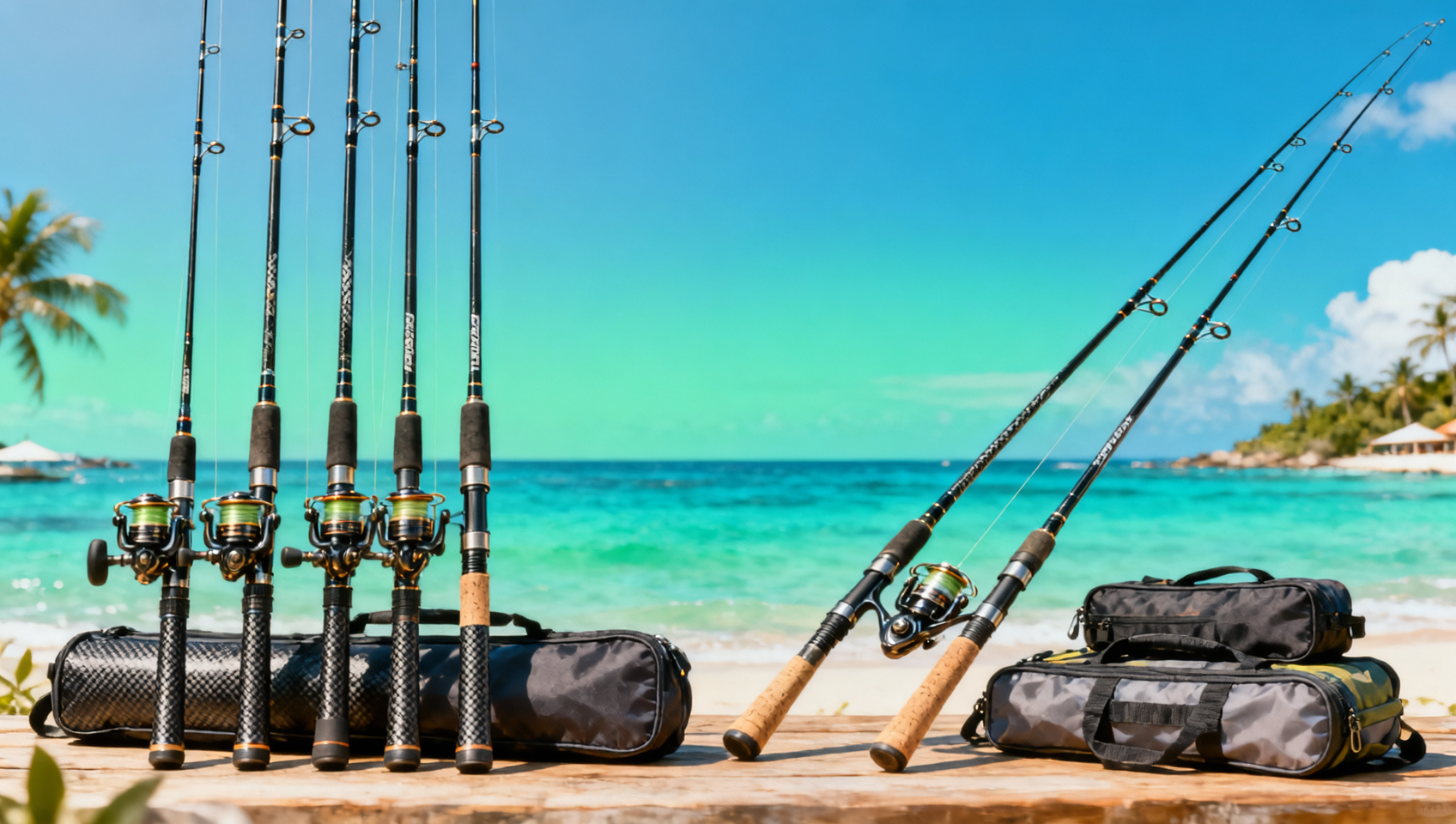
Before investing in carbon fiber fishing rods, buyers should assess material grade, action, durability, guide quality, and supplier compliance to avoid costly mistakes. For sourcing teams, technical evaluators, and outdoor product brands, understanding these checkpoints is essential for balancing performance, safety, and long-term value in a highly competitive global market.
Why carbon fiber fishing rods require more careful buying checks in travel and outdoor retail
In travel services and tourism-linked retail, carbon fiber fishing rods are not just sporting goods. They often sit inside destination packages, resort retail programs, charter fishing operations, airport outdoor stores, and cross-border e-commerce catalogs targeting anglers who travel light. That makes the buying decision more complex than comparing price tags. A rod that performs well in a showroom may still fail under airline transport, saltwater exposure, or repeated guest use over a 6–12 month season.
Information researchers want fast clarity on specifications. Operators care about handling, transport, and breakage rates. Technical evaluators focus on blank construction, guide alignment, and action consistency. Decision-makers and finance approvers want predictable margins, not hidden replacement costs. Quality and safety teams need supplier documentation, packaging reliability, and reasonable testing evidence. End consumers, especially fishing travelers, expect sensitivity, casting control, and easy packing into 2-piece, 4-piece, or telescopic formats.
This is where a sourcing intelligence platform such as Global Consumer Sourcing becomes useful. For buyers managing sports and outdoors categories, GCS helps connect product evaluation with supplier risk, compliance expectations, and market positioning. Instead of treating carbon fiber fishing rods as generic inventory, sourcing teams can compare private-label opportunities, manufacturing readiness, and delivery feasibility across typical production cycles of 30–60 days, depending on complexity and sampling needs.
Before approving a purchase order, most professional teams should review at least 5 core checkpoints: material grade, rod action, component quality, durability under transport conditions, and supplier compliance capacity. Ignoring even 1 of these areas can affect guest satisfaction, return rates, and inventory write-offs. In travel-oriented retail, where peak season timing matters, a late or defective batch can damage both revenue and brand credibility.
- Travel retail buyers need packable rod formats that reduce baggage complaints and freight volume.
- Charter operators need durable rods that tolerate repeated use and rough handling across weekly trips.
- Private-label brands need stable quality across small, medium, and larger order runs, often from sample stage to repeat orders within 2–3 selling cycles.
What technical checkpoints matter most before buying carbon fiber fishing rods?
A carbon fiber fishing rod should always be evaluated as a system, not as a single material claim. “Carbon fiber” alone says very little. Buyers need to ask what kind of carbon content is used, how the blank is layered, whether fiberglass is blended for toughness, and how the rod behaves under real casting and fighting loads. For travel and tourism retailers, the wrong balance between sensitivity and durability can quickly lead to warranty claims from customers using rods in unfamiliar destinations.
Material grade is the first checkpoint. Higher-modulus carbon generally improves sensitivity and reduces weight, but it can also become more brittle if the design and resin system are not well controlled. Mid-range carbon constructions are often better for commercial use because they offer a more forgiving balance for rental fleets, beginner anglers, and destination gift shops. A sourcing team should request a clear material description rather than vague claims such as “high carbon” or “premium graphite.”
The second checkpoint is action and power. Fast action rods suit lure control and sensitivity, while moderate action designs may be easier for beginners and better for varied charter use. Power ratings should match intended fish size, line class, and travel scenario. For example, a light travel rod for freshwater tourist markets differs greatly from a medium-heavy inshore saltwater rod used in resort excursions. It is helpful to review at least 3 performance dimensions together: casting feel, hook-setting response, and fatigue during 4–8 hour use.
The third checkpoint is component integrity. Guides, reel seats, ferrules, handles, and finish quality often cause failures before the blank itself does. Misaligned guides reduce casting efficiency. Poor ferrule fit can loosen after repeated travel assembly. Weak reel seats become a safety and customer-experience issue during active use. Handle material should also match the environment: EVA can be practical for rental and humid conditions, while cork may suit premium retail but requires better finish control.
A practical parameter review for sourcing and technical teams
The table below helps convert technical language into a buying checklist. It is especially useful for travel service operators, fishing tour suppliers, and retail sourcing teams comparing multiple OEM or ODM options.
A table like this does more than organize product specs. It helps different stakeholders ask the right questions at the right stage. Technical teams can verify fit and finish during sampling. Finance teams can connect better component choices with lower return rates. Commercial teams can position the rod correctly for travelers, tour operators, and destination-based outdoor stores.
Minimum sample review points before mass order approval
- Check guide alignment visually across the full blank and under loaded bending.
- Assemble and disassemble ferrules at least 10–20 times to evaluate fit stability.
- Review packaging drop protection for common logistics damage points, especially tip sections.
- Confirm actual rod weight and packed length against catalog claims before listing or quoting.
How to compare rod formats for travel buyers, operators, and private-label brands
Not every carbon fiber fishing rod format serves the same travel need. A one-piece rod may deliver excellent action, but it can be difficult for airline travel, souvenir retail, and international parcel distribution. Multi-piece and telescopic designs offer compactness, yet performance and durability vary widely. Buyers should compare format trade-offs before discussing price, because the wrong structure can disrupt both user experience and logistics economics.
For tourism-linked sales, the most common comparison involves 2-piece, 4-piece, and telescopic rods. A 2-piece rod often provides a strong balance of performance and transport convenience. A 4-piece travel rod suits mobile anglers and destination shops where packed length matters. Telescopic rods can appeal to impulse buyers and casual tourists, but quality differences are significant, so supplier capability must be examined closely during sampling and pre-shipment inspection.
From a commercial standpoint, format choice changes packaging volume, damage risk, and return handling. It also affects merchandising. Compact rods are easier to sell in travel retail and online channels where shipping cost sensitivity is high. Longer rods may fit premium guided fishing programs but require stronger packaging and more careful freight planning. In many sourcing projects, the best decision is not the cheapest unit cost, but the format with the lowest total landed risk across one selling season.
The comparison below can support product managers, procurement teams, and travel service operators when matching rod construction with use case, traveler profile, and operational constraints.
This comparison is especially useful when finance approvers ask why a more expensive 4-piece rod may still be the smarter choice. Lower freight volume, fewer baggage-related complaints, and stronger fit with travel behavior can support better sell-through. For charter operators, however, a sturdier 2-piece model may reduce operational stress over repeated weekly use.
A 4-step selection path for professional buyers
- Define the user group: beginner tourists, experienced travelers, charter guests, or specialist anglers.
- Set 3 core constraints: packed length, target price band, and environment such as freshwater or saltwater.
- Request sample comparison across at least 2–3 rod structures, not just one design.
- Approve only after reviewing packing, handling, and usage fit together, not in isolation.
What should procurement, quality, and compliance teams verify with suppliers?
Many buying mistakes happen after the rod itself has been approved. The product sample looks promising, but the supplier may not be ready for consistent production, proper packaging, labeling control, or documentation support. For global retail buyers and tourism-related sourcing teams, supplier verification should cover production communication, batch consistency, export packaging, and reasonable compliance readiness. This is particularly important when launching under a private label or when selling through large online channels.
Carbon fiber fishing rods do not usually rely on one single universal certificate in the way some regulated products do, but buyers should still review applicable product safety expectations, material declarations when required, labeling accuracy, and destination-market documentation. For example, if the rod is sold with accessories, packaging claims, or children-adjacent marketing, the compliance discussion may become broader. Quality teams should also ask how the supplier controls adhesive curing, guide placement, and final assembly inspection across each production lot.
Lead time is another key checkpoint. Sample development may take 7–15 days for simple revisions, while customized private-label programs can require 3–6 weeks before final approval, followed by 30–60 days for production. Buyers in tourism retail should count backward from high season. Waiting too long to confirm artwork, packaging, or accessories often creates freight upgrades that erase margin. A lower ex-factory price is rarely attractive if it forces expensive air shipments before a seasonal launch.
Global Consumer Sourcing adds value here by connecting product evaluation with supplier-side intelligence. That means buyers can approach the project with a more complete view: not only what rod to buy, but what kind of supplier relationship is realistic for MOQ, quality control checkpoints, and private-label development. This is especially important for B2B teams balancing speed, compliance expectations, and long-term product line stability.
Supplier verification checklist before order confirmation
- Ask for a clear specification sheet with rod length, sections, power, action, guide details, handle material, and packaging dimensions.
- Confirm whether samples and bulk orders are built on the same material and component standard.
- Review inspection points such as ferrule fit, guide straightness, cosmetic finish, and carton protection.
- Clarify typical MOQ, sample cycle, production cycle, and re-order cycle before promotional launch commitments.
- Check whether labeling, barcode placement, and multilingual packaging can be handled correctly for destination markets.
Common risk signals that buyers often miss
Be cautious if a supplier cannot explain the difference between blank materials, avoids discussing packaging failure points, or provides inconsistent sample dimensions. Another warning sign is when lead time promises are unrealistically short for custom projects. If a supplier claims they can finish tooling changes, packaging, and bulk production in a few days, procurement teams should slow down and verify each step carefully.
Quality teams should also watch for over-polished samples with weak process control behind them. A rod can look premium in one sample but fail to maintain guide alignment or ferrule consistency across hundreds of units. For destination retail and travel programs, consistency matters more than a single attractive sample because replacement and service logistics are usually more expensive once the season begins.
Which buying mistakes cause the highest cost after launch?
The most expensive mistake is not always overpaying. In many cases, the bigger cost comes from misalignment between the carbon fiber fishing rod and the sales or usage scenario. A rod chosen for premium performance may be too fragile for rental turnover. A compact travel rod may be easy to sell, yet too light-duty for charter use. A low-cost option may trigger more returns, replacement shipments, and customer dissatisfaction than the initial savings justify.
Another common problem is buying by headline material claims alone. Terms such as “24T,” “30T,” or “high carbon” can influence perception, but they do not replace practical review. Buyers should look at complete build quality, not just material wording. In tourism retail, consumer expectations are often shaped by portability and reliability. If the rod breaks during a holiday trip, the customer remembers the failure more than the specification label.
Packaging is also underestimated. A well-designed carbon rod can still arrive damaged if tube protection, carton strength, or internal stabilization is weak. For cross-border distribution, even small packaging flaws can create a visible loss rate. This is why many professional buyers include 3 packaging checks before approval: compression resistance, tip protection, and label accuracy. These checks are simple, but they directly protect gross margin and review ratings.
Finally, teams often fail to link rod choice with business model. A resort store, a fishing tour operator, an online outdoor seller, and a private-label travel brand should not buy the same product the same way. The right decision depends on sell-through speed, return handling ability, packaging cost tolerance, and how much technical guidance the end user will receive after purchase.
FAQ for buyers comparing carbon fiber fishing rods
How do I know if a carbon fiber fishing rod is suitable for travel retail?
Start with packed length, section design, and packaging strength. For travel retail, 2-piece and 4-piece rods are often easier to merchandise and ship. Then review weight, ferrule stability, and transport protection. If customers are likely to fly or move frequently, compactness and repeat assembly reliability matter as much as casting feel.
What should procurement teams ask during sample evaluation?
Ask for a detailed specification sheet, packed dimensions, component list, and expected production timeline. Test ferrule fit, guide alignment, finish consistency, and carton protection. It is also wise to compare at least 2 samples rather than approving one piece, because consistency is often more important than isolated appearance.
Are higher-modulus rods always better?
Not always. Higher-modulus designs can feel lighter and more sensitive, but they may not be the best choice for repeated commercial use or beginner-heavy tourism programs. Mid-range constructions often provide a better balance of performance, durability, and replacement cost, especially when rods are used across mixed skill levels.
What is a reasonable timeline for a private-label order?
A simple sample update may take 7–15 days. A customized project with graphics, packaging, and component adjustments may take 3–6 weeks before bulk confirmation. Production commonly falls in the 30–60 day range, depending on order size and material scheduling. Buyers planning for a tourism season should build in extra time for inspection and freight booking.
Why choose a sourcing intelligence partner when selecting carbon fiber fishing rods?
Choosing carbon fiber fishing rods is no longer just a product task. It is a category strategy decision that touches product positioning, supplier stability, travel-oriented usability, and commercial timing. Global Consumer Sourcing supports this process by helping buyers connect market demand in sports and outdoors with practical sourcing decisions, especially for businesses expanding private-label lines or refining global retail assortments.
For information researchers, GCS helps shorten the path from broad search to usable specification insight. For technical evaluators and quality teams, it provides a clearer framework for reviewing materials, components, and supplier readiness. For business decision-makers and finance approvers, it helps compare product risk against cost, lead time, and long-term margin potential. This is particularly relevant in tourism-linked channels where seasonality, portability, and customer satisfaction have direct commercial impact.
If you are planning to source carbon fiber fishing rods for destination retail, charter operations, travel e-commerce, or a new private-label outdoor range, the most productive next step is a structured consultation. Useful discussion points include parameter confirmation, rod format selection, sample planning, packaging review, lead time mapping, compliance considerations, and quotation alignment for your target market.
Contact GCS to discuss 5 practical areas before your next buying cycle: product positioning, sample specifications, supplier comparison, delivery schedule, and labeling or packaging requirements. This kind of early coordination can help reduce sourcing delays, improve fit for travel users, and support a more confident buying decision from first sample to repeat order.
Related Intelligence
 Cosmetics & PkgApr 23, 2026SAMR Penalizes 7 Platforms for 'Ghost Food Delivery' PackagingSAMR penalizes 7 platforms for 'ghost food delivery' packaging—critical for infant pouch & supplement container suppliers. Verify your Food-Related Product Production License now to secure global orders.
 Cosmetics & PkgApr 23, 2026EU EPR Dual-Country Registration Effective for Cosmetics PackagingEU EPR Dual-Country Registration is now mandatory for cosmetics packaging in France & Germany—register with ADEME and EAR by April 2026 to avoid delisting.
 Cosmetics & PkgApr 23, 2026US FDA Enforces VCRP Registration for Cosmetic Packaging as of Apr 22, 2026US FDA mandates VCRP registration for cosmetic packaging as of Apr 22, 2026 — learn how bottles, tubes & aerosol cans must comply to clear U.S. customs.
 Corporate & Seasonal GiftsApr 23, 2026TÜV Rheinland LCA Rule for Green Gift Packaging Takes Effect in EUTÜV Rheinland LCA Rule for Green Gift Packaging is now live in EU—mandatory carbon heat maps & certified LCAs required for DE/AT/NL market access. Act now!
 Beauty DevicesApr 23, 2026Global Li-ion Recycling Rate Hits 62%: Beauty Device Battery BOM Cost Down 9%Li-ion recycling rate hits 62% — beauty device battery BOM costs drop 9%. Discover how this boosts margins, cuts lead times, and strengthens global supply agility.
 Nursery Furniture & MonitorsApr 23, 2026Canton Fair Phase III: Baby Monitors Surge, EN60601-1-12 Focus in Middle EastCanton Fair Phase III: Baby monitors surge 142%—Middle East buyers prioritize EN60601-1-12:2023 compliance. Discover key implications for exporters & certifiers.
 Infant Feeding & CareApr 23, 2026JETRO Mandates Blockchain Batch Codes for Infant Silicone Feeding ProductsJETRO mandates blockchain batch codes for infant silicone feeding products—pacifiers, teething rings & spoons—to ensure traceability and market access in Japan. Act now!
 STEM & Educational ToysApr 23, 2026SASO Cuts AI Module Certification for STEM Toys to 24 HoursSASO Cuts AI Module Certification for STEM Toys to 24 Hours — Fast-track CoC for voice/image AI toys entering Saudi Arabia. Act now before summer procurement!
 Smart Pet DevicesApr 23, 2026Vietnam Enforces ISO 13485 + Vietnamese Manual for Smart Pet CollarsVietnam enforces ISO 13485 + Vietnamese manual for smart pet collars—key compliance update impacting exporters, OEMs & importers. Act now!
 Camping & WaterApr 23, 2026RCEP Camping Water Bag Tariff Cut: Indonesia Updates TPU+Aluminum SpecRCEP Camping Water Bag tariff cut + TPU+aluminum spec update in Indonesia—key implications for OEMs, material suppliers & exporters. Act now!
 Cosmetics & PkgApr 22, 2026SAMR Penalizes 7 Platforms for 'Ghost Kitchen' Packaging ViolationsSAMR penalizes 7 platforms for 'ghost kitchen' packaging violations—critical for food-grade packaging OEMs, suppliers & procurement teams. Act now.
 Camping & WaterApr 22, 2026RCEP Camping Water Bags: Indonesia Cuts Tariff, Sets TPU+Aluminum SpecRCEP Camping Water Bags: Indonesia cuts tariff to 3.4% & mandates TPU+aluminum spec—key opportunity for exporters, TPU suppliers & converters in ASEAN-China supply chains.
 Corporate & Seasonal GiftsApr 22, 2026TÜV Green Packaging LCA Threshold Effective Apr 2026TÜV Green Packaging LCA Threshold takes effect Apr 2026 — mandatory carbon heatmaps & ISO-compliant LCAs for holiday, wedding &文创 packaging. Act now to meet EU tender requirements.