Why outdoor equipment samples pass but production still fails
Why do outdoor equipment samples look excellent in development, only for production runs to generate defects, delays, and costly disputes? In most cases, the sample itself is not the problem. The failure usually comes from the gap between sample conditions and production reality: different materials, looser process control, uneven supplier capability, unvalidated tooling, missing compliance checkpoints, or unrealistic quality expectations before scale-up. For sourcing teams, technical evaluators, project managers, and commercial decision-makers, this is not just a factory issue. It is a risk management issue that affects cost, launch timing, compliance, and brand reputation.
For buyers working across sports and outdoors, private label programs, OEM/ODM sourcing, and broader consumer product categories, the key question is not “Did the sample pass?” but “Was the sample representative of mass production?” That distinction determines whether a supplier can deliver consistently once order volumes rise.
Why a passed sample does not guarantee production success
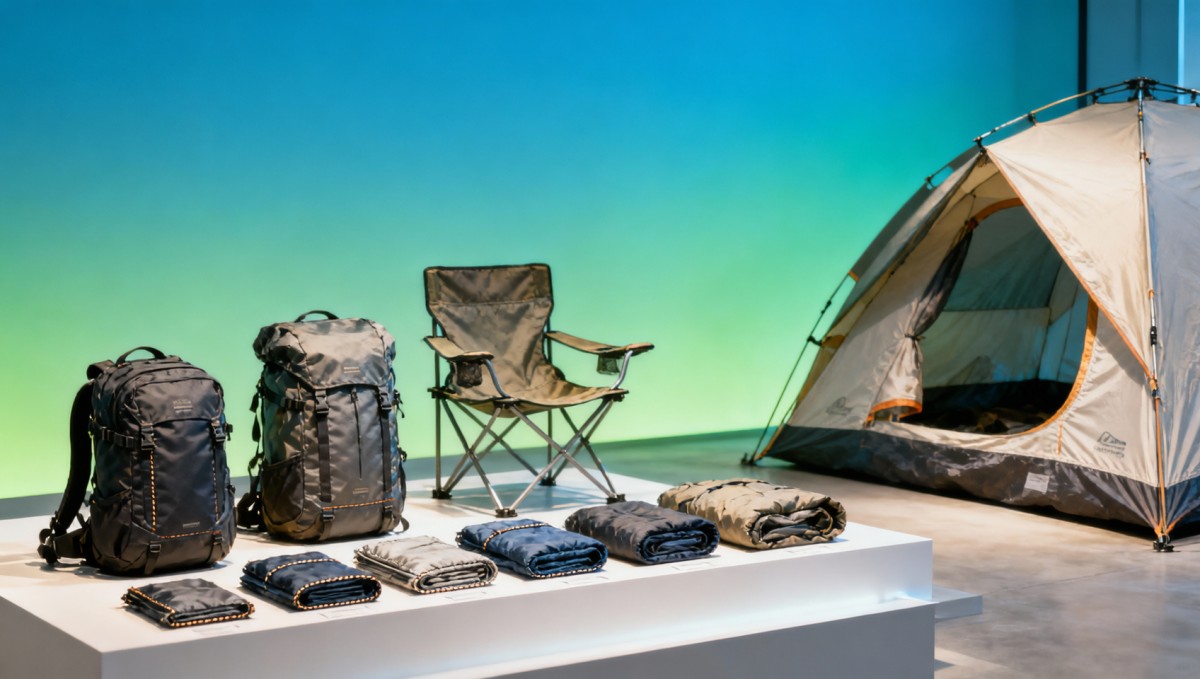
A passed sample often reflects an ideal scenario: extra manual attention, hand-selected materials, small-batch assembly, and direct oversight from senior technicians. Mass production is very different. It introduces variability across labor, raw material lots, machine settings, subcontracted processes, packaging, and shipment timelines.
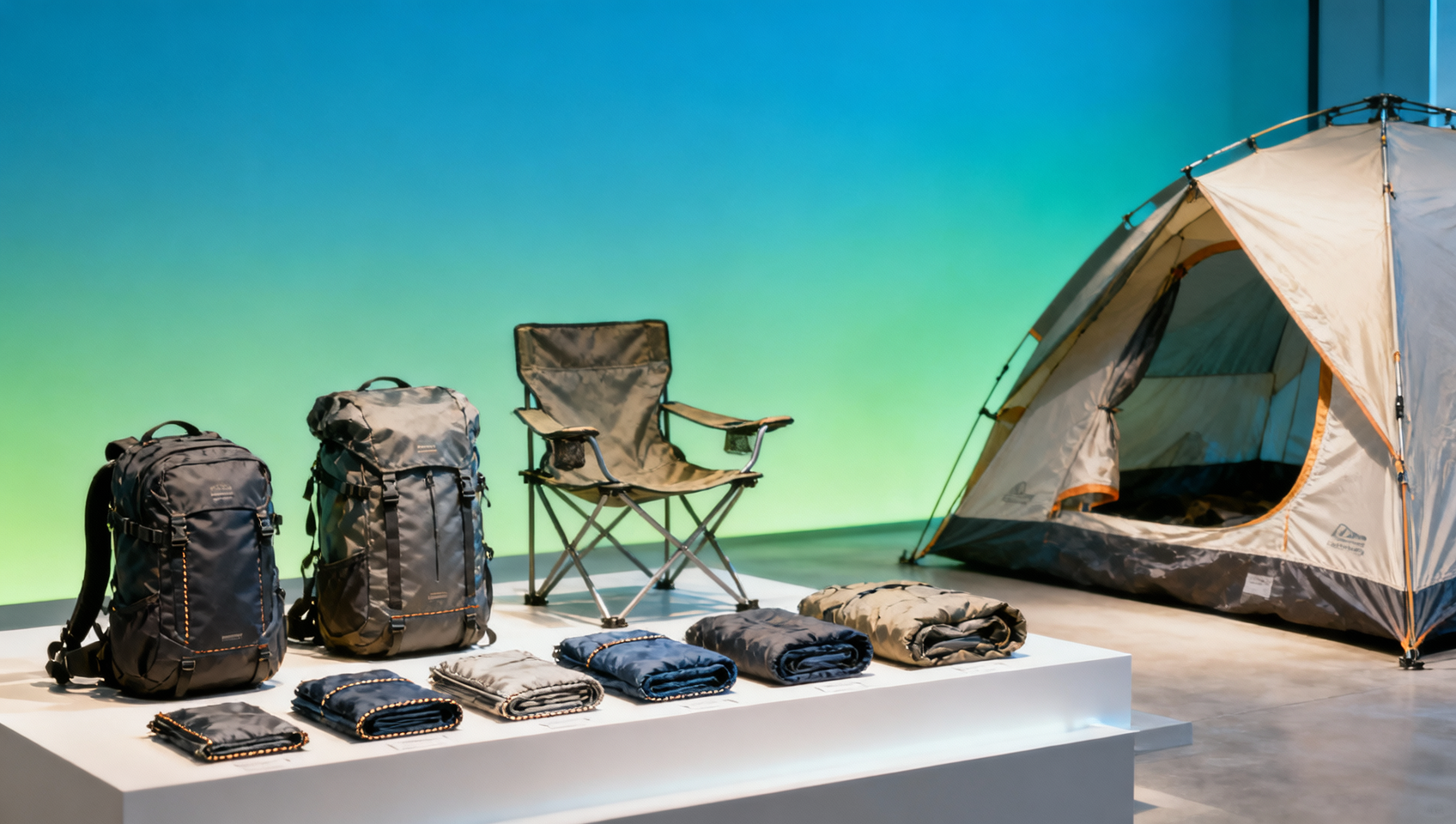
In outdoor equipment, this gap is especially common because products must perform across safety, durability, weather resistance, and user experience at the same time. A backpack sample may look premium, but bulk production may use fabric from another lot with weaker tear strength. A camping chair sample may pass load testing, but production units may fail because welding consistency changes from batch to batch. A tent sample may appear waterproof in a basic check, yet mass production seam sealing may be inconsistent, causing field failure.
For procurement and technical teams, the root issue is usually one of these three realities:
- The sample was not production-representative — it was made under prototype conditions, not real factory conditions.
- The production system was not validated — tooling, processes, QC controls, and operator training were not proven at scale.
- The specifications were incomplete or not enforced — the approved sample became a visual reference, not a controlled manufacturing standard.
What buyers and sourcing teams are actually worried about
Readers searching this topic are rarely looking for a theoretical explanation. They usually need to reduce decision risk before confirming or expanding an order. Their real concerns are practical and commercial:
- Why did the supplier pass development but fail during production?
- How can we tell whether the factory can repeat quality consistently?
- What checks should happen before PO approval or mass production release?
- How do we prevent margin erosion from rework, claims, returns, or shipment delays?
- What documentation, testing, and process controls should be locked in?
- How do we compare suppliers beyond sample appearance and unit price?
For financial approvers and business evaluators, the concern is broader: a failed production run can trigger chargebacks, seasonal sales loss, expedited freight, legal exposure, and damage to retailer relationships. In other words, the sample-to-production gap is a hidden cost driver across the retail supply chain.
The most common reasons outdoor equipment production fails after sample approval
1. Material substitution or uncontrolled raw material variation
Outdoor gear depends heavily on performance materials: coated fabrics, aluminum tubes, buckles, zippers, foams, webbings, and stitching threads. Even when the factory does not intentionally substitute materials, differences between lots can affect colorfastness, UV resistance, waterproofing, tensile strength, or load performance. If incoming material standards are weak, production quality becomes unstable.
2. The sample was handmade, but production is semi-industrial
A development sample may be produced by the factory’s best technician, with extra polishing and manual correction. In production, dozens of operators work under time pressure. That means tolerance variation, inconsistent finishing, and assembly differences become visible.
3. Tooling and process capability were never fully validated
For products involving molded parts, metal frames, sewn structures, or folding mechanisms, passing one sample does not prove process stability. A buyer needs evidence that the factory can maintain dimensions, functionality, and strength over repeated cycles and batch volume.
4. Compliance was checked only at the sample stage
Many teams focus on sample testing but fail to build compliance control into bulk manufacturing. In outdoor equipment, especially products for children, travel, or consumer safety-sensitive retail channels, passing one lab test is not enough if production inputs can change later. This is also relevant for brands managing CE, CPC, or other market-entry standards across adjacent categories.
5. Specifications were too vague
If the approval standard is “match the sample,” disputes become inevitable. A production-ready project needs measurable criteria: dimensions, weight range, material codes, color tolerances, performance thresholds, packaging requirements, logo application, and defect classification.
6. Supplier capability was overestimated
Some factories are strong in prototyping but weak in scale manufacturing. Others perform well in one category but stretch into adjacent products without mature process control. A supplier may produce a convincing sample to win the business but still lack the production planning, engineering depth, or quality system needed for repeatable delivery.
7. Production planning created hidden quality pressure
Compressed lead times, peak-season overload, labor turnover, or subcontracting can all weaken consistency. Many bulk failures are not caused by a single technical mistake but by operational strain inside the factory.
How to judge whether a sample is truly production-representative
For buyers, technical evaluators, and project owners, this is the most useful decision point. A good sample should not only look correct. It should prove that the supplier can manufacture the product under normal production conditions.
Use the following evaluation questions before mass production approval:
- Was the approved sample made with the same bill of materials intended for production?
- Are all key components sourced from confirmed suppliers and approved lots?
- Was the sample made using actual production tooling, machines, and line processes?
- Have performance and safety tests been tied to final production specifications?
- Has the factory defined critical-to-quality points and acceptable tolerances?
- Was a pilot run or pre-production run completed, not just a single sample?
- Can the supplier provide consistency data, not only one approved piece?
If the answer to several of these questions is no, then the sample is primarily a development milestone, not evidence of reliable mass production capability.
What procurement teams should lock in before placing or scaling an order
To reduce risk, sourcing and procurement teams should treat sample approval as only one checkpoint in a larger control process.
Define a production-grade specification package
This should include approved materials, construction details, measurements, tolerances, finishing requirements, test methods, labeling, packaging, and defect standards. If possible, use a master approval file rather than informal sample comments spread across emails and chat threads.
Confirm manufacturing readiness
Before PO release, validate tooling readiness, line capacity, operator instructions, QC checkpoints, and incoming material controls. For outdoor equipment, special attention should go to structural strength, corrosion resistance, moving-part durability, stitching reinforcement, and weather-related performance claims.
Require a pilot run or pre-production sample from actual line conditions
This is one of the most effective ways to expose the sample-to-production gap early. A pilot run can reveal whether the factory can maintain quality when volume, labor variation, and process speed are introduced.
Align on inspection criteria before manufacturing starts
Do not wait until final inspection to define what is acceptable. Set standards for workmanship, functionality, packaging, and reliability in advance. This reduces disputes and improves accountability.
Check supplier capability beyond the quote
A lower price may reflect weaker process control, dependence on subcontractors, or limited testing discipline. Commercial teams should compare suppliers on repeatability, corrective action speed, compliance culture, and category-specific manufacturing depth, not just unit cost.
How this affects cost, timing, and supplier selection decisions
When production fails after a successful sample, the damage often extends far beyond quality claims. The business impact can include:
- Delayed product launch windows
- Retailer penalties or missed seasonal demand
- Higher inspection and rework costs
- Expedited air freight to recover delivery schedules
- Warranty exposure and customer complaints
- Internal management time spent on escalation and dispute handling
That is why experienced sourcing organizations evaluate suppliers based on total execution reliability. In categories such as sports and outdoors, as well as beauty OEM, baby product sourcing, gifts, and other regulated or specification-sensitive product lines, a factory’s ability to convert approval into stable production is a more valuable indicator than a polished sample alone.
A practical framework for reducing sample-to-production risk
If your team is evaluating an outdoor equipment supplier, use this simple framework:
- Approve the design — confirm the product concept, user function, and visual quality.
- Approve the specification — lock the materials, tolerances, test standards, and packaging details.
- Approve the process — verify tooling, line setup, work instructions, and QC control points.
- Approve the pilot run — test whether consistency holds under near-production conditions.
- Approve the supplier’s control system — assess corrective action ability, traceability, and production discipline.
This approach helps procurement teams, engineers, and business stakeholders make better sourcing decisions before committing larger volumes or long-term supplier partnerships.
Conclusion
Outdoor equipment samples pass while production fails because a sample often proves possibility, not repeatability. For buyers and sourcing leaders, the real task is to verify whether the supplier can reproduce the same quality under actual production conditions, with stable materials, controlled processes, clear specifications, and scalable quality management.
The smartest sourcing decisions come from looking beyond sample approval and testing the full manufacturing system behind it. If a supplier cannot demonstrate production readiness, consistency, and compliance discipline, then even the best-looking sample may become an expensive false signal. In global retail supply chains, especially for private label and OEM/ODM programs, reliable scale is what turns a promising product into a profitable one.
Related Intelligence
 Baby Gear & StrollersApr 27, 2026Global Shipping Alliances Cut Shanghai–Rotterdam Capacity by 15%Global shipping alliances cut Shanghai–Rotterdam capacity by 15%—impacting baby strollers & gear exporters, EU retailers, and forwarders. Act now to secure space, assess rail/air alternatives, and build resilient supply chains.
 Camping & WaterApr 27, 2026SASO IEC 62368-3:2026 Released for GCC: IP6X Dust Testing Required for Camping & Water PumpsSASO IEC 62368-3:2026 now mandates IP6X dust testing for camping & water pumps in GCC — act now to avoid customs delays and ensure compliance by Oct 1, 2026.
 Nursery Furniture & MonitorsApr 27, 2026Indonesia BPOM Fast-Tracks Baby Monitor Registration to 14 Working DaysIndonesia BPOM Fast-Tracks Baby Monitor Registration to 14 working days—leverage CNAS reports & ID-SNI 7203:2025 for rapid market entry.
 Corporate & Seasonal GiftsApr 27, 2026TÜV Rheinland Releases Sustainable Gift Packaging White Paper 2026Sustainable gift packaging white paper 2026 by TÜV Rheinland: New LCA rules for VOCs, container loading & last-mile transport — act now to meet IKEA, Douglas Q3 2026 requirements.
 Smart Pet DevicesApr 27, 2026JETRO Summer Inspection: Smart Pet Collars Must Pass JIS T 1002:2026 Bluetooth TestSmart Pet Collars must pass JIS T 1002:2026 Bluetooth 5.4 coexistence testing for JETRO’s 2026 summer inspection — avoid delays, recalls & lost sales in Japan.
 Fitness EquipmentApr 27, 2026CPSC Mandates Emergency Stop & Thermal Cutoff for US Fitness MirrorsCPSC mandates emergency stop & thermal cutoff for US fitness mirrors—urgent compliance required by July 2026. Learn implications for OEMs, importers & suppliers.
 STEM & Educational ToysApr 27, 2026SASO Updates Toy Certification: EN71-3:2026 for STEM Toys in Saudi ArabiaSASO EN71-3:2026 toy certification now mandatory for STEM toys in Saudi Arabia—nickel, cobalt & antimony limits tightened. Act before Aug 1, 2026!
 Infant Feeding & CareApr 27, 2026RCEP Update: Vietnam Cuts Tariffs on Silicone Nipples, Smart Bottles from ChinaRCEP Update: Vietnam cuts tariffs on silicone nipples & smart bottles from China—save 9–13% import costs starting May 1, 2026. Act now!
 Beauty DevicesApr 27, 2026EU EPR Carbon Fee for Smart Beauty Devices Starts June 2026EU EPR Carbon Fee for Smart Beauty Devices starts June 2026 — learn how the new Green Packaging Regulation Fee impacts OEMs, suppliers & EU importers.
 Skincare OEMApr 27, 2026FDA CPIS Mandate Effective July 2026 for US Cosmetic ImportsFDA CPIS mandate takes effect July 2026—learn how skincare OEMs, cosmetic exporters & U.S. importers must comply to avoid shipment delays and entry denials.
 Beauty DevicesApr 26, 2026Global Li-ion Recycling Rate Hits 62%: Beauty Device Battery BOM Cost Down 9%Li-ion recycling hits 62% globally—cutting beauty device battery BOM costs by 9% and lead times to 6 weeks. Act now to boost export agility & margins.
") Smart Pet DevicesApr 26, 2026Vietnam Enforces New Smart Pet Collar Standard (QCVN 135:2026)Vietnam Enforces New Smart Pet Collar Standard (QCVN 135:2026): Bluetooth 5.4 resilience & native Vietnamese voice prompts required by July 1, 2026 — act now to avoid customs delays!
Smart Pet DevicesApr 26, 2026Vietnam Enforces New Smart Pet Collar Standard (QCVN 135:2026)Vietnam Enforces New Smart Pet Collar Standard (QCVN 135:2026): Bluetooth 5.4 resilience & native Vietnamese voice prompts required by July 1, 2026 — act now to avoid customs delays! Nursery Furniture & MonitorsApr 26, 2026Shanghai International Logistics Procurement Expo 2026 ClosesShanghai International Logistics Procurement Expo 2026 closed—AI-powered smart infant & pet health devices led procurement demand. Discover key trends, buyer priorities & 2027 outlook.