Basketball Hoop Wholesale: Which Specs Matter Most for Long-Term Use
For project managers evaluating basketball hoop wholesale options, long-term performance depends on more than price alone. From material strength and weather resistance to installation demands, safety standards, and maintenance costs, the right specifications directly affect lifecycle value. This guide highlights the key factors that help procurement teams choose durable systems for schools, parks, resorts, and commercial recreation projects.
Why specification decisions are changing in leisure and destination projects
The buying logic behind basketball hoop wholesale has shifted in recent years. For travel service operators, mixed-use developers, resort planners, municipal recreation teams, and project managers building guest-facing activity zones, the hoop is no longer a simple accessory. It is part of the overall visitor experience, safety profile, maintenance budget, and brand promise of the site. That change matters because a basketball court inside a hotel, campground, coastal resort, sports park, or family recreation destination is expected to remain usable through heavy traffic, changing weather, and low-maintenance operating cycles.
At the same time, procurement pressure has increased. Buyers are dealing with longer asset-life expectations, stricter risk reviews, higher insurance awareness, and stronger demands for visible quality in public-facing installations. As a result, basketball hoop wholesale decisions are increasingly evaluated through lifecycle performance rather than only unit cost. In practical terms, that means project leaders are asking better questions about steel gauge, backboard material, anchoring methods, corrosion protection, rim design, and replacement part availability.
This trend is especially relevant in tourism-oriented settings. Recreation amenities influence guest reviews, repeat bookings, family appeal, youth programming, and property differentiation. A hoop system that becomes unstable, rusted, noisy, or unsafe after one or two seasons can turn a small purchasing mistake into a visible operational problem. That is why the best basketball hoop wholesale strategy today starts with understanding what has changed in use environments and what specifications now matter most for long-term use.
The strongest market signals: durability now outranks low upfront cost
One of the clearest signals in the current market is the move from “lowest landed price” toward “lowest total ownership burden.” This does not mean buyers ignore price. It means they increasingly compare purchase cost against inspection frequency, repainting, part failure, guest complaints, and downtime during peak season. For project managers responsible for delivering recreation infrastructure on time and within budget, that shift changes how basketball hoop wholesale should be assessed.
Several factors are driving this change. Outdoor leisure facilities are seeing broader user groups, from children and casual vacationers to teen camp programs and adult sports events. Sites near beaches, pools, mountain lodges, or humid climates put more stress on metal components. Operators also prefer equipment that can survive unattended periods, off-season exposure, and limited maintenance labor. In response, specification quality has become a stronger purchasing signal than promotional pricing alone.
For travel service projects, this broader market direction suggests a simple conclusion: a lower-cost hoop that needs early replacement is usually more expensive than a better-engineered system chosen through disciplined basketball hoop wholesale evaluation.
Which specs matter most when long-term use is the real priority
When comparing models, project teams should focus on the specifications that most directly affect asset longevity. The first is pole construction. Heavy-gauge steel, stable one-piece or well-engineered sectional structures, and reliable weld quality all influence resistance to vibration, impact, and wind load. A hoop used at a resort activity area or public recreation stop may face rough play and irregular supervision, so structural confidence is essential.
The second is corrosion protection. Galvanization, powder coating quality, and coating adhesion matter more than surface appearance alone. Coastal tourism properties, humid climates, and poolside recreation areas can accelerate rust. In basketball hoop wholesale, suppliers that can explain coating process details usually offer a stronger basis for lifecycle judgment than those who only show polished product photos.
Third, the backboard material deserves close attention. Tempered glass provides premium play feel and a professional visual impression, which may suit high-end leisure destinations or sports-focused hospitality projects. Polycarbonate and acrylic options can work in many public-use sites, but impact resistance, scratch behavior, yellowing risk, and frame support design must be checked carefully. What matters is not just the material name, but whether the full backboard assembly can withstand repeated use without loosening or clouding quickly.
Fourth, rim design is a major long-term variable. Breakaway rims are often preferred for more active sites because they absorb stress better and reduce the chance of damage from aggressive play. Fixed rims may fit lower-intensity applications, but only when the site profile truly supports that choice. In many basketball hoop wholesale projects, a stronger rim system protects both the board and the support arm over time.
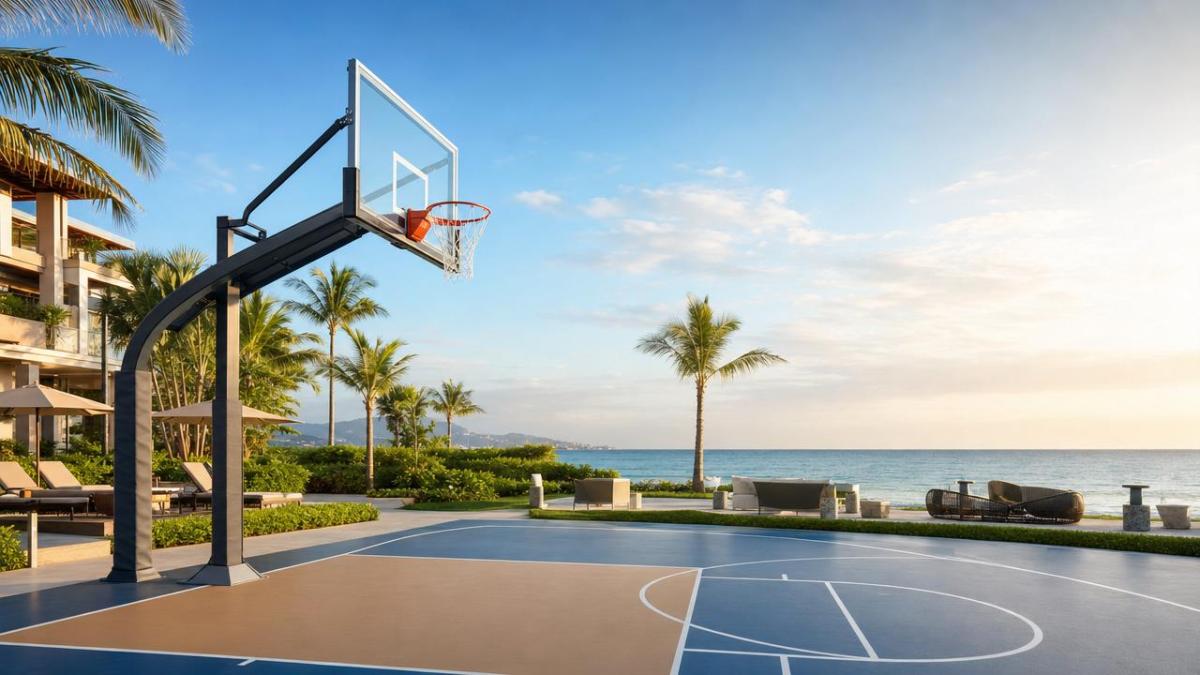
Fifth, anchoring and in-ground engineering should never be treated as secondary. The hoop can only perform as well as its foundation, bolt system, and installation compatibility allow. Project managers should align product selection with local soil conditions, slab design, drainage, and installation resources. A specification that looks attractive on paper may become a long-term problem if it is poorly matched to site realities.
Finally, spare parts access is now a key procurement signal. Nets, padding, rim springs, bolts, and replacement backboards all affect service continuity. The most practical basketball hoop wholesale partners are often those that support standardized parts, clear documentation, and realistic post-sale availability.
Why usage environment now shapes spec selection more than ever
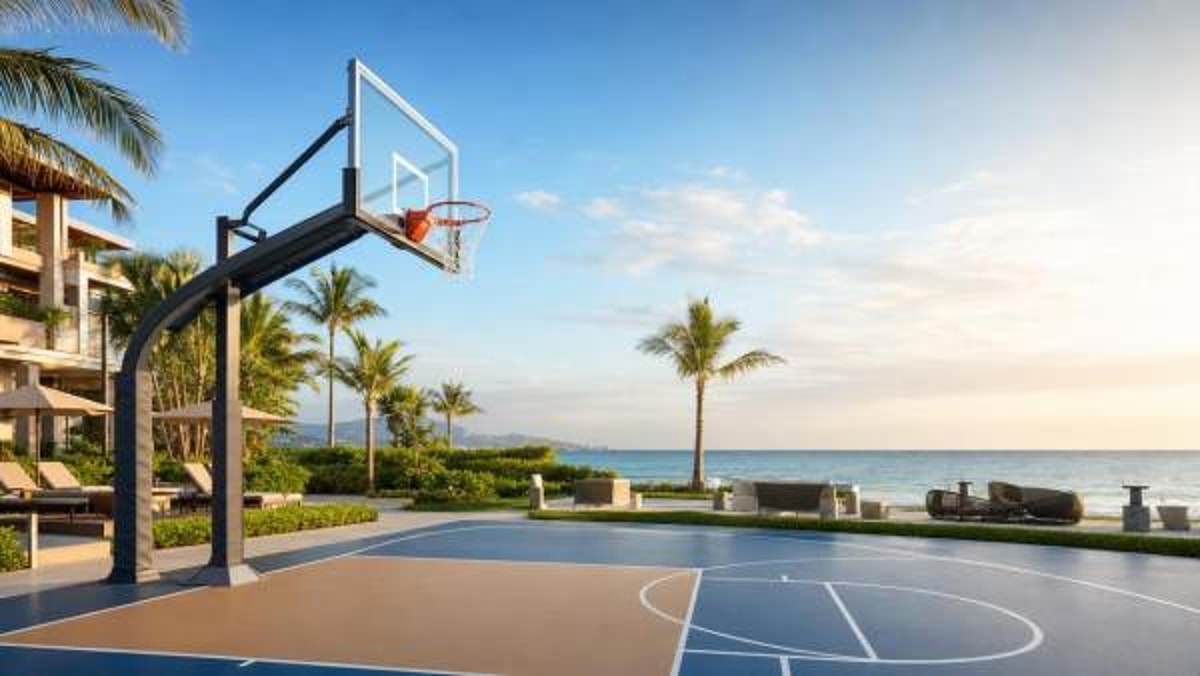
Another important shift is that buyers can no longer select hoop systems in isolation from the surrounding environment. Long-term use is highly context dependent. A covered court inside a resort wellness center faces very different risks from an exposed half-court at a beachfront hotel or a family sports area within a holiday park. Strong basketball hoop wholesale decisions begin with a realistic use-case map.
For example, high-salinity coastal air increases corrosion risk. Remote eco-lodges may have limited repair access, making maintenance simplicity a top concern. Urban recreation projects attached to tourism districts may see heavy weekend traffic, requiring stronger impact tolerance. Multi-age family resorts may prioritize safe edge finishing, visible padding, and lower noise during use. In each case, the “best” specification is not universal; it is the one that best fits the operating environment over time.
This is why project managers should ask suppliers for environment-specific recommendations instead of generic product brochures. A supplier that understands climate exposure, use intensity, and guest expectations can usually support better basketball hoop wholesale outcomes than one selling a single standard configuration for every scenario.
How these changes affect different stakeholders in a project
The shift toward lifecycle-focused specification affects more than procurement. It changes coordination across planning, engineering, operations, and guest experience teams. In tourism and leisure developments, that cross-functional impact is particularly clear because recreation equipment influences both infrastructure performance and customer perception.
Understanding these viewpoints helps buyers avoid a common mistake: choosing by price without aligning the hoop specification to the people who will install it, maintain it, insure it, and explain it to customers later. Better basketball hoop wholesale planning is often less about finding the cheapest unit and more about reducing friction between departments after installation.
The next decision layer: safety, compliance, and visible trust signals
Across public-use leisure environments, buyers are putting more weight on safety documentation and visible trust signals. This does not always mean a single universal certification solves every issue. It means project teams increasingly want traceable manufacturing quality, load-relevant design confidence, clear installation instructions, and evidence that components are suited for intended use. In basketball hoop wholesale, this is becoming part of normal due diligence rather than an optional extra.
That shift is also linked to brand reputation. A damaged or unstable hoop in a resort or destination facility is not merely a maintenance issue; it can affect guest confidence and online reviews. Project leaders should therefore assess whether suppliers can provide technical drawings, material explanations, replacement part references, and responsive after-sales communication. These are practical trust signals that matter in real operating conditions.
What project managers should now ask before placing a wholesale order
In the current market, the best questions are often more valuable than the lowest quote. Before confirming a basketball hoop wholesale order, project managers should test the supplier on long-term readiness, not just shipment capability.
Start by confirming the intended usage intensity. Is the product designed for light recreational use, school environments, or high-frequency public play? Then verify finish performance under the actual climate where it will be installed. Ask how the rim and board assembly behave under repeated stress, what the recommended maintenance cycle is, and which parts are easiest to replace. Review anchor requirements early, not after the civil work is finalized. Also confirm what documentation will be delivered with the order, including assembly guidance and parts identification.
These questions matter because they connect product choice to operational reality. A disciplined basketball hoop wholesale process protects schedules, reduces future change orders, and supports better long-term asset planning.
A practical judgment framework for the next 12 to 24 months
Looking ahead, buyers should expect continued demand for outdoor-ready, lower-maintenance, and safety-conscious sports infrastructure in leisure destinations. Recreation amenities remain a useful differentiator for tourism properties, but operators will likely continue favoring equipment that combines guest appeal with predictable upkeep. That means future basketball hoop wholesale decisions will increasingly reward suppliers who can demonstrate durability, parts continuity, and environment-specific guidance.
For project teams, a practical framework is to score options across five areas: structural durability, weather suitability, maintenance burden, installation compatibility, and supplier support responsiveness. If one model is cheaper but weak in three of those five categories, it may not be the better long-term choice. This is especially true in travel service projects where downtime and visible wear can affect customer experience more quickly than in purely private-use settings.
Final takeaway for teams sourcing basketball systems at scale
The biggest change in basketball hoop wholesale is not the product itself, but the way serious buyers evaluate it. Long-term use now depends on matching specifications to environment, user intensity, maintenance capacity, and safety expectations. For project managers and engineering leads, that means the most important specs are usually pole strength, corrosion resistance, backboard resilience, rim design, anchoring quality, and spare-parts support.
If your team wants to judge whether current market trends will affect your next recreation project, focus on a few key questions: Will this hoop still look and perform well after repeated public use? Is the finish suitable for the climate? Can your site team maintain it easily? Are replacement parts realistic to source? And does the supplier provide enough technical confidence to support a long asset life? Those answers will do more to protect project value than a low quote alone.
Related Intelligence
 Camping & WaterMay 03, 2026How to Compare a Kayak Manufacturer for Quality, Capacity, and WarrantyKayak manufacturer comparison for travel services: learn how to assess quality, load capacity, warranty, and supplier support to reduce sourcing risk and choose with confidence.
 Camping & WaterMay 03, 2026Portable Camping Stove: Fuel Options, Boil Time, and Packing Trade-OffsPortable camping stove guide: compare fuel options, boil time, weight, and packing trade-offs to choose the best stove for your trip style, cooking needs, and outdoor comfort.
 Camping & WaterMay 03, 2026Rooftop Tent Manufacturer: What Impacts Lead Time, MOQ, and ReliabilityRooftop tent manufacturer guide for travel service buyers: learn what affects lead time, MOQ, and reliability to reduce sourcing risk and choose a dependable supplier.
 Activewear OEMMay 03, 2026Sports Bra Private Label: Support Levels, Fabrics, and Fit Issues to KnowSports bra private label guide: compare support levels, breathable fabrics, and common fit issues to choose a comfortable, travel-ready bra that performs and feels right.
 Fitness EquipmentMay 03, 2026Soccer Balls Bulk: How to Match Construction to Training or Match UseSoccer balls bulk buying guide for travel services: learn how to match ball construction to training or match use, reduce replacement costs, and source with more confidence.
 Camping & WaterMay 03, 2026Wholesale Life Jackets: Safety Standards You Should Not OverlookWholesale life jackets for tourism demand more than low pricing. Learn the key safety standards, certifications, labeling, and inspection points to protect guests and reduce sourcing risk.
 Camping & WaterMay 03, 2026Trekking Poles Manufacturer Review: Strength Tests, Locks, and Failure PointsTrekking poles manufacturer review covering strength tests, lock reliability, and failure points. Learn how QC teams and tourism service buyers can spot safer, more durable suppliers.
 Camping & WaterMay 03, 2026Outdoor Cooler Box Wholesale: Features That Matter in Real Field UseOutdoor cooler box wholesale: discover the field-tested features that really matter—insulation, durability, sealing, portability, and easy cleaning for reliable tourism operations.
 Camping & WaterMay 03, 2026Fiberglass SUP Paddle: When It Makes More Sense Than CarbonFiberglass SUP paddle buying guide for travel and leisure businesses: discover when fiberglass beats carbon for rentals, tours, and retail with better value, durability, and guest comfort.
 Fitness EquipmentMay 03, 2026Pickleball Paddles OEM: Design Choices That Influence Market AppealPickleball paddles OEM design choices shape appeal in resorts, retail, and travel channels. Learn how materials, branding, packaging, and compliance drive sales.
 Fitness EquipmentMay 03, 2026Golf Clubs Manufacturer Comparison: OEM Capability vs Consistent QualityGolf clubs manufacturer comparison guide: learn how to balance OEM capability with consistent quality, reduce sourcing risk, and choose a supplier that supports brand growth.
 Fitness EquipmentMay 03, 2026Wholesale Running Shoes: Sizing, Cushioning, and Return Risk ExplainedWholesale running shoes buyers in travel retail: learn how sizing accuracy, cushioning consistency, and defect checks reduce return risk, protect margins, and improve customer satisfaction.
 Fitness EquipmentMay 03, 2026Wholesale Tennis Rackets: How to Balance Price, Weight, and PlayabilityWholesale tennis rackets for travel services: learn how to balance price, weight, and playability to improve guest satisfaction, reduce replacement costs, and source smarter.