
Ningbo Port Launches Green Cosmetics Packaging Clearance Channel
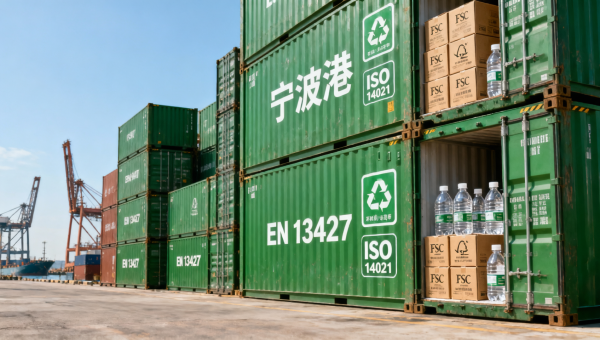
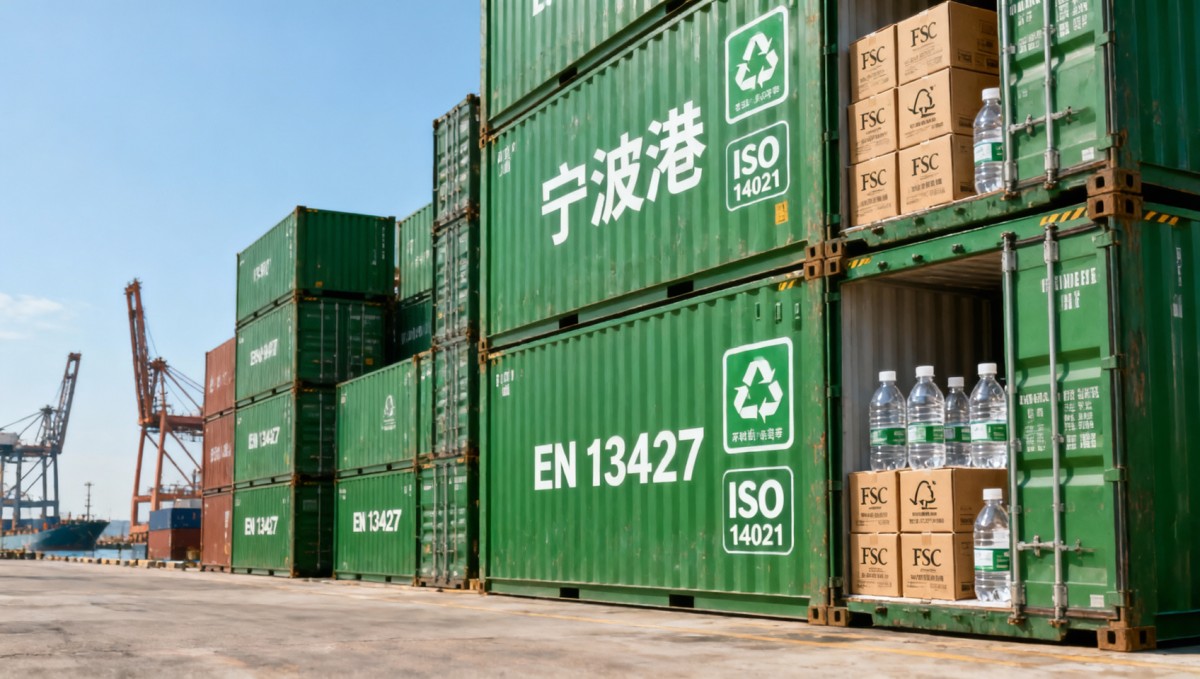
Starting May 16, 2026, Ningbo Port has initiated a pilot program—the ‘Green Clearance Channel for Cosmetics Packaging’—jointly implemented by Ningbo Customs and SGS China. The initiative targets exporters of environmentally compliant packaging materials for cosmetics, aiming to accelerate customs release and alleviate seasonal delivery pressures across global supply chains.
Event Overview
Ningbo Customs and SGS China launched the pilot on May 16, 2026. For cosmetic packaging meeting EN 13427 or ISO 14021 standards—including post-consumer recycled (PCR) plastic bottles, FSC-certified paper boxes, and water-based ink printed items—customs clearance is granted immediately upon submission of a valid SGS environmental compliance test report. Average clearance time has been reduced to 3.2 hours. The channel covers approximately 76% of China’s export-oriented cosmetics packaging production capacity.
Industries Affected
Direct Trading Enterprises
Exporters and brand-owned trading arms handling finished packaging units are directly impacted: faster clearance reduces demurrage, lowers logistics overhead, and improves on-time delivery performance—especially critical during peak seasons (e.g., Q3–Q4 holiday campaigns). However, eligibility requires upfront investment in third-party verification, shifting part of compliance cost from customs processing to pre-shipment testing.
Raw Material Procurement Enterprises
Suppliers sourcing PCR resins, certified pulp, or water-based inks face heightened traceability and documentation demands. Buyers now routinely require batch-level conformity evidence aligned with EN 13427/ISO 14021—not just supplier declarations. This elevates due diligence expectations and may compress margins for suppliers lacking integrated certification support.
Manufacturing Enterprises
OEM/ODM packaging producers must align internal quality control protocols with SGS test parameters—particularly for PCR content quantification, heavy metal migration limits, and ink VOC profiles. Facilities without in-house labs or certified sampling procedures may experience delays in report turnaround, offsetting the channel’s time savings unless process integration is prioritized.
Supply Chain Service Providers
Freight forwarders and customs brokers supporting cosmetics packaging exports must update their advisory frameworks: verifying report validity (issue date, scope coverage, accreditation status), confirming alignment between declared materials and tested samples, and managing client expectations around documentation readiness. Those offering bundled SGS coordination services gain competitive differentiation.
Key Considerations and Recommended Actions
Verify Standard Alignment Early
Confirm whether existing packaging designs—and associated material declarations—fully satisfy EN 13427 (for packaging recovery) and ISO 14021 (for environmental claims). Minor deviations (e.g., non-FSC auxiliary labels or mixed-ink substrates) may invalidate eligibility despite functional compliance.
Prioritize SGS Engagement in Pre-Production
Engage SGS at the prototype or BOM finalization stage—not post-production—to avoid rework. Request test plans covering all regulated components (e.g., bottle body + cap + sleeve), as composite items require holistic assessment under the channel’s current protocol.
Map Coverage Gaps Across Production Bases
While the channel covers 76% of national export capacity, that figure reflects aggregate volume—not geographic or facility-level inclusion. Exporters operating multiple plants should audit each site’s eligibility separately, especially those using non-standard PCR blends or regional paper certifications not recognized under FSC Chain-of-Custody rules.
Editorial Perspective / Industry Observation
Observably, this pilot signals a structural shift from *regulatory enforcement* toward *incentivized compliance*: rather than imposing new mandates, authorities are rewarding verifiable sustainability performance with tangible operational benefits. Analysis shows that such ‘green lanes’—when coupled with trusted third-party validation—can drive faster adoption of circular design principles than prescriptive bans alone. From an industry perspective, however, scalability hinges on harmonizing test criteria across ports; currently, only Ningbo offers this pathway, limiting its utility for multi-port exporters. Current more critical question is whether other major ports (e.g., Shanghai, Shenzhen) will adopt interoperable protocols—or risk fragmenting green trade facilitation.
Conclusion
This initiative marks a pragmatic step in aligning trade efficiency with environmental accountability—without sacrificing speed or predictability. It does not eliminate compliance complexity but redistributes it upstream, rewarding preparedness over reaction. For the cosmetics packaging sector, the broader significance lies less in the 3.2-hour clearance itself, and more in the precedent it sets: sustainability verification, once treated as a marketing add-on, is now becoming embedded in core trade infrastructure.
Source Attribution
Official announcement issued by Ningbo Customs (May 15, 2026); technical framework confirmed via SGS China press briefing (May 16, 2026). Pending clarification: formal expansion timeline beyond the pilot phase; acceptance criteria for non-SGS accredited labs; and integration with China’s upcoming Green Product Certification system (GB/T 33761–202X), expected for public consultation in Q3 2026.
Related Intelligence
 Skincare OEMAug 16, 2026Amazon Enforces AI Human Metadata Rule for Beauty and Personal Care SellersAmazon now enforces AI human metadata rules for beauty sellers. Learn how to protect listings, traffic, and compliance in skincare, cosmetics, and beauty devices.
 Beauty DevicesAug 15, 2026China to Roll Out Nationwide Cross-Border Cash Pooling for MultinationalsChina to roll out nationwide cross-border cash pooling for multinationals from Sept. 14. Discover how this policy could improve treasury efficiency, liquidity management, and China-linked supply chains.
 Beauty DevicesAug 14, 2026China Imposes Temporary Export Ban on Helium, Affecting Cooling Supply ChainsChina's temporary helium export ban may disrupt cooling supply chains for beauty RF devices and laser systems. Learn what ODMs, buyers, and procurement teams should check now.
![]() Cosmetics & PkgAug 13, 2026PPWR becomes mandatory: Beauty and personal care packaging materials usher in new EPR and PFAS compliance requirementsPPWR takes effect for cosmetics packaging in the EU, bringing EPR registration and PFAS limits. Learn what brands, importers, and suppliers must do now.
Cosmetics & PkgAug 13, 2026PPWR becomes mandatory: Beauty and personal care packaging materials usher in new EPR and PFAS compliance requirementsPPWR takes effect for cosmetics packaging in the EU, bringing EPR registration and PFAS limits. Learn what brands, importers, and suppliers must do now. Cosmetics & PkgAug 12, 2026EU PPWR Now Enforced for Beauty Packaging ComplianceEU PPWR now enforced for beauty packaging compliance: learn how EPR, ERN, heavy metals and PFAS rules affect EU exports, customs clearance and platform sales.
 Cosmetics & PkgAug 11, 2026EU PPWR Rules Take Effect on Aug. 12 for Beauty PackagingEU PPWR rules for beauty packaging take effect on Aug. 12, 2026. Learn key compliance steps, EPR, labeling, PFAS limits, and how to avoid customs delays and fines.
 Smart Pet DevicesAug 10, 2026EU EPR Rules to Cover Smart Pet Devices on Aug. 15EU EPR Rules will cover smart pet devices from Aug. 15, 2026. Learn how smart collars, feeders, and monitoring devices can avoid delisting, customs delays, and compliance risks in the EU.
 Infant Feeding & CareAug 09, 2026CPSC Recalls Baby Sleep Sacks Over Undeclared TDCPPCPSC Recalls Baby Sleep Sacks Over Undeclared TDCPP: learn how this 2026 recall impacts CPC documents, third-party testing, and U.S. baby product compliance for exporters.
 Infant Feeding & CareAug 08, 2026ECHA Adds 5 SVHCs, Importer Notices Due From Oct 2026ECHA adds 5 SVHCs to the Candidate List, with importer notices due from October 2026. Learn how REACH affects exporters, supply chains, and documentation readiness.
 Baby Gear & StrollersAug 07, 2026CPSC Revises Crib Rail Standard for November 2026CPSC revises crib rail standard for November 2026, adding dynamic impact tests and mandatory third-party lab testing. Learn how the new rule affects U.S. market access, compliance, and shipments.
 Electronic & RC ToysAug 06, 2026EU to Require EN IEC 62115:2025 for Electronic ToysEU to Require EN IEC 62115:2025 for Electronic Toys from Oct 1, 2026. Learn scope, battery and AI safety updates, CE compliance risks, and how exporters can avoid customs delays.
 Baby Gear & StrollersAug 05, 2026US Stroller Stability Rule Takes Effect Aug. 15US Stroller Stability Rule Takes Effect Aug. 15: learn how new U.S. stroller compliance, ASTM F833-26a, and CPSC testing rules may affect imports, certification, and shipment readiness.
 Infant Feeding & CareAug 04, 2026ECHA Adds 5 SVHCs, Triggering Baby Care Export ReviewECHA adds 5 SVHCs, prompting an urgent baby care export review for EU-bound products. Learn the 0.1% threshold risks, compliance steps, and how to avoid customs delays and fines.












