
Pet OEM Samples: What to Test Before Bulk Production
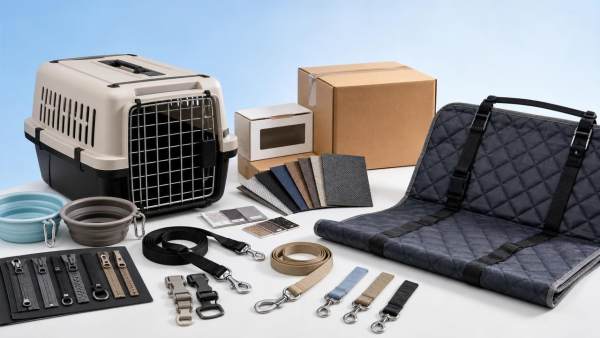
Before moving from prototype to mass production, pet OEM samples must be tested beyond appearance alone. In travel service retail, pet travel products face tougher real-world use.
A weak zipper, unsafe fabric, or poor packaging can damage customer trust fast. This guide explains how to evaluate pet OEM samples before bulk production with fewer surprises.
Why does pet OEM sample testing matter so much for travel-related products?
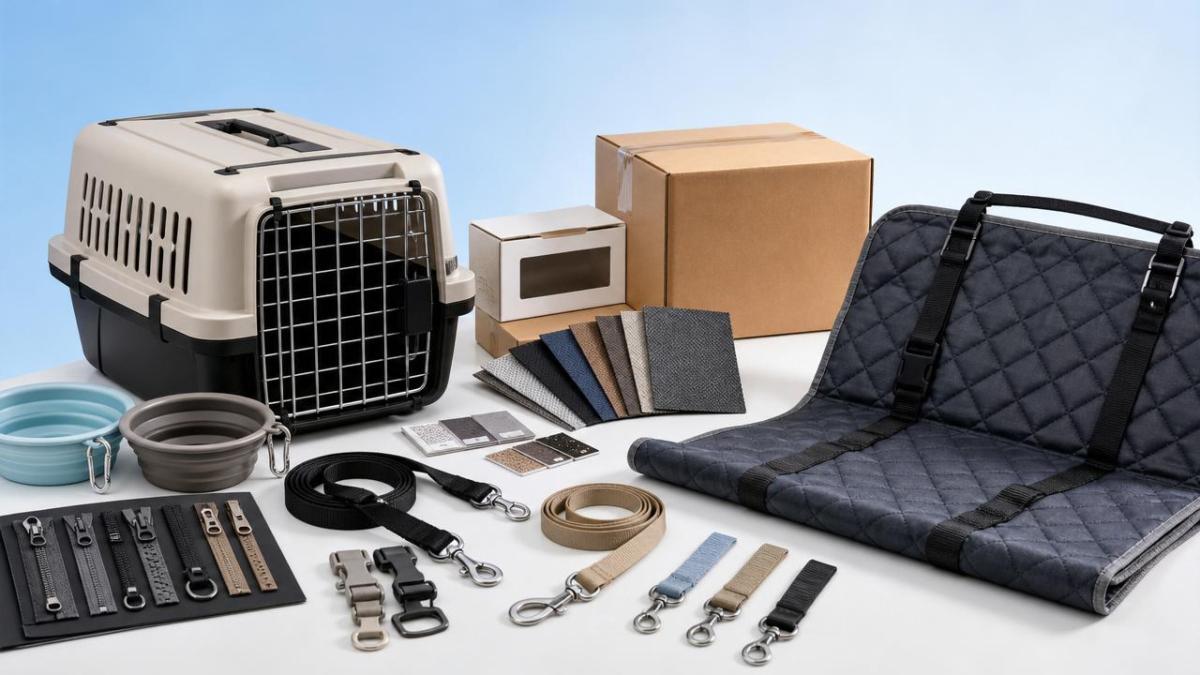
Travel service brands often sell carriers, collapsible bowls, car seat covers, leashes, and portable pet accessories. These items must survive transit, weather changes, and repeated packing.
That is why pet OEM sample approval should include usage simulation, safety review, and packaging checks. A visually attractive sample may still fail under airport, road trip, or hotel conditions.
Testing early helps reduce product returns, review complaints, and compliance setbacks. It also gives clearer evidence when comparing suppliers offering similar pet OEM capabilities.
What risks appear when sample checks are too superficial?
- Fabric odor or chemical residue causes customer rejection.
- Handles, seams, or clips fail during travel.
- Dimensions do not match airline or vehicle use expectations.
- Retail packaging collapses in cross-border shipping.
- Labeling misses care instructions or compliance information.
What should be tested first on a pet OEM sample?
Start with material safety and construction accuracy. For travel goods, direct contact materials matter because pets may lick, scratch, or rest on the surface for long periods.
1. Material identity and safety
Confirm whether the delivered material matches the approved specification. Check fabric weight, coating type, foam density, mesh strength, and hardware composition.
For pet OEM travel items, ask for restricted substance screening when needed. Strong odor is an early warning sign that requires closer review.
2. Dimensions and fit-for-use
Measure all critical dimensions against drawings and intended usage. A pet carrier that looks correct may still fail airline under-seat expectations.
Check fold size, handle drop, strap length, bowl volume, or leash extension range. Small size errors become major customer complaints in travel settings.
3. Visual and finishing quality
Review stitching consistency, edge finishing, logo placement, color matching, print clarity, and surface cleanliness. Quality defects often first appear around corners, seams, and closures.
How do you test durability for real travel scenarios?
Durability testing should reflect actual movement and pressure. A pet OEM sample for travel should be tested under repeated opening, loading, dragging, folding, and cleaning cycles.
Which practical tests are most useful?
- Load test handles, straps, and attachment points.
- Cycle zippers and buckles at least dozens of times.
- Fold and unfold portable products repeatedly.
- Perform abrasion checks on base panels and corners.
- Test water resistance if the product targets outdoor trips.
- Review washability and drying behavior after cleaning.
For carriers, place a weighted load inside and lift from different points. For travel mats or seat covers, test slipping, bunching, and coating wear after friction.
If the pet OEM product includes plastic parts, inspect stress whitening, cracking, or brittle feel. Temperature change can affect performance during air or road travel.
What is often missed during functional testing?
Noise, comfort, and user handling are often overlooked. Metal clips that rattle, mesh that collapses inward, or straps that twist can lower perceived quality quickly.
A pet OEM sample should feel easy to carry, store, clean, and reassemble. Convenience matters strongly for tourism-linked retail products.
How can compliance and labeling readiness be checked before mass production?
Compliance review should begin at sample stage, not after production planning. Waiting too long can trigger relabeling costs, shipment holds, or market access problems.
Which compliance points deserve early attention?
Check the product category, target market, and claims first. A waterproof claim, eco claim, or travel safety claim may need support or careful wording.
- Country-of-origin marking
- Fiber or material labeling where required
- Care instructions
- Warning statements for straps, buckles, or small parts
- Barcode readability and packaging traceability
For pet OEM items sold across travel channels, packaging copy should also be checked for space limits, multilingual needs, and retail shelf clarity.
Why does documentation matter even at sample stage?
A sample should connect to a clear specification sheet. Without records for material, color code, dimensions, and test notes, later bulk consistency becomes difficult.
Strong pet OEM documentation also helps future audits, complaint tracing, and supplier communication when adjustments are required.
What packaging tests help protect pet OEM goods during travel retail distribution?
Packaging is part of product performance. For travel service sales, products may move through e-commerce parcels, airport retail handling, hotel gift shops, and international freight.
A pet OEM sample should therefore be reviewed with its actual inner pack, barcode placement, polybag warning text, carton structure, and drop resistance.
What should be checked on packaging samples?
- Product fit inside the package without crushing
- Color box strength and print rub resistance
- Master carton sealing and stacking stability
- Moisture protection for fabric or paper components
- Scan success for labels after transit simulation
If the product is vacuum packed or folded tightly, reopen and inspect shape recovery. Poor recovery can make a good pet OEM item look cheap on arrival.
How do you compare samples and decide if a pet OEM supplier is ready for bulk production?
Use a structured scorecard instead of relying on first impressions. This makes sample comparison more objective and reduces bias from price or presentation alone.
Decision-making should consider sample consistency too. If repeat samples vary in color, finish, or dimensions, bulk production control may also be unstable.
What final questions should be answered before approval?
- Did the pet OEM sample pass key safety and use tests?
- Are all corrections documented with revised references?
- Does packaging support the intended travel retail channel?
- Are compliance and labeling risks understood early?
- Can the same quality be repeated at production scale?
Testing pet OEM samples thoroughly is not just a factory step. It is a protection layer for brand reputation, traveler satisfaction, and smoother global retail execution.
For travel-oriented pet goods, the best sample is not the prettiest one. It is the one that proves safety, durability, compliance readiness, and packaging resilience.
Before placing a bulk order, build a simple approval checklist, record every deviation, and request corrected samples when necessary. That process can save time, cost, and customer trust later.
Related Intelligence
 Skincare OEMAug 16, 2026Amazon Enforces AI Human Metadata Rule for Beauty and Personal Care SellersAmazon now enforces AI human metadata rules for beauty sellers. Learn how to protect listings, traffic, and compliance in skincare, cosmetics, and beauty devices.
 Beauty DevicesAug 15, 2026China to Roll Out Nationwide Cross-Border Cash Pooling for MultinationalsChina to roll out nationwide cross-border cash pooling for multinationals from Sept. 14. Discover how this policy could improve treasury efficiency, liquidity management, and China-linked supply chains.
 Beauty DevicesAug 14, 2026China Imposes Temporary Export Ban on Helium, Affecting Cooling Supply ChainsChina's temporary helium export ban may disrupt cooling supply chains for beauty RF devices and laser systems. Learn what ODMs, buyers, and procurement teams should check now.
![]() Cosmetics & PkgAug 13, 2026PPWR becomes mandatory: Beauty and personal care packaging materials usher in new EPR and PFAS compliance requirementsPPWR takes effect for cosmetics packaging in the EU, bringing EPR registration and PFAS limits. Learn what brands, importers, and suppliers must do now.
Cosmetics & PkgAug 13, 2026PPWR becomes mandatory: Beauty and personal care packaging materials usher in new EPR and PFAS compliance requirementsPPWR takes effect for cosmetics packaging in the EU, bringing EPR registration and PFAS limits. Learn what brands, importers, and suppliers must do now. Cosmetics & PkgAug 12, 2026EU PPWR Now Enforced for Beauty Packaging ComplianceEU PPWR now enforced for beauty packaging compliance: learn how EPR, ERN, heavy metals and PFAS rules affect EU exports, customs clearance and platform sales.
 Cosmetics & PkgAug 11, 2026EU PPWR Rules Take Effect on Aug. 12 for Beauty PackagingEU PPWR rules for beauty packaging take effect on Aug. 12, 2026. Learn key compliance steps, EPR, labeling, PFAS limits, and how to avoid customs delays and fines.
 Smart Pet DevicesAug 10, 2026EU EPR Rules to Cover Smart Pet Devices on Aug. 15EU EPR Rules will cover smart pet devices from Aug. 15, 2026. Learn how smart collars, feeders, and monitoring devices can avoid delisting, customs delays, and compliance risks in the EU.
 Infant Feeding & CareAug 09, 2026CPSC Recalls Baby Sleep Sacks Over Undeclared TDCPPCPSC Recalls Baby Sleep Sacks Over Undeclared TDCPP: learn how this 2026 recall impacts CPC documents, third-party testing, and U.S. baby product compliance for exporters.
 Infant Feeding & CareAug 08, 2026ECHA Adds 5 SVHCs, Importer Notices Due From Oct 2026ECHA adds 5 SVHCs to the Candidate List, with importer notices due from October 2026. Learn how REACH affects exporters, supply chains, and documentation readiness.
 Baby Gear & StrollersAug 07, 2026CPSC Revises Crib Rail Standard for November 2026CPSC revises crib rail standard for November 2026, adding dynamic impact tests and mandatory third-party lab testing. Learn how the new rule affects U.S. market access, compliance, and shipments.
 Electronic & RC ToysAug 06, 2026EU to Require EN IEC 62115:2025 for Electronic ToysEU to Require EN IEC 62115:2025 for Electronic Toys from Oct 1, 2026. Learn scope, battery and AI safety updates, CE compliance risks, and how exporters can avoid customs delays.
 Baby Gear & StrollersAug 05, 2026US Stroller Stability Rule Takes Effect Aug. 15US Stroller Stability Rule Takes Effect Aug. 15: learn how new U.S. stroller compliance, ASTM F833-26a, and CPSC testing rules may affect imports, certification, and shipment readiness.
 Infant Feeding & CareAug 04, 2026ECHA Adds 5 SVHCs, Triggering Baby Care Export ReviewECHA adds 5 SVHCs, prompting an urgent baby care export review for EU-bound products. Learn the 0.1% threshold risks, compliance steps, and how to avoid customs delays and fines.












