
How to Evaluate Wholesale Essential Oils for Private Label Travel Kits
How to Evaluate Wholesale Essential Oils for Private Label Travel Kits
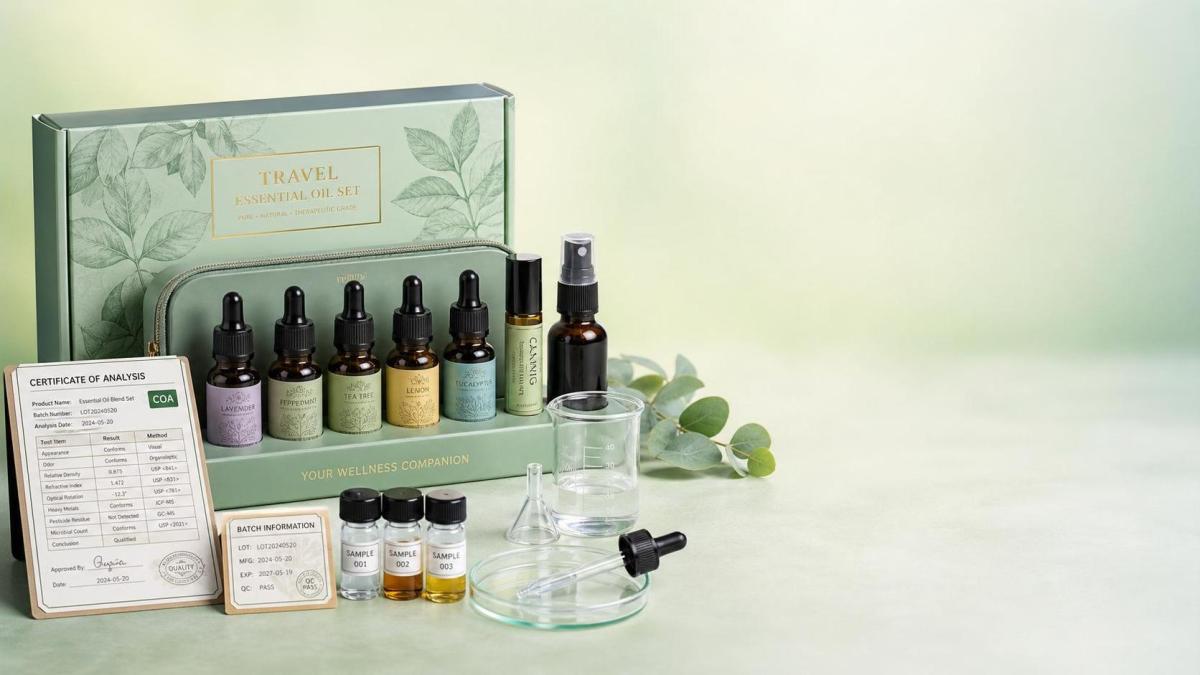
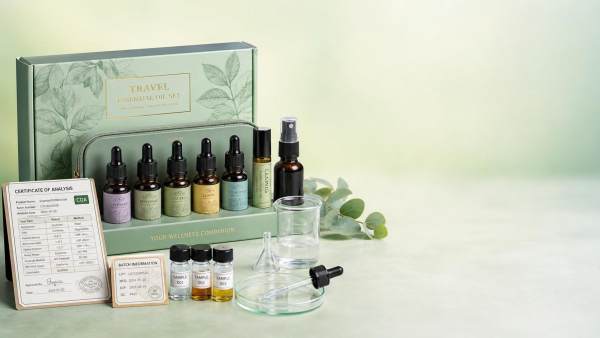
For travel kits, small details shape the whole customer experience. Scent, texture, leakage risk, and labeling accuracy all influence how a product is judged.
That is why choosing wholesale essential oils is not only about price. It is a sourcing decision tied to safety, positioning, and long-term supplier reliability.
In practical terms, travel formats create extra pressure. Oils must stay stable in smaller packs, survive transit, and still support a strong brand story.
This also means buyers need a sharper review method. A basic sample check is rarely enough when private label travel kits must meet retail and compliance expectations.
A better approach is to evaluate wholesale essential oils across six areas: purity, compliance, packaging fit, supplier consistency, commercial terms, and end-use performance.
Start with product-market fit, not just fragrance appeal
Many teams begin with scent preference. That is understandable, but it can lead to weak private label choices.
First define the travel kit use case. Is the kit designed for sleep support, stress relief, jet lag recovery, spa gifting, or wellness amenities?
From recent market shifts, blends with a clear scenario often perform better than generic wellness claims. Consumers want a reason to use the product immediately.
When reviewing wholesale essential oils, match each oil to the kit format. Roll-ons, pillow sprays, balms, and mini dropper bottles all require different performance checks.
- Lavender may suit sleep kits, but oxidation stability still matters.
- Peppermint may fit refresh kits, but skin sensitivity risk must be reviewed.
- Citrus oils can feel travel-friendly, but phototoxicity may affect formulation decisions.
This early filter saves time later. It helps narrow wholesale essential oils to options that are commercially usable, not only pleasant during sampling.
Verify purity with documents, testing, and traceability
Purity is one of the biggest decision points. A polished brochure cannot replace technical proof.
Reliable wholesale essential oils should come with a Certificate of Analysis, GC-MS data when relevant, batch numbers, and origin details.
Ask whether the oil is 100% pure, blended, diluted, or standardized. These differences affect claims, formulation cost, and label transparency.
In actual sourcing work, vague phrases like “premium grade” or “therapeutic quality” should trigger more questions. They sound attractive, but they are not technical standards.
Key purity checks
- Request recent batch-specific testing, not a generic library report.
- Confirm botanical name, extraction method, and country of origin.
- Check whether carrier oils or synthetic fragrance components are present.
- Review shelf life, storage guidance, and oxidation indicators.
- Ask how nonconforming batches are isolated and replaced.
If the supplier cannot explain batch variation clearly, the risk increases. This becomes critical when wholesale essential oils are used across repeat production runs.
Review compliance requirements for every target market
Travel kits often cross borders faster than standard beauty products. That makes compliance review more important, not less.
The same wholesale essential oils may face different labeling, safety, and transportation expectations depending on destination markets and product format.
Suppliers should provide documentation that supports cosmetic, wellness, or household positioning, depending on intended use. Claims and category definitions must stay aligned.
More telling still is how a supplier handles restricted substances, allergen declarations, and transportation paperwork for flammable or sensitive materials.
For private label travel kits, compliance gaps usually surface late and cost more to fix. Early document review reduces painful relabeling and shipment delays.
Test packaging compatibility under real travel conditions
This step is often underestimated. Some wholesale essential oils behave well in bulk, then fail in finished travel packaging.
Essential oils can interact with closures, liners, droppers, rollers, and printed labels. Even a small leak can damage the entire kit presentation.
That is why packaging trials should reflect actual transit and usage conditions. Heat, vibration, pressure change, and repeated opening all matter.
What to test before approval
- Leak resistance after vibration and inverted storage.
- Cap torque stability after repeated opening cycles.
- Formula reaction with plastic, rubber, and metal parts.
- Label adhesion after temperature swings and handling.
- Scent retention after short-term travel simulation.
If a supplier offers wholesale essential oils but avoids compatibility testing support, that is worth noting. Strong partners understand finished product risk, not just raw material supply.
Assess supplier consistency beyond the first sample
A good sample is only the beginning. The real question is whether the same quality can be delivered six months later at scale.
With wholesale essential oils, crop cycles, regional weather, extraction practices, and storage conditions can all create variation.
This is where supplier management becomes more strategic. Ask how they control sourcing continuity and how they communicate changes before shipment.
- Do they hold buffer stock for key oils?
- Can they maintain aroma profile targets across batches?
- Do they document harvest and production timing?
- How fast do they respond to quality claims?
More mature suppliers of wholesale essential oils usually offer clearer forecasting support, stronger corrective action records, and better communication during volatility.
Compare commercial terms with total cost in mind
Low unit cost can be misleading. For travel kits, total sourcing cost includes much more than the oil price.
When comparing wholesale essential oils, factor in minimum order quantity, lead time, sample charges, testing fees, packaging loss, and replacement policy.
A slightly higher quote may still be the better option if it reduces failures, shortens launch timelines, or supports cleaner private label execution.
Questions that sharpen cost evaluation
- Is the MOQ realistic for seasonal or pilot travel kits?
- Are price breaks tied to stable specifications?
- Who pays for failed batches or transit leakage?
- Can the supplier support mixed-SKU planning?
- What is the backup plan during raw material shortages?
In many buying decisions, the cheapest wholesale essential oils create the highest hidden cost. Rework, complaints, and delays can erase early savings quickly.
Use a practical scorecard before final selection
A structured scorecard makes cross-supplier decisions easier. It also helps internal teams align faster when several stakeholders influence final approval.
For wholesale essential oils, score each supplier against technical quality, compliance readiness, packaging performance, service response, and commercial flexibility.
Weight the criteria based on launch risk. If the travel kit is entering premium retail, consistency and documentation may matter more than the lowest quoted cost.
A simple model often works best because it keeps decisions actionable.
- 25% purity and technical validation
- 20% compliance and documentation readiness
- 20% packaging and travel performance
- 20% supply consistency and communication
- 15% pricing and commercial terms
This kind of system turns wholesale essential oils evaluation into a repeatable process. It also creates a stronger record for future audits and supplier reviews.
Final decision: choose the supplier that reduces risk and supports growth
The best wholesale essential oils are not simply the most fragrant or the cheapest. They are the ones that perform reliably inside a complete private label system.
That system includes compliant documentation, stable quality, packaging compatibility, realistic MOQs, and dependable communication.
For travel kits, this matters even more because small-format products face tight space limits, higher handling risk, and stronger first-use expectations.
A disciplined review process helps avoid common sourcing mistakes. It also makes it easier to launch collections that feel polished, safe, and worth reordering.
When evaluating wholesale essential oils next time, build the shortlist around proof, performance, and repeatability. That is usually where the strongest private label results begin.
Related Intelligence
 Skincare OEMAug 16, 2026Amazon Enforces AI Human Metadata Rule for Beauty and Personal Care SellersAmazon now enforces AI human metadata rules for beauty sellers. Learn how to protect listings, traffic, and compliance in skincare, cosmetics, and beauty devices.
 Beauty DevicesAug 15, 2026China to Roll Out Nationwide Cross-Border Cash Pooling for MultinationalsChina to roll out nationwide cross-border cash pooling for multinationals from Sept. 14. Discover how this policy could improve treasury efficiency, liquidity management, and China-linked supply chains.
 Beauty DevicesAug 14, 2026China Imposes Temporary Export Ban on Helium, Affecting Cooling Supply ChainsChina's temporary helium export ban may disrupt cooling supply chains for beauty RF devices and laser systems. Learn what ODMs, buyers, and procurement teams should check now.
![]() Cosmetics & PkgAug 13, 2026PPWR becomes mandatory: Beauty and personal care packaging materials usher in new EPR and PFAS compliance requirementsPPWR takes effect for cosmetics packaging in the EU, bringing EPR registration and PFAS limits. Learn what brands, importers, and suppliers must do now.
Cosmetics & PkgAug 13, 2026PPWR becomes mandatory: Beauty and personal care packaging materials usher in new EPR and PFAS compliance requirementsPPWR takes effect for cosmetics packaging in the EU, bringing EPR registration and PFAS limits. Learn what brands, importers, and suppliers must do now. Cosmetics & PkgAug 12, 2026EU PPWR Now Enforced for Beauty Packaging ComplianceEU PPWR now enforced for beauty packaging compliance: learn how EPR, ERN, heavy metals and PFAS rules affect EU exports, customs clearance and platform sales.
 Cosmetics & PkgAug 11, 2026EU PPWR Rules Take Effect on Aug. 12 for Beauty PackagingEU PPWR rules for beauty packaging take effect on Aug. 12, 2026. Learn key compliance steps, EPR, labeling, PFAS limits, and how to avoid customs delays and fines.
 Smart Pet DevicesAug 10, 2026EU EPR Rules to Cover Smart Pet Devices on Aug. 15EU EPR Rules will cover smart pet devices from Aug. 15, 2026. Learn how smart collars, feeders, and monitoring devices can avoid delisting, customs delays, and compliance risks in the EU.
 Infant Feeding & CareAug 09, 2026CPSC Recalls Baby Sleep Sacks Over Undeclared TDCPPCPSC Recalls Baby Sleep Sacks Over Undeclared TDCPP: learn how this 2026 recall impacts CPC documents, third-party testing, and U.S. baby product compliance for exporters.
 Infant Feeding & CareAug 08, 2026ECHA Adds 5 SVHCs, Importer Notices Due From Oct 2026ECHA adds 5 SVHCs to the Candidate List, with importer notices due from October 2026. Learn how REACH affects exporters, supply chains, and documentation readiness.
 Baby Gear & StrollersAug 07, 2026CPSC Revises Crib Rail Standard for November 2026CPSC revises crib rail standard for November 2026, adding dynamic impact tests and mandatory third-party lab testing. Learn how the new rule affects U.S. market access, compliance, and shipments.
 Electronic & RC ToysAug 06, 2026EU to Require EN IEC 62115:2025 for Electronic ToysEU to Require EN IEC 62115:2025 for Electronic Toys from Oct 1, 2026. Learn scope, battery and AI safety updates, CE compliance risks, and how exporters can avoid customs delays.
 Baby Gear & StrollersAug 05, 2026US Stroller Stability Rule Takes Effect Aug. 15US Stroller Stability Rule Takes Effect Aug. 15: learn how new U.S. stroller compliance, ASTM F833-26a, and CPSC testing rules may affect imports, certification, and shipment readiness.
 Infant Feeding & CareAug 04, 2026ECHA Adds 5 SVHCs, Triggering Baby Care Export ReviewECHA adds 5 SVHCs, prompting an urgent baby care export review for EU-bound products. Learn the 0.1% threshold risks, compliance steps, and how to avoid customs delays and fines.












