
How to Evaluate Toy Inspection Standards Before Sourcing
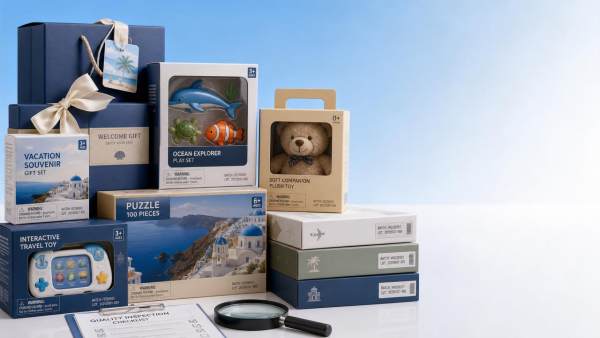
Before committing to a supplier, procurement teams need a clear framework for assessing toy inspection standards. From material safety and age grading to lab testing and regulatory compliance, effective toy inspection can prevent costly recalls and protect brand reputation. This guide explains what buyers should verify before sourcing, helping you compare manufacturers with greater confidence and reduce supply chain risk.
For travel service buyers, the stakes are often higher than in standard retail. Toys sold or distributed through resorts, family tour operators, airport gift shops, cruise programs, museum stores, and holiday destination retailers are closely linked to guest experience, child safety, and public brand trust.
A single failure in toy inspection can trigger complaints across multiple markets within 24–72 hours, especially when travelers post incidents online in real time. That is why procurement teams in tourism-related sourcing need a practical, repeatable evaluation model before approving any OEM or ODM toy supplier.
Why Toy Inspection Matters in Travel Service Procurement
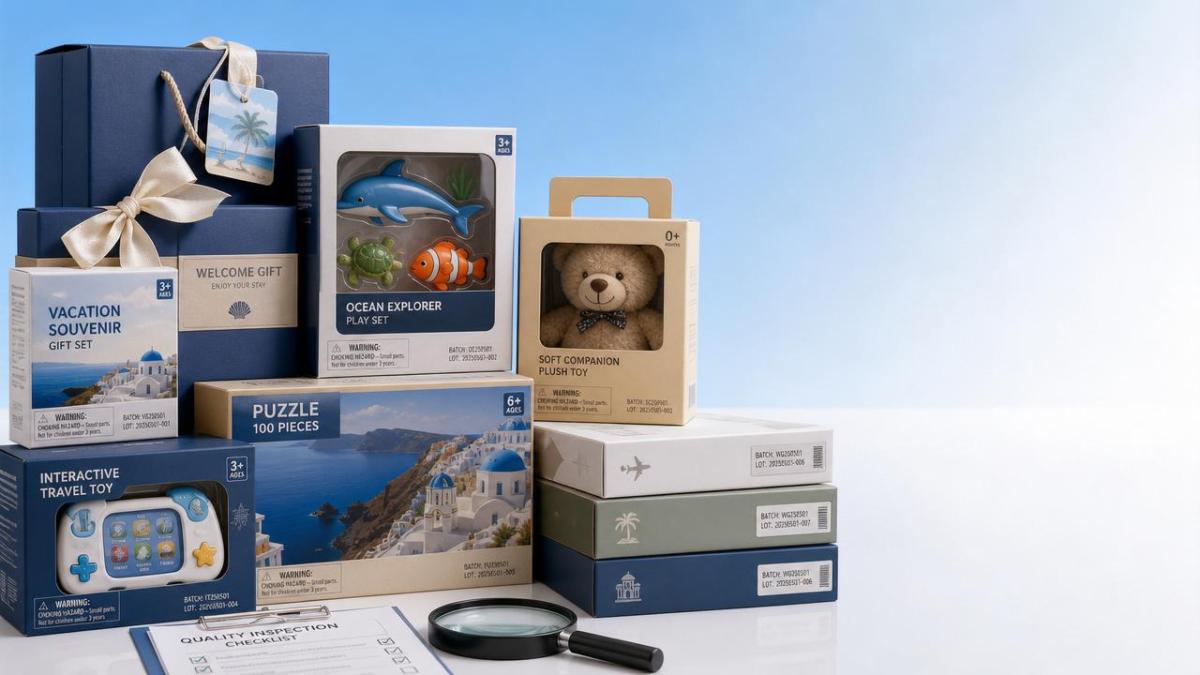
In travel service settings, toys are rarely isolated products. They are often bundled into welcome kits, kids’ club programs, seasonal promotions, theme-based excursions, or destination souvenir assortments. This means toy inspection affects not only compliance, but also customer satisfaction, incident response, and operational continuity.
Procurement teams typically evaluate price, lead time, and packaging first. However, for toys intended for child-facing tourism environments, at least 4 additional filters should come earlier: material safety, mechanical hazard control, age grading accuracy, and traceable test documentation.
Common risk scenarios in tourism channels
A hotel gift shop may reorder fast-moving items every 30–45 days. A cruise operator may load toy inventory for 2–6 week voyages. A theme resort may distribute promotional toys to hundreds of children during peak holiday periods. In each case, a defect can affect many guests before the issue is detected.
- Loose small parts in toys marketed to children under 3 years old
- Sharp edges created after drop impact during luggage or transit handling
- Paint or coating issues that raise chemical compliance concerns
- Incorrect warning labels for multilingual tourist environments
- Battery compartment weaknesses in interactive travel toys
Why travel-related buyers need a stricter threshold
Unlike single-market retail, travel service distribution can expose one SKU to customers from 10 or more countries in one location. A family resort in Europe, for example, may serve guests from the EU, UK, US, Middle East, and Asia in the same week. That raises the importance of toy inspection standards aligned with destination rules and source-market expectations.
The table below shows how inspection priorities shift when toys are sourced for tourism channels instead of ordinary domestic retail.
The key takeaway is clear: toy inspection in travel service procurement should be tied to usage context, not only to factory claims. A supplier that performs well for basic shelf retail may still fail under tourism-specific handling, guest interaction, or multilingual labeling demands.
Core Toy Inspection Standards Buyers Should Verify Before Sourcing
Before placing a trial order or approving a seasonal launch, buyers should confirm whether the supplier’s toy inspection process covers both product safety and commercial usability. In practical sourcing terms, this means reviewing 5 core areas before moving to mass production.
1. Material safety and restricted substances
Material checks are the first gate. Procurement teams should ask what plastics, coatings, inks, textiles, adhesives, and fillings are used. For travel service channels that serve children under 8, toy inspection should include documentation for chemical safety and consistency across color variants and production batches.
If the item is a souvenir plush, beach toy, puzzle, or handheld game, verify whether the same bill of materials is used in all SKUs. A supplier may pass one sample but substitute another component later. That is why batch-level control matters as much as pre-shipment testing.
2. Age grading and hazard alignment
Age grading cannot be treated as packaging text only. It should match product design, size, function, and foreseeable use. For example, a toy labeled 3+ but displayed in a toddler-friendly resort zone creates a practical risk, even if the legal label exists.
Ask suppliers to explain how age grading was determined and whether warning statements are aligned with destination market rules. Buyers should also review whether components can detach under drop, bite, twist, or pull stress during ordinary guest use.
3. Mechanical and physical safety checks
For tourism use, toys often face rougher handling than standard home use. They may be packed into luggage, exposed to poolside humidity, opened quickly by excited children, or shared in kids’ activity areas. A robust toy inspection program should therefore include pull tests, tension checks, seam review, edge assessment, and drop-related observations.
4. Labeling, instructions, and traceability
Travel service buyers should verify at least 3 labeling layers: consumer-facing warning language, outer carton traceability, and internal batch identification. When inventory moves across warehouses, resorts, and concession partners, the ability to isolate one batch within hours is a major risk-control advantage.
5. Lab testing and market-specific compliance readiness
Toy inspection standards vary by destination market, but procurement teams should expect the supplier to understand the target compliance path before production begins. If a supplier waits until finished goods are ready, failed testing can delay launch by 2–4 weeks and create urgent airfreight costs or canceled promotions.
The table below can be used as a quick supplier screening checklist during the quotation and sampling stage.
A supplier that answers these questions clearly is usually more reliable than one that offers only low prices and fast promises. In toy inspection, documentation quality often predicts execution quality.
How to Compare Suppliers Using a Practical Inspection Framework
Many procurement teams have access to similar catalogs from multiple factories, but struggle to compare them on risk. A workable method is to score each supplier across 6 categories, assign weighted importance, and require evidence for every score above a defined threshold.
Build a 6-point supplier review model
- Material transparency and consistency
- In-house quality control capability
- Third-party lab coordination speed
- Market-specific compliance understanding
- Packaging and labeling accuracy
- Corrective action response time after nonconformity
For travel service sourcing, some buyers assign 25% of the score to safety and compliance, 20% to inspection discipline, 15% to packaging traceability, 15% to lead-time stability, 15% to communication quality, and 10% to commercial terms. The exact weighting can vary by channel and season.
Questions that reveal real inspection maturity
Instead of asking, “Do you do toy inspection?” ask process-based questions. For example: At which stage do you inspect first articles? How many checkpoints exist between raw material intake and final carton sealing? How long does corrective action take after a failed result? Precise answers are more valuable than broad assurances.
A mature supplier can usually explain a 3-stage or 4-stage inspection sequence, identify decision owners, and share sample records. If the response remains vague after two rounds of discussion, buyers should treat that as a commercial risk signal.
Evaluate sample quality against destination use
Sample review should simulate travel service conditions, not just office handling. Procurement teams can perform basic screening in 1–2 days by checking packaging scuff resistance, closure stability, odor, print adhesion, accessory attachment, and ease of re-shelving after customer interaction.
If toys will be sold in beach resorts, water-adjacent handling may matter. If they are distributed on long-haul tours, compactness and pack durability become more relevant. Effective toy inspection begins with the final use environment, then works backward to the factory process.
Inspection Timing, Documentation, and Ongoing Risk Control
Even strong products can fail if inspection happens too late. Procurement teams should map toy inspection into the sourcing timeline from sample approval to shipment release. In most projects, 4 checkpoints create a safer structure than relying on final inspection alone.
Recommended inspection checkpoints
- Pre-production review before raw material commitment
- Initial production check after first output units
- During-production inspection at roughly 20%–50% completion
- Final random inspection before shipment release
For seasonal travel programs, this sequence reduces the chance of discovering a major issue only days before departure, hotel opening, or destination retail launch. It also gives buyers time to decide whether to rework, relabel, retest, or split the shipment.
Documents procurement teams should collect
At minimum, keep approved artwork files, packaging specifications, bill of materials summary, inspection criteria, testing plan, and batch traceability records. For larger travel service groups managing multiple destinations, digital filing by SKU and supplier can shorten response time from several days to a few hours during an incident review.
Common mistakes that increase sourcing risk
One common mistake is approving inspection only after commercial negotiation ends. Another is assuming that previous test reports automatically cover new colors, accessories, packaging formats, or destination languages. A third is skipping revalidation on repeat orders after 6–12 months, even when material sources may have changed.
For procurement teams under deadline pressure, the most effective safeguard is a written approval gate. No shipment should move until toy inspection results, labeling review, and batch traceability checks are complete and internally signed off.
What GCS-Oriented Buyers Should Prioritize Before the First Order
For buyers using Global Consumer Sourcing intelligence to identify toy suppliers, the best sourcing outcomes usually come from disciplined prequalification. Rather than evaluating 20 factories at a shallow level, reduce the list to 3–5 viable candidates and compare them on evidence, not presentation quality.
In tourism-driven buying cycles, speed matters, but inspection discipline matters more. A supplier that needs 7 extra days to complete clear toy inspection checks may still be a better long-term partner than one that moves quickly without batch control, test readiness, or packaging traceability.
Pre-order checklist for procurement teams
- Confirm target markets and destination use scenarios before quotation
- Request toy inspection workflow details during supplier onboarding
- Align age grading, warnings, and packaging language before sampling
- Set 4 inspection checkpoints in the production calendar
- Require batch traceability for all child-facing SKUs
- Plan contingency time of 1–2 weeks for retest or corrective action
A reliable toy inspection strategy protects more than the product itself. It protects guest trust, destination reputation, retail continuity, and future contract value. For tourism procurement teams, that makes inspection a commercial decision, not just a compliance task.
If your team is reviewing toy suppliers for resorts, cruise retail, airport stores, family tour programs, or destination gift channels, use these checkpoints to build a more defensible sourcing process. To explore tailored supplier evaluation support, compliance-focused sourcing insights, or category-specific buying guidance, contact us today and get a more informed plan before your next order.
Related Intelligence
 Skincare OEMAug 16, 2026Amazon Enforces AI Human Metadata Rule for Beauty and Personal Care SellersAmazon now enforces AI human metadata rules for beauty sellers. Learn how to protect listings, traffic, and compliance in skincare, cosmetics, and beauty devices.
 Beauty DevicesAug 15, 2026China to Roll Out Nationwide Cross-Border Cash Pooling for MultinationalsChina to roll out nationwide cross-border cash pooling for multinationals from Sept. 14. Discover how this policy could improve treasury efficiency, liquidity management, and China-linked supply chains.
 Beauty DevicesAug 14, 2026China Imposes Temporary Export Ban on Helium, Affecting Cooling Supply ChainsChina's temporary helium export ban may disrupt cooling supply chains for beauty RF devices and laser systems. Learn what ODMs, buyers, and procurement teams should check now.
![]() Cosmetics & PkgAug 13, 2026PPWR becomes mandatory: Beauty and personal care packaging materials usher in new EPR and PFAS compliance requirementsPPWR takes effect for cosmetics packaging in the EU, bringing EPR registration and PFAS limits. Learn what brands, importers, and suppliers must do now.
Cosmetics & PkgAug 13, 2026PPWR becomes mandatory: Beauty and personal care packaging materials usher in new EPR and PFAS compliance requirementsPPWR takes effect for cosmetics packaging in the EU, bringing EPR registration and PFAS limits. Learn what brands, importers, and suppliers must do now. Cosmetics & PkgAug 12, 2026EU PPWR Now Enforced for Beauty Packaging ComplianceEU PPWR now enforced for beauty packaging compliance: learn how EPR, ERN, heavy metals and PFAS rules affect EU exports, customs clearance and platform sales.
 Cosmetics & PkgAug 11, 2026EU PPWR Rules Take Effect on Aug. 12 for Beauty PackagingEU PPWR rules for beauty packaging take effect on Aug. 12, 2026. Learn key compliance steps, EPR, labeling, PFAS limits, and how to avoid customs delays and fines.
 Smart Pet DevicesAug 10, 2026EU EPR Rules to Cover Smart Pet Devices on Aug. 15EU EPR Rules will cover smart pet devices from Aug. 15, 2026. Learn how smart collars, feeders, and monitoring devices can avoid delisting, customs delays, and compliance risks in the EU.
 Infant Feeding & CareAug 09, 2026CPSC Recalls Baby Sleep Sacks Over Undeclared TDCPPCPSC Recalls Baby Sleep Sacks Over Undeclared TDCPP: learn how this 2026 recall impacts CPC documents, third-party testing, and U.S. baby product compliance for exporters.
 Infant Feeding & CareAug 08, 2026ECHA Adds 5 SVHCs, Importer Notices Due From Oct 2026ECHA adds 5 SVHCs to the Candidate List, with importer notices due from October 2026. Learn how REACH affects exporters, supply chains, and documentation readiness.
 Baby Gear & StrollersAug 07, 2026CPSC Revises Crib Rail Standard for November 2026CPSC revises crib rail standard for November 2026, adding dynamic impact tests and mandatory third-party lab testing. Learn how the new rule affects U.S. market access, compliance, and shipments.
 Electronic & RC ToysAug 06, 2026EU to Require EN IEC 62115:2025 for Electronic ToysEU to Require EN IEC 62115:2025 for Electronic Toys from Oct 1, 2026. Learn scope, battery and AI safety updates, CE compliance risks, and how exporters can avoid customs delays.
 Baby Gear & StrollersAug 05, 2026US Stroller Stability Rule Takes Effect Aug. 15US Stroller Stability Rule Takes Effect Aug. 15: learn how new U.S. stroller compliance, ASTM F833-26a, and CPSC testing rules may affect imports, certification, and shipment readiness.
 Infant Feeding & CareAug 04, 2026ECHA Adds 5 SVHCs, Triggering Baby Care Export ReviewECHA adds 5 SVHCs, prompting an urgent baby care export review for EU-bound products. Learn the 0.1% threshold risks, compliance steps, and how to avoid customs delays and fines.












