
Bottle Sterilizer OEM Checklist for Safe and Consistent Production
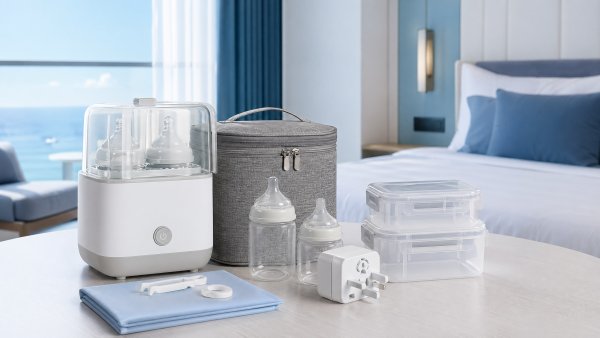
For quality control and safety managers, a reliable bottle sterilizer OEM partnership is essential to maintaining product safety, regulatory compliance, and batch-to-batch consistency. This checklist highlights the critical standards, factory capabilities, and verification points that help reduce production risks, strengthen supplier evaluation, and support safe, scalable manufacturing decisions.
Why does a bottle sterilizer OEM checklist matter so much for quality and safety teams?
For quality control professionals, a bottle sterilizer OEM project is not simply a sourcing task. It is a risk-control exercise that affects infant feeding safety, product liability exposure, after-sales claims, and retailer acceptance. In cross-border retail and travel-friendly baby care categories, even a small inconsistency in heating performance, drying temperature, or timer calibration can create product complaints across hundreds or thousands of units in a single batch.
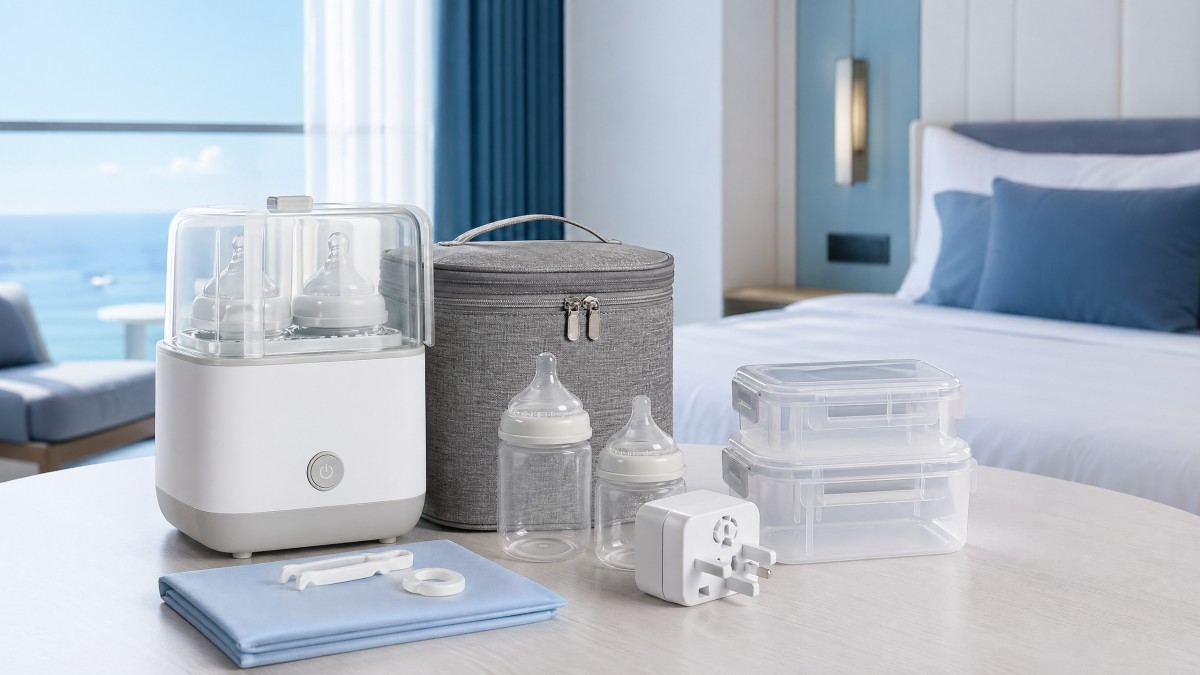
This becomes even more important when the end use includes travel service scenarios such as hotel family amenities, airport retail, resort baby-care kits, cruise gift packs, or portable products sold through duty-free and travel-accessory channels. In these settings, users expect compact design, predictable sterilization cycles, and safe operation under frequent packing and transport. A bottle sterilizer OEM must therefore be reviewed not only for manufacturing ability, but also for portability, voltage options, packaging resilience, and user safety communication.
A practical checklist helps teams move from vague supplier claims to measurable verification points. Instead of asking whether a factory is “experienced,” buyers can examine 8 to 12 concrete areas: material traceability, heating module validation, assembly line controls, electrical safety checks, aging tests, incoming inspection standards, final random sampling plans, and corrective action speed. This approach shortens supplier comparison time and improves internal approval quality.
What risks increase when the checklist is missing?
Without a structured bottle sterilizer OEM review, the most common problems appear late in the process. Teams often discover unstable boil times, inconsistent steam distribution, or packaging damage only after pilot shipment. Correcting these issues after tooling confirmation or after a 30 to 45 day production cycle can increase costs and delay launch windows tied to holiday travel, family tourism demand, or seasonal retail programs.
Another common issue is incomplete documentation. A supplier may provide general declarations, but fail to maintain lot-based records for heating elements, food-contact plastics, silicone components, power cords, or thermostat calibration. For safety managers, missing records weaken root-cause analysis and make it harder to respond within 24 to 72 hours when a retailer or distributor requests a corrective action report.
In travel service linked distribution channels, damage tolerance also matters. Portable bottle sterilizer models are often carried in luggage, used in hotels, or packed in compact family travel sets. If drop resistance, seal integrity, or accessory fit are not validated early, return rates can rise quickly even when the sterilization function itself is technically acceptable.
Core checkpoints quality teams should frame from day one
- Define target use conditions, including home use, travel use, hotel use, and regional voltage requirements such as 110V, 220V, or dual-voltage options.
- Confirm whether the bottle sterilizer OEM supports pilot runs of 100 to 500 units before larger orders of 3,000 to 10,000 units.
- Set measurable acceptance criteria for cycle time, shutoff reliability, odor control, material deformation, and user interface accuracy.
- Require documented CAPA procedures so nonconformities can be traced and closed within an agreed timeline.
What should you verify first when screening a bottle sterilizer OEM supplier?
The first review should focus on process capability rather than price. A strong bottle sterilizer OEM should be able to explain how product safety is built into design review, component approval, assembly, and final inspection. For quality managers, the early goal is to determine whether the supplier can consistently repeat the same output over multiple production runs, not just produce an acceptable sample once.
Start with the product structure. Ask how the unit generates sterilization conditions, how the heating chamber is controlled, how overheat protection is triggered, and how drying or storage functions are separated if the product is multi-functional. These details reveal whether the factory understands failure modes such as dry heating, residual water pooling, steam leakage, lid deformation, or unstable auto-off performance.
Then review factory readiness. A useful benchmark is whether the supplier has clear incoming quality control for plastic resin, heating components, wire assemblies, and food-contact parts; in-process checks every 1 to 2 hours; and final inspection sampling tied to documented defect categories. For OEM buyers serving travel retail or hospitality channels, carton labeling, multilingual manuals, and drop-test packaging are also early-screen topics.
Which supplier questions reveal real capability?
The most useful questions are operational. Ask how many process checkpoints exist between component preparation and packed goods, what percentage of units receive functional testing, and how temperature or timing consistency is verified during mass production. A capable bottle sterilizer OEM should answer with process details, tolerances, and records rather than only marketing language.
You should also ask how engineering changes are controlled. If a thermostat supplier, plastic grade, or cord assembly changes, what approval flow is triggered? Is there a golden sample update? Is there a re-validation requirement? These are especially important when the product is sold into travel service environments where compactness, foldability, or accessory integration can increase structural sensitivity.
Finally, ask how nonconforming finished goods are isolated. Good suppliers can explain quarantine procedures, rework limits, and traceability by date code or lot number. That level of discipline matters far more than a low opening quote.
Initial bottle sterilizer OEM screening checklist
The table below helps quality and safety teams compare early supplier readiness across the most relevant review points for travel-friendly consumer product programs.
This comparison format helps teams reject weak suppliers faster. If a bottle sterilizer OEM cannot provide objective evidence in these three basic areas, further price negotiation usually creates more risk than value.
Which certifications, tests, and production records deserve the closest review?
For safety managers, compliance review should be practical and product-specific. A bottle sterilizer OEM may mention broad regulatory familiarity, but the real question is whether the supplier can align materials, electrical structure, labeling, and testing with the destination market. Depending on channel and region, this may involve electrical safety expectations, food-contact material declarations, labeling rules, instruction manual clarity, and transport packaging suitability.
Production records deserve equal attention. In many factories, the gap is not testing capacity but record discipline. Ask to review incoming inspection logs, in-line inspection reports, final inspection summaries, aging test records, and calibration schedules for temperature-related equipment. If records are incomplete for the last 3 to 6 months, consistency in future mass production becomes harder to trust.
For travel service distribution, instructions and warnings should also be audited carefully. Portable appliances sold through travel retail, family hotels, and baby amenity programs often reach international users who need simple operating guidance. Poorly translated instructions or unclear water-fill limits can lead to misuse, overheating complaints, and preventable returns.
What documents should be on your review list?
- Bill of materials with version control and approval history for critical components.
- Material declarations or supplier statements for food-contact and heat-exposed parts.
- Electrical and functional test procedures, including pass/fail criteria and retest rules.
- Calibration records for test devices used every 6 to 12 months or according to internal procedure.
- Packaging test records for drop, compression, and transit simulation where relevant.
The following table can be used during supplier audits or desktop reviews to separate essential documentation from supporting records.
A bottle sterilizer OEM that maintains these records in a structured way is easier to audit, easier to improve, and safer to scale. Documentation quality often predicts how the supplier will behave when something goes wrong.
How can you judge batch-to-batch consistency before placing a large order?
Consistency is rarely proven by one sample. For a bottle sterilizer OEM, the better approach is staged validation. Begin with engineering samples, move to a pilot run, and only then approve volume production. A common flow is 2 to 3 sample rounds, followed by a pilot of several hundred units, then a first production order with enhanced inspection. This sequence gives quality teams time to identify drift in heating response, molding fit, and accessory alignment.
Ask the supplier to define critical-to-quality points in writing. For example, these may include cycle completion time range, lid locking performance, deformation threshold after repeated heat exposure, and leakage tolerance after transport simulation. In portable and travel-oriented versions, cable storage, compact folding parts, or carrying-case fit may also be critical-to-quality features.
Batch consistency should also include packaging and presentation. If the product is intended for tourism retail, hotels, maternity travel kits, or premium gift channels, visual consistency matters nearly as much as function. Carton color variation, accessory count errors, or inconsistent printed language can damage brand trust even when the unit works normally.
What production controls are worth asking about?
Ask whether key assembly steps are standardized with work instructions and whether operators receive refresher training every few months. Stable output usually depends on repeatable setup, fixture control, and clear reaction plans if defects rise above an internal threshold. If the supplier cannot explain escalation steps, consistency may depend too heavily on individual operator skill.
Another useful question is whether first-piece approval and hourly line checks are documented. On a line producing 500 to 1,500 units per day, even a short period of unmonitored drift can create a large defect cluster. Safety managers should also ask whether failed units are analyzed by defect category rather than simply reworked and repacked.
Before mass launch, request sealed retention samples from the pilot and first production batches. These samples are valuable for later complaint comparison, especially in travel service programs where products may be stored, shipped, and used across varying humidity and voltage environments.
Simple consistency review steps
- Approve critical specifications and defect definitions before tooling freeze.
- Run a pilot order and inspect both function and packaging under normal transit conditions.
- Tighten inspection frequency for the first one or two mass production lots.
- Review complaint trends within the first 30 to 60 days after launch and feed them back to the factory.
What mistakes do buyers make when selecting a bottle sterilizer OEM for travel-related retail channels?
One frequent mistake is treating all end-use channels as the same. A bottle sterilizer OEM serving general online retail may not automatically be suitable for hotel amenity partnerships, travel stores, airport retail, or bundled family-tour packages. Travel-related channels often require stricter packaging resilience, smaller footprints, clearer instructions, and a cleaner unboxing experience because products are purchased quickly and used in unfamiliar environments.
Another mistake is overvaluing feature count. A unit with sterilizing, drying, storage, and warming functions may look attractive, but each additional function adds testing burden and more potential failure modes. For quality teams, a simpler product that performs reliably over 500 or 1,000 cycles may create lower long-term risk than a complex unit with limited validation depth.
A third mistake is overlooking serviceability. If replacement parts, manuals, adapters, or troubleshooting instructions are not planned in advance, post-sale support becomes difficult. This is especially relevant in tourism and hospitality supply programs, where service windows can be short and operational staff may not have technical training.
Which red flags should trigger caution?
- The supplier offers unusually short lead times, such as under 15 days, without explaining capacity, stock strategy, or testing coverage.
- The bottle sterilizer OEM cannot show controlled versions of manuals, labels, or packaging files for different destination markets.
- There is no clear answer on how failed units are segregated, repaired, or destroyed.
- The factory relies heavily on verbal assurances instead of records, samples, and corrective action evidence.
The right supplier is usually the one that communicates limits clearly, documents change well, and supports realistic qualification timelines. That is often more valuable than aggressive quotations that hide unresolved quality gaps.
How should quality managers prepare before requesting quotes or samples?
Preparation improves quote accuracy and reduces rework. Before contacting a bottle sterilizer OEM, quality and sourcing teams should align on the target market, expected order volume, required functions, compliance needs, packaging format, and intended use scenario. A product for home retail differs from one intended for travel kits, family hotels, or gift distribution through tourism channels.
It is also wise to define your acceptable trade-offs. For example, if portability is critical, what is the maximum folded size or packed weight? If retailer launch timing is fixed, what is the acceptable lead time range, such as 35 to 60 days for first order and 25 to 40 days for repeat orders? If the product will be sold internationally, do you need region-specific plug configurations or a dual-voltage approach?
The clearer your input package, the more meaningful supplier feedback becomes. Good OEM evaluation depends as much on buyer discipline as on factory capability.
What should be included in your inquiry package?
- Target use case: home, travel, hotel amenity, airport retail, maternity gift set, or mixed channels.
- Core specifications: capacity, cycle type, power requirement, accessory count, packaging dimensions, and language needs.
- Quality expectations: inspection level, defect definitions, pilot run requirements, and document review needs.
- Commercial assumptions: estimated annual volume, launch date, sample timing, and preferred Incoterms if already known.
Why choose us for bottle sterilizer OEM sourcing support?
At Global Consumer Sourcing, we help retail buyers, procurement leaders, and safety teams evaluate bottle sterilizer OEM opportunities with a sharper focus on compliance, production discipline, and channel fit. Our coverage connects consumer goods sourcing insight with practical requirements seen in travel-related retail, hospitality distribution, family-oriented tourism products, and globally mobile consumer use cases.
If you need support, we can help you confirm product parameters, compare supplier readiness, review documentation expectations, discuss sample plans, estimate delivery windows, and clarify what to ask before moving into tooling or mass production. We can also help narrow down which factory profile is better suited for compact travel versions, gift-pack programs, or broader private-label retail launches.
Contact us if you want to discuss bottle sterilizer OEM selection, compliance checkpoints, sample support, lead time planning, packaging suitability, certification requirements, or quotation communication. A well-prepared conversation at the start often prevents the most expensive quality problems later.
Related Intelligence
 Skincare OEMAug 16, 2026Amazon Enforces AI Human Metadata Rule for Beauty and Personal Care SellersAmazon now enforces AI human metadata rules for beauty sellers. Learn how to protect listings, traffic, and compliance in skincare, cosmetics, and beauty devices.
 Beauty DevicesAug 15, 2026China to Roll Out Nationwide Cross-Border Cash Pooling for MultinationalsChina to roll out nationwide cross-border cash pooling for multinationals from Sept. 14. Discover how this policy could improve treasury efficiency, liquidity management, and China-linked supply chains.
 Beauty DevicesAug 14, 2026China Imposes Temporary Export Ban on Helium, Affecting Cooling Supply ChainsChina's temporary helium export ban may disrupt cooling supply chains for beauty RF devices and laser systems. Learn what ODMs, buyers, and procurement teams should check now.
![]() Cosmetics & PkgAug 13, 2026PPWR becomes mandatory: Beauty and personal care packaging materials usher in new EPR and PFAS compliance requirementsPPWR takes effect for cosmetics packaging in the EU, bringing EPR registration and PFAS limits. Learn what brands, importers, and suppliers must do now.
Cosmetics & PkgAug 13, 2026PPWR becomes mandatory: Beauty and personal care packaging materials usher in new EPR and PFAS compliance requirementsPPWR takes effect for cosmetics packaging in the EU, bringing EPR registration and PFAS limits. Learn what brands, importers, and suppliers must do now. Cosmetics & PkgAug 12, 2026EU PPWR Now Enforced for Beauty Packaging ComplianceEU PPWR now enforced for beauty packaging compliance: learn how EPR, ERN, heavy metals and PFAS rules affect EU exports, customs clearance and platform sales.
 Cosmetics & PkgAug 11, 2026EU PPWR Rules Take Effect on Aug. 12 for Beauty PackagingEU PPWR rules for beauty packaging take effect on Aug. 12, 2026. Learn key compliance steps, EPR, labeling, PFAS limits, and how to avoid customs delays and fines.
 Smart Pet DevicesAug 10, 2026EU EPR Rules to Cover Smart Pet Devices on Aug. 15EU EPR Rules will cover smart pet devices from Aug. 15, 2026. Learn how smart collars, feeders, and monitoring devices can avoid delisting, customs delays, and compliance risks in the EU.
 Infant Feeding & CareAug 09, 2026CPSC Recalls Baby Sleep Sacks Over Undeclared TDCPPCPSC Recalls Baby Sleep Sacks Over Undeclared TDCPP: learn how this 2026 recall impacts CPC documents, third-party testing, and U.S. baby product compliance for exporters.
 Infant Feeding & CareAug 08, 2026ECHA Adds 5 SVHCs, Importer Notices Due From Oct 2026ECHA adds 5 SVHCs to the Candidate List, with importer notices due from October 2026. Learn how REACH affects exporters, supply chains, and documentation readiness.
 Baby Gear & StrollersAug 07, 2026CPSC Revises Crib Rail Standard for November 2026CPSC revises crib rail standard for November 2026, adding dynamic impact tests and mandatory third-party lab testing. Learn how the new rule affects U.S. market access, compliance, and shipments.
 Electronic & RC ToysAug 06, 2026EU to Require EN IEC 62115:2025 for Electronic ToysEU to Require EN IEC 62115:2025 for Electronic Toys from Oct 1, 2026. Learn scope, battery and AI safety updates, CE compliance risks, and how exporters can avoid customs delays.
 Baby Gear & StrollersAug 05, 2026US Stroller Stability Rule Takes Effect Aug. 15US Stroller Stability Rule Takes Effect Aug. 15: learn how new U.S. stroller compliance, ASTM F833-26a, and CPSC testing rules may affect imports, certification, and shipment readiness.
 Infant Feeding & CareAug 04, 2026ECHA Adds 5 SVHCs, Triggering Baby Care Export ReviewECHA adds 5 SVHCs, prompting an urgent baby care export review for EU-bound products. Learn the 0.1% threshold risks, compliance steps, and how to avoid customs delays and fines.












