
Common Problems in Baby Food Maker Machine Design and How to Avoid Them
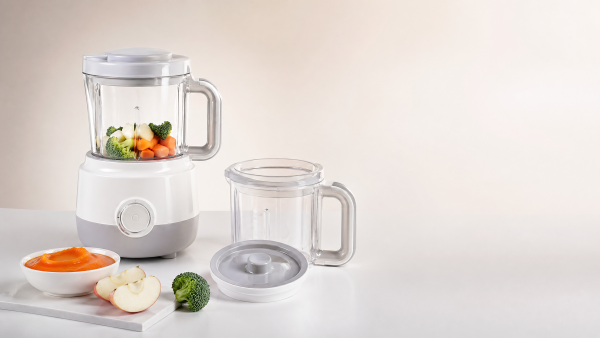
Design flaws in a baby food maker machine can quickly undermine an otherwise promising product. For technical evaluators, the main question is not simply whether a design works in a lab, but whether it can deliver safe heating, consistent blending, easy cleaning, reliable long-term performance, and manufacturable compliance at scale. In practice, the most common failures come from avoidable decisions in thermal design, material selection, sealing, interface logic, and cleanability.
For sourcing teams, OEM/ODM reviewers, and product assessment specialists, this matters because baby feeding appliances operate in one of the most sensitive consumer categories. Parents expect convenience, but they also expect food-contact safety, hygienic construction, predictable texture control, and straightforward maintenance. A machine that performs well in demos but is difficult to sanitize, noisy in operation, or vulnerable to leakage will struggle in both compliance review and market acceptance.
This article focuses on the issues that technical evaluators care about most: where design problems usually appear, how they affect risk, cost, and user satisfaction, and what design choices help avoid failure before tooling, certification, or mass production. Rather than covering generic appliance theory, the discussion centers on practical assessment points for more reliable, market-ready baby food maker machine development.
Why Technical Evaluators Should Look Beyond Core Function Claims
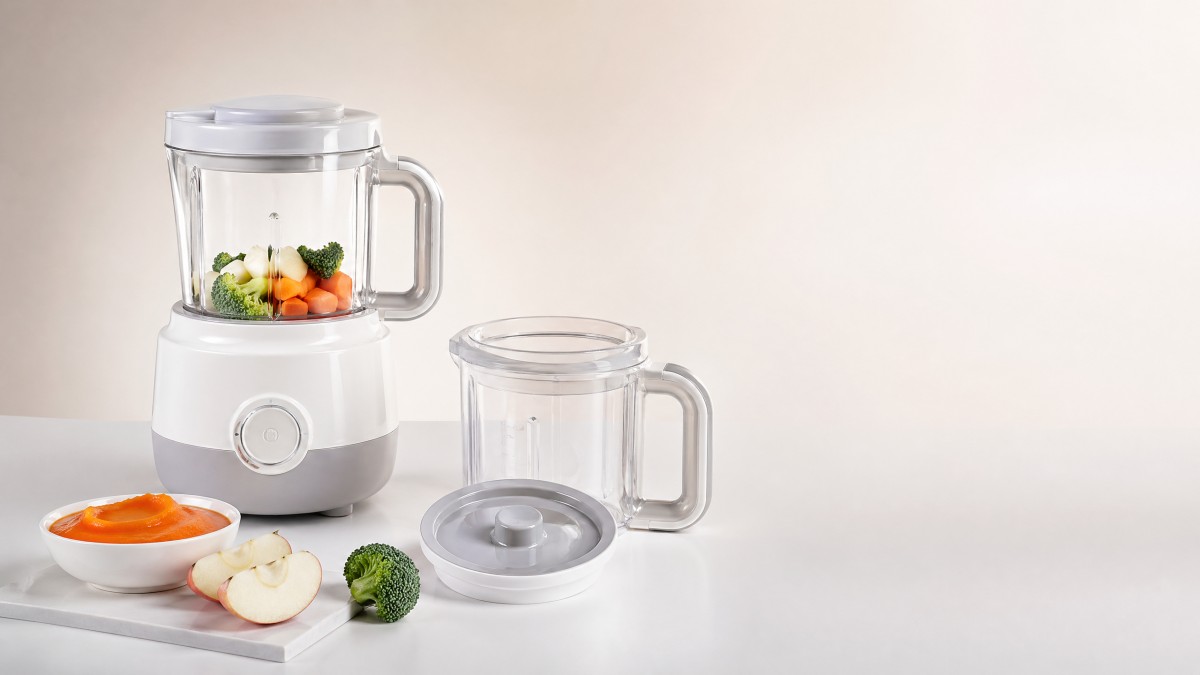
Many product briefs define success too narrowly: steam, blend, reheat, and perhaps sterilize. But for a baby food maker machine, functional completeness is only the starting point. Technical assessment should extend into how the machine handles residue, how evenly it transfers heat, whether assembly tolerances remain stable after repeated wash cycles, and whether the design supports certification without major redesign.
A machine may blend adequately when tested with soft fruits yet fail when processing fibrous vegetables, frozen portions, or small-batch recipes. Likewise, a steam chamber may reach target temperatures but create hotspots or condensation patterns that affect texture and cleaning. These are not minor details. In baby product categories, they influence complaint rates, returns, and brand trust.
For evaluators, the strongest approach is to review the product as an integrated system: food path, water path, heating architecture, electronics, motor load, enclosure sealing, and user workflow. Products that fail commercially often do not collapse because of one dramatic defect. They fail because several “acceptable” design compromises combine into poor real-world usability and elevated risk.
Problem 1: Poor Cleanability and Hidden Food Traps
The most common design problem in a baby food maker machine is poor cleanability. Parents use these machines daily, often multiple times a day, and they are especially sensitive to hygiene. If food accumulates around blade hubs, under gaskets, inside steam outlets, in lid seams, or in dead corners of the bowl, users quickly perceive the appliance as unsafe or inconvenient.
From a technical standpoint, hidden retention zones do more than frustrate users. They increase microbial risk, shorten the effective service life of seals, and create repeated customer support issues around odor, discoloration, and residue buildup. In categories involving infant feeding, even low-probability hygiene concerns can cause disproportionate reputational damage.
To avoid this problem, evaluators should prioritize designs with smooth food-contact geometries, removable and inspectable sealing elements, minimized thread complexity in contact areas, and clear drainage paths after washing. Bowl interiors should avoid sharp internal transitions where puree accumulates. Blade assemblies should be removable without tools if possible, or at minimum easy to rinse without exposing inaccessible cavities.
Another useful evaluation criterion is wash validation under realistic conditions. Instead of checking only whether parts are labeled “dishwasher safe,” assess how much residue remains after typical manual rinsing, sponge cleaning, and air drying. A design that is technically washable but practically annoying will still underperform in the market.
Problem 2: Uneven Heating and Weak Thermal Control
Heating quality is critical because baby food texture and safety depend on controlled thermal performance. A frequent issue is uneven steam distribution or overly simplistic heating logic. Some machines produce acceptable temperatures at the sensor point while leaving inconsistent heat exposure in the food mass, especially in small portions or dense ingredients.
This creates several risks. First, users may need extra cycles, reducing convenience and increasing energy use. Second, texture may become inconsistent, with some portions overcooked and others underprocessed. Third, poor thermal control can lead to confusion in user perception: if reheating and steaming results vary from batch to batch, consumers assume the product is unreliable.
To prevent this, technical evaluators should examine heater placement, steam pathway design, bowl geometry, venting behavior, condensation return flow, and temperature sensing strategy. A single sensor may not provide enough process accuracy if food load sizes vary widely. Better designs account for both thermal source control and food-contact distribution behavior.
It is also important to test with realistic recipes, not just standard water-based loads. Sweet potato, carrot, apple, rice blends, and mixed protein purees all respond differently to heat and moisture. If the machine cannot maintain repeatable outcomes across these profiles, the thermal design likely needs refinement before commercialization.
Problem 3: Blade and Motor Design That Ignores Real Food Loads
Another recurring mistake is underestimating the diversity of food textures users expect the machine to handle. In product presentations, blending often appears effortless because test materials are soft and pre-cut. In reality, parents may process fibrous vegetables, partially thawed ingredients, or mixed recipes with very different resistance characteristics.
If the blade geometry, rotational speed, torque curve, or bowl flow pattern is not matched to these loads, the machine may leave lumps, require repeated user intervention, or trigger motor protection too often. On the other hand, an overly aggressive blade system can create splashing, aeration, noise, and unnecessary wear. Performance has to be balanced, not maximized blindly.
Evaluators should look at whether the product design supports controlled circulation toward the blade, whether the blade placement works for both small and moderate batch sizes, and whether overload protection is calibrated to protect the motor without disrupting normal use. Bowl shape matters here as much as motor rating. Poor internal flow can make a high-power motor seem weak.
One effective avoidance strategy is to test texture outcomes rather than relying only on electrical specifications. A strong wattage claim is not proof of superior puree quality. What matters is whether the machine can produce smooth, repeatable results across intended recipe types while maintaining acceptable noise, heat buildup, and component durability.
Problem 4: Leakage, Steam Escape, and Seal Failure
Leakage is one of the fastest ways for a baby food maker machine to lose user trust. Water reservoir leakage, steam escape at the lid, seepage around the blade shaft, and condensation intrusion near electronics are all common design vulnerabilities. These issues often emerge only after repeated thermal cycling, when materials expand, contract, and gradually lose compression stability.
For technical evaluators, leakage should be treated as both a reliability and safety concern. Escaping steam can create burn risk. Water entering non-isolated electrical zones can trigger performance instability or shortened life. Even minor drips can damage countertop perception and lead users to suspect deeper hygiene or assembly problems.
Design prevention starts with proper gasket architecture, material compatibility with heat and cleaning agents, and tolerance control across mating parts. Seal design should account for repeated assembly, not just first-use compression. If the product requires users to frequently remove and reinstall components, the sealing system must tolerate misuse and alignment variation.
Long-cycle validation is especially important. A product may pass short-term leak tests but fail after dozens or hundreds of heating and washing cycles. Evaluators should request life-cycle data or conduct stress testing that includes thermal shock, detergent exposure, and repeated user assembly simulation.
Problem 5: User Interface Logic That Increases Error Rates
Baby care appliances are often used when caregivers are multitasking or tired, so interface clarity is not a cosmetic feature. It is a functional safety issue. A poorly designed control panel can lead to incorrect mode selection, uncertain water filling, incomplete processing, or accidental restarts. These outcomes reduce confidence and increase complaint rates even if the underlying hardware is sound.
Common problems include ambiguous icons, too many steps for basic tasks, weak feedback on cycle status, and no clear distinction between steaming, blending, reheating, and cleaning-related functions. Some machines also fail to communicate when assembly is incomplete, causing avoidable support issues and perceived defects.
To avoid these problems, evaluators should review interface design with real use cases in mind: one-handed interaction, quick setup, noisy kitchen environments, and low-attention operation. Audible cues should be informative but not excessive. Visual indicators should be easy to understand without consulting a manual every time.
Good design also reduces misuse through interlocks and guided logic. For example, the machine should detect improper lid seating, missing bowl placement, or low water conditions. The best interface design lowers the cognitive burden on the user while supporting safer and more repeatable operation.
Problem 6: Food-Contact Material Choices That Complicate Compliance
In infant-related product categories, material selection can determine whether a design remains commercially viable across markets. A baby food maker machine may perform well mechanically, yet become difficult to scale if its polymers, coatings, seals, inks, or adhesives raise migration, odor, durability, or certification issues.
Technical evaluators should pay close attention to all food-contact and near-food-contact materials. The review should include heat resistance, hydrolysis resistance, repeated cleaning stability, stain retention, odor pickup, and suitability for applicable regulations such as FDA or EU food-contact requirements. Transparent materials may look appealing but can scratch, haze, or discolor quickly under repeated use.
Another common oversight is using materials that pass baseline compliance but fail user expectation after exposure to colored foods, acidic ingredients, or steam. In baby feeding products, visible staining can be interpreted as contamination even when it is not. This makes cosmetic durability commercially relevant, not merely aesthetic.
To reduce risk, sourcing and engineering teams should align early on approved material libraries, supplier documentation depth, and change-control discipline. Last-minute substitutions in gaskets, bowls, or blade mount polymers can create expensive retesting and launch delays.
Problem 7: Designs That Are Hard to Manufacture Consistently
Some baby food maker machine concepts look strong in prototype form but become unstable in mass production. Tight cosmetic expectations, multi-part sealing assemblies, difficult snap fits, and sensitive alignment requirements can all reduce yield and increase variability between units. For technical evaluators, manufacturability is just as important as concept performance.
A design that depends on precise manual assembly for steam integrity or motor alignment may be too risky for high-volume production, especially across multiple OEM lines. Small variation in part warpage, torque application, or gasket placement can lead to inconsistent field performance and unpredictable quality claims.
To avoid this, evaluators should examine assembly simplification opportunities early. Ask whether components are self-locating, whether error-proofing features are built into the design, and whether final inspection can reliably detect critical defects. Designs with fewer hidden assembly dependencies are usually more scalable and less expensive to control.
Cost should also be considered in context. The lowest bill of materials is not always the best sourcing decision if it creates a fragile production process. In many cases, modest investment in better sealing architecture, stronger locator features, or more stable material choices pays back through lower return rates and smoother certification pathways.
How to Evaluate a Baby Food Maker Machine More Effectively
For technical evaluators, a practical review framework should combine four dimensions: safety and compliance, user-centered performance, reliability over time, and production readiness. Looking at only one dimension usually hides the real risk. A machine that performs well once may still fail if it is difficult to clean, inconsistent across loads, or too sensitive to assembly variation.
Start with scenario-based testing. Evaluate steaming, blending, reheating, and cleaning using realistic ingredients and household workflows. Include small portions, sticky recipes, fibrous vegetables, and repeated-cycle usage. Then review how the machine behaves after thermal stress, wash exposure, and reassembly. This reveals design weaknesses that specification sheets rarely show.
Next, map all critical interfaces: lid to bowl, bowl to base, blade shaft to seal, water path to heater, and user controls to process logic. Most recurring product complaints originate at these interfaces. A strong evaluation process asks not only “Does it work?” but also “Where will it degrade, confuse users, or create variability?”
Finally, connect technical findings to commercial implications. Cleaning difficulty affects reviews and repeat use. Thermal inconsistency affects product credibility. Material uncertainty affects certification and retailer acceptance. Manufacturability issues affect margin and launch timing. This broader view helps teams make sourcing and development decisions that hold up in the real market.
Conclusion: The Best Designs Solve Risk Before It Reaches the Consumer
The most common baby food maker machine design problems are rarely mysterious. They usually stem from underestimating hygiene, real food loads, thermal distribution, sealing durability, interface clarity, compliant material behavior, or manufacturing variation. For technical evaluators, the goal is to identify these weaknesses before they become tooling revisions, certification setbacks, return claims, or damaged brand trust.
The strongest products in this category are not just feature-rich. They are easy to clean, thermally consistent, safe in daily use, robust across ingredients, and manufacturable at scale. When evaluating a baby food maker machine, those are the qualities that matter most because they connect engineering choices directly to compliance, user satisfaction, and commercial resilience.
In a market where parents expect both convenience and absolute confidence, avoiding common design errors is not simply a technical exercise. It is the foundation for a product that can pass evaluation, earn buyer trust, and succeed long after launch.
Related Intelligence
 Skincare OEMAug 16, 2026Amazon Enforces AI Human Metadata Rule for Beauty and Personal Care SellersAmazon now enforces AI human metadata rules for beauty sellers. Learn how to protect listings, traffic, and compliance in skincare, cosmetics, and beauty devices.
 Beauty DevicesAug 15, 2026China to Roll Out Nationwide Cross-Border Cash Pooling for MultinationalsChina to roll out nationwide cross-border cash pooling for multinationals from Sept. 14. Discover how this policy could improve treasury efficiency, liquidity management, and China-linked supply chains.
 Beauty DevicesAug 14, 2026China Imposes Temporary Export Ban on Helium, Affecting Cooling Supply ChainsChina's temporary helium export ban may disrupt cooling supply chains for beauty RF devices and laser systems. Learn what ODMs, buyers, and procurement teams should check now.
![]() Cosmetics & PkgAug 13, 2026PPWR becomes mandatory: Beauty and personal care packaging materials usher in new EPR and PFAS compliance requirementsPPWR takes effect for cosmetics packaging in the EU, bringing EPR registration and PFAS limits. Learn what brands, importers, and suppliers must do now.
Cosmetics & PkgAug 13, 2026PPWR becomes mandatory: Beauty and personal care packaging materials usher in new EPR and PFAS compliance requirementsPPWR takes effect for cosmetics packaging in the EU, bringing EPR registration and PFAS limits. Learn what brands, importers, and suppliers must do now. Cosmetics & PkgAug 12, 2026EU PPWR Now Enforced for Beauty Packaging ComplianceEU PPWR now enforced for beauty packaging compliance: learn how EPR, ERN, heavy metals and PFAS rules affect EU exports, customs clearance and platform sales.
 Cosmetics & PkgAug 11, 2026EU PPWR Rules Take Effect on Aug. 12 for Beauty PackagingEU PPWR rules for beauty packaging take effect on Aug. 12, 2026. Learn key compliance steps, EPR, labeling, PFAS limits, and how to avoid customs delays and fines.
 Smart Pet DevicesAug 10, 2026EU EPR Rules to Cover Smart Pet Devices on Aug. 15EU EPR Rules will cover smart pet devices from Aug. 15, 2026. Learn how smart collars, feeders, and monitoring devices can avoid delisting, customs delays, and compliance risks in the EU.
 Infant Feeding & CareAug 09, 2026CPSC Recalls Baby Sleep Sacks Over Undeclared TDCPPCPSC Recalls Baby Sleep Sacks Over Undeclared TDCPP: learn how this 2026 recall impacts CPC documents, third-party testing, and U.S. baby product compliance for exporters.
 Infant Feeding & CareAug 08, 2026ECHA Adds 5 SVHCs, Importer Notices Due From Oct 2026ECHA adds 5 SVHCs to the Candidate List, with importer notices due from October 2026. Learn how REACH affects exporters, supply chains, and documentation readiness.
 Baby Gear & StrollersAug 07, 2026CPSC Revises Crib Rail Standard for November 2026CPSC revises crib rail standard for November 2026, adding dynamic impact tests and mandatory third-party lab testing. Learn how the new rule affects U.S. market access, compliance, and shipments.
 Electronic & RC ToysAug 06, 2026EU to Require EN IEC 62115:2025 for Electronic ToysEU to Require EN IEC 62115:2025 for Electronic Toys from Oct 1, 2026. Learn scope, battery and AI safety updates, CE compliance risks, and how exporters can avoid customs delays.
 Baby Gear & StrollersAug 05, 2026US Stroller Stability Rule Takes Effect Aug. 15US Stroller Stability Rule Takes Effect Aug. 15: learn how new U.S. stroller compliance, ASTM F833-26a, and CPSC testing rules may affect imports, certification, and shipment readiness.
 Infant Feeding & CareAug 04, 2026ECHA Adds 5 SVHCs, Triggering Baby Care Export ReviewECHA adds 5 SVHCs, prompting an urgent baby care export review for EU-bound products. Learn the 0.1% threshold risks, compliance steps, and how to avoid customs delays and fines.












