
How a Cat Tree Tower Manufacturer Handles Stability and Load Testing
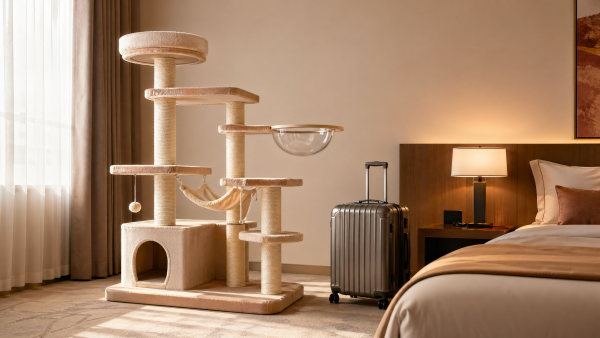
For technical evaluators, understanding how a cat tree tower manufacturer verifies stability and load performance is essential before approving suppliers or product lines. This article outlines the testing logic, structural considerations, and safety benchmarks behind reliable cat furniture, helping sourcing teams assess manufacturing capability, compliance readiness, and long-term product consistency with greater confidence.
Why Stability Testing Matters More in Different Sourcing Scenarios
Not every buyer evaluates cat furniture for the same end use. A retailer launching a private-label pet range, a cross-border seller targeting apartment owners, and a hospitality buyer outfitting pet-friendly vacation rentals will each define acceptable stability differently. For that reason, a cat tree tower manufacturer should not be judged only by whether a sample “feels solid” in a showroom. The more useful question is whether the factory can prove repeatable structural performance across product sizes, user weights, transport conditions, and installation environments.
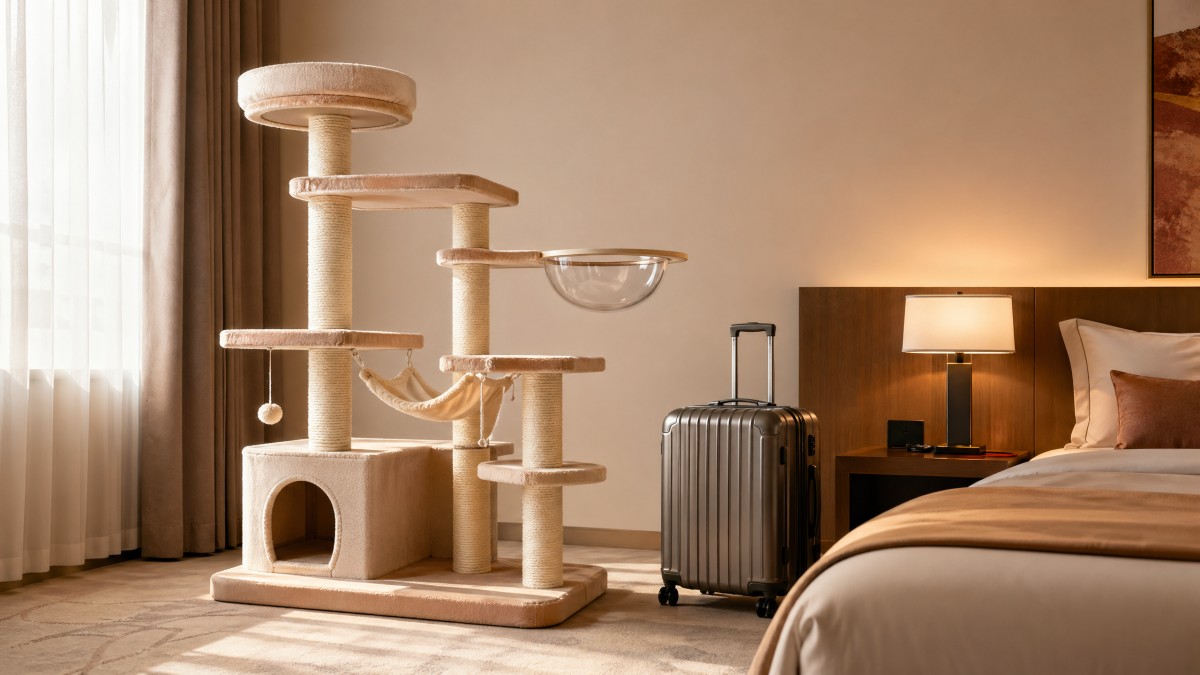
In travel service settings, this difference becomes especially relevant. Pet-friendly hotels, serviced apartments, glamping operators, and long-stay vacation properties often need cat furniture that can withstand frequent guest turnover, variable room layouts, and repeated cleaning cycles. A tower intended for light residential use may perform adequately for 12 to 18 months in a private home, yet show accelerated loosening if moved, repositioned, or climbed by multiple pets over a shorter operational cycle in hospitality environments.
Technical evaluators therefore need a scenario-based review method. Instead of asking for generic test claims, they should examine how the cat tree tower manufacturer defines vertical load, lateral tipping resistance, fastener retention, platform deflection, and fatigue durability. Typical review windows range from initial sample approval in 2 to 4 weeks, through pilot order validation in 30 to 60 days, to post-launch quality monitoring over the first 90 days of market feedback.
Three business contexts where testing standards shift
- Private-label retail programs: focus on mass production consistency, carton drop survival, and complaint prevention at scale.
- Pet-friendly accommodation procurement: focus on repeated use, housekeeping movement, floor stability, and incident risk reduction.
- E-commerce launches: focus on assembly accuracy, customer self-installation tolerance, and low damage rates during parcel delivery.
A capable cat tree tower manufacturer should adapt its validation approach to all three situations. This is where supplier interviews become more meaningful. Instead of asking only about “maximum load,” evaluators should request the test method, sample quantity, loading points, pass criteria, and whether verification occurs once per model, once per batch, or during every major material change.
Scenario Breakdown: What Technical Evaluators Should Check First
Different application settings create different failure risks. A compact cat tree for a city rental unit may need a smaller footprint and stronger anti-tip behavior, while a multi-level tower for a pet-friendly resort suite may need broader base geometry and more durable scratching surfaces. A cat tree tower manufacturer that understands application context can usually explain why one design uses a 50 cm base, while another requires 60 to 70 cm for acceptable stability under dynamic movement.
For travel service procurement, scenario review should include room type, expected cat size, daily interaction frequency, and whether the product may be moved for cleaning. Even a 2 kg difference in expected pet weight can influence post diameter, board thickness, and connection hardware specification. Products for premium short-stay accommodation may also need a cleaner visual finish, which means hidden fasteners or wrapped surfaces that must still preserve structural strength.
The comparison below helps frame sourcing decisions before a sample is approved. It also shows why a cat tree tower manufacturer should not present one universal test report as sufficient for every use case.
For evaluators, the key takeaway is that testing must match use intensity. A cat tree tower manufacturer serving accommodation buyers should be able to discuss not only laboratory-style loading but also operational realities such as floor unevenness, frequent relocation, and accidental side impacts from luggage or cleaning equipment.
Typical scenario-specific questions
For hospitality and travel service procurement
Ask whether the base remains stable on tile, laminate, and low-pile carpet, since accommodation portfolios often include mixed floor finishes. A practical review threshold is to check visible sway after repeated side loading over 20 to 50 cycles. If the tower is expected to be shifted during room turnover, ask whether threaded inserts or bolts resist loosening after re-tightening.
For e-commerce distribution
Focus on knock-down structure integrity. The cat tree tower manufacturer should explain how packaging protects edges, corner boards, and wrapped posts during parcel handling. If one damaged post causes an unstable final assembly, the commercial risk can rise quickly through returns, poor reviews, and replacement costs within the first 30 days after launch.
How a Cat Tree Tower Manufacturer Tests Stability in Practice
A reliable cat tree tower manufacturer usually approaches stability through a combination of design review, sample verification, and production-stage control. The testing sequence often starts with material confirmation, then prototype assembly, then controlled loading, then repeated movement or fatigue checks. While methods vary by factory, evaluators should expect a documented process rather than a verbal assurance from sales staff.
Static load testing is often the first gate. In practical terms, weighted force may be applied on top perches, mid-level platforms, hammocks, or jumping surfaces for a defined duration such as 1 hour, 4 hours, or 24 hours, depending on internal standards. The goal is not simply to see whether the part breaks, but whether the structure deforms, tilts, cracks, or develops looseness at connection points after the load is removed.
Dynamic stability is equally important. Cats do not climb like static weights; they jump laterally, descend quickly, and concentrate force on narrow edges. A cat tree tower manufacturer with stronger engineering discipline will often evaluate side-pull behavior, rocking tendency, and platform movement under repeated action. Even where no single universal test protocol applies, the internal logic should still be consistent and reproducible.
Core test categories evaluators should review
- Static vertical load on platforms, condos, and resting beds.
- Lateral force or tip-resistance assessment at upper levels.
- Fastener torque retention after repeated assembly or use cycles.
- Fatigue checks for posts, wrapped rope sections, and board joints.
- Packaging and transit simulation for flat-pack designs.
What a stronger testing file should contain
Technical evaluators should look for model drawings, BOM linkage, sample photos, loading diagrams, measurement records, and pass/fail notes. A useful factory file often identifies loading points by level, indicates whether testing was done on 3 samples or more, and records any dimensional change beyond a stated tolerance such as 2 mm to 5 mm. Without this, comparison between suppliers becomes subjective.
The table below shows a practical framework for reviewing the testing maturity of a cat tree tower manufacturer during supplier screening or line extension approval.
If a supplier can show only a single final load number, the review is incomplete. Technical reliability depends on method definition, not just outcome. A disciplined cat tree tower manufacturer should be able to explain why one large tower requires a wider stance, thicker board, or higher-density tube than a compact model, and how that decision was verified before production release.
Structural Factors That Change Load Performance by Use Case
Load performance is shaped by design details that may look minor in product photos. Base dimensions, post diameter, board density, screw engagement depth, bracket placement, and the vertical center of gravity all influence whether a tower remains stable after months of use. In many procurement projects, visual design receives too much attention while structural geometry receives too little.
For example, a tall cat tree intended for premium room décor may use slender profiles to achieve a cleaner aesthetic. But if the overall height reaches 140 cm to 180 cm, the stability margin changes materially compared with a 90 cm unit. A technical evaluator should ask how the cat tree tower manufacturer compensates for added leverage: wider base, thicker posts, wall-anchoring option, redistributed platforms, or lower top-level overhang.
Travel service operators should also think about maintenance realities. If housekeeping teams move the product several times per week, exposed joints and threaded connections may loosen faster than in private home settings. That shifts attention toward insert quality, washer design, and connection reinforcement rather than only top-perch capacity.
Key design variables with sourcing impact
- Base-to-height ratio: taller towers usually require broader support or anchoring strategies.
- Post diameter and wall strength: common ranges differ by model size and intended cat weight class.
- Board thickness and density: affects screw holding power and platform deflection over time.
- Platform layout: asymmetric upper levels can increase tipping tendency during lateral jumps.
- Connection method: bolt quality and insert retention often decide long-term wobble behavior.
What often gets overlooked during sample approval
A hand-built showroom sample may be tighter than batch production because assembly is slower and inspection is more careful. Technical evaluators should therefore compare at least 2 to 3 production-representative samples where possible. If one sample is stable but another shows visible sway after standard tightening, the issue may lie in tolerance control rather than design intent.
Another overlooked point is the interaction between packaging and final structure. If boards are compressed, corners chipped, or inserts stressed during shipping, load performance can degrade before the customer even opens the carton. For travel service buyers managing multi-site distribution, this can affect installation quality across 20, 50, or 100 rooms at once.
How to Match Testing Depth to Your Business Scenario
The right level of testing depends on rollout scale, sales channel, and liability exposure. A boutique travel property ordering a small quantity may prioritize stable design and easy replacement parts, while a retail chain or platform seller may need more formalized records for every version, colorway, and packaging revision. A cat tree tower manufacturer suited to one model may not be suitable for another if the documentation depth is inconsistent.
In practical sourcing terms, evaluators can divide projects into three review levels. Level 1 is sample screening for basic residential or pilot use. Level 2 adds structured load and assembly verification for regular retail launch. Level 3 is for repeated-use environments such as pet-friendly hospitality programs, where durability under movement and maintenance matters almost as much as initial strength.
The matrix below can help procurement teams align validation depth with operational risk before requesting quotations or production lead times, which typically fall in the 30 to 75 day range depending on material readiness and order volume.
This kind of graded review helps avoid over-testing low-risk projects and under-testing high-exposure ones. It also gives the cat tree tower manufacturer a clearer brief, which usually leads to better quotations, more relevant samples, and fewer late-stage changes.
Common misjudgments in scenario matching
- Assuming residential test logic automatically fits hospitality use.
- Approving a tall design without checking anti-tip strategy in smaller rooms.
- Treating a sample’s visual finish as evidence of durable structural control.
- Ignoring reassembly wear when products may be relocated between sites.
For technical teams, the best evaluation outcome is not merely finding a low-price supplier. It is selecting a cat tree tower manufacturer whose testing habits match the intended environment, whether that environment is a retail shelf, a direct-to-consumer parcel network, or a pet-friendly tourism property with high turnover and more varied use conditions.
What to Ask Before You Approve a Supplier or Product Line
Before final approval, technical evaluators should convert structural concerns into clear supplier questions. The goal is to reveal whether the cat tree tower manufacturer works from controlled engineering logic or from experience alone. Both matter, but documented process becomes much more important once sourcing scales across regions, channels, and product variations.
Good supplier conversations often cover five areas: test method, material specification, tolerance control, packaging protection, and corrective action. If a factory cannot explain what happens when a sample fails side stability after 50 cycles, that may indicate weak problem-solving discipline. By contrast, a manufacturer that can discuss reinforcement options, re-test timing, and batch monitoring usually offers lower long-term sourcing risk.
For travel service buyers, it is also worth discussing practical replacement strategy. In hotel or rental settings, being able to replace one post, perch, or fastener pack within a short lead time can be more valuable than buying a highly complex tower that is difficult to service. This is especially relevant when managing multi-property inventories or seasonal occupancy swings.
Recommended supplier review checklist
- Request the loading logic for each platform level, not only the final claimed capacity.
- Confirm whether the cat tree tower manufacturer tests one prototype or multiple production-representative samples.
- Ask how tall models are protected against lateral tipping in active-use settings.
- Review packaging design if the product will be shipped through parcel networks or distributed to multiple travel properties.
- Check whether spare parts, assembly guides, and maintenance instructions are available for post-sale support.
Contact Us for Scenario-Based Supplier Evaluation Support
If you are comparing a cat tree tower manufacturer for retail launch, e-commerce expansion, or pet-friendly travel accommodation procurement, we can help you review the right technical questions before you commit. Our support is designed for buyers, sourcing managers, and technical evaluators who need a sharper view of stability logic, load-testing depth, and supplier readiness.
You can contact us to discuss parameter confirmation, product selection by use scenario, expected lead time, packaging suitability, sample support, customization options, and practical documentation needs. If your project involves pet-friendly hotels, serviced apartments, vacation rentals, or travel-related retail sourcing, we can help translate application conditions into a clearer supplier brief.
Why choose us: we focus on the commercial realities behind product sourcing, not just catalog descriptions. That means helping you compare factory capability, testing discipline, compliance readiness, and operational fit in a way that supports better approvals and fewer downstream quality surprises. Reach out with your target specifications, expected quantity range, preferred structure type, and market channel, and we can help you move from general inquiry to a more confident sourcing decision.
Related Intelligence
 Skincare OEMAug 16, 2026Amazon Enforces AI Human Metadata Rule for Beauty and Personal Care SellersAmazon now enforces AI human metadata rules for beauty sellers. Learn how to protect listings, traffic, and compliance in skincare, cosmetics, and beauty devices.
 Beauty DevicesAug 15, 2026China to Roll Out Nationwide Cross-Border Cash Pooling for MultinationalsChina to roll out nationwide cross-border cash pooling for multinationals from Sept. 14. Discover how this policy could improve treasury efficiency, liquidity management, and China-linked supply chains.
 Beauty DevicesAug 14, 2026China Imposes Temporary Export Ban on Helium, Affecting Cooling Supply ChainsChina's temporary helium export ban may disrupt cooling supply chains for beauty RF devices and laser systems. Learn what ODMs, buyers, and procurement teams should check now.
![]() Cosmetics & PkgAug 13, 2026PPWR becomes mandatory: Beauty and personal care packaging materials usher in new EPR and PFAS compliance requirementsPPWR takes effect for cosmetics packaging in the EU, bringing EPR registration and PFAS limits. Learn what brands, importers, and suppliers must do now.
Cosmetics & PkgAug 13, 2026PPWR becomes mandatory: Beauty and personal care packaging materials usher in new EPR and PFAS compliance requirementsPPWR takes effect for cosmetics packaging in the EU, bringing EPR registration and PFAS limits. Learn what brands, importers, and suppliers must do now. Cosmetics & PkgAug 12, 2026EU PPWR Now Enforced for Beauty Packaging ComplianceEU PPWR now enforced for beauty packaging compliance: learn how EPR, ERN, heavy metals and PFAS rules affect EU exports, customs clearance and platform sales.
 Cosmetics & PkgAug 11, 2026EU PPWR Rules Take Effect on Aug. 12 for Beauty PackagingEU PPWR rules for beauty packaging take effect on Aug. 12, 2026. Learn key compliance steps, EPR, labeling, PFAS limits, and how to avoid customs delays and fines.
 Smart Pet DevicesAug 10, 2026EU EPR Rules to Cover Smart Pet Devices on Aug. 15EU EPR Rules will cover smart pet devices from Aug. 15, 2026. Learn how smart collars, feeders, and monitoring devices can avoid delisting, customs delays, and compliance risks in the EU.
 Infant Feeding & CareAug 09, 2026CPSC Recalls Baby Sleep Sacks Over Undeclared TDCPPCPSC Recalls Baby Sleep Sacks Over Undeclared TDCPP: learn how this 2026 recall impacts CPC documents, third-party testing, and U.S. baby product compliance for exporters.
 Infant Feeding & CareAug 08, 2026ECHA Adds 5 SVHCs, Importer Notices Due From Oct 2026ECHA adds 5 SVHCs to the Candidate List, with importer notices due from October 2026. Learn how REACH affects exporters, supply chains, and documentation readiness.
 Baby Gear & StrollersAug 07, 2026CPSC Revises Crib Rail Standard for November 2026CPSC revises crib rail standard for November 2026, adding dynamic impact tests and mandatory third-party lab testing. Learn how the new rule affects U.S. market access, compliance, and shipments.
 Electronic & RC ToysAug 06, 2026EU to Require EN IEC 62115:2025 for Electronic ToysEU to Require EN IEC 62115:2025 for Electronic Toys from Oct 1, 2026. Learn scope, battery and AI safety updates, CE compliance risks, and how exporters can avoid customs delays.
 Baby Gear & StrollersAug 05, 2026US Stroller Stability Rule Takes Effect Aug. 15US Stroller Stability Rule Takes Effect Aug. 15: learn how new U.S. stroller compliance, ASTM F833-26a, and CPSC testing rules may affect imports, certification, and shipment readiness.
 Infant Feeding & CareAug 04, 2026ECHA Adds 5 SVHCs, Triggering Baby Care Export ReviewECHA adds 5 SVHCs, prompting an urgent baby care export review for EU-bound products. Learn the 0.1% threshold risks, compliance steps, and how to avoid customs delays and fines.












