
Bentonite Cat Litter Bulk: How to Compare Clumping Performance
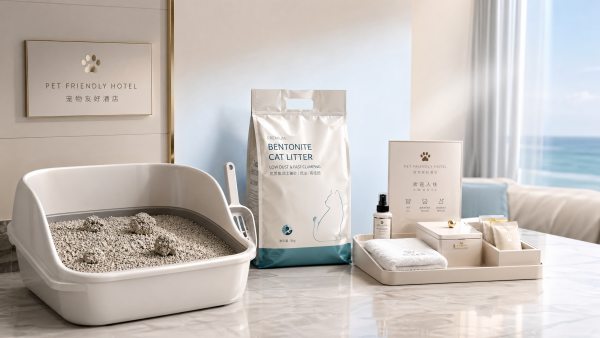
When sourcing bentonite cat litter bulk, clumping performance is one of the most important factors for daily usability, odor control, and customer satisfaction. For buyers and operators, knowing how to compare particle size, moisture absorption, dust levels, and waste removal efficiency can help identify products that perform consistently in real-world conditions and support smarter purchasing decisions.
Why clumping performance matters differently across operating scenarios
For operators, bentonite cat litter bulk is not purchased in isolation. It is selected for a use environment, a cleaning routine, a storage condition, and a service expectation. A small pet boarding unit, a cat café linked to a tourism district, and a long-stay pet-friendly accommodation provider may all buy clumping litter, but they do not judge performance in the same way. The same product can feel efficient in one setting and costly in another.
This matters especially in travel service ecosystems, where guest impressions form quickly and hygiene issues have direct commercial consequences. In locations with daily guest turnover, litter that forms a tight clump within 3 to 8 seconds after liquid contact may save labor and reduce odor migration. In lower-frequency cleaning environments, operators often care more about clump integrity after 10 to 12 hours rather than immediate formation speed alone.
Another reason scenario analysis matters is that bulk procurement decisions affect storage, logistics, and refill frequency. A property handling 200 to 500 kilograms per month will notice a very different cost pattern from a boutique operator using 20 to 50 kilograms. Comparing bentonite cat litter bulk only by price per ton can hide differences in wastage rate, dust complaints, and cleaning time per tray.
Common operator goals behind bulk litter selection
Most operators evaluate clumping litter through four linked goals: stable user experience, manageable labor, odor containment, and predictable replenishment. In practice, these goals show up as measurable checks. Examples include whether the litter leaves less than 10% loose residue after scooping, whether dust is tolerable during refill, and whether one tray can maintain acceptable cleanliness through one service cycle.
- Daily operations often prioritize fast clump formation, low tracking, and simple waste removal.
- Guest-facing environments typically emphasize low dust, odor control, and visual cleanliness within the first 24 hours.
- Bulk buyers usually focus on consistency across batches, pallet storage practicality, and damage rate during transport.
- Multi-site operators need products that remain reliable despite differences in humidity, tray size, and cleaning frequency.
This is why a useful comparison framework should go beyond a single lab-style claim. Operators need to understand what type of bentonite cat litter bulk is suitable for their actual service pattern, not only what looks good in a sample bag.
Three typical application scenarios and what each one should compare
A scenario-based comparison is often the fastest way to narrow options. In travel-related pet service operations, three common use cases appear repeatedly: pet-friendly hotels or serviced apartments, cat cafés or guest-interaction venues, and pet boarding or transit care facilities. Each has a different tolerance for dust, breakage, refill speed, and waste volume.
The table below compares these scenarios in a way that operators can apply during product screening. It is designed to help users judge bentonite cat litter bulk based on operating reality rather than generic marketing language.
The key takeaway is that there is no single “best” litter for every service model. A low-dust formula may be ideal for guest-facing venues, while a stronger, denser clump may produce better economics for boarding operators handling dozens of trays every day. Matching bentonite cat litter bulk to the operating scene reduces both overbuying and underperformance.
Scenario 1: Pet-friendly accommodation
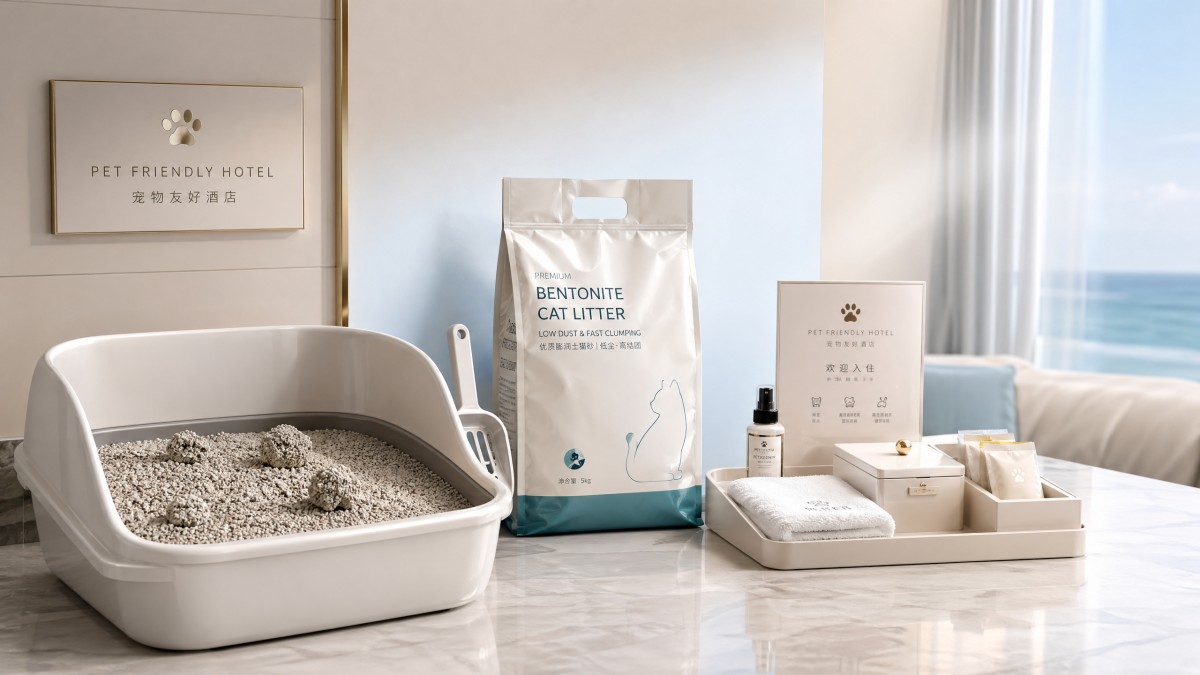
In hotels, serviced apartments, and holiday rentals that accept cats, the operator’s main risk is guest discomfort. Odor spread, visible dust on floors, and messy tray edges can quickly affect reviews. In this setting, bentonite cat litter bulk should be judged on how well it holds a compact clump after overnight use and whether it minimizes fine airborne particles during refilling.
Housekeeping teams usually prefer granules in a moderate particle range because very fine material can increase dust while very large particles may weaken surface coverage. If trays are cleaned once per day, the clump should stay stable after 12 to 18 hours without breaking apart under normal scooping force. That reduces rework and helps keep the tray visually clean for the next guest cycle.
For this scenario, operators should also look at packaging practicality. Bags in the 5 to 10 kilogram range may be easier for room-service and housekeeping staff than larger sacks, even if pallet-level cost is slightly higher. The labor gain can offset handling inconvenience.
Scenario 2: Cat cafés and guest-interaction spaces
Cat cafés and similar visitor spaces usually face a different challenge: repeated use by multiple cats and constant public visibility. Here, bentonite cat litter bulk must handle frequent urination, repeated foot traffic around trays, and a higher chance of litter tracking into visible customer areas. Low tracking and quick spot cleaning matter as much as basic clumping.
Operators in this scene often inspect trays every 4 to 8 hours. A litter that forms clumps quickly but breaks when lifted can still create dirty-looking residue. Products that maintain shape during repeated scooping help preserve a cleaner tray bed and reduce full-tray replacement frequency. Even a 10% to 15% reduction in residual contamination can make public-facing maintenance easier.
Because customers are physically present nearby, dust release during refill is more noticeable. Testing should therefore include pouring behavior from bag to tray, not only urine absorption. A product that performs well in a closed back room may not be suitable in an open visitor environment.
Scenario 3: Boarding, quarantine, and transit care
High-volume care settings are usually the most cost-sensitive. Operators may manage 10, 20, or more litter stations, which means small differences in waste generation become meaningful over a 30-day period. In this scenario, bentonite cat litter bulk should be evaluated for clump density, scoop loss, and how long the base layer remains usable before full replacement.
A stronger clump can lower disposal volume because less surrounding clean litter is removed with each scoop. This matters when waste handling costs are part of site operations. If a litter loses structure after 6 to 10 hours, staff may remove extra material to maintain hygiene, increasing monthly consumption beyond the expected benchmark.
Storage also becomes relevant here. Bulk users should check whether pallets can tolerate humid warehouse conditions and whether the product remains free-flowing after partial bag opening. In practical terms, stable bag integrity and moisture-resistant storage behavior can matter almost as much as clump speed.
How to compare bentonite cat litter bulk in a repeatable way
A repeatable comparison method helps operators avoid buying based on appearance alone. The best screening process combines quick-use testing and short operational observation. Instead of asking only whether the litter clumps, ask how consistently it clumps under the same tray depth, same cleaning interval, and same ambient conditions across at least 3 to 5 test cycles.
For most users, four variables matter first: particle size distribution, moisture absorption speed, dust generation, and waste removal efficiency. Each one affects a different part of daily use. A product with attractive clumping but high dust may fail in guest-facing spaces, while a low-dust option with weak clump retention may raise consumption in busy boarding facilities.
The following table provides a practical screening framework. It is suitable for first-round sample evaluation before committing to regular bentonite cat litter bulk orders.
This framework helps operators compare products in a structured way. It also makes supplier discussions more productive because the conversation can move from vague claims to operational criteria such as refill behavior, scoop loss, and acceptable dust tolerance.
A simple field test checklist
- Fill each tray to a consistent depth, usually 5 to 7 centimeters, before testing.
- Use the same scoop type and the same inspection interval for every sample.
- Observe clump formation immediately, then again after 6 hours and 12 hours.
- Record whether the clump lifts cleanly or leaves wet residue on the tray base.
- Note dust during pouring and after scooping, especially in enclosed indoor areas.
- Track how much surrounding clean litter is removed with each waste scoop.
Even a basic trial using this checklist can reveal whether a bentonite cat litter bulk option is better suited to hospitality, leisure, or high-volume care. The goal is not perfect lab precision. The goal is stable operational judgment.
Common misjudgments when matching litter to use conditions
One common mistake is judging bentonite cat litter bulk only from dry appearance. A bright, clean-looking granule can still perform poorly if the clump turns soft or sticks to the tray floor after several hours. Operators should avoid making decisions from opening-bag impressions alone.
A second mistake is overvaluing low unit price without factoring in real waste rate. If a lower-cost litter causes 15% to 25% more clean material to be discarded during scooping, the actual monthly cost may be higher. This is especially important for boarding and transit care sites where trays are cleaned repeatedly every day.
A third issue is ignoring environment. Humidity, ventilation, and tray density all affect results. A sample that behaves well in a dry storeroom may respond differently in a coastal tourism location or a warm indoor leisure venue. This is why pilot tests over at least 7 days are often more useful than one-day spot checks.
Warning signs during product trials
Operators should pause or retest when they notice repeated tray-bottom sticking, excessive fine dust collecting around refill points, unstable clumps after overnight use, or unusually fast top-up frequency. These signs suggest that the product may not be compatible with the intended service pattern.
Questions worth asking before bulk commitment
- Will this litter be used in guest-visible areas or only in back-of-house care zones?
- How often will trays be checked: every 4 hours, every 12 hours, or once daily?
- Is lower dust more important than maximum clump hardness for this location?
- How much monthly volume is expected, and what storage condition will the bags face?
- Do staff need smaller pack sizes for easier handling across multiple rooms or units?
These questions turn product selection into a fit assessment. For users and operators, that is usually the difference between a smooth routine and a constant maintenance problem.
How to move from sample testing to a practical sourcing decision
Once a shortlist is created, the next step is balancing performance with supply practicality. For bentonite cat litter bulk, this includes pack format, order frequency, warehouse handling, and quality consistency across shipments. A product that performs well in one sample but varies between batches can create more operational disruption than a slightly less aggressive clumper with steadier quality.
Users should compare not just one sample bag but the overall sourcing fit. This includes whether the supplier can support trial quantities, whether packaging aligns with on-site handling, and whether there is enough flexibility for different application scenarios such as hotel rooms, café zones, or boarding units. In many cases, a 2-stage decision process works best: sample validation first, then a limited-volume pilot order for 2 to 4 weeks.
For travel service operators with pet-related business lines, selecting the right bentonite cat litter bulk can improve routine hygiene, reduce waste labor, and support a more reliable guest or visitor experience. The right option is usually the one that matches your cleaning cycle, visibility level, and handling needs rather than the one with the broadest claim list.
Why choose us
Global Consumer Sourcing supports buyers, sourcing teams, and operators who need practical guidance for product comparison and supplier communication. If you are evaluating bentonite cat litter bulk for pet-friendly hospitality, cat café operations, boarding services, or mixed-use travel environments, we can help you narrow the decision around real operating criteria instead of guesswork.
You can contact us to discuss sample screening points, product selection logic, pack size considerations, expected delivery cycle ranges, and scenario-based sourcing questions. We can also help structure supplier conversations around clumping performance, dust control, handling convenience, and trial-order planning so your team can move from testing to procurement with more confidence.
If you are ready to compare options, contact us with your monthly volume, tray count, cleaning interval, preferred pack format, and target use scenario. We can help you define the right evaluation checklist, identify suitable sourcing directions, and prepare for quotation, sample support, and next-step supply discussions.
Related Intelligence
 Skincare OEMAug 16, 2026Amazon Enforces AI Human Metadata Rule for Beauty and Personal Care SellersAmazon now enforces AI human metadata rules for beauty sellers. Learn how to protect listings, traffic, and compliance in skincare, cosmetics, and beauty devices.
 Beauty DevicesAug 15, 2026China to Roll Out Nationwide Cross-Border Cash Pooling for MultinationalsChina to roll out nationwide cross-border cash pooling for multinationals from Sept. 14. Discover how this policy could improve treasury efficiency, liquidity management, and China-linked supply chains.
 Beauty DevicesAug 14, 2026China Imposes Temporary Export Ban on Helium, Affecting Cooling Supply ChainsChina's temporary helium export ban may disrupt cooling supply chains for beauty RF devices and laser systems. Learn what ODMs, buyers, and procurement teams should check now.
![]() Cosmetics & PkgAug 13, 2026PPWR becomes mandatory: Beauty and personal care packaging materials usher in new EPR and PFAS compliance requirementsPPWR takes effect for cosmetics packaging in the EU, bringing EPR registration and PFAS limits. Learn what brands, importers, and suppliers must do now.
Cosmetics & PkgAug 13, 2026PPWR becomes mandatory: Beauty and personal care packaging materials usher in new EPR and PFAS compliance requirementsPPWR takes effect for cosmetics packaging in the EU, bringing EPR registration and PFAS limits. Learn what brands, importers, and suppliers must do now. Cosmetics & PkgAug 12, 2026EU PPWR Now Enforced for Beauty Packaging ComplianceEU PPWR now enforced for beauty packaging compliance: learn how EPR, ERN, heavy metals and PFAS rules affect EU exports, customs clearance and platform sales.
 Cosmetics & PkgAug 11, 2026EU PPWR Rules Take Effect on Aug. 12 for Beauty PackagingEU PPWR rules for beauty packaging take effect on Aug. 12, 2026. Learn key compliance steps, EPR, labeling, PFAS limits, and how to avoid customs delays and fines.
 Smart Pet DevicesAug 10, 2026EU EPR Rules to Cover Smart Pet Devices on Aug. 15EU EPR Rules will cover smart pet devices from Aug. 15, 2026. Learn how smart collars, feeders, and monitoring devices can avoid delisting, customs delays, and compliance risks in the EU.
 Infant Feeding & CareAug 09, 2026CPSC Recalls Baby Sleep Sacks Over Undeclared TDCPPCPSC Recalls Baby Sleep Sacks Over Undeclared TDCPP: learn how this 2026 recall impacts CPC documents, third-party testing, and U.S. baby product compliance for exporters.
 Infant Feeding & CareAug 08, 2026ECHA Adds 5 SVHCs, Importer Notices Due From Oct 2026ECHA adds 5 SVHCs to the Candidate List, with importer notices due from October 2026. Learn how REACH affects exporters, supply chains, and documentation readiness.
 Baby Gear & StrollersAug 07, 2026CPSC Revises Crib Rail Standard for November 2026CPSC revises crib rail standard for November 2026, adding dynamic impact tests and mandatory third-party lab testing. Learn how the new rule affects U.S. market access, compliance, and shipments.
 Electronic & RC ToysAug 06, 2026EU to Require EN IEC 62115:2025 for Electronic ToysEU to Require EN IEC 62115:2025 for Electronic Toys from Oct 1, 2026. Learn scope, battery and AI safety updates, CE compliance risks, and how exporters can avoid customs delays.
 Baby Gear & StrollersAug 05, 2026US Stroller Stability Rule Takes Effect Aug. 15US Stroller Stability Rule Takes Effect Aug. 15: learn how new U.S. stroller compliance, ASTM F833-26a, and CPSC testing rules may affect imports, certification, and shipment readiness.
 Infant Feeding & CareAug 04, 2026ECHA Adds 5 SVHCs, Triggering Baby Care Export ReviewECHA adds 5 SVHCs, prompting an urgent baby care export review for EU-bound products. Learn the 0.1% threshold risks, compliance steps, and how to avoid customs delays and fines.












