
Automatic Pet Feeder OEM: Custom Features Brands Ask for Most
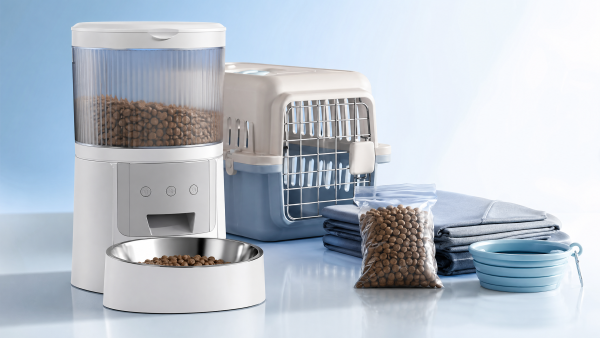
As the pet care market becomes more design-led and tech-driven, automatic pet feeder OEM solutions are drawing strong interest from brands seeking differentiation. From app control and portion precision to material safety and branding flexibility, buyers want features that match both consumer expectations and retail trends. This article explores the custom functions brands request most and what they reveal about sourcing priorities.
What does automatic pet feeder OEM really mean for brands entering a fast-moving retail market?
For information-stage buyers, automatic pet feeder OEM is not just about finding a factory that can produce a feeder with a logo on it. It usually means working with a manufacturing partner that can adapt hardware, software, packaging, compliance documentation, and feature sets to fit a brand’s sales model. In practical terms, that may include custom feeding schedules, app localization, bowl material choices, color development, and retail-ready packaging for online or offline channels.
This matters because the pet economy now overlaps with lifestyle retail, smart home demand, and travel-related convenience. Pet owners who travel for 2 to 7 days at a time, book pet-friendly stays, or manage hybrid work schedules often look for devices that support reliable feeding even when they are away from home. As a result, brands selling through travel-adjacent retail channels, airport shops, pet-friendly hospitality partners, or cross-border e-commerce stores increasingly ask for differentiated feeder functions rather than commodity designs.
In sourcing terms, an OEM project sits between standard catalog purchasing and full ODM development. Buyers often begin with a proven base model to reduce risk, then request 3 to 8 customized changes that improve market fit. This approach is especially relevant for retail sourcing teams that need predictable lead times, manageable tooling costs, and lower launch complexity during the first 60 to 120 days of product planning.
Why is this topic receiving more attention now?
Three forces are driving demand. First, consumers expect more control features, including app connection, portion accuracy, and backup power. Second, retailers want SKUs with stronger differentiation and fewer price-only comparisons. Third, global sourcing teams are paying more attention to material compliance, packaging efficiency, and after-sales support because product reviews can affect conversion rates within days of launch.
For travel service and hospitality-adjacent retailers, this interest also reflects changing pet-owner behavior. A growing share of customers plan short trips without boarding their pets, rely on neighbors or pet sitters, or combine smart devices with remote monitoring. That makes an automatic feeder not just a convenience item, but part of a broader “care while away” purchasing decision.
Quick signals that a brand needs OEM rather than off-the-shelf supply
- The brand needs packaging in 2 or more languages for cross-border distribution.
- The target retail price requires feature balancing rather than using a fixed standard model.
- The sales channel demands specific compliance files, barcode placement, or gift-box presentation.
- The product must fit a lifestyle narrative such as travel convenience, pet-friendly living, or remote care.
These signals help buyers understand whether they should ask only for quotations or prepare a fuller sourcing brief. In many cases, a stronger brief shortens the sampling cycle by 2 to 4 weeks because fewer assumptions are left unresolved.
Which custom features do brands ask for most in automatic pet feeder OEM projects?
The most requested features usually fall into four groups: feeding control, connectivity, safety and hygiene, and branding flexibility. Among these, feeding control remains the core demand. Brands frequently ask for portion sizes that can be adjusted in small increments, typically across 1 to 20 portions per meal or a similar step system depending on kibble size. That level of control helps marketing teams position a product for small cats, medium dogs, or multi-pet households.
Connectivity is the second major category. App-based scheduling, low-food alerts, Wi-Fi pairing, and feeding history logs are common requests. However, smart features are not always the right answer for every SKU. Some travel-oriented or value-focused channels prefer simpler feeders with timer programming and battery backup because they reduce support complexity. In other words, brands do not always want the most advanced model; they want the model that best matches channel expectations and return-rate risk.
Safety and hygiene requests are also becoming more specific. Buyers increasingly ask whether food-contact parts use commonly accepted materials such as food-grade ABS, stainless steel bowls, or removable trays for cleaning. They also ask for sealing performance, anti-jam design, desiccant storage options, and power-failure backup for 24 to 72 hours, depending on the product structure.
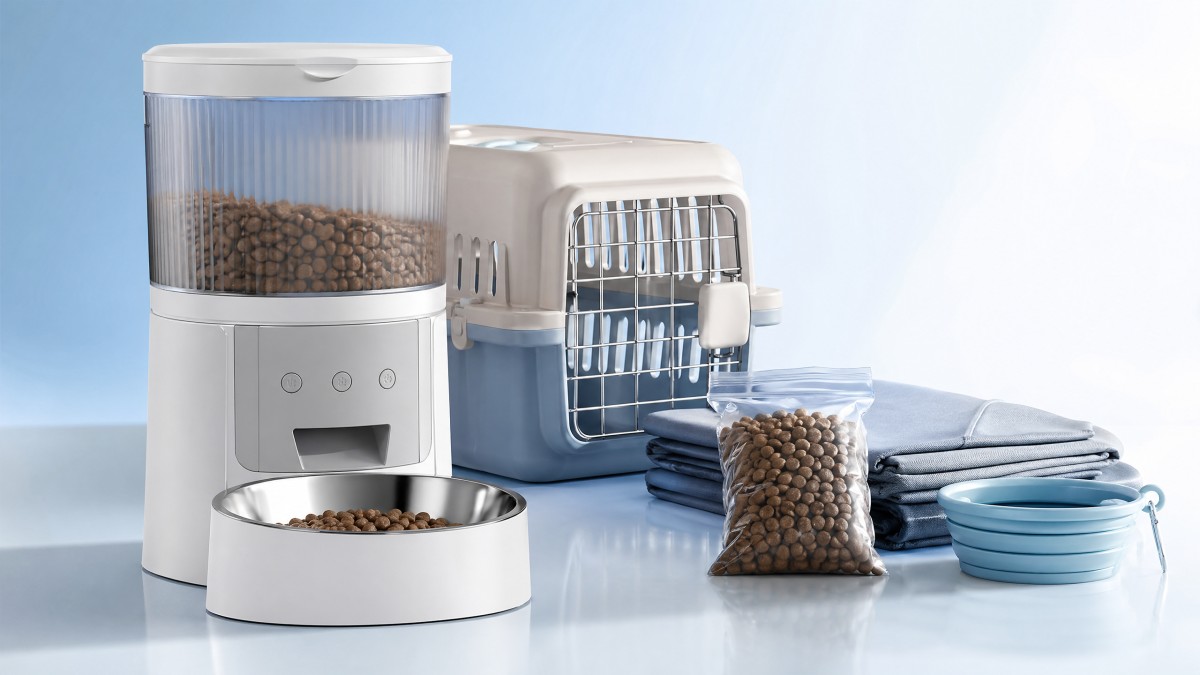
What feature requests appear most often during supplier discussions?
The table below summarizes common automatic pet feeder OEM requests and why they matter commercially. It is especially useful for retail buyers comparing standard catalog models with partially customized options.
A useful takeaway is that feature requests often reflect channel strategy rather than technology enthusiasm. A feeder sold through travel-inspired gifting, premium pet boutiques, or hotel partnership programs may need cleaner aesthetics and easier setup, while a feeder sold through online smart-home channels may need stronger app integration and user data functions.
Features that tend to create higher review sensitivity
- Inconsistent portion output when kibble sizes vary too much.
- Weak Wi-Fi pairing experience during the first 5 to 10 minutes of setup.
- Difficult cleaning that discourages regular maintenance.
- Poor backup power performance during short outages or overnight periods.
For buyers in early research, these pain points are important because they indicate where custom development budget often produces the best return. A small improvement in lid sealing or UI clarity can matter more than adding another high-tech function.
How should buyers compare feature choices for different retail and travel-related use cases?
Not every buyer should source the same feeder. The right automatic pet feeder OEM brief depends on where and how the product will be sold. For example, a feeder marketed to pet owners who travel on weekends may prioritize dependable timed feeding, battery support, and easy cleaning. A feeder intended for tech-savvy urban households may prioritize app control, voice prompts, and data visibility. A gift-oriented SKU may emphasize packaging, compact footprint, and visual finish.
This distinction matters for retail performance. Overbuilding a product can raise landed cost and increase support requests, while underbuilding it can reduce appeal and trigger poor ratings. Buyers should therefore compare products against actual use scenarios rather than spec sheets alone. In many sourcing projects, 5 to 7 key decision points are enough to separate a suitable model from an unsuitable one.
For travel service ecosystems, including pet-friendly accommodation partnerships, subscription care bundles, or travel accessories retail, a feeder may be positioned as part of a “peace of mind while away” solution. In that context, reliability, portability of setup, and clear instructions often matter more than feature quantity.
Which feature mix fits which channel best?
The comparison below helps information-stage buyers align OEM requests with likely sales environments and customer expectations.
What this table shows is that OEM decisions should begin with retail context. Buyers who skip this step often request conflicting features, such as premium app development for a low-price retail program or oversized packaging for a logistics-sensitive e-commerce launch.
A practical comparison checklist
- Define the target customer’s absence pattern: daily work hours, overnight stays, or 2 to 3 day trips.
- Map feature needs to the retail price band before discussing cosmetic upgrades.
- Ask whether customer support can handle app onboarding if a smart model is selected.
- Check package dimensions early if cross-border shipping cost is sensitive.
This method reduces wasted sampling and helps procurement teams make decisions that align with both commercial and operational realities.
What mistakes do brands make when sourcing automatic pet feeder OEM products?
One common mistake is treating all feeders as equivalent once they share a similar appearance. In reality, internal structure, dispensing consistency, control logic, and cleaning design can differ significantly. A visually attractive model may still produce customer complaints if the kibble path jams too easily or the control panel confuses first-time users. For buyers still in research mode, this is a reminder to request operational details, not only product photos.
Another mistake is underestimating localization. If a product includes app control, voice recording, or digital instructions, brand teams need to confirm language adaptation, setup flow, and support readiness. Even small translation issues can affect product returns in the first 30 days after launch. The same applies to manuals and quick-start guides, especially in gift, travel, or lifestyle channels where the buyer may be purchasing for convenience rather than technical interest.
A third mistake is focusing on unit price too early. In OEM sourcing, the lower ex-factory quote is not always the lower total cost. Packaging size, accessory count, testing needs, replacement part complexity, and customer support burden can change the economics of the product over a 6 to 12 month sales cycle.
Which risks should be checked before sampling or negotiation?
- Whether the feeder performs consistently with different kibble diameters, not only one sample feed type.
- Whether food-contact components can be removed and cleaned without complicated tools.
- Whether the backup power solution supports realistic outage scenarios, often at least overnight.
- Whether packaging and manuals are ready for the intended market, channel, and user profile.
- Whether the supplier can explain the difference between standard changes and deeper engineering changes.
A disciplined buyer will also ask how many rounds of sampling are realistic. For a moderate customization project, 2 to 3 sample rounds are common. If the project includes app modifications, mold revisions, or major structural changes, the process may extend further and should be planned accordingly.
Why these errors matter more in travel-adjacent and convenience-led retail
Customers buying around a travel or “away from home” use case often have low tolerance for setup problems. They are purchasing confidence as much as function. If the product fails during a short trip, the dissatisfaction can be much stronger than with a general household gadget. That is why reliability claims should always be explored through practical questions, not broad promises.
For this reason, sourcing teams should think beyond feature lists and consider the emotional use case. A feeder positioned for owners leaving home for 24, 48, or 72 hours must communicate trust through design, instructions, and support readiness.
How do lead time, sampling, and compliance usually affect an automatic pet feeder OEM project?
Lead time depends heavily on customization depth. If the project only involves packaging, color, logo application, and manual updates, development may move relatively quickly. If it includes app functions, firmware changes, tooling adjustments, or custom accessories, timelines usually become longer and require tighter milestone control. Buyers should ask for separate estimates for sample preparation, approval revision, and bulk production rather than one combined promise.
In many sourcing workflows, initial samples may take several weeks, while mass production can require another 30 to 60 days after approval, depending on material readiness and order volume. This is one reason why information-stage buyers should begin requirement mapping early, especially if the product is tied to a seasonal launch, a pet travel campaign, or a retail event window.
Compliance is another area where buyers should be precise. While exact requirements depend on market and channel, teams commonly review electrical safety expectations, labeling language, packaging information, and food-contact material considerations. The key is not to assume that a generic product file automatically matches the target sales region.
What should a buyer confirm before moving from research to quotation?
The table below can serve as a pre-quotation FAQ reference for automatic pet feeder OEM evaluation.
This type of structured review helps buyers move from broad interest to practical sourcing dialogue. It also reduces misunderstandings during quotation, because suppliers can price the project based on real expectations rather than assumptions.
A simple sequence for first-time buyers
- Define target channel, user scenario, and price band.
- List non-negotiable features such as backup power, app control, or bowl material.
- Clarify packaging, language, and documentation needs.
- Request sample timing and production timing as separate milestones.
- Discuss compliance expectations before finalizing artwork or launch dates.
For brands linking the product to seasonal travel, summer pet care, holiday gifting, or promotional bundles, this sequencing can make the difference between a timely launch and a delayed one.
How can buyers decide whether an automatic pet feeder OEM partner is the right fit?
The best supplier fit is not defined by the broadest catalog alone. It is defined by how clearly a partner can discuss use cases, customization boundaries, testing logic, and launch practicalities. Buyers should listen for specific answers. Can the supplier explain which changes are cosmetic, which affect internal engineering, and which may influence lead time or product stability? Can they communicate in a way that supports procurement, product, and marketing teams at the same time?
A good fit also shows up in briefing discipline. Serious OEM discussions usually include target markets, expected order size, feature priorities, packaging needs, and desired launch timing. When these topics are handled early, quotation quality improves and unnecessary sample iterations are reduced. For information-stage researchers, this is often the clearest sign that a sourcing project is ready to move forward.
In the pet economy, especially where products connect with convenience, mobility, and “care while away” purchasing behavior, the strongest supplier relationships are built on practical alignment. The objective is not to request every available function, but to build a feeder that fits the customer, the channel, and the operating reality of the brand.
Why choose us for market-guided sourcing insight?
At Global Consumer Sourcing, we help buyers and brand teams evaluate automatic pet feeder OEM opportunities through a retail and supply-chain lens. That means looking beyond product descriptions to the issues that matter in real sourcing decisions: feature relevance, channel fit, compliance considerations, sampling logic, packaging readiness, and launch timing.
If you are comparing suppliers, shaping a private-label pet care range, or exploring travel-adjacent retail opportunities in the pet economy, we can support the early-stage questions that usually determine project quality. These include parameter confirmation, product selection, delivery cycle planning, custom feature direction, certification requirements, sample support planning, and quotation communication priorities.
Contact us to discuss the right next step
- Confirm which feeder features best match your target retail channel.
- Review whether your brief needs OEM adjustments or broader ODM development.
- Discuss sample timelines, expected production cycles, and launch windows.
- Clarify packaging, multilingual manual, and branding customization needs.
- Prepare supplier questions around certification, food-contact materials, and support expectations.
If you need to move from information gathering to a more concrete sourcing plan, contact us with your target market, feature priorities, order expectations, and timing goals. That will make it easier to assess the most suitable automatic pet feeder OEM direction for your product line.
Related Intelligence
 Skincare OEMAug 16, 2026Amazon Enforces AI Human Metadata Rule for Beauty and Personal Care SellersAmazon now enforces AI human metadata rules for beauty sellers. Learn how to protect listings, traffic, and compliance in skincare, cosmetics, and beauty devices.
 Beauty DevicesAug 15, 2026China to Roll Out Nationwide Cross-Border Cash Pooling for MultinationalsChina to roll out nationwide cross-border cash pooling for multinationals from Sept. 14. Discover how this policy could improve treasury efficiency, liquidity management, and China-linked supply chains.
 Beauty DevicesAug 14, 2026China Imposes Temporary Export Ban on Helium, Affecting Cooling Supply ChainsChina's temporary helium export ban may disrupt cooling supply chains for beauty RF devices and laser systems. Learn what ODMs, buyers, and procurement teams should check now.
![]() Cosmetics & PkgAug 13, 2026PPWR becomes mandatory: Beauty and personal care packaging materials usher in new EPR and PFAS compliance requirementsPPWR takes effect for cosmetics packaging in the EU, bringing EPR registration and PFAS limits. Learn what brands, importers, and suppliers must do now.
Cosmetics & PkgAug 13, 2026PPWR becomes mandatory: Beauty and personal care packaging materials usher in new EPR and PFAS compliance requirementsPPWR takes effect for cosmetics packaging in the EU, bringing EPR registration and PFAS limits. Learn what brands, importers, and suppliers must do now. Cosmetics & PkgAug 12, 2026EU PPWR Now Enforced for Beauty Packaging ComplianceEU PPWR now enforced for beauty packaging compliance: learn how EPR, ERN, heavy metals and PFAS rules affect EU exports, customs clearance and platform sales.
 Cosmetics & PkgAug 11, 2026EU PPWR Rules Take Effect on Aug. 12 for Beauty PackagingEU PPWR rules for beauty packaging take effect on Aug. 12, 2026. Learn key compliance steps, EPR, labeling, PFAS limits, and how to avoid customs delays and fines.
 Smart Pet DevicesAug 10, 2026EU EPR Rules to Cover Smart Pet Devices on Aug. 15EU EPR Rules will cover smart pet devices from Aug. 15, 2026. Learn how smart collars, feeders, and monitoring devices can avoid delisting, customs delays, and compliance risks in the EU.
 Infant Feeding & CareAug 09, 2026CPSC Recalls Baby Sleep Sacks Over Undeclared TDCPPCPSC Recalls Baby Sleep Sacks Over Undeclared TDCPP: learn how this 2026 recall impacts CPC documents, third-party testing, and U.S. baby product compliance for exporters.
 Infant Feeding & CareAug 08, 2026ECHA Adds 5 SVHCs, Importer Notices Due From Oct 2026ECHA adds 5 SVHCs to the Candidate List, with importer notices due from October 2026. Learn how REACH affects exporters, supply chains, and documentation readiness.
 Baby Gear & StrollersAug 07, 2026CPSC Revises Crib Rail Standard for November 2026CPSC revises crib rail standard for November 2026, adding dynamic impact tests and mandatory third-party lab testing. Learn how the new rule affects U.S. market access, compliance, and shipments.
 Electronic & RC ToysAug 06, 2026EU to Require EN IEC 62115:2025 for Electronic ToysEU to Require EN IEC 62115:2025 for Electronic Toys from Oct 1, 2026. Learn scope, battery and AI safety updates, CE compliance risks, and how exporters can avoid customs delays.
 Baby Gear & StrollersAug 05, 2026US Stroller Stability Rule Takes Effect Aug. 15US Stroller Stability Rule Takes Effect Aug. 15: learn how new U.S. stroller compliance, ASTM F833-26a, and CPSC testing rules may affect imports, certification, and shipment readiness.
 Infant Feeding & CareAug 04, 2026ECHA Adds 5 SVHCs, Triggering Baby Care Export ReviewECHA adds 5 SVHCs, prompting an urgent baby care export review for EU-bound products. Learn the 0.1% threshold risks, compliance steps, and how to avoid customs delays and fines.












