
Automatic Pet Feeder OEM Quality Checks That Prevent Returns
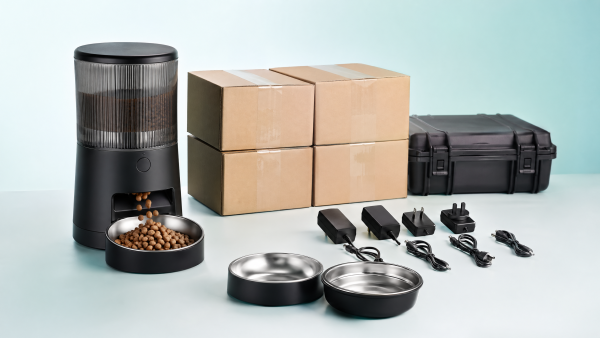
In the pet economy, return prevention starts long before products reach the shelf. For quality and safety teams, automatic pet feeder oem programs demand rigorous checks on materials, dispensing accuracy, electrical safety, and packaging durability. This article outlines the quality control steps that help manufacturers and sourcing partners reduce defects, protect compliance, and deliver more reliable products to global retail markets.
Why quality teams should use a checklist-first approach
For quality control and safety managers, an automatic pet feeder oem project is rarely a single-product review. It usually involves sourcing decisions, private-label changes, power adapter variations, carton updates, multilingual labeling, and destination-market compliance. A checklist-first method helps teams control these moving parts in a repeatable way across sample approval, pilot run, and mass production.
This approach is especially important when products are sold through global retail, cross-border e-commerce, travel retail, or destination-based consumer channels where return costs are amplified by long-distance logistics. A defect that looks minor at factory level can create a 30-day to 90-day reverse logistics burden once the item reaches overseas warehouses, airport-adjacent retail programs, or tourism-driven seasonal inventory cycles.
For travel service supply networks and globally distributed retail sourcing teams, the focus is not just whether a feeder works on day one. The real question is whether it survives a full journey: factory handling, export packing, sea or air transit, customs inspection, local fulfillment, and final consumer use. That is why automatic pet feeder oem quality checks should be organized by return risk, not only by engineering category.
The first 5 priorities to confirm before mass production
- Confirm the power configuration for each sales market, including voltage range, plug type, adapter labeling, and battery backup behavior.
- Verify food-contact material declarations for bowls, impellers, lids, and seals, especially where moisture and oil contact occur daily.
- Set dispensing tolerance limits by portion size, such as acceptable variance within small, medium, and large feed settings over 20 to 50 cycles.
- Review packaging drop resistance and vibration performance for long-haul shipping, including outer carton compression and internal cushioning.
- Lock the inspection plan early: incoming material checks, in-process audits, 100% functional tests, and final AQL sampling before shipment.
When these five items are defined before production start, quality teams usually gain clearer acceptance criteria and fewer disputes between buyer, supplier, and third-party inspector. In practical sourcing environments, that can shorten corrective action loops from several weeks to a few working days.
Core automatic pet feeder oem inspection checklist
The most effective way to reduce returns is to connect every inspection item to a likely field complaint. Instead of testing in isolation, quality teams should ask which defect leads to jamming, underfeeding, overfeeding, leakage, cracked housings, unstable app pairing, or damaged arrivals. This makes the automatic pet feeder oem review more aligned with actual after-sales risk.
A practical program normally covers four stages: incoming material inspection, first-article confirmation, in-line production control, and final pre-shipment verification. For feeders with electronic scheduling, camera modules, or Wi-Fi features, a fifth stage for software and connectivity validation is often necessary. Even simple gravity-assisted or timer-based units still need repeat-cycle checks over at least 20 operating rounds.
The table below can be used as a working inspection reference for quality and safety teams managing private-label feeder projects across global sourcing channels.
The value of this checklist is that it translates broad quality expectations into repeatable controls. If a team records portion variance, jam rate, and packaging failure frequency lot by lot, supplier discussions become objective. Over time, that documentation also helps sourcing teams compare factories, not only products.
Minimum tests that should not be skipped
- Repeated dispensing test using at least 2 kibble sizes if the feeder is sold for mixed pet diets.
- Lid closure and lock check over multiple open-close cycles to detect weak latch structures.
- Power interruption recovery test to confirm whether schedules are retained after short outages.
- Noise review during dispensing, especially for products marketed for apartment, hotel, or compact urban living.
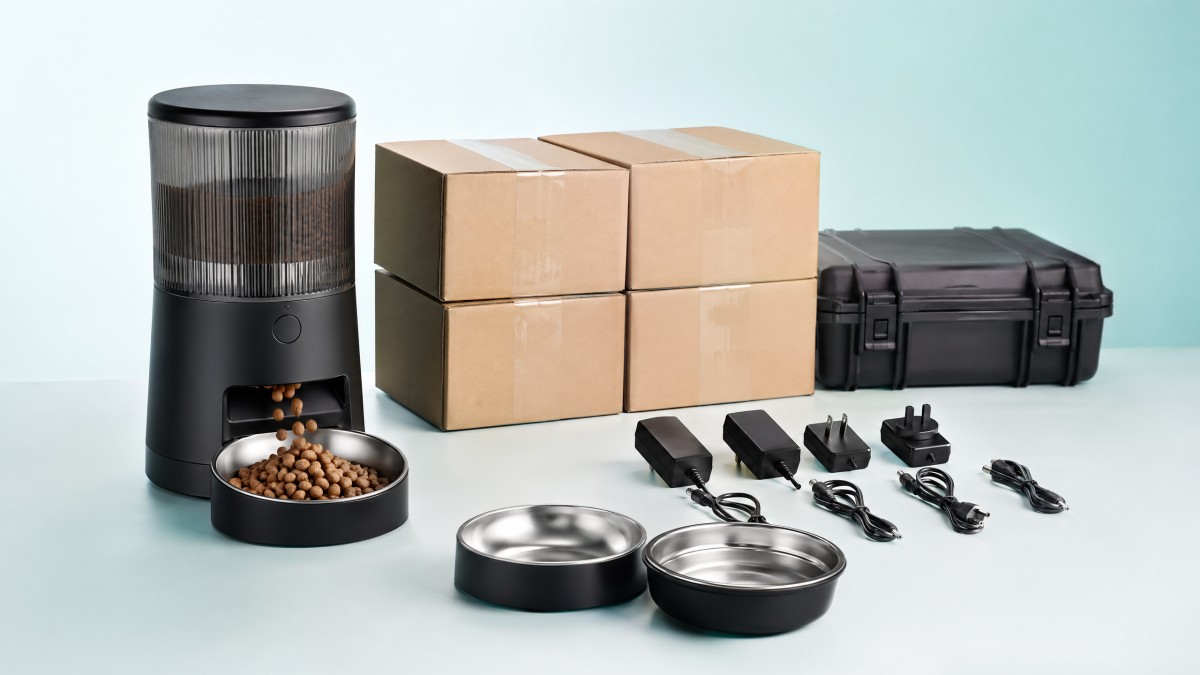
- Final packaging audit with accessory count, manual language check, and retail label verification.
These checks are simple, but they often catch the defects that most directly drive negative reviews and return requests. In many buyer programs, one missed accessory, one unstable plug adapter, or one recurring jam issue can trigger a full hold on shipment release.
Material, safety, and durability checks that most affect return rates
Among all failure points, material selection and durability often create the most expensive return patterns because problems may appear after 2 weeks to 12 weeks of use. A feeder can pass a short function test yet still fail in the field if plastics become brittle, seals absorb odor, or moving parts wear too quickly under daily cycles.
For quality managers handling automatic pet feeder oem sourcing, it is useful to divide risk into three categories: food-contact safety, mechanical reliability, and transport durability. This is particularly relevant for products distributed through long international routes tied to travel-linked retail and tourism-driven consumption periods, where replenishment windows may be narrow and return turnaround slower.
The following matrix helps teams prioritize which defects need tighter control at factory level before goods enter global distribution channels.
This matrix is useful because it links technical findings to operational consequences. For example, a cracked hopper does not only create a cosmetic complaint. It can increase leakage, contamination concerns, and retailer rejection rates, especially where shelf presentation matters in premium consumer channels.
High-priority material and durability checks
Food-contact surfaces
Inspect for sharp edges, mold residue, trapped dust zones, and visible sink marks around joints. If the feeder is promoted as easy to clean, removable parts should be assembled and disassembled several times without stress whitening or loose fit. A practical review target is 10 repeated assembly cycles during sample evaluation.
Moving mechanisms
Check the feed wheel, gearbox area, and anti-blocking path using the actual kibble size range named in product claims. If the supplier only tests one dry feed shape, the result may not reflect real use. Testing 2 to 3 kibble shapes is a stronger benchmark for private-label acceptance.
Transit resistance
Outer packaging should be assessed not only for product protection but also for destination handling. Cartons shipped through cross-border fulfillment, tourism retail replenishment, or regional consolidation hubs may face multiple loading and unloading points. A single shipment can be handled 5 to 8 times before final delivery, so carton integrity matters more than teams sometimes expect.
Scenario-based checks for global retail and travel-linked distribution
Not every automatic pet feeder oem project has the same risk profile. A feeder sold through online pet specialists may require one testing emphasis, while a feeder placed in travel-related retail programs, seasonal gift channels, or destination-driven distribution may require another. Quality teams should adjust inspection depth based on selling environment, not just factory claims.
Travel service and tourism-connected retail channels often create compressed selling windows. If a feeder is part of a holiday campaign, airport retail assortment, resort gift platform, or cross-border seasonal promotion, a delayed replacement cycle may be commercially worse than a normal domestic return. This makes pre-shipment control more valuable than post-sale correction.
Below are scenario-based additions that quality and safety teams should consider when building an inspection plan for different distribution environments.
- For cross-border e-commerce fulfillment, prioritize barcode readability, accessory count accuracy, multilingual instructions, and adapter-market matching to reduce warehouse claims and consumer confusion.
- For travel-linked or tourism retail programs, strengthen packaging appearance review, carton edge durability, and shelf-ready presentation because damaged packaging can lead to immediate rejection.
- For D2C private-label launches, focus on app setup flow, first-use success rate, and customer-unboxing completeness because early reviews strongly affect conversion.
- For club-store or high-volume retail, emphasize pallet stability, compression resistance, and batch consistency across large production runs of 1,000 units or more.
What changes by destination market
Destination markets may require different plug formats, warning statements, labeling details, and age-use or household safety language. Quality teams should freeze artwork and labeling at least 2 to 3 weeks before packing production to avoid last-minute relabeling errors. That timing is often more important than teams realize because packaging mistakes can create full rework even when the product itself is acceptable.
In projects with multiple sales regions, it is useful to keep a market-by-market control file listing adapter type, manual language, carton marks, and mandatory warnings. This reduces the risk of mixed cartons and wrong-label shipments, which are common return triggers in globally sourced consumer products.
For buyers managing dispersed retail channels, especially where tourism or travel service demand can fluctuate sharply by season, the safest path is to keep the approved configuration matrix simple. More SKU complexity often means more inspection burden and a higher error rate during final packing.
Common oversights that lead to avoidable returns
Many returns do not come from catastrophic product failure. They come from small oversights that quality teams assumed were low risk: a poorly translated manual, a lid that feels loose even if it locks, a feeder that dispenses accurately with one kibble type but jams with another, or a retail box that arrives dented after a 4-week shipping route.
For automatic pet feeder oem programs, these details matter because consumer expectations are shaped by reliability and convenience. Pet owners are less tolerant of uncertainty when a device controls feeding schedules. Even a defect rate that appears moderate in factory terms can generate sharp dissatisfaction in the end market.
The most common blind spots usually appear in the handoff between departments: engineering assumes packaging will protect the unit, sourcing assumes compliance documents are complete, and QC assumes the approved sample reflects real bulk output. A return-prevention plan should close these gaps explicitly.
Frequent oversights to add to your audit sheet
- No defined tolerance for portion deviation, making pass-fail decisions inconsistent across inspectors.
- Testing with only one feed shape, despite consumer use involving multiple kibble diameters.
- Insufficient review of battery backup or memory retention after power interruption.
- No verification of final retail box after all inserts, manuals, and adapters are packed together.
- Missing check for smell, residue, or cleaning difficulty in food-contact components.
- Late artwork changes that create mixed-language or wrong-market packaging in the same batch.
When these oversights are included in a standard audit sheet, quality teams usually improve detection earlier in the process. That matters because correcting a feeder before final packing is far less costly than correcting it after export, retail intake, or customer return initiation.
How to execute a practical return-prevention plan with your supplier
A strong return-prevention plan is not just a list of defects. It is a control system with timing, ownership, evidence, and escalation rules. In a typical automatic pet feeder oem program, the most effective structure is to assign checkpoints to pre-production, pilot build, mass production, and pre-shipment release, with photo records and measurable pass criteria at each stage.
Quality and safety managers should also align with sourcing and supplier teams on what requires immediate stop-ship attention. Electrical anomalies, food-contact concerns, and repeated jam failures should not be treated the same way as minor print alignment issues. Risk ranking helps teams act faster and prevents negotiation delays when shipment schedules are tight.
For many global buyers, the most practical operating rhythm includes one sample confirmation round, one pilot run review, and one final shipment inspection. On projects with higher complexity, adding an in-line inspection at 20% to 30% production completion can catch recurring assembly issues before they spread across the full order.
Recommended execution sequence
- Before tooling or order release, confirm product specification, market configuration, accessory list, and packaging expectation in one signed file.
- At sample stage, document dispensing consistency, assembly feel, noise level, and cleaning experience with photos and short videos.
- During pilot run, inspect actual line output instead of hand-built samples, then compare against approved reference units.
- During production, monitor recurring assembly defects, screw torque consistency, lid fit, and display function across multiple cartons.
- Before shipment, complete functional checks, packaging audit, shipping mark review, and final quantity verification.
Documentation to prepare in advance
Prepare a concise file set including product specification sheet, packaging specification, user manual version, market labeling requirements, inspection checklist, and defect classification guide. With these documents ready, supplier communication is faster and disagreement over acceptance standards is reduced. This is especially helpful when multiple factories or fulfillment locations are involved.
If your team manages sourcing across international retail and travel service supply networks, keeping these records centralized improves continuity when replenishment orders repeat after 3 months, 6 months, or a new seasonal cycle. The same checklist can then be refined rather than rebuilt from zero.
Why choose us for automatic pet feeder oem sourcing support
Global Consumer Sourcing supports buyers, sourcing teams, and quality professionals who need practical intelligence for managing automatic pet feeder oem projects across global consumer channels. We focus on the decision points that matter most in private-label development: supplier evaluation, compliance readiness, quality risk screening, packaging control, and market-fit sourcing strategy.
For teams serving retail, e-commerce, and travel-linked distribution environments, we help structure sourcing discussions around real checkpoints rather than generic claims. That includes support on parameter confirmation, feeder configuration review, expected lead time ranges, packaging considerations for long-haul transit, certification-related planning, sample evaluation priorities, and quotation comparison logic.
If you are preparing a new automatic pet feeder oem program or reviewing an existing supplier, contact us to discuss your target market, key quality risks, sample requirements, delivery timeline, and customization scope. We can help you prioritize the right checks before mass production, clarify what to verify in factory audits, and strengthen your sourcing decisions before defects turn into returns.
Related Intelligence
 Skincare OEMAug 16, 2026Amazon Enforces AI Human Metadata Rule for Beauty and Personal Care SellersAmazon now enforces AI human metadata rules for beauty sellers. Learn how to protect listings, traffic, and compliance in skincare, cosmetics, and beauty devices.
 Beauty DevicesAug 15, 2026China to Roll Out Nationwide Cross-Border Cash Pooling for MultinationalsChina to roll out nationwide cross-border cash pooling for multinationals from Sept. 14. Discover how this policy could improve treasury efficiency, liquidity management, and China-linked supply chains.
 Beauty DevicesAug 14, 2026China Imposes Temporary Export Ban on Helium, Affecting Cooling Supply ChainsChina's temporary helium export ban may disrupt cooling supply chains for beauty RF devices and laser systems. Learn what ODMs, buyers, and procurement teams should check now.
![]() Cosmetics & PkgAug 13, 2026PPWR becomes mandatory: Beauty and personal care packaging materials usher in new EPR and PFAS compliance requirementsPPWR takes effect for cosmetics packaging in the EU, bringing EPR registration and PFAS limits. Learn what brands, importers, and suppliers must do now.
Cosmetics & PkgAug 13, 2026PPWR becomes mandatory: Beauty and personal care packaging materials usher in new EPR and PFAS compliance requirementsPPWR takes effect for cosmetics packaging in the EU, bringing EPR registration and PFAS limits. Learn what brands, importers, and suppliers must do now. Cosmetics & PkgAug 12, 2026EU PPWR Now Enforced for Beauty Packaging ComplianceEU PPWR now enforced for beauty packaging compliance: learn how EPR, ERN, heavy metals and PFAS rules affect EU exports, customs clearance and platform sales.
 Cosmetics & PkgAug 11, 2026EU PPWR Rules Take Effect on Aug. 12 for Beauty PackagingEU PPWR rules for beauty packaging take effect on Aug. 12, 2026. Learn key compliance steps, EPR, labeling, PFAS limits, and how to avoid customs delays and fines.
 Smart Pet DevicesAug 10, 2026EU EPR Rules to Cover Smart Pet Devices on Aug. 15EU EPR Rules will cover smart pet devices from Aug. 15, 2026. Learn how smart collars, feeders, and monitoring devices can avoid delisting, customs delays, and compliance risks in the EU.
 Infant Feeding & CareAug 09, 2026CPSC Recalls Baby Sleep Sacks Over Undeclared TDCPPCPSC Recalls Baby Sleep Sacks Over Undeclared TDCPP: learn how this 2026 recall impacts CPC documents, third-party testing, and U.S. baby product compliance for exporters.
 Infant Feeding & CareAug 08, 2026ECHA Adds 5 SVHCs, Importer Notices Due From Oct 2026ECHA adds 5 SVHCs to the Candidate List, with importer notices due from October 2026. Learn how REACH affects exporters, supply chains, and documentation readiness.
 Baby Gear & StrollersAug 07, 2026CPSC Revises Crib Rail Standard for November 2026CPSC revises crib rail standard for November 2026, adding dynamic impact tests and mandatory third-party lab testing. Learn how the new rule affects U.S. market access, compliance, and shipments.
 Electronic & RC ToysAug 06, 2026EU to Require EN IEC 62115:2025 for Electronic ToysEU to Require EN IEC 62115:2025 for Electronic Toys from Oct 1, 2026. Learn scope, battery and AI safety updates, CE compliance risks, and how exporters can avoid customs delays.
 Baby Gear & StrollersAug 05, 2026US Stroller Stability Rule Takes Effect Aug. 15US Stroller Stability Rule Takes Effect Aug. 15: learn how new U.S. stroller compliance, ASTM F833-26a, and CPSC testing rules may affect imports, certification, and shipment readiness.
 Infant Feeding & CareAug 04, 2026ECHA Adds 5 SVHCs, Triggering Baby Care Export ReviewECHA adds 5 SVHCs, prompting an urgent baby care export review for EU-bound products. Learn the 0.1% threshold risks, compliance steps, and how to avoid customs delays and fines.












