
How to Choose an Automatic Pet Feeder OEM Without Delaying Launch
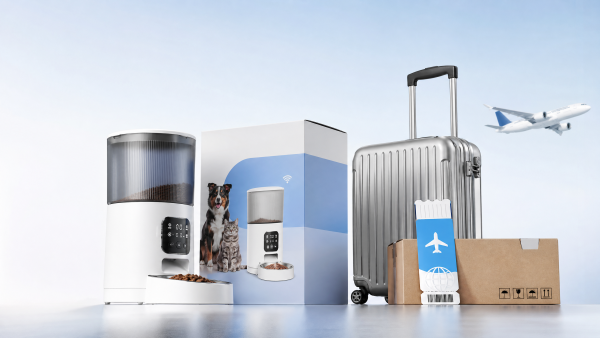
Choosing the right automatic pet feeder OEM can make or break your launch timeline, especially when project managers must balance tooling, compliance, cost, and cross-border coordination. For teams under pressure to move fast without sacrificing quality, the real challenge is finding a manufacturing partner that can deliver predictable milestones, transparent communication, and scalable production from day one.
Why a Checklist Approach Matters for an automatic pet feeder oem Search
For project managers and engineering leads, supplier selection is rarely a branding exercise. It is a schedule-control exercise. In the pet economy, especially for connected or timed feeding products, a delayed tooling revision, missing test report, or unstable firmware can easily push launch by 4 to 12 weeks. That is why an automatic pet feeder oem should be evaluated through a practical checklist rather than a broad supplier pitch.
This matters even more for buyers serving travel service ecosystems, such as airport retail, travel e-commerce bundles, hotel loyalty merchandise, mobile pet care kits for long-distance travelers, and cross-border gifting programs. In these use cases, the product is not just a feeder. It becomes part of a time-sensitive retail package that must align with seasonal campaigns, regional shipping windows, and destination-specific compliance expectations.
A checklist reduces ambiguity. It helps teams confirm what must be true before paying for molds, approving engineering samples, or locking a production slot. In most sourcing programs, 6 to 10 core checkpoints are enough to reveal whether a factory can support a smooth launch or whether hidden risks are likely to surface after deposit.
What project teams should verify first
- Whether the supplier has existing feeder platforms that can shorten development by 30 to 60 days compared with a fully new design.
- Whether electronics, plastic housing, app integration, and packaging are managed in-house or split across multiple subcontractors.
- Whether the factory can provide a realistic milestone plan covering sample lead time, tooling, pilot run, mass production, and shipment booking.
- Whether required market-entry documents can be prepared before launch, not after the goods are already on the water.
When these four items are unclear, the odds of timeline disruption rise quickly. A polished quotation does not replace operational readiness. For an automatic pet feeder oem, launch speed usually depends less on the cheapest unit cost and more on whether the supplier controls the critical path.
Core evaluation checklist: the milestones that protect launch timing
The fastest way to compare suppliers is to review them against milestone reliability, not only price. A supplier that answers quickly but cannot freeze drawings, verify food-contact materials, or manage firmware revisions will create downstream delays. The checklist below highlights the operational areas that deserve priority during supplier screening.
Use this table during your first 2 to 3 qualification calls. It works especially well for retail and travel-linked sourcing teams that need predictable launch windows tied to promotions, route expansion, or peak booking seasons.
The most reliable automatic pet feeder oem partners can explain each stage in operational language, not only sales language. If the team can define sample lead time, test sample quantity, tooling review points, and corrective-action timing, that is usually a good sign. If answers stay vague, assume timeline risk is higher than quoted.
Minimum checkpoint list before sample approval
- Confirm feed capacity range, portion setting logic, and power mode, including battery backup or adapter requirements.
- Request exploded views or key component summaries for motors, sensors, lids, seals, and PCB assemblies.
- Check whether the hopper and bowl materials are appropriate for repeated food contact and easy cleaning.
- Set a pass/fail test plan for jam rate, timer accuracy, drop consistency, and packaging drop resistance.
These checks help avoid a common sourcing mistake: approving a good-looking sample that has not been tested against production reality. For travel retail and destination delivery programs, where returns are expensive and customer patience is limited, this discipline is essential.
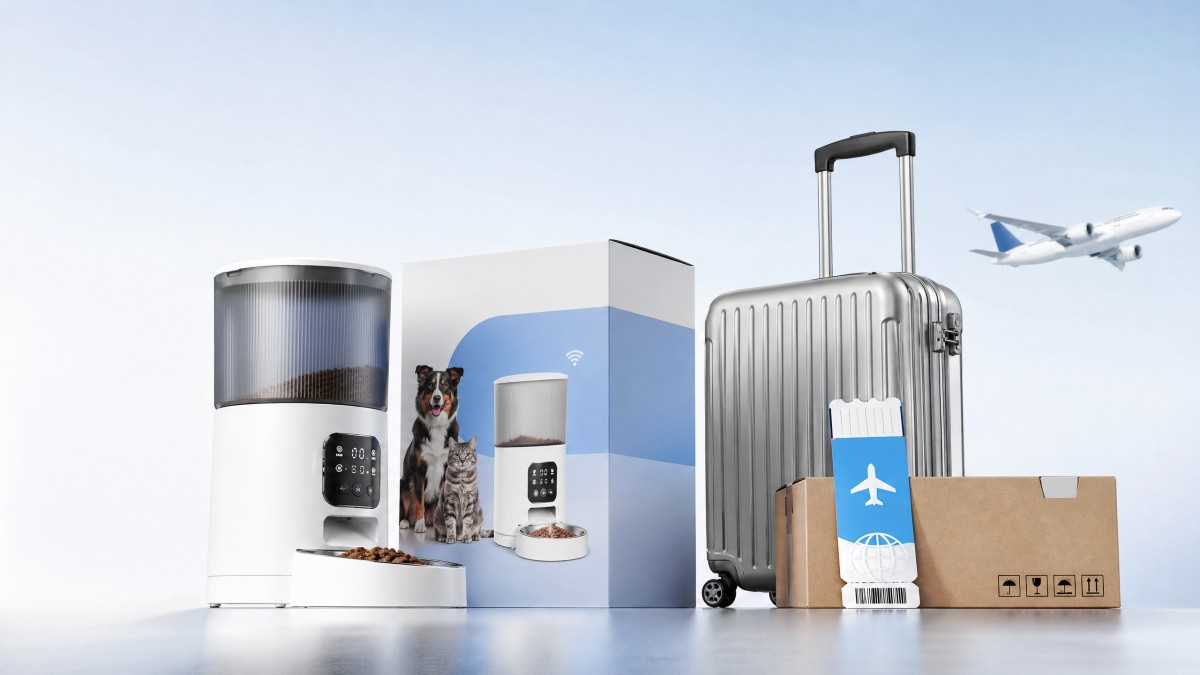
How to judge launch-fit for travel service retail programs and mobile consumer scenarios
Although the keyword is automatic pet feeder oem, product selection should still reflect where and how the item will be sold. In travel service channels, buyer priorities often differ from traditional pet specialty retail. Packaging footprint, voltage compatibility, route durability, and fulfillment simplicity can become more important than adding one more smart feature.
For example, a feeder sold through a travel-related online gift shop may need compact packaging for parcel efficiency. A hotel partnership program may prioritize quiet operation and simple user setup within 10 minutes. An airport retail concept may need a strong shelf story and clear multilingual labeling. These are commercial fit questions, but they directly influence OEM selection and launch readiness.
A capable OEM should be able to adapt the same core feeder platform for at least 3 common scenarios: e-commerce shipping, retail shelf display, and promotional bundle packaging. If every variation requires a separate engineering cycle, your schedule buffer may disappear quickly.
Scenario-based checklist for travel-linked distribution
Before finalizing a supplier, map the product against the actual sales channel. This reduces late packaging edits and avoids mismatches between engineering assumptions and commercial reality.
This comparison shows why one automatic pet feeder oem may perform well in standard e-commerce but poorly in travel-linked campaigns. The right partner is not simply the one with the broadest catalog. It is the one whose operating model matches your distribution complexity, packaging rhythm, and launch calendar.
Practical fit signals to prioritize
- A standard lead time range for packaging updates, usually 7 to 14 days for artwork confirmation and sample revisions.
- Carton planning that supports both pallet shipment and parcel delivery without complete repacking.
- A documented process for destination labels, user manuals, and language variations across 2 or more regions.
Common blind spots that delay an automatic pet feeder oem project
Many delays do not come from dramatic production failures. They come from small assumptions left unconfirmed. A factory may quote 35 days for production but omit 10 days for packaging approval, 7 days for final inspection booking, and another week for shipping document alignment. Project managers should treat these hidden intervals as part of the real launch schedule.
Another common issue is over-customization too early. If your team requests a new app interface, custom mold texture, unique bowl structure, and special gift packaging at the same time, each decision creates dependencies. In many programs, using 70% to 80% of an existing platform first is a better path to market than insisting on a ground-up design before validating demand.
Travel service buyers should also watch for logistics-related oversights. If the product includes adapters, batteries, or electronic modules, shipping options may narrow. If destination instructions are incomplete, retail onboarding may slow. A supplier that understands these practical export details can save more time than one offering a marginally lower factory price.
Risk reminders your team should not ignore
- Do not treat pre-production samples as proof of mass-production consistency unless a pilot run has been completed.
- Do not assume every OEM manages firmware or app changes internally; outsourced software work can add 2 to 6 weeks.
- Do not finalize booking deadlines before confirming final carton dimensions, pallet pattern, and shipping mode.
- Do not overlook after-sales spare parts planning if the feeder is sold into premium travel gift channels where return handling is costly.
A simple timing rule
If your required market launch is less than 90 days away, prioritize platform-based OEMs with proven tooling and limited customization. If your horizon is 120 to 180 days, more extensive private-label adaptation may be realistic. This rule is not absolute, but it helps teams avoid committing to a scope that the calendar cannot support.
Execution plan: how to move from shortlist to launch without losing control
Once you have 2 or 3 viable candidates, the next step is not immediate price negotiation. It is controlled validation. The best project outcomes usually come from a staged process where engineering, sourcing, packaging, compliance, and logistics owners all sign off at defined checkpoints. That structure prevents last-minute surprises and creates a shared view of what “ready” actually means.
For an automatic pet feeder oem project tied to travel service retail or destination e-commerce, a practical execution plan often spans 5 stages: specification lock, sample validation, pilot run, production release, and shipment readiness. Each stage should have named owners, target dates, and no more than 3 to 5 approval criteria. If the list becomes too long, teams lose speed and accountability.
The benefit of this structure is clarity. Instead of asking whether the supplier “looks good,” you can ask whether the hopper material was approved, whether the timer logic passed tests, whether the carton survived handling trials, and whether shipping documents match destination requirements. That is how launch timing is protected in real sourcing programs.
Recommended implementation checklist
- Prepare a supplier brief with target market, channel type, packaging constraints, order forecast, and requested launch date.
- Ask each OEM for a milestone calendar covering sample lead time, tooling if needed, pilot quantity, production days, and shipment preparation.
- Score suppliers against schedule realism, documentation readiness, communication speed, and platform maturity rather than unit cost alone.
- Run a structured sample review with engineering, packaging, and commercial teams before any deposit for mass production.
- Hold a pre-production meeting to freeze artwork, labels, carton specs, inspection criteria, and booking assumptions.
FAQ for project managers evaluating an automatic pet feeder oem
How many suppliers should we shortlist?
In most cases, 3 is enough. Fewer than 2 limits comparison. More than 4 often slows the decision process without adding much value, especially when your launch window is tight.
Should we start with ODM or full OEM customization?
If speed matters, start from an existing platform and customize selectively. That often reduces engineering uncertainty and shortens the path to production by several weeks.
What is the biggest schedule mistake?
Treating compliance, packaging, and logistics as downstream tasks. In reality, they should be checked during supplier qualification, not after the factory starts production.
Why work with us when sourcing an automatic pet feeder oem
Global Consumer Sourcing supports buyers, brand owners, and procurement teams that need sharper supplier judgment, faster validation, and clearer visibility across product, compliance, and retail-readiness questions. For project managers under launch pressure, that means practical guidance rather than generic sourcing theory.
We help teams frame the right OEM questions early, compare suppliers against realistic delivery risks, and align product decisions with channel requirements, including travel-linked retail and cross-border distribution use cases. If you are trying to reduce revision cycles, protect milestone dates, or understand which feeder platform is commercially viable, an informed evaluation process can save significant time.
Contact us if you need support with automatic pet feeder oem selection, parameter confirmation, product positioning, sample review priorities, certification requirement planning, expected delivery windows, packaging fit for travel service channels, or quotation communication. The earlier these points are clarified, the easier it becomes to launch on schedule with fewer avoidable surprises.
Related Intelligence
 Skincare OEMAug 16, 2026Amazon Enforces AI Human Metadata Rule for Beauty and Personal Care SellersAmazon now enforces AI human metadata rules for beauty sellers. Learn how to protect listings, traffic, and compliance in skincare, cosmetics, and beauty devices.
 Beauty DevicesAug 15, 2026China to Roll Out Nationwide Cross-Border Cash Pooling for MultinationalsChina to roll out nationwide cross-border cash pooling for multinationals from Sept. 14. Discover how this policy could improve treasury efficiency, liquidity management, and China-linked supply chains.
 Beauty DevicesAug 14, 2026China Imposes Temporary Export Ban on Helium, Affecting Cooling Supply ChainsChina's temporary helium export ban may disrupt cooling supply chains for beauty RF devices and laser systems. Learn what ODMs, buyers, and procurement teams should check now.
![]() Cosmetics & PkgAug 13, 2026PPWR becomes mandatory: Beauty and personal care packaging materials usher in new EPR and PFAS compliance requirementsPPWR takes effect for cosmetics packaging in the EU, bringing EPR registration and PFAS limits. Learn what brands, importers, and suppliers must do now.
Cosmetics & PkgAug 13, 2026PPWR becomes mandatory: Beauty and personal care packaging materials usher in new EPR and PFAS compliance requirementsPPWR takes effect for cosmetics packaging in the EU, bringing EPR registration and PFAS limits. Learn what brands, importers, and suppliers must do now. Cosmetics & PkgAug 12, 2026EU PPWR Now Enforced for Beauty Packaging ComplianceEU PPWR now enforced for beauty packaging compliance: learn how EPR, ERN, heavy metals and PFAS rules affect EU exports, customs clearance and platform sales.
 Cosmetics & PkgAug 11, 2026EU PPWR Rules Take Effect on Aug. 12 for Beauty PackagingEU PPWR rules for beauty packaging take effect on Aug. 12, 2026. Learn key compliance steps, EPR, labeling, PFAS limits, and how to avoid customs delays and fines.
 Smart Pet DevicesAug 10, 2026EU EPR Rules to Cover Smart Pet Devices on Aug. 15EU EPR Rules will cover smart pet devices from Aug. 15, 2026. Learn how smart collars, feeders, and monitoring devices can avoid delisting, customs delays, and compliance risks in the EU.
 Infant Feeding & CareAug 09, 2026CPSC Recalls Baby Sleep Sacks Over Undeclared TDCPPCPSC Recalls Baby Sleep Sacks Over Undeclared TDCPP: learn how this 2026 recall impacts CPC documents, third-party testing, and U.S. baby product compliance for exporters.
 Infant Feeding & CareAug 08, 2026ECHA Adds 5 SVHCs, Importer Notices Due From Oct 2026ECHA adds 5 SVHCs to the Candidate List, with importer notices due from October 2026. Learn how REACH affects exporters, supply chains, and documentation readiness.
 Baby Gear & StrollersAug 07, 2026CPSC Revises Crib Rail Standard for November 2026CPSC revises crib rail standard for November 2026, adding dynamic impact tests and mandatory third-party lab testing. Learn how the new rule affects U.S. market access, compliance, and shipments.
 Electronic & RC ToysAug 06, 2026EU to Require EN IEC 62115:2025 for Electronic ToysEU to Require EN IEC 62115:2025 for Electronic Toys from Oct 1, 2026. Learn scope, battery and AI safety updates, CE compliance risks, and how exporters can avoid customs delays.
 Baby Gear & StrollersAug 05, 2026US Stroller Stability Rule Takes Effect Aug. 15US Stroller Stability Rule Takes Effect Aug. 15: learn how new U.S. stroller compliance, ASTM F833-26a, and CPSC testing rules may affect imports, certification, and shipment readiness.
 Infant Feeding & CareAug 04, 2026ECHA Adds 5 SVHCs, Triggering Baby Care Export ReviewECHA adds 5 SVHCs, prompting an urgent baby care export review for EU-bound products. Learn the 0.1% threshold risks, compliance steps, and how to avoid customs delays and fines.












