What CPC Certified Really Covers in Kids Gift Products
For global procurement teams, D2C brands, and compliance-focused buyers, understanding what CPC certified really covers in gift products is critical. From children’s gift products to maternity items, outdoor gear, and sports equipment, safety requirements often intersect with CE compliance, FDA certified claims, and sustainable manufacturing goals. This guide explains the real scope of CPC certified standards and helps sourcing, quality, and business decision-makers reduce risk while choosing compliant suppliers.
In cross-border retail sourcing, CPC certification is often treated as a simple checkbox. In reality, it affects product design, material selection, age grading, labeling, testing schedules, supplier qualification, and shipment readiness. For travel retail buyers, airport gift operators, resort shops, family-focused tourism brands, and destination merchandise distributors, that distinction matters because children’s gift products are frequently sold in fast-turn, seasonal, and highly visible environments.
The challenge is that many tourism-service procurement teams source gift assortments across multiple categories at once: plush souvenirs, activity kits, travel toys, stroller accessories, hydration items, mini sports sets, and family trip bundles. Not all of these items fall under the same rules, and not every product claiming compliance has the same documentation depth. Knowing what CPC certified really covers helps avoid customs delays, retailer rejection, recall exposure, and unnecessary testing costs.
Why CPC Matters in Travel Retail and Family Tourism Gift Programs
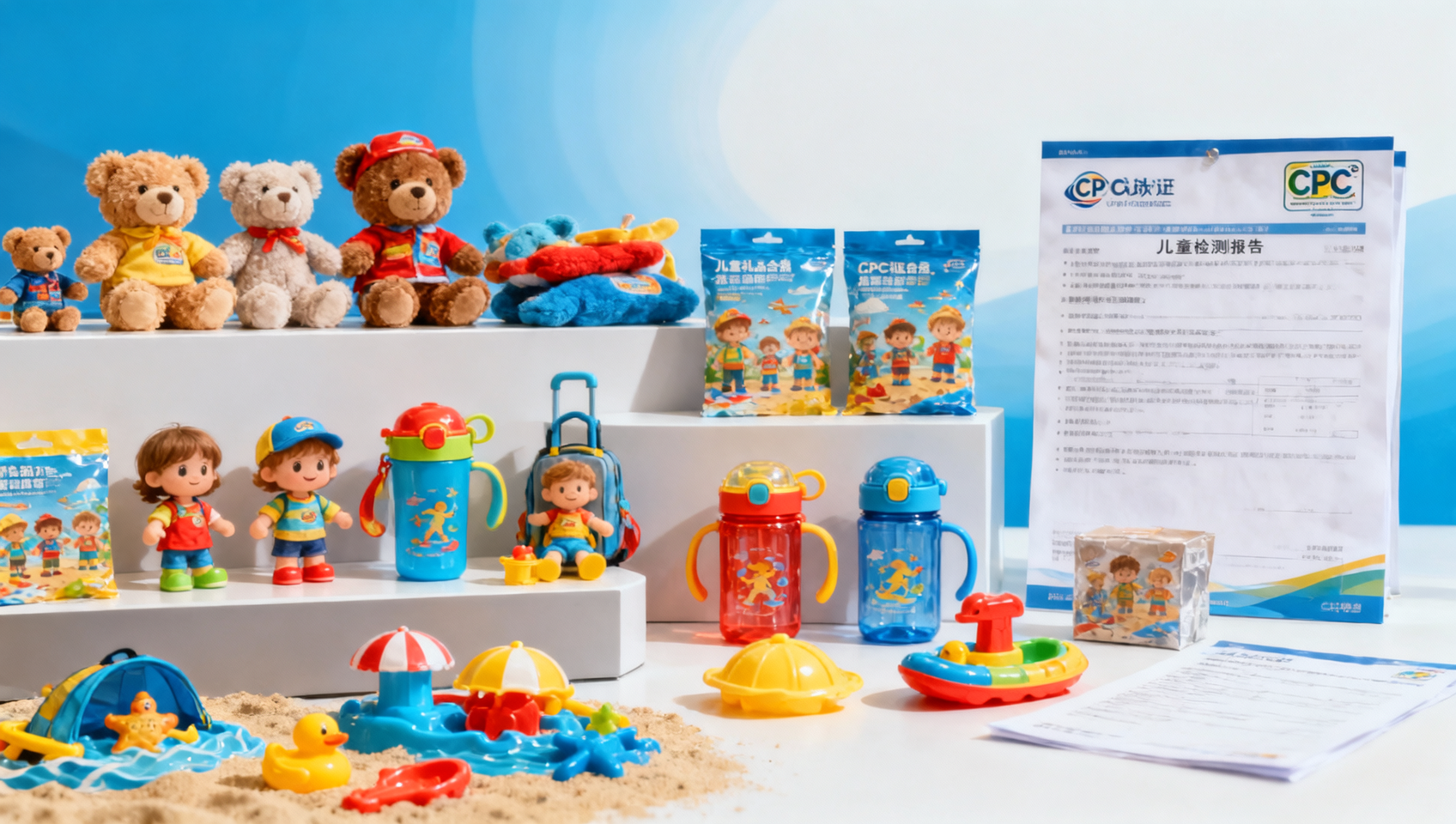
In the United States, CPC usually refers to the Children’s Product Certificate required for products intended primarily for children aged 12 and under. For tourism-service businesses, this is especially relevant when gift products are sold in theme attractions, hotel gift shops, cruise retail corners, museum stores, zoo outlets, and airport family retail zones. If a product is marketed to a child, decorated for child use, or commonly purchased as a children’s souvenir, CPC may become part of the compliance file.
This matters because travel retail operates on compressed timelines. A seasonal launch window may be only 6–10 weeks, and missed compliance documents can hold a shipment at the worst possible time: before peak holiday travel, school vacation periods, or summer resort openings. A buyer evaluating 20–50 SKUs for a destination gift range cannot rely on a generic supplier statement alone.
CPC is not a logo program in the same way many buyers think of CE marking. It is a certificate backed by testing and product-specific regulations. That means the certificate should align with the exact item, materials, intended age group, and applicable safety rules. For example, a children’s travel activity board book, a plush keychain for ages 3+, and a mini beach toy set may each require different test considerations even when sold in the same tourism channel.
For operators in travel services, the commercial impact is direct. A non-compliant item can trigger store-level removal, brand reputation damage, and replacement costs across multiple tourist locations. In a network of 15 stores or 3 airport terminals, a single issue can quickly spread from one point of sale to an entire retail program.
Typical tourism-service channels where CPC review is essential
- Hotel and resort gift shops selling children’s souvenirs, travel kits, and family activity items.
- Airport and station retailers offering compact toys, plush gifts, and on-the-go entertainment products.
- Cruise and ferry retail programs carrying destination-themed kids gifts and family travel bundles.
- Attraction stores in museums, aquariums, zoos, and theme destinations with educational or play-based merchandise.
A practical sourcing point
If the product is likely to be purchased by a parent, grandparent, or tour group as a child-focused gift, it should be reviewed as a potential children’s product early in development, ideally 30–45 days before final production approval. Waiting until pre-shipment testing often creates avoidable rework.
What CPC Certified Really Covers in Kids Gift Products
The most common misunderstanding is that CPC certified means a product has passed one universal test. In practice, the certificate covers compliance with all applicable children’s product safety rules relevant to that item. The scope can include substrate rules, chemical limits, mechanical and physical hazards, labeling requirements, tracking labels, and small parts or choking risk assessments. Coverage depends on the product category, material type, and age grading.
For tourism gift assortments, this often includes plush toys, souvenir play sets, children’s tableware, travel accessories, seasonal novelty products, arts-and-crafts packs, and baby-adjacent items. A child-sized travel pillow sold as a comfort toy may be reviewed differently from an adult souvenir cushion. Similarly, a silicone feeding item for maternity travel retail may involve a different regulatory pathway than a decorative gift item, even if both are displayed together.
Procurement teams should also remember what CPC does not automatically cover. It does not replace CE requirements for the EU market, does not act as an FDA approval for regulated food-contact or medical-related claims, and does not by itself prove sustainable sourcing. These are separate compliance or claim systems, though they often appear together in multi-market sourcing conversations.
The table below shows how CPC coverage typically maps to common children’s gift items sold through travel and destination retail channels.
The key takeaway is that CPC is product-specific, not brochure-specific. A supplier with one valid certificate for a toy line does not automatically cover 8 color variations, 3 material substitutions, or a redesigned package. Each change can alter risk and documentation requirements.
Core elements buyers should verify
- The certificate identifies the exact product or product family with a clear match to the shipment.
- The listed regulations match the product’s intended use, age grade, and material profile.
- The supporting test reports come from an accepted laboratory and reflect current production.
- The importer or domestic responsible party details are consistent with market-entry requirements.
How Buyers Should Separate CPC, CE, FDA, and Sustainability Claims
Multi-market tourism brands often source one product line for the U.S., EU, Middle East, and Asia-Pacific at the same time. That is where confusion grows. A supplier may present CE reports, FDA material statements, recycled-content claims, and a CPC file in one compliance pack. While all of these may be useful, they answer different questions for different markets and product functions.
For example, CE is relevant to certain EU obligations, especially for toys and specific regulated categories. FDA-related statements may be relevant where food-contact materials or other regulated claims apply. Sustainability documentation may concern recycled resin content, packaging reduction, or social compliance. CPC, however, is focused on applicable U.S. children’s product rules. One document cannot replace the others.
This distinction is commercially important for tourism-service operators serving international travelers. A cruise retailer or airport concessionaire may purchase the same children’s gift concept for multiple routes, but compliance may need to be split into 2–4 destination-specific document sets. Trying to force one universal file usually increases risk instead of reducing it.
The comparison below helps technical reviewers, sourcing teams, and financial approvers see where each claim fits in a practical buying workflow.
For purchasing teams, the operational solution is simple: create a 4-column compliance checklist for every SKU covering market, age grade, claim type, and document owner. This can reduce approval confusion across sourcing, legal, and merchandising teams, especially when 3 or more departments review the same product before order release.
Common mistakes in mixed-claim sourcing
- Assuming CE test evidence automatically satisfies U.S. CPC needs.
- Using outdated reports after changing colorants, coatings, or accessory parts.
- Advertising “FDA certified” in a broad way without checking whether the product claim is appropriate.
- Confusing recycled packaging claims with safety compliance for child use.
A Practical Supplier Review Framework for Procurement, QA, and Project Teams
A strong sourcing decision is rarely based on price alone. In travel retail, where demand can spike around holidays, vacation peaks, and event-driven tourism, buyers need a repeatable process that balances compliance confidence with speed. For children’s gift products, the most effective review model combines document screening, sample validation, risk scoring, and production control before shipment.
A useful framework is to divide the review into 5 stages over roughly 3–8 weeks, depending on product complexity. Stage 1 is concept classification. Stage 2 is document collection. Stage 3 is sample and labeling review. Stage 4 is production confirmation. Stage 5 is pre-shipment compliance file closure. This staged approach works well for resort operators, attraction retailers, and distributors managing 10–100 SKUs per season.
Technical evaluators should pay special attention to product changes that seem minor but affect compliance, such as zipper pulls, detachable tags, metallic paints, magnets, or decorative accessories. In many travel souvenir products, styling changes are made late to reflect a destination brand or event theme. If those changes occur after testing, the certificate package may no longer be aligned with the production item.
Finance and business approvers also need visibility into risk-cost tradeoffs. Paying for one additional verification step upfront may prevent much larger losses tied to port delays, returns, or markdowns across a chain of tourist retail locations.
Suggested 5-step buying workflow
- Classify the item by intended user age, use scenario, and sales market before PO issuance.
- Request CPC-related documents, supporting test reports, bill of materials summary, and labeling artwork.
- Review physical samples against documentation, including warnings, tracking labels, and detachable parts.
- Freeze materials and components for production, then confirm no substitutions are made without approval.
- Complete pre-shipment document matching and keep records for importer, distributor, and retail audit use.
Risk signals that deserve escalation
If a supplier cannot explain which regulation the certificate refers to, provides reports older than the current product version, or cannot link test data to the exact SKU family, the product should move into a higher-risk review path. In a practical sourcing matrix, these cases often justify delayed approval until corrective evidence is received within 5–7 working days.
Documentation, Lead Time, and FAQ for Tourism-Service Buyers
For many buyers, the real issue is not whether CPC exists in theory, but whether the sourcing process can support it on time. Typical lead times vary. Simple repeat-order items with unchanged materials may move through document refresh and production in 2–4 weeks. New product programs, multi-component kits, or customized destination merchandise may require 4–8 weeks, especially if artwork, packaging, or accessories change late.
Documentation discipline is equally important. A useful compliance file for a children’s travel gift product usually includes the certificate, supporting test reports, product images, SKU references, age grading, warning language, tracking label details, and the responsible importer or manufacturer information. Where products are sold across airports, resorts, and attraction stores, centralized digital storage can cut retrieval time from several hours to under 15 minutes during an audit or shipment review.
This is where intelligence-led sourcing platforms such as Global Consumer Sourcing add value. For retail buyers and supply chain managers navigating gifts, toys, maternity, sports, and outdoor categories, the advantage is not just access to products. It is access to better supplier screening logic, cross-category compliance awareness, and sourcing insight that fits real-world commercial timelines.
Below are common buyer questions that often arise during tourism merchandise planning and supplier onboarding.
How do I know whether a souvenir item is really a children’s product?
Look at intended use, marketing presentation, design cues, and likely purchaser behavior. If the item is promoted for children, sized for child use, or merchandised in a family travel section, treat it as a children’s product candidate. This should happen before sample approval, not after booking cargo.
Can one CPC file cover multiple destination-themed versions?
Sometimes, but only if the product family is genuinely consistent in materials, construction, and risk profile. If a destination version adds a metal charm, glow coating, sound module, or detachable accessory, additional review may be required. Even a packaging change can affect warning and labeling obligations.
What should distributors and agents ask from factories first?
Start with product identification, intended age, target market, latest test support, and the current certificate format. Then ask whether any material, print, or accessory changes were made in the last 12 months. That question often reveals hidden gaps faster than a generic request for “all certificates.”
What is the safest approval timing before a tourism peak season?
A practical buffer is 45–60 days before store launch for new items and at least 21–30 days for repeat items with updated artwork. This allows time for document review, possible retesting, packaging correction, and shipping adjustments without jeopardizing seasonal sales windows.
What CPC certified really covers in kids gift products is more detailed than many sourcing teams expect. It touches testing scope, age grading, product changes, documentation control, and market-specific compliance strategy. For travel retail, family tourism merchandise, and destination gift programs, that knowledge supports safer assortments, fewer delays, and more reliable supplier selection.
If your team is evaluating children’s souvenirs, maternity travel items, outdoor family products, or private-label gift lines across global supply markets, now is the right time to tighten your compliance review process. Contact GCS to explore tailored sourcing intelligence, supplier screening support, and category-specific guidance that helps you make faster, lower-risk buying decisions.
Related Intelligence
 Beauty DevicesApr 19, 2026Global Li-ion Recycling Rate Hits 62.3%: Beauty Device BOM Cost Down 9%Li-ion recycling rate hits 62.3% — driving 9% BOM cost reduction for beauty devices. Discover how cascade utilization is reshaping global supply chains & boosting margins.
 Cosmetics & PkgApr 19, 2026FDA Mandates Independent VCRP Registration for Cosmetic Packaging as of Apr 19, 2026FDA mandates independent VCRP registration for cosmetic packaging by Apr 19, 2026—avoid Import Alert 66-12. Act now to secure U.S. market access.
 Nursery Furniture & MonitorsApr 19, 2026Canton Fair Phase III: Smart Infant Monitors Surge Amid EN60601-1-12 DemandSmart infant monitors surge at Canton Fair Phase III amid rising EN60601-1-12 compliance demand — discover why Middle East buyers now prioritize medical-grade safety.
 Camping & WaterApr 19, 2026RCEP Cuts Tariff on China-Made Camping Water Bags by 0.8% for TPU+Aluminum LaminateRCEP cuts tariff by 0.8% on China-made camping water bags with TPU+aluminum laminate — unlock duty savings & win Indonesian tenders now.
 Corporate & Seasonal GiftsApr 19, 2026TÜV Rheinland Updates Green Packaging Certification for Corporate GiftsGreen Packaging Certification now requires LCA reports & carbon heat maps for corporate gifts—key for OEMs, exporters & ESG procurement. Act before July 2026.
 Smart Pet DevicesApr 19, 2026Vietnam Requires ISO 13485 + Vietnamese Manual for Smart Pet CollarsISO 13485 + Vietnamese manual now mandatory for smart pet collars in Vietnam—key compliance update for exporters, certifiers & logistics partners.
 Infant Feeding & CareApr 19, 2026JETRO Mandates Blockchain Traceability for Silicone in Infant Feeding ProductsBlockchain traceability for silicone in infant feeding products is now mandated by JETRO — ensure compliance with AntChain/ZhiXin Chain to clear Japanese customs.
 STEM & Educational ToysApr 19, 2026SASO Shortens AI-STEM Toy EMC Certification to 24 HoursSASO Shortens AI-STEM Toy EMC Certification to 24 Hours — Chinese manufacturers can now accelerate Saudi market access with pre-embedded PCB-level EMC filtering and verified design docs.
 Cosmetics & PkgApr 19, 2026EU EPR Mandatory Registration in France & Germany Takes Effect Apr 18, 2026EU EPR mandatory registration in France & Germany starts Apr 18, 2026 — Chinese cosmetic packaging exporters must act now to avoid delisting, delays & fines.
 Camping & WaterApr 19, 2026CPSC Tightens Import Inspection for Camping Water BladdersCPSC Tightens Import Inspection for Camping Water Bladders: Urgent ASTM F2739-23 cold-flex compliance required at −20°C—avoid shipment rejection & re-export.
 Camping & WaterApr 18, 2026CPSC Launches New TPU Camping Bladder ChecksCPSC launches TPU camping bladder checks: Critical −20°C performance enforcement for exporters, suppliers & OEMs. Act now to avoid U.S. customs delays.
 Beauty DevicesApr 18, 2026Global Li-ion Battery Recycling Rate Hits 62.3%Li-ion battery recycling rate hits 62.3%—cutting BOM costs for beauty & smart pet device batteries. Discover how LFP cathode savings boost margins and compliance readiness.
 Beauty DevicesApr 18, 2026Canton Fair Phase II Preview: Beauty Device Inquiries +41% YoYBeauty device inquiries surge +41% YoY ahead of Canton Fair Phase II — Middle East buyers prioritize RF safety & energy efficiency certification.