Outdoor Gear Materials That Fail Faster Than Spec Sheets Suggest
Spec sheets rarely tell the full story. For buyers managing global procurement, D2C brands sourcing outdoor gear and sports equipment must look beyond lab claims to real-world durability, CE compliance, CPC certified standards, FDA certified components, and sustainable manufacturing risks. This guide helps procurement, quality, and project teams identify material failures earlier and source smarter across demanding retail categories.
In travel services, outdoor equipment is not a background detail. It directly affects tour safety, rental fleet uptime, guest satisfaction, insurance exposure, and replacement costs. A tent fabric that loses waterproof performance after 40 to 60 field nights, or a trekking pole grip that degrades after one wet season, can damage both margins and brand trust faster than a clean laboratory report suggests.
For sourcing teams, the core issue is simple: material failure rarely starts with a dramatic break. It usually starts with hidden abrasion, UV embrittlement, coating hydrolysis, seam creep, odor migration, corrosion, or delamination. These failure modes matter to operators, technical reviewers, quality managers, distributors, and financial approvers because a product that passes incoming inspection can still underperform across 3 to 12 months of tourism use.
The sections below focus on outdoor gear used in guided tours, camping packages, adventure travel programs, rental operations, and resort activity services. The objective is not only to compare materials, but to help B2B decision-makers evaluate durability risk, certification fit, maintenance burden, and sourcing strategy before the first purchase order is released.
Why Outdoor Gear Materials Fail Faster in Travel Service Use
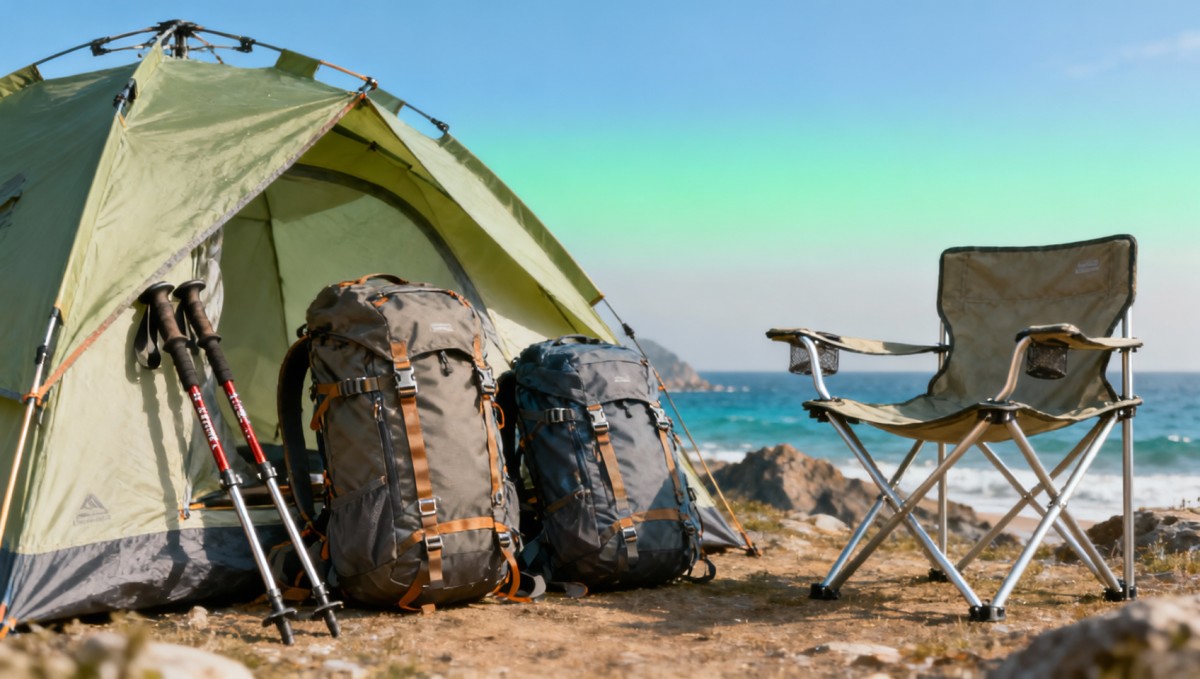
Travel service environments compress wear into shorter timeframes. A retail customer may use a backpack or folding chair 10 to 15 times per year, but a tour operator, campsite, or rental service may put the same item into use 80 to 200 times annually. That difference changes how materials should be evaluated. A fabric that appears robust on a spec sheet may be unsuitable for repeated loading, wet packing, rough transport, and variable storage temperatures.
The most common gap between specification and reality comes from test conditions. Many materials are measured under controlled humidity, limited UV exposure, and clean abrasion surfaces. In tourism operations, gear is dragged across rock, exposed to salt spray, packed when damp, and left inside vehicles that can exceed 45°C. These conditions accelerate hydrolysis, cracking, foam collapse, adhesive failure, and corrosion across much shorter service cycles.
Another issue is mismatch between consumer-grade construction and commercial rotation. Outdoor gear for guided trekking, glamping, beach excursions, paddling tours, or youth travel programs needs a higher duty cycle. Procurement teams often focus on unit cost, but replacement frequency can be 2 to 3 times more important than initial price if service downtime disrupts bookings or damages reviews.
Field stress factors buyers often underestimate
- Wet-dry cycling repeated 20 to 50 times can weaken coatings and seam tape faster than static water-resistance testing indicates.
- UV exposure during 1 summer season in high-altitude or coastal tourism locations can reduce polymer flexibility and color fastness significantly.
- Transport vibration over hundreds of kilometers can loosen rivets, deform frames, and fatigue stitched attachment points.
- Shared-use hygiene protocols, including frequent cleaning agents, may degrade grips, soft-touch coatings, and laminated labels.
For travel service businesses, the right sourcing question is not “Does this material meet the brochure claim?” but “How does this material behave after 30, 90, and 180 days of actual service use?” That shift helps technical teams create more reliable approval criteria and helps finance teams forecast total lifecycle cost more accurately.
High-Risk Materials and Failure Patterns to Watch
Certain materials fail more often than buyers expect, especially when suppliers emphasize nominal specifications without enough context. In travel and outdoor service applications, the biggest risk is not always the weakest-looking material. It is often the material that performs well in a narrow test but loses function quickly under mixed stress. This is common in coatings, foams, adhesives, and lower-grade alloys.
PU-coated fabrics are a typical example. They may offer attractive waterproof ratings, but hydrolysis can occur if products are stored damp or in hot warehouses for even 6 to 18 months. This matters for tents, rain covers, seat pads, and dry-storage accessories used in tourism fleets. Silicone-coated or better-managed multilayer constructions may cost more, yet often provide more stable service life in humid or coastal routes.
Open-cell foams and low-density EVA in straps, mats, and padded supports can also disappoint. After 3 to 6 months of commercial use, compression set becomes visible, reducing comfort and support. In guided travel packages, that leads to customer complaints even before visible breakage appears. Similarly, low-grade zinc alloy hardware may corrode or loosen faster than stainless steel or anodized aluminum components in marine or high-rain destinations.
Common materials that need deeper review
The table below shows where published claims and field behavior often diverge in outdoor gear used by tour operators, rental services, and activity providers.
The key takeaway is that a high number on a spec sheet does not automatically equal better lifecycle value. Buyers should ask how the material behaves after moisture exposure, repeated folding, cleaning chemical contact, and 100-plus usage cycles. For travel service fleets, these are baseline conditions, not exceptional ones.
Red flags during sample review
- Strong chemical odor after 48 hours out of packaging, which may indicate unstable additives or incomplete curing.
- Visible whitening at fold lines after 10 to 20 manual bends.
- Surface tackiness under warm-hand contact, especially on coated fabrics and grips.
- Inconsistent color or gloss across the same batch, suggesting coating variation.
How to Evaluate Durability Beyond the Spec Sheet
A stronger sourcing process starts with a use-case matrix, not a catalog comparison. For tourism businesses, that means mapping each product to terrain, climate, cleaning frequency, user weight range, rental turnover, and storage conditions. A beach resort, mountain guide service, and family glamping operator may all buy “outdoor gear,” but their durability priorities are different. Procurement and technical evaluation teams should define 4 to 6 critical stress conditions before requesting quotations.
Sample testing should also be staged. One incoming inspection is not enough. A more practical process uses 3 checkpoints: initial build review, accelerated wear simulation, and short field trial. Even a 14-day pilot with 10 to 20 units can reveal seam creep, buckle fatigue, foam collapse, zipper grit sensitivity, or fabric odor issues that do not appear during desk review.
Compliance matters as well, but it should be linked to actual risk. CE marking may apply to specific equipment categories. CPC certified requirements are especially relevant for children’s products in family travel programs, while FDA certified components can matter for food-contact hydration accessories or certain wellness-related travel goods. The objective is not to collect certificates for marketing purposes, but to ensure the selected product architecture aligns with the intended service environment and target market.
Practical evaluation framework for B2B buyers
The following table can be used by sourcing, quality, and project teams when screening outdoor gear materials for tourism operations.
This approach helps reduce two expensive errors: buying over-specified products that add cost without operational benefit, and buying under-tested products that trigger replacements inside the first season. In many tourism categories, a 5% to 8% increase in unit cost can be justified if it extends field life by one peak season and reduces returns, complaints, and emergency reordering.
A 5-step sourcing workflow
- Define the actual service environment, including climate, user profile, cleaning routine, and transport method.
- Request both standard specifications and failure-mode explanations from suppliers.
- Run accelerated internal checks plus a field trial of at least 2 weeks.
- Verify certification scope, especially where CE, CPC, or FDA-related component requirements apply.
- Approve with a batch-control and reinspection plan, not only with a one-time sample signoff.
Procurement, Compliance, and Sustainability Decisions That Improve Lifecycle Value
In outdoor travel service procurement, the best decision is usually the one that balances durability, compliance, replenishment stability, and end-of-life responsibility. Sustainable manufacturing is often discussed as a branding issue, but it is also a risk-control issue. Poorly managed recycled inputs, unstable dyeing, or inconsistent finishing can create batch variation that undermines field performance. Buyers should ask not only whether a material contains recycled content, but also how consistency is controlled across production lots.
Lead time planning matters too. For seasonal tourism programs, replacing failed outdoor gear in peak months can take 4 to 10 weeks depending on customization, testing, and shipping mode. That means project managers and financial approvers should review lifecycle cost before launch. A cheaper product with a 12% failure rate in the first season can become more expensive than a better-constructed option with a 3% to 5% failure rate and a longer reorder cycle.
Distributors and regional agents should pay close attention to spare-part strategy. Outdoor gear with replaceable buckles, poles, valves, straps, and fasteners often delivers better service economics than fully integrated designs that require whole-unit replacement. For operators managing 50, 100, or 500 units across multiple destinations, parts availability can materially reduce service interruption.
Commercial decision points before placing volume orders
- Confirm the minimum order quantity fits your seasonal demand curve and warehouse capacity.
- Ask for batch retention samples and a defect response process with a target reply time of 24 to 72 hours.
- Review whether key components are single-source or dual-source, especially for customized private-label programs.
- Require packaging suitable for humid transport and long-haul shipping to reduce mold and coating damage.
A disciplined supplier review process should connect product engineering, quality assurance, sourcing, and commercial planning. That is especially valuable for D2C brands expanding into travel-oriented outdoor categories, as well as for hospitality groups, experiential travel providers, and activity operators building branded gear programs. Material selection is not only a technical detail; it is a retail supply chain decision that influences warranty cost, channel reputation, and product-line resilience.
FAQ for buyers and technical reviewers
How long should a field trial last before approval?
For high-turn travel service use, 14 to 30 days is a practical minimum. If the product will be used in wet, coastal, or high-UV environments, extending trials to 45 days can reveal coating, corrosion, and comfort issues earlier.
Which failure modes deserve the most attention?
Focus on hydrolysis, seam and stitch creep, foam compression set, hardware corrosion, UV brittleness, and cleaning-chemical sensitivity. These account for a large share of early dissatisfaction in tourism-oriented outdoor products.
When do certifications become commercially important?
They matter most when the destination market, user age group, or product function requires them. Family travel programs, hydration products, and regulated accessory categories deserve early documentation review before design lock and supplier nomination.
A Smarter Sourcing Approach for Outdoor Gear in Tourism Operations
Outdoor gear materials fail faster than spec sheets suggest when products are selected for headline numbers instead of operational reality. For travel services, the safest purchasing strategy is to evaluate duty cycle, storage conditions, maintenance routines, component replaceability, and certification relevance together. That gives buyers a clearer picture of true lifecycle value.
Teams responsible for procurement, quality, project delivery, and commercial approval should treat field durability as a supply chain metric, not a post-sale problem. The most resilient sourcing programs use sample trials, risk-based compliance review, structured supplier documentation, and realistic commercial planning before scaling volume.
Global Consumer Sourcing supports retail buyers, brand owners, distributors, and sourcing leaders with deeper insight into material behavior, product compliance, and supply chain decision-making across sports and outdoors categories. If you are reviewing outdoor gear for guided travel, rental operations, private-label programs, or multi-market distribution, now is the right time to assess where your current specifications may be missing real-world failure risk.
To explore more resilient sourcing strategies, compare supplier capabilities, or review outdoor gear material choices in detail, contact us to get a tailored sourcing perspective and learn more solutions for your next product line.
Related Intelligence
 Beauty DevicesApr 19, 2026Global Li-ion Recycling Rate Hits 62.3%: Beauty Device BOM Cost Down 9%Li-ion recycling rate hits 62.3% — driving 9% BOM cost reduction for beauty devices. Discover how cascade utilization is reshaping global supply chains & boosting margins.
 Cosmetics & PkgApr 19, 2026FDA Mandates Independent VCRP Registration for Cosmetic Packaging as of Apr 19, 2026FDA mandates independent VCRP registration for cosmetic packaging by Apr 19, 2026—avoid Import Alert 66-12. Act now to secure U.S. market access.
 Nursery Furniture & MonitorsApr 19, 2026Canton Fair Phase III: Smart Infant Monitors Surge Amid EN60601-1-12 DemandSmart infant monitors surge at Canton Fair Phase III amid rising EN60601-1-12 compliance demand — discover why Middle East buyers now prioritize medical-grade safety.
 Camping & WaterApr 19, 2026RCEP Cuts Tariff on China-Made Camping Water Bags by 0.8% for TPU+Aluminum LaminateRCEP cuts tariff by 0.8% on China-made camping water bags with TPU+aluminum laminate — unlock duty savings & win Indonesian tenders now.
 Corporate & Seasonal GiftsApr 19, 2026TÜV Rheinland Updates Green Packaging Certification for Corporate GiftsGreen Packaging Certification now requires LCA reports & carbon heat maps for corporate gifts—key for OEMs, exporters & ESG procurement. Act before July 2026.
 Smart Pet DevicesApr 19, 2026Vietnam Requires ISO 13485 + Vietnamese Manual for Smart Pet CollarsISO 13485 + Vietnamese manual now mandatory for smart pet collars in Vietnam—key compliance update for exporters, certifiers & logistics partners.
 Infant Feeding & CareApr 19, 2026JETRO Mandates Blockchain Traceability for Silicone in Infant Feeding ProductsBlockchain traceability for silicone in infant feeding products is now mandated by JETRO — ensure compliance with AntChain/ZhiXin Chain to clear Japanese customs.
 STEM & Educational ToysApr 19, 2026SASO Shortens AI-STEM Toy EMC Certification to 24 HoursSASO Shortens AI-STEM Toy EMC Certification to 24 Hours — Chinese manufacturers can now accelerate Saudi market access with pre-embedded PCB-level EMC filtering and verified design docs.
 Cosmetics & PkgApr 19, 2026EU EPR Mandatory Registration in France & Germany Takes Effect Apr 18, 2026EU EPR mandatory registration in France & Germany starts Apr 18, 2026 — Chinese cosmetic packaging exporters must act now to avoid delisting, delays & fines.
 Camping & WaterApr 19, 2026CPSC Tightens Import Inspection for Camping Water BladdersCPSC Tightens Import Inspection for Camping Water Bladders: Urgent ASTM F2739-23 cold-flex compliance required at −20°C—avoid shipment rejection & re-export.
 Camping & WaterApr 18, 2026CPSC Launches New TPU Camping Bladder ChecksCPSC launches TPU camping bladder checks: Critical −20°C performance enforcement for exporters, suppliers & OEMs. Act now to avoid U.S. customs delays.
 Beauty DevicesApr 18, 2026Global Li-ion Battery Recycling Rate Hits 62.3%Li-ion battery recycling rate hits 62.3%—cutting BOM costs for beauty & smart pet device batteries. Discover how LFP cathode savings boost margins and compliance readiness.
 Beauty DevicesApr 18, 2026Canton Fair Phase II Preview: Beauty Device Inquiries +41% YoYBeauty device inquiries surge +41% YoY ahead of Canton Fair Phase II — Middle East buyers prioritize RF safety & energy efficiency certification.