Sports Equipment Sampling Issues That Distort Final Cost
In global procurement, sampling errors in sports equipment can quietly inflate landed costs, delay launches, and expose D2C brands to quality and compliance risks. From outdoor gear prototypes to CPC certified, CE compliance, and FDA certified components, early misjudgments affect sourcing decisions, sustainable manufacturing goals, and final margins. This article explores the hidden cost distortions buyers and quality teams must catch before mass production.
For travel service businesses, this issue is more than a factory-side technical problem. Hotels, resorts, adventure operators, destination retailers, cruise programs, airport stores, and travel experience brands increasingly source sports and outdoor equipment as part of guest packages, rental programs, branded merchandise, and wellness offerings. A flawed sample can distort cost models across freight, returns, training, insurance exposure, and seasonal launch timing.
That makes sampling a commercial control point for operators, technical evaluators, sourcing teams, finance approvers, project leads, distributors, and safety managers. When the sample does not reflect the production reality, travel service companies may approve a product that looks viable at USD 12 per unit, only to discover a true landed cost closer to USD 16–19 after packaging changes, compliance testing, defect allowances, and replacement logistics are added.
Why sampling errors matter in travel service procurement
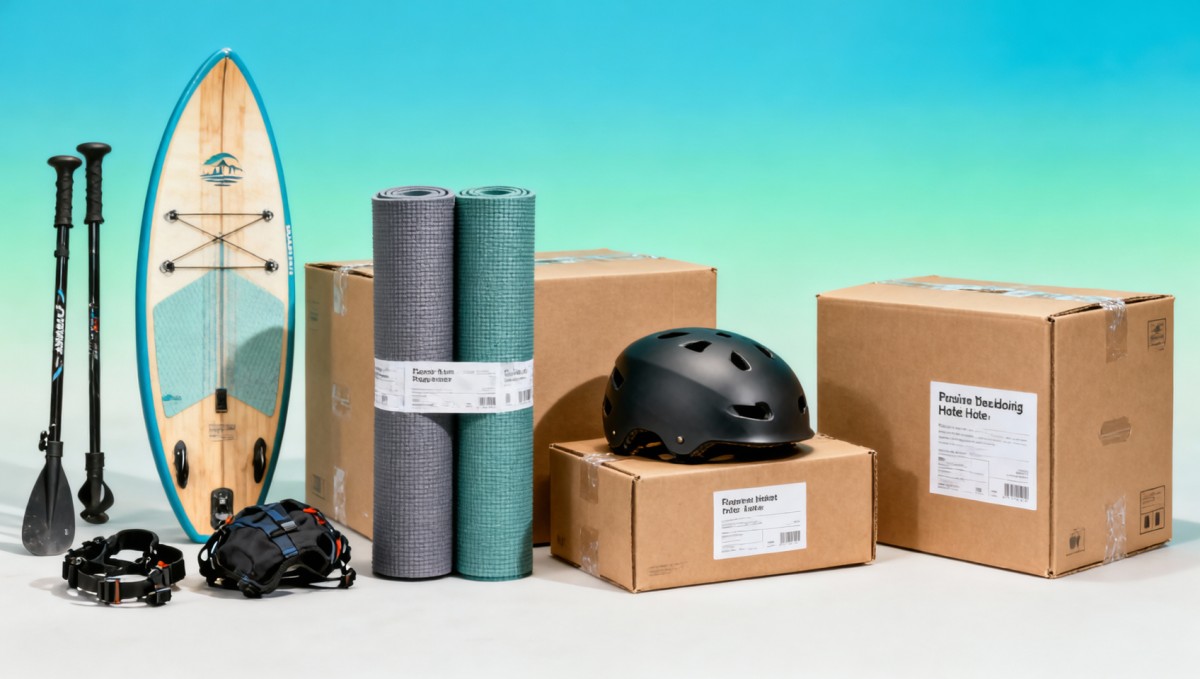
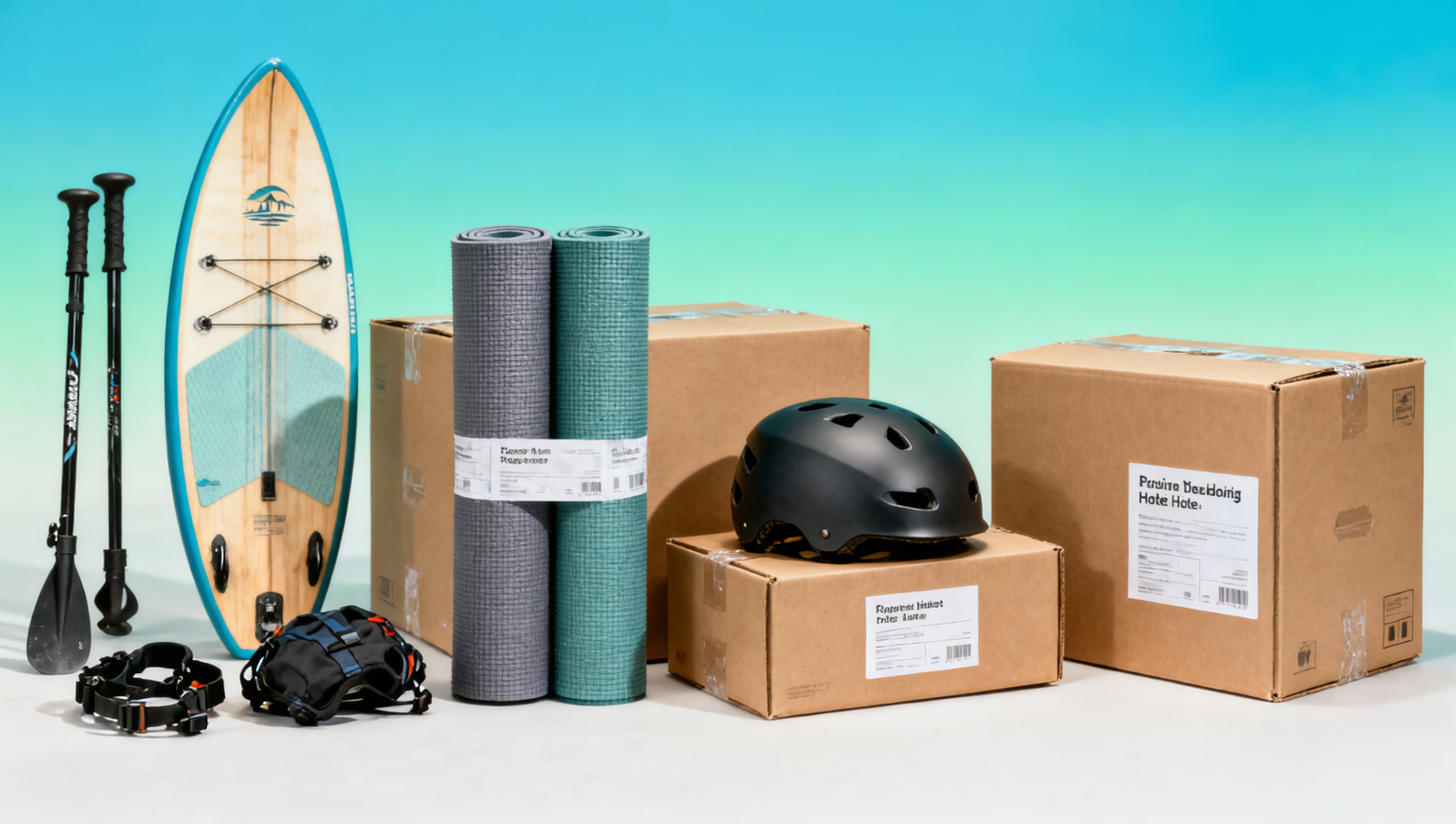
In the travel service sector, sports equipment often supports revenue-generating experiences. Examples include paddle sets at beach resorts, helmets for guided cycling tours, yoga kits for wellness retreats, inflatable products for family packages, and branded outdoor accessories sold in destination retail. If the approved sample is lighter, stronger, or better finished than the mass-production version, the operator may face dissatisfied guests, damaged reviews, and accelerated replacement cycles within 30–90 days.
Sampling mistakes usually distort cost in 4 direct ways. First, material substitution changes durability and warranty exposure. Second, packaging differences alter cubic volume and freight rates. Third, untested components trigger extra certification or lab costs. Fourth, operational mismatch increases staff handling time, especially for rental fleets or multi-site deployments. A sample that is 8% lighter because it uses a higher-grade alloy can create a major cost gap when the factory later switches to a cheaper but heavier material.
Travel operators are especially sensitive to launch timing. Many seasonal programs run on fixed selling windows of 6–12 weeks. If sampling misses a problem with water resistance, stitching strength, surface coating, or small-part safety, mass production may need rework, delaying inbound delivery by 14–28 days. In peak travel periods, that delay can be more expensive than the product itself because service bundles, partner promotions, and retail floor plans are already committed.
This is why sampling should be reviewed as an operational and financial approval gate, not just a design checkpoint. Procurement teams need cross-functional review from quality, compliance, finance, and the end-use operator. For travel brands with multiple channels, the same item may need to survive guest use, retail resale, and distributor handling, each adding different acceptance criteria.
Typical travel-service use cases where sample errors become expensive
- Resort rental fleets: a handle, buckle, or strap failure rate above 2% can disrupt daily operations and force immediate replacements.
- Guided adventure programs: if user weight tolerance or impact resistance is not validated, liability and insurance review may intensify.
- Travel retail merchandise: packaging dimensions that grow by 10%–15% can sharply change air freight and shelf planning.
- Kids and family travel offers: unverified small parts, coatings, or material claims may trigger CPC-related review and relabeling.
The hidden cost drivers that samples often fail to reveal
A common mistake is treating the prototype as a cost proxy. In reality, the sample may be hand-finished, assembled by a senior technician, or built from available premium stock rather than planned production materials. That creates false confidence in both quality and pricing. For travel service buyers, the hidden cost is rarely in the ex-factory quote alone; it emerges across packaging, field durability, replacement stock, and guest-facing service recovery.
Another distortion comes from incomplete test conditions. A sample helmet or outdoor accessory may pass a desk review but fail when exposed to 35°C heat, salt air, repeated sanitizing chemicals, or 3 to 5 guest uses per day. Travel operators often run products in harsher conditions than standard retail use. If the factory samples for showroom appeal rather than field performance, the cost model becomes disconnected from reality.
Packaging is a frequent blind spot. A compact prototype may be presented without retail-ready inserts, manuals, barcode labels, warning labels, polybags, or export cartons. Once those are added, carton count, dimensional weight, and pallet efficiency change. For cross-border orders, even a 2 cm increase in packed size can alter how many units fit per carton or per container, affecting freight by 6%–18% depending on lane and mode.
Compliance-related omissions are equally expensive. If a sample includes material claims involving food contact, skin contact, child use, electronics, or medical-adjacent wellness positioning, additional review may be needed. CE, CPC, or FDA-related pathways do not always apply to every sports item, but any relevant component or claim should be checked before production. The later this happens, the more likely the project absorbs repeat testing, relabeling, or a 2–4 week schedule shift.
Cost distortion map from sample stage to final landed cost
The table below shows how a seemingly acceptable sample can produce major variance once the item is used in hotels, tours, or travel retail channels.
The key lesson is that sample approval should model the complete service environment, not just unit appearance. For travel service procurement, a cost distortion of even USD 1.50 per unit can become significant when spread across 3,000 units, multiple properties, and backup stock requirements.
What finance and sourcing teams should ask before sample sign-off
- Does the sample reflect the exact production BOM, including foam density, coating thickness, fasteners, valves, or fabric weight?
- Was the sample packed in its final shipping and retail format, with warning labels and manuals included?
- Has the product been tested in realistic travel-service conditions for at least 3 to 7 days of repeated use simulation?
- Are destination market compliance assumptions confirmed, especially where child use, electronics, or wellness claims are involved?
How to evaluate sports equipment samples before approving production
A robust sample review process should separate visual approval from operational approval. The first confirms color, branding, dimensions, and finish. The second checks durability, maintenance burden, compliance fit, and service suitability. Travel service organizations should require at least 2 sample rounds for medium-risk products and 3 rounds for products used in rental, guided activity, or children’s programs.
Teams often focus on whether the item looks correct, but operators care whether it survives real turnover. If a resort expects a yoga mat, helmet, paddle, or inflatable to be cleaned 2 to 4 times daily, the sample should be tested under that exact cleaning and drying routine. Materials that look premium in showroom conditions may delaminate, fade, or stiffen after 20–50 cleaning cycles.
Cross-functional review is essential. Operators identify handling issues, quality teams review tolerances and construction, sourcing checks manufacturability, compliance reviews market-fit risks, and finance validates total cost assumptions. This process usually adds 5–10 working days before PO release, but it can save much larger losses later by preventing wrong approvals and unplanned field replacements.
Where sustainability matters, the sample review should also confirm whether recycled content, lower-impact coatings, or packaging reductions are feasible at scale. Sustainable manufacturing goals fail when the sample is built one way and production shifts to a less traceable, cheaper alternative under time pressure. For travel brands with ESG commitments, that inconsistency becomes both a sourcing and reputation risk.
Recommended sample validation checklist for travel-service buyers
The following framework helps procurement and technical teams translate sample review into an approval standard that is practical for destination retail, hospitality, and activity-based travel programs.
This checklist is useful because it connects technical review to business impact. Instead of asking whether the sample looks acceptable, it asks whether the approved version can move through service operations, freight, compliance, and guest use without hidden cost escalation.
Minimum approval workflow
- Step 1: Visual and dimensional review against artwork, branding, and functional brief.
- Step 2: BOM confirmation and factory declaration of production-equivalent materials.
- Step 3: Field-use simulation in the actual travel-service environment.
- Step 4: Packaging, labeling, and freight cube review.
- Step 5: Final commercial approval tying sample outcome to total landed cost.
Frequent sampling mistakes by buyers, operators, and project teams
One frequent error is approving based on a showroom sample without requiring a production sample. Showroom pieces are often built to win the order, not to reflect stable factory output. In travel service purchasing, this matters when the same item will be used across multiple properties or resold through multiple channels. A sample that works in one premium location may fail in a higher-turnover tourist environment.
Another common problem is reviewing the item without the end user present. Operators, instructors, retail staff, and maintenance personnel often see issues that head-office sourcing misses. For example, a beach activity operator may notice that a valve cap is too easy to lose, or a hotel team may find that a bag design slows room setup by 20–30 seconds per unit. Those small operational frictions become expensive at scale.
A third mistake is separating compliance review from sample review. If labeling, age grading, material declarations, or destination-market warnings are checked only after purchase order issuance, the program absorbs avoidable delay. Even where formal certification is not mandatory for the whole product, a single component or marketing claim may create additional documentation needs. This is particularly relevant for wellness-oriented travel products and family travel merchandise.
Finally, many teams underestimate fallback inventory cost. If an item has uncertain durability, the buyer may need 3%–8% spare stock for replacements. That reserve is often ignored in the initial sample approval discussion, even though it directly affects cash flow, storage, and replenishment planning. In destination operations where replenishment lead times run 30–60 days, underestimating spare need can interrupt service continuity.
Risk signals that a sample is not production-ready
- The supplier cannot confirm whether the sample uses mass-production materials or only available development stock.
- Packed dimensions are not finalized, yet freight decisions are already being discussed.
- No clear testing record exists for moisture, UV, heat, or repeated sanitizing exposure.
- Warnings, manuals, and destination-market labels are still “to be added later.”
- The sample passes visual review, but no operator has handled it in a real service workflow.
How distributors and finance approvers should respond
Distributors and commercial reviewers should request a cost sensitivity model before approval. This does not need to be complex. A 3-scenario view is often enough: base case, likely case, and stressed case. If freight rises by 10%, defect rate reaches 4%, and lead time extends by 2 weeks, does the program still meet margin goals? If not, the sample has not been commercially validated, even if it has been visually approved.
That discipline is especially useful for travel service businesses balancing service quality with seasonal demand. It prevents overcommitting to a product line that appears attractive during development but becomes margin-destructive after launch.
A practical sourcing framework to reduce sample-driven cost distortion
The most effective solution is to convert sampling into a staged sourcing framework. Travel service companies do not need overly complex systems, but they do need documented gates. A 4-stage model works well for most programs: concept sample, production-equivalent sample, field-tested sample, and pre-shipment approval sample. Each stage answers a different question and protects a different part of margin.
At stage 1, the goal is design feasibility. At stage 2, the factory confirms the actual BOM and packaging concept. At stage 3, the operator tests the item in live or simulated service conditions. At stage 4, the buyer checks whether the final approved product still matches the validated sample. This approach reduces the chance that a beautiful early sample hides an expensive production compromise.
It is also wise to define rejection thresholds. For example, travel rental products may require no critical safety defects, acceptable cosmetic variation within the agreed standard, and functional failure below an internal threshold during a sample cycle test. The precise threshold varies by item, but documenting it prevents disputes later between sourcing, operations, and the supplier.
Platforms like Global Consumer Sourcing help buyers make these decisions with better market intelligence. When sourcing teams understand category trends, material options, compliance considerations, and supplier capability signals earlier, they can ask better questions during sampling rather than discovering cost distortion after the order is placed.
Suggested 4-stage control model
This structure is practical because it aligns responsibility. Operators own field suitability, quality teams own technical consistency, sourcing owns supplier coordination, and finance owns margin validation. When these roles are connected at the sample stage, final cost becomes far more predictable.
FAQ: questions travel-service buyers often ask
How long should sample validation take?
For low-risk branded accessories, 7–10 working days may be enough. For rental, safety-adjacent, or family-oriented equipment, 2–4 weeks is more realistic because packaging, field testing, and compliance review may need to run together.
Should every product have a field test?
Not always, but any item exposed to repeated guest use, moisture, UV, heavy cleaning, or child interaction should have one. A short field simulation often reveals issues that lab or desk review misses.
What is the biggest financial blind spot?
In many programs, it is the combination of packaging-driven freight increase and replacement stock. Teams budget unit cost carefully but ignore cube efficiency and spare inventory, which can erase projected margin quickly.
When should compliance review begin?
At or before the production-equivalent sample stage. Waiting until mass production starts is too late, especially when destination labeling, warnings, or component claims may need revision.
Sampling errors in sports equipment are rarely just technical oversights; in travel service procurement, they reshape total landed cost, service reliability, launch timing, and guest satisfaction. The safest path is to treat sampling as a structured approval system that covers materials, field use, packaging, compliance, and margin sensitivity before production begins.
For buyers, operators, quality teams, distributors, and decision-makers seeking stronger sourcing discipline across sports and outdoor categories, Global Consumer Sourcing provides the intelligence needed to evaluate suppliers, spot hidden risks, and make better pre-production decisions. To reduce cost distortion in your next product program, contact us to discuss a tailored sourcing approach, request category insights, or explore more solutions for compliant and profitable travel-service supply chains.
Related Intelligence
 Beauty DevicesApr 19, 2026Global Li-ion Recycling Rate Hits 62.3%: Beauty Device BOM Cost Down 9%Li-ion recycling rate hits 62.3% — driving 9% BOM cost reduction for beauty devices. Discover how cascade utilization is reshaping global supply chains & boosting margins.
 Cosmetics & PkgApr 19, 2026FDA Mandates Independent VCRP Registration for Cosmetic Packaging as of Apr 19, 2026FDA mandates independent VCRP registration for cosmetic packaging by Apr 19, 2026—avoid Import Alert 66-12. Act now to secure U.S. market access.
 Nursery Furniture & MonitorsApr 19, 2026Canton Fair Phase III: Smart Infant Monitors Surge Amid EN60601-1-12 DemandSmart infant monitors surge at Canton Fair Phase III amid rising EN60601-1-12 compliance demand — discover why Middle East buyers now prioritize medical-grade safety.
 Camping & WaterApr 19, 2026RCEP Cuts Tariff on China-Made Camping Water Bags by 0.8% for TPU+Aluminum LaminateRCEP cuts tariff by 0.8% on China-made camping water bags with TPU+aluminum laminate — unlock duty savings & win Indonesian tenders now.
 Corporate & Seasonal GiftsApr 19, 2026TÜV Rheinland Updates Green Packaging Certification for Corporate GiftsGreen Packaging Certification now requires LCA reports & carbon heat maps for corporate gifts—key for OEMs, exporters & ESG procurement. Act before July 2026.
 Smart Pet DevicesApr 19, 2026Vietnam Requires ISO 13485 + Vietnamese Manual for Smart Pet CollarsISO 13485 + Vietnamese manual now mandatory for smart pet collars in Vietnam—key compliance update for exporters, certifiers & logistics partners.
 Infant Feeding & CareApr 19, 2026JETRO Mandates Blockchain Traceability for Silicone in Infant Feeding ProductsBlockchain traceability for silicone in infant feeding products is now mandated by JETRO — ensure compliance with AntChain/ZhiXin Chain to clear Japanese customs.
 STEM & Educational ToysApr 19, 2026SASO Shortens AI-STEM Toy EMC Certification to 24 HoursSASO Shortens AI-STEM Toy EMC Certification to 24 Hours — Chinese manufacturers can now accelerate Saudi market access with pre-embedded PCB-level EMC filtering and verified design docs.
 Cosmetics & PkgApr 19, 2026EU EPR Mandatory Registration in France & Germany Takes Effect Apr 18, 2026EU EPR mandatory registration in France & Germany starts Apr 18, 2026 — Chinese cosmetic packaging exporters must act now to avoid delisting, delays & fines.
 Camping & WaterApr 19, 2026CPSC Tightens Import Inspection for Camping Water BladdersCPSC Tightens Import Inspection for Camping Water Bladders: Urgent ASTM F2739-23 cold-flex compliance required at −20°C—avoid shipment rejection & re-export.
 Camping & WaterApr 18, 2026CPSC Launches New TPU Camping Bladder ChecksCPSC launches TPU camping bladder checks: Critical −20°C performance enforcement for exporters, suppliers & OEMs. Act now to avoid U.S. customs delays.
 Beauty DevicesApr 18, 2026Global Li-ion Battery Recycling Rate Hits 62.3%Li-ion battery recycling rate hits 62.3%—cutting BOM costs for beauty & smart pet device batteries. Discover how LFP cathode savings boost margins and compliance readiness.
 Beauty DevicesApr 18, 2026Canton Fair Phase II Preview: Beauty Device Inquiries +41% YoYBeauty device inquiries surge +41% YoY ahead of Canton Fair Phase II — Middle East buyers prioritize RF safety & energy efficiency certification.