
China Customs to Implement Export Classification for Child Products from April 1
Introduction
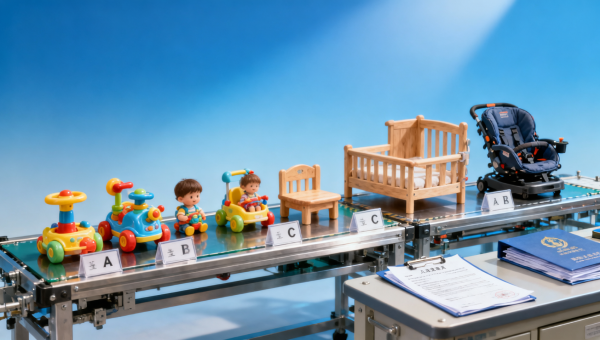
China Customs has announced a new export classification system for child-related products, effective April 1, 2026. The regulation targets HS codes 9503 (toys), 9403.89 (children's furniture), and 8715.00 (child safety seats), among others. This policy will significantly impact manufacturers, exporters, and supply chain stakeholders in the child products industry by adjusting inspection rates based on enterprise classification (A, B, or C). Companies should prepare for potential shifts in delivery stability and customer evaluations of supply chain resilience.
Event Overview
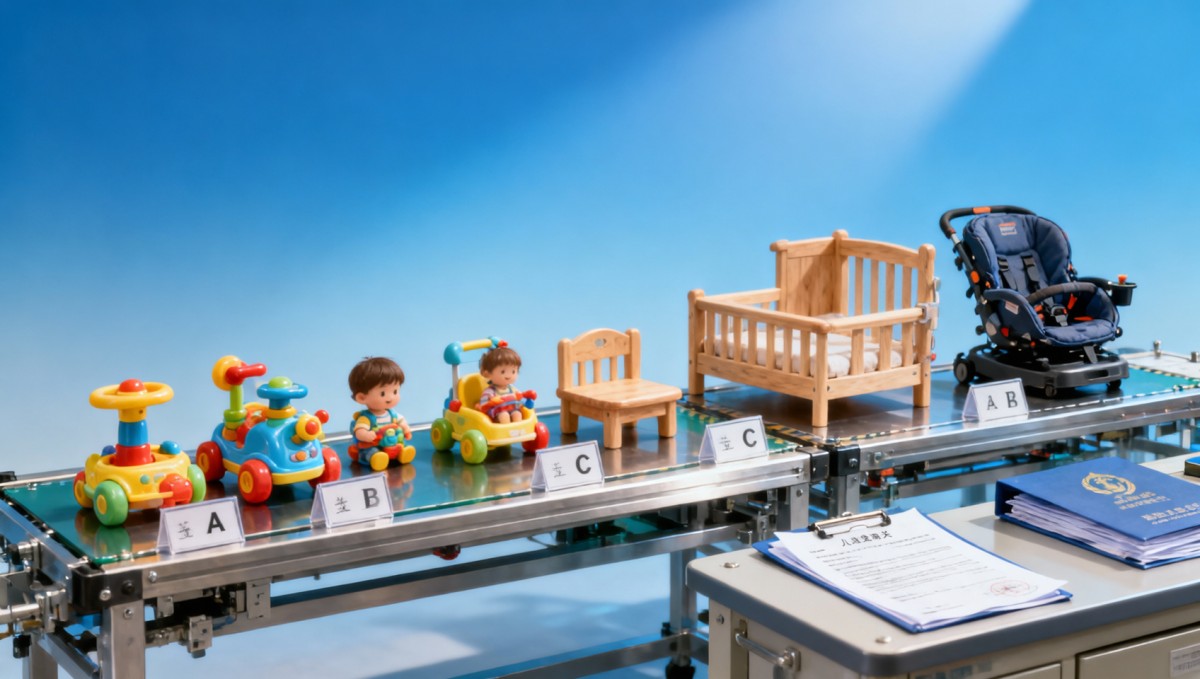
On March 28, 2026, China Customs released a notice introducing a tiered inspection system for exports of child products. Key changes include:
- A-class enterprises: inspection rate reduced from 10% to 3%
- B-class enterprises: inspection rate increased to 15%
- C-class enterprises: export qualifications suspended
The policy applies immediately from April 1, 2026, without transitional arrangements.
Impact on Sub-sectors
Direct Export Enterprises
Exporters with A-class certification will gain competitive advantages through faster customs clearance (3% inspection rate versus 15% for B-class). This may lead to preferential treatment from overseas buyers prioritizing supply chain reliability.
Manufacturing Facilities
Production plants must align with higher compliance standards to maintain or achieve A-class status. The widened gap in inspection rates (3% vs. 15%) will make factory audits and quality documentation more critical for operational continuity.
Supply Chain Service Providers
Logistics partners and trade compliance consultants will need to develop differentiated services for A-class and B-class clients, particularly regarding documentation preparation and customs coordination.
Key Focus Areas and Recommended Actions
Verify Current Classification Status
Enterprises should immediately confirm their customs classification through official channels. Misclassification could lead to unexpected inspection delays or export suspensions.
Prioritize Compliance Documentation
For B-class companies aiming for upgrade: focus on improving product testing reports, factory audit records, and quality management system documentation - the primary criteria for classification adjustments.
Communicate Proactively with Buyers
Exporters should transparently discuss classification status and potential lead time variations with overseas clients, particularly for time-sensitive orders. A-class suppliers may leverage their status in contract negotiations.
Monitor Related Policy Developments
Track potential expansions of the classification system to additional product categories or markets, as similar measures often extend to other sectors after initial implementation.
Industry Perspective
From an industry standpoint, this policy appears designed to accelerate market consolidation by rewarding compliance leaders with operational advantages. The 12-point inspection rate differential (3% vs. 15%) creates substantial incentives for quality upgrades. However, the immediate suspension of C-class exports suggests stricter enforcement compared to previous gradual compliance policies. Market observers should watch for whether this model extends to other consumer goods categories.
Conclusion
This export classification system represents a significant operational divider for China's child products industry, with tangible impacts on delivery reliability and buyer preferences. While A-class exporters stand to benefit from reduced inspections, all market participants should treat this as a compliance benchmark rather than a one-time requirement, given the likelihood of expanding scope and stricter standards over time.
Source Information
Primary source: China Customs Notice (March 28, 2026)
Note: The long-term effects on export volumes and market share distribution between enterprise classes require ongoing monitoring.
Related Intelligence
 Skincare OEMAug 16, 2026Amazon Enforces AI Human Metadata Rule for Beauty and Personal Care SellersAmazon now enforces AI human metadata rules for beauty sellers. Learn how to protect listings, traffic, and compliance in skincare, cosmetics, and beauty devices.
 Beauty DevicesAug 15, 2026China to Roll Out Nationwide Cross-Border Cash Pooling for MultinationalsChina to roll out nationwide cross-border cash pooling for multinationals from Sept. 14. Discover how this policy could improve treasury efficiency, liquidity management, and China-linked supply chains.
 Beauty DevicesAug 14, 2026China Imposes Temporary Export Ban on Helium, Affecting Cooling Supply ChainsChina's temporary helium export ban may disrupt cooling supply chains for beauty RF devices and laser systems. Learn what ODMs, buyers, and procurement teams should check now.
![]() Cosmetics & PkgAug 13, 2026PPWR becomes mandatory: Beauty and personal care packaging materials usher in new EPR and PFAS compliance requirementsPPWR takes effect for cosmetics packaging in the EU, bringing EPR registration and PFAS limits. Learn what brands, importers, and suppliers must do now.
Cosmetics & PkgAug 13, 2026PPWR becomes mandatory: Beauty and personal care packaging materials usher in new EPR and PFAS compliance requirementsPPWR takes effect for cosmetics packaging in the EU, bringing EPR registration and PFAS limits. Learn what brands, importers, and suppliers must do now. Cosmetics & PkgAug 12, 2026EU PPWR Now Enforced for Beauty Packaging ComplianceEU PPWR now enforced for beauty packaging compliance: learn how EPR, ERN, heavy metals and PFAS rules affect EU exports, customs clearance and platform sales.
 Cosmetics & PkgAug 11, 2026EU PPWR Rules Take Effect on Aug. 12 for Beauty PackagingEU PPWR rules for beauty packaging take effect on Aug. 12, 2026. Learn key compliance steps, EPR, labeling, PFAS limits, and how to avoid customs delays and fines.
 Smart Pet DevicesAug 10, 2026EU EPR Rules to Cover Smart Pet Devices on Aug. 15EU EPR Rules will cover smart pet devices from Aug. 15, 2026. Learn how smart collars, feeders, and monitoring devices can avoid delisting, customs delays, and compliance risks in the EU.
 Infant Feeding & CareAug 09, 2026CPSC Recalls Baby Sleep Sacks Over Undeclared TDCPPCPSC Recalls Baby Sleep Sacks Over Undeclared TDCPP: learn how this 2026 recall impacts CPC documents, third-party testing, and U.S. baby product compliance for exporters.
 Infant Feeding & CareAug 08, 2026ECHA Adds 5 SVHCs, Importer Notices Due From Oct 2026ECHA adds 5 SVHCs to the Candidate List, with importer notices due from October 2026. Learn how REACH affects exporters, supply chains, and documentation readiness.
 Baby Gear & StrollersAug 07, 2026CPSC Revises Crib Rail Standard for November 2026CPSC revises crib rail standard for November 2026, adding dynamic impact tests and mandatory third-party lab testing. Learn how the new rule affects U.S. market access, compliance, and shipments.
 Electronic & RC ToysAug 06, 2026EU to Require EN IEC 62115:2025 for Electronic ToysEU to Require EN IEC 62115:2025 for Electronic Toys from Oct 1, 2026. Learn scope, battery and AI safety updates, CE compliance risks, and how exporters can avoid customs delays.
 Baby Gear & StrollersAug 05, 2026US Stroller Stability Rule Takes Effect Aug. 15US Stroller Stability Rule Takes Effect Aug. 15: learn how new U.S. stroller compliance, ASTM F833-26a, and CPSC testing rules may affect imports, certification, and shipment readiness.
 Infant Feeding & CareAug 04, 2026ECHA Adds 5 SVHCs, Triggering Baby Care Export ReviewECHA adds 5 SVHCs, prompting an urgent baby care export review for EU-bound products. Learn the 0.1% threshold risks, compliance steps, and how to avoid customs delays and fines.












